Best Litter Box Furniture for Small Apartments
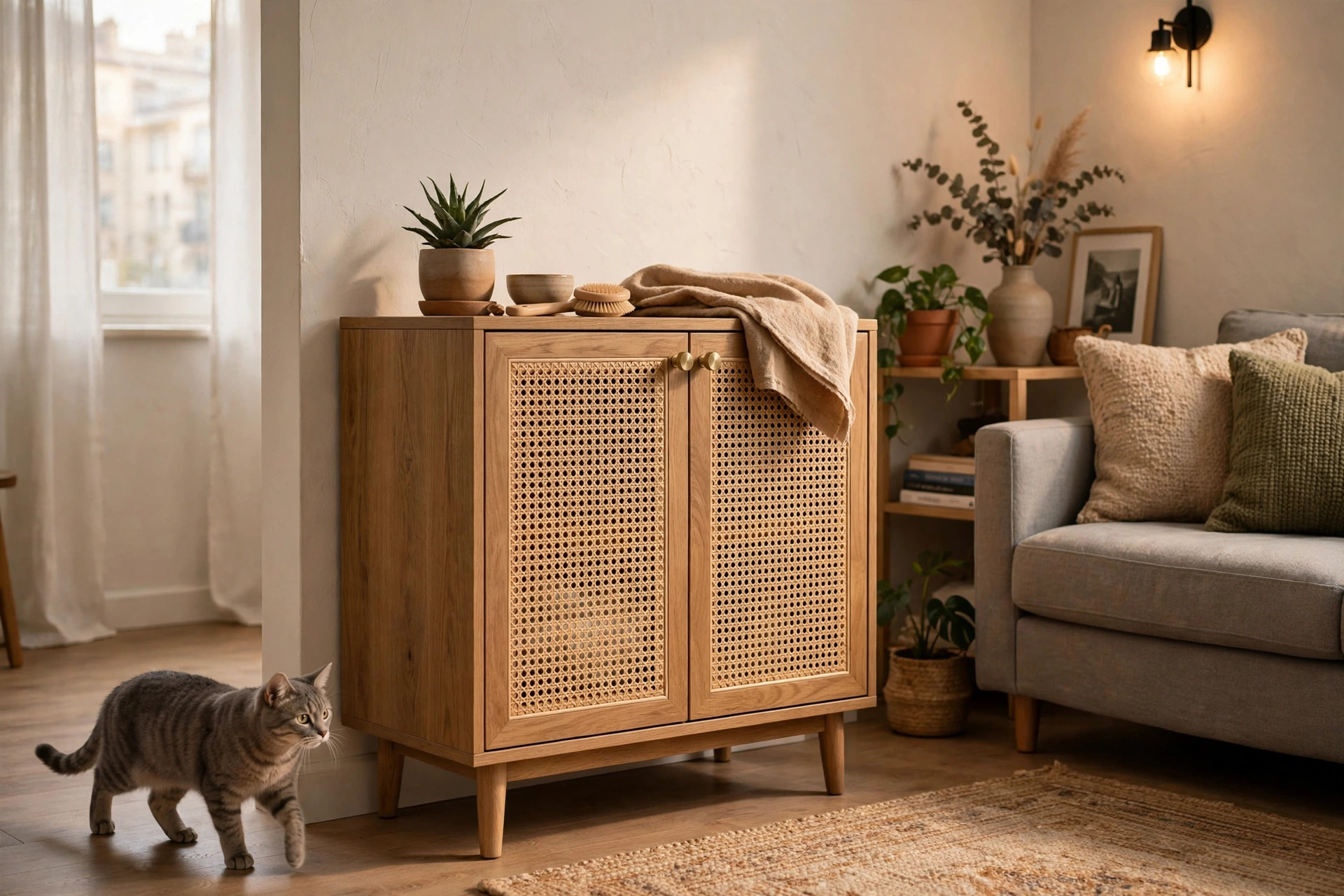
In a studio, the litter box shares air and sightlines with your bed, your desk, and your dinner. Litter box furniture promises to hide the box inside a cabinet that doubles as a side table or bench. Done well, it contains tracking, muffles odor between scoops, and gives you a surface back. Done badly, it traps smell, shrinks the box your cat actually needs, and makes scooping so awkward you do it less. This guide separates the cabinets that work in small homes from the ones that photograph well and function poorly.
Measure first: the box inside the furniture
The single most common failure is buying the cabinet, then discovering your cat's box does not fit, or fits with no room for the cat to turn. Cats need a box at least 1.5 times their body length (nose to tail base); for an average 18-inch cat, that is a 24-inch interior length. Many decorative enclosures offer only 20–22 inches inside once walls and a divider are counted. Before shopping, measure your current box (length, width, height including any hood) and tape that rectangle on the floor where the furniture would go. Add two inches of clearance in each dimension for sliding the box in and out. If the enclosure cannot swallow that tape outline, it is decor, not a litter solution.
Height matters twice: the entry hole must clear your cat's back without crouching (arthritic and large cats refuse low entries first), and the interior must fit a high-sided box if you have a high peeer or a vigorous digger. Bring those numbers to every listing below. Our litter zone setup guide shows how to plan the mat, scoop storage, and airflow around any enclosure so the furniture helps instead of hindering.
- Interior dimensions are the product. Ignore exterior style until the box-plus-cat math works.
- Ventilation is non-negotiable: look for rear vents or a second opening, not a single cat door in a sealed box.
- Budget $75–$200. Particleboard is fine if the interior is sealed; raw interior wood absorbs urine permanently.
- If scooping access requires moving furniture or removing the top, you will scoop less. Front doors that open fully win.
Four enclosures that work in small homes
All four are long-running models with stated interior sizes and replacement parts, at typical US street prices in fall 2026. We judged on interior fit, cleaning access, odor behavior between scoops, and whether the top surface is genuinely usable in an apartment (side table, bench, plant stand) rather than a wobbly lid.
| Model | Style | Typical price | Small-apartment note |
|---|---|---|---|
| GOOD LIFE USA Recessed Cabinet | Single cabinet | Usually $110–$160 | Best door access; fits large boxes. |
| Aivituvin Double Cabinet | Double-wide with divider | Usually $140–$200 | Two cats or box-plus-storage split. |
| Unipaws Enclosure with Top Opening | Cabinet, top-lift | Usually $90–$130 | Good for corners; top access trade-off. |
| Merry Products Nightstand | Nightstand style | Usually $75–$110 | Smallest footprint; bedroom-friendly look. |
GOOD LIFE USA Recessed Cabinet — the cleaning winner
This single-door cabinet earns its price at scoop time: the front opens fully, the litter box slides out on the smooth interior floor like a drawer, and you are done in the 30-second rhythm our scoop station guide recommends. The interior (roughly 29 x 18 inches of usable floor in the standard size) fits most large boxes with room for the cat to turn, and the recessed entry reduces litter spit onto your floor. The top holds a lamp and books without flex. It is particleboard, so wipe spills immediately and consider a washable liner mat inside; sealed correctly, it contains odor between scoops without sealing it in.
Aivituvin Double Cabinet — for two cats or box-plus-storage
Apartment owners with two cats face the n+1 box rule in 600 square feet. The Aivituvin double solves it honestly: a removable divider lets you run one oversized box plus a storage bay for litter and bags, or two standard boxes side by side with separate entries. Vent slots in the back panel keep air moving, which is why this model resists the greenhouse smell that plagues sealed doubles. It is the largest footprint here (about 48 inches wide), so it suits a living-room wall or the foot of a bed rather than a bathroom. Assembly takes an hour; tighten cams after a week as the board settles.
Unipaws Enclosure — the corner option
Unipaws' top-opening design fits the awkward corner where a front door would swing into a wall. You lift the lid to scoop, which is slightly slower and rules out stacking anything permanent on top, but the interior is generously tall and the side entry can face either direction during setup. For a single cat in a studio corner beside a corner cat tree, the vertical litter-plus-climb zone keeps the cat's territory compact and the rest of the room yours. Add a motion light inside if your cat is hesitant; most adopt within days once the entry is propped invitingly at first.
Merry Products Nightstand — the bedroom disguise
When the only available wall is beside the bed, looks matter and so does odor discipline. The Merry nightstand is the smallest cabinet here, with a wainscot exterior that genuinely reads as bedroom furniture and a towel-bar detail owners either love or remove. Interior space is the compromise: it fits standard (not jumbo) boxes, so it suits cats under about 12 pounds and owners who scoop twice daily. In a bedroom, that frequency is not optional anyway — pair it with the odor timeline in our litter comparison and choose the litter that matches your scoop cadence honestly.
What to skip
Unvented single-hole boxes with no stated interior dimensions, raw pine interiors that will absorb the first miss forever, and any enclosure whose door opening is under 7 inches wide for an adult cat. Also skip wash-stand conversions with plumbing-era cutouts that leak litter into the cabinet seams. If the listing leads with styled photos and hides the interior measurements, it is selling the photo.
The odor truth: furniture contains, it does not eliminate
A cabinet buys you time between scoops, not freedom from them. Enclosed air warms, and warm litter off-gasses faster; without vents, opening the door releases a concentrated puff that is worse than an open box. The working system is boring: scoop solids daily (twice in a studio), stir and top the litter, replace fully on the litter maker's schedule, and wipe the interior monthly with an enzyme cleaner from our enzyme cleaner guide so residue does not perfume the wood. A small charcoal filter pad taped near the rear vent helps, but it is garnish, not the meal. If a household member is smell-sensitive, place the cabinet on the balcony-adjacent wall or bathroom side of the room where air already moves toward an exhaust or window, never in the dead-air corner behind the sofa.
The guest test, revisited: a visitor should not be able to locate the litter box by nose in under ten seconds. Furniture that passes the eye test but fails the nose test just moves the problem inside a prettier box. Ventilation plus scoop cadence is the whole game.
Transitioning a cat into furniture without a boycott
Cats boycott changes that arrive all at once. Move in stages over 7–10 days: place the new cabinet beside the old box with doors open and no box inside so it reads as furniture; then put the familiar box (same litter, same fill depth) inside with doors propped; then close doors while leaving the entry inviting, with a litter mat defining the path. Never switch box, litter, location, and enclosure in the same week. If your cat has a history of avoiding covered boxes, start with the top-entry alternative in our top-entry guide (next in this batch) or keep one open backup box during the transition, as our transition guide details. Most cats adopt the cabinet once they learn it is quiet, private, and predictably clean.
FAQ
Does litter box furniture really reduce smell in a studio?
It reduces spread between scoops by containing air and tracking, but it can concentrate smell inside if unvented or scooped rarely. With rear ventilation, daily scooping, and monthly interior wipes, most studio owners report a clear improvement. Without the scooping cadence, furniture makes the reveal worse, not better.
What size litter box fits inside most furniture?
Most single cabinets fit a standard 22–24 inch long box; doubles fit two standards or one jumbo. Measure your box and require at least two inches of interior clearance on length and width. When in doubt, size the furniture to the box your cat already loves, not the other way around.
Will my cat use an enclosed cabinet if they dislike covered boxes?
Often yes, if you transition gradually and keep the interior bright and clean at first (doors propped, familiar box inside). Some cats never accept a single small entry, especially large or arthritic cats. Watch for hovering, perching on the rim, or eliminating beside the cabinet: those are votes against, and an open box in a defined litter zone is the kinder answer.
Can I put litter box furniture in the bedroom?
You can, with the smallest nightstand styles, twice-daily scooping, and a litter chosen for low dust and fast clumping. Keep it as far from the bed as the room allows and crack ventilation. If anyone in the home has asthma or a strong smell sensitivity, a bathroom or hallway placement is the healthier default.