Best Cat Litter Mat for Small Apartments
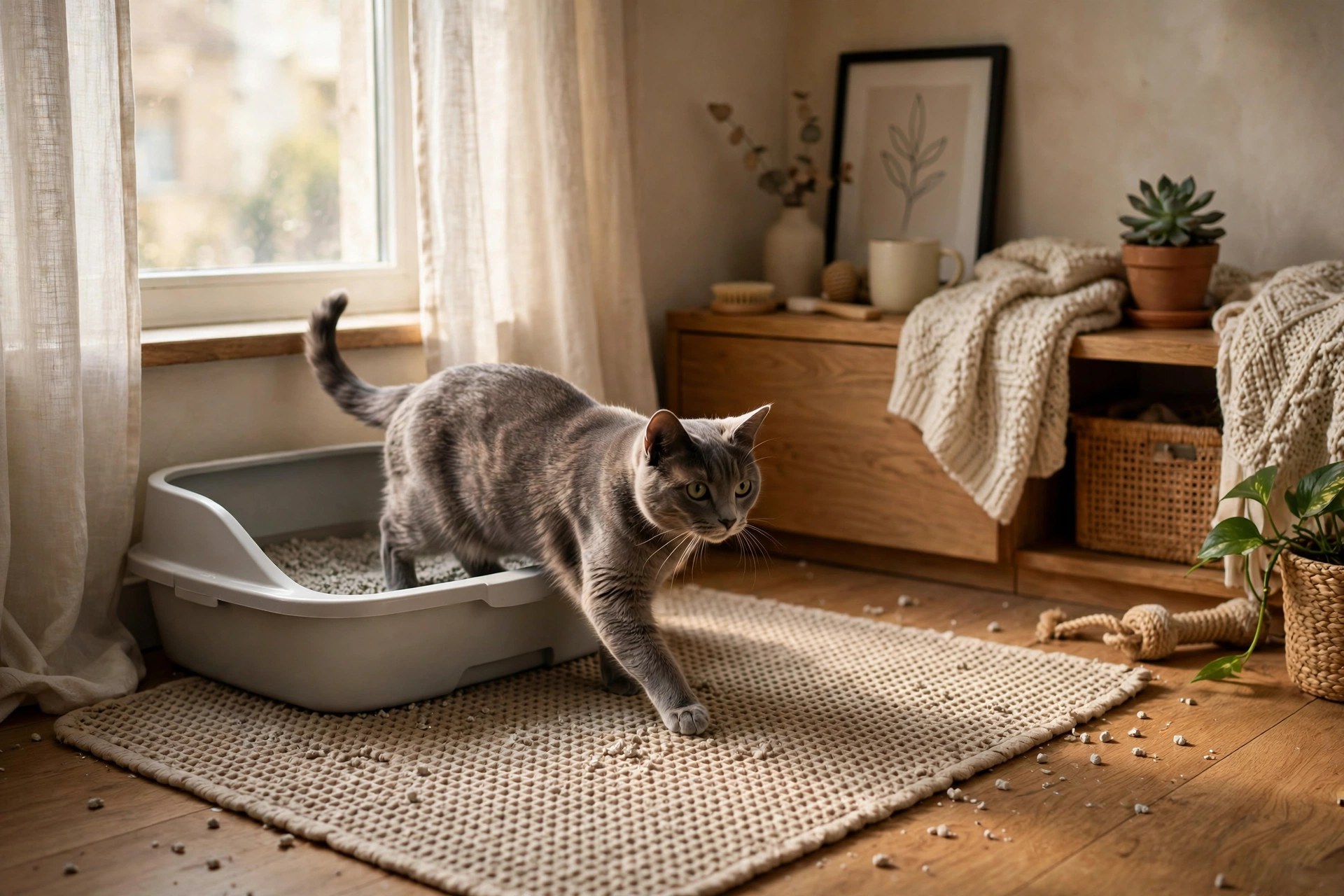
Litter tracking is a distance problem, and small apartments have no distance. In a house, stray granules die out across a hallway; in a studio, they reach your bed in three hops. A litter mat is the cheapest way to buy back that distance — if you pick the right material and size it like it matters, because it does.
How tracking actually works (and why size beats brand)
A cat exits the box carrying litter in three places: between the toes, in the paw fur, and on the paw pads. The first 12–18 inches of travel shake loose most of it — that is the entire job of the mat. A mat that extends less than a foot past the box entrance on every side is decoration; one that gives the cat two full strides of textured surface before the bare floor catches the overwhelming majority of tracked litter.
This is why sizing matters more than brand in small spaces. Measure your litter zone: you want the mat to extend at least 12 inches beyond the box on the exit side and 6–8 inches on the other sides. For a standard 18 x 15 inch box, that means a mat around 30 x 24 inches minimum — and bigger is genuinely better here, up to the point where the mat itself becomes the thing you trip over in a tight bathroom.
- Length in the exit direction: 12+ inches past the box opening — the single biggest factor.
- Texture depth: deep grooves or loops trap litter; flat mats just relocate it.
- Waterproof backing: non-negotiable on wood or laminate floors; urine happens.
- Weight and grip: a mat the cat can bunch up or drag is worse than no mat.
The three materials, honestly compared
Nearly every litter mat on the market is one of three constructions. Understanding the trade-offs saves you from buying the wrong category entirely:
- Loop/pile (carpet-style): soft on paws, good at grabbing fine litter, but a nightmare to deep-clean — litter works down into the fibers and urine soaks in without a waterproof layer. Best for: tidy cats, carpeted rooms where you can shake it out.
- Double-layer honeycomb (EVA): the top honeycomb layer lets litter fall through to a solid bottom sheet; you lift the top and pour the trapped litter back. Excellent capture, easy emptying, but the two layers can separate and some cats dislike the texture. Best for: heavy trackers, easy maintenance.
- Grooved PVC/rubber: deep channels trap litter, fully waterproof, hoses off or wipes clean in seconds. Heavier and less forgiving underfoot, but the most durable category by far. Best for: messy cats, hard floors, long-term use.
Head-to-head: four mats for small apartments
Typical US street prices; all of these are widely available and have years of review history behind them.
| Mat | Material | Typical price | Small-space verdict |
|---|---|---|---|
| Gorilla Grip Original | Thick loop/pile, slip-resistant backing | Usually $15–$30 | The safe default: soft, stays put, sizes up to about 35 x 23 in. Deep-cleaning is the weak point — shake outdoors weekly. |
| Drymate Litter Trapping Mat | Absorbent fabric over waterproof backing | Usually $20–$40 | The only pick here that absorbs liquid — ideal under and around the box on hard floors. Less "trapping" texture than grooved mats, so pair with good litter. |
| iPrimio | Deep-groove, large sizes | Usually $25–$45 | Enormous sizes (up to roughly 47 x 36 in) for the price — the best choice when you have floor to spare and a champion tracker. Heavy enough to stay flat. |
| Double-layer honeycomb (various brands) | EVA honeycomb over solid base | Usually $15–$35 | Easiest daily emptying: lift, pour trapped litter back. Watch for thin EVA that curls at the edges — thicker (4mm+) versions hold shape. |
If you only buy one: get the largest grooved or loop mat your litter zone can physically fit, with a waterproof layer if your floors are wood or laminate. In side-by-side use, an extra 6 inches of mat length reduces visible tracking more than switching from a $15 mat to a $40 one.
Placement: the part everyone gets wrong
The mat goes where the cat walks, not where it looks tidy in a product photo. Three rules:
- Cover the exit path, not the box. Center the mat on the box opening, extending outward. A mat perfectly centered under the box with 3 inches showing on the exit side is doing almost nothing.
- One continuous surface. Two small mats with a gap between them create a litter highway through the gap. One mat, sized right, beats two pretty ones.
- Anchor it. On hard floors, a mat that slides when the cat launches out of the box becomes a bunched-up tripping hazard within days. Rubber-backed or heavy grooved mats stay put; light EVA mats may need double-sided rug tape rated for the floor type.
In a bathroom setup — the most common small-apartment litter location — run the mat from the box to the door. The 2–3 feet of hallway-adjacent floor is where tracking escapes into the rest of the home.
Cleaning: the maintenance nobody budgets for
A litter mat is a litter trap, which means it accumulates everything it catches. Maintenance by material:
- Loop/pile mats: shake out outdoors or over a trash can every 2–3 days; vacuum monthly with an upholstery attachment. Machine-washable versions exist — check the label, and wash alone on gentle.
- Honeycomb double-layer: lift the top layer and pour trapped litter back into the box or trash every few days; wipe the base monthly. The easiest category to maintain.
- Grooved PVC/rubber: shake or hose off as needed; wipe with a pet-safe disinfectant monthly. The most forgiving of neglect.
Replace any mat that stays smelly after washing, curls permanently at the edges, or has lost its grip backing — a mat that migrates across the floor is actively making tracking worse. Typical lifespan is 1–2 years for fabric mats, several years for quality grooved rubber.
FAQ
What size litter mat do I actually need?
At least 12 inches of mat past the box opening in the exit direction, and 6–8 inches on the remaining sides. For a standard 18 x 15 inch box, that means roughly 30 x 24 inches minimum. When in doubt, go bigger — extra mat length cuts visible tracking more than any brand upgrade.
Do litter mats work with tofu or pellet litter?
Partially. Large pellets and tofu sticks are easier for mats to catch than fine clay dust, so any textured mat helps — but pellets also bounce and roll farther, sometimes clearing a small mat entirely. With pellet litter, prioritize mat length in the exit direction over texture depth.
My cat refuses to walk on the mat. What do I do?
Texture aversion is real, especially with honeycomb EVA. Switch to a softer loop/pile mat (like the Gorilla Grip style), or place a thin familiar towel over the new mat for a week and remove it gradually. Never trap the cat into stepping on it by blocking alternatives — that creates box avoidance, which is far worse than tracking.
Can I just use a regular doormat instead?
A coir or rubber doormat works in a pinch and is cheap, but dedicated litter mats win on three counts: deeper texture for the same footprint, waterproof backing options, and sizes actually shaped for litter zones. A doormat is a fine stopgap while you order the real thing.