Best Tofu Cat Litter for Small Apartments
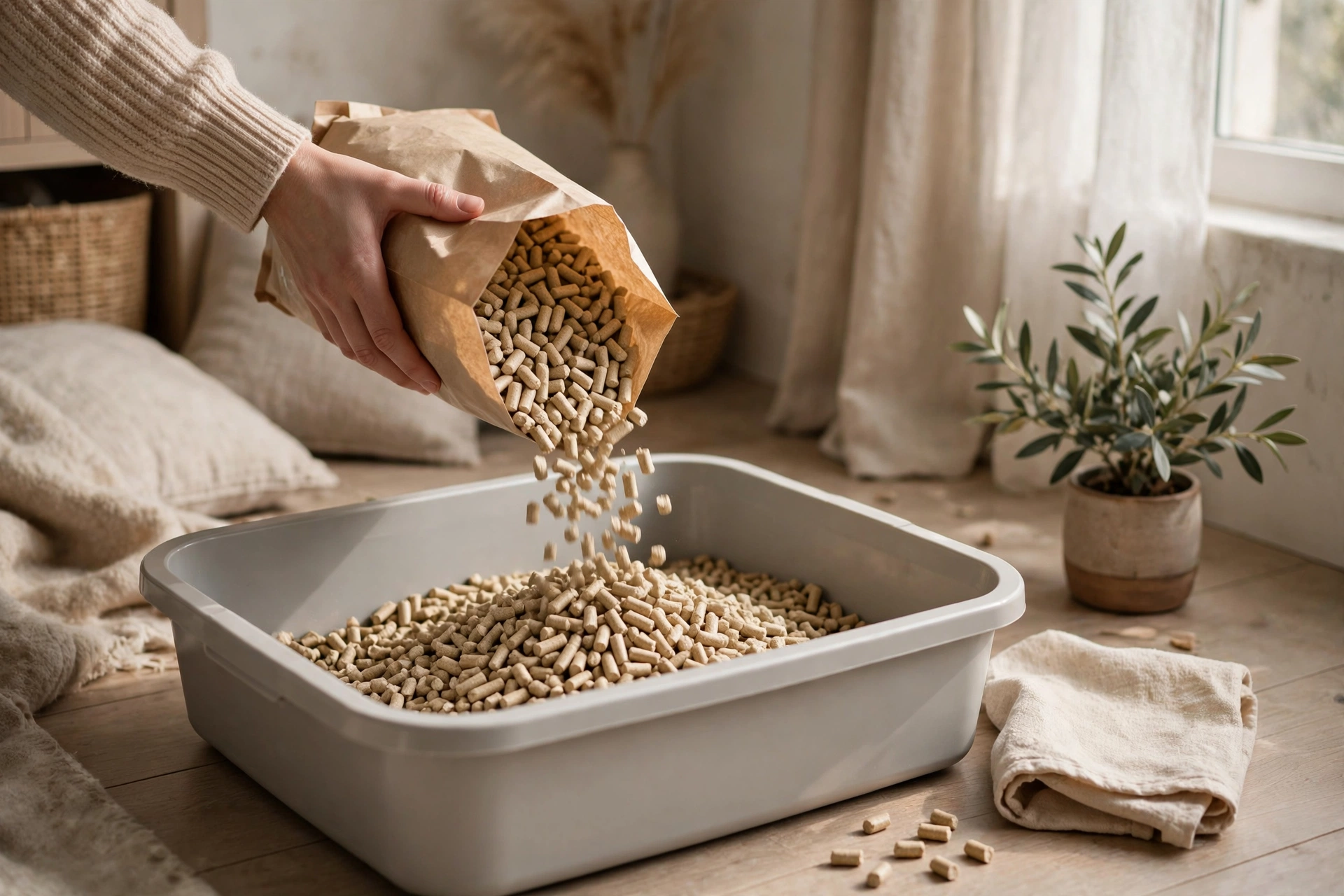
Tofu litter — pressed pellets made from soybean residue — has become the default recommendation for apartment cats, and for good reasons: it's nearly dust-free, light to carry up stairs, and the used clumps are small enough to handle easily. But not all tofu litters perform the same. Here are the 5 numbers that separate the good from the gimmicky, 4 real products compared, and how to switch without a litter-box protest.
The 5 numbers that matter
Ignore the marketing ("natural! eco!") and judge every tofu litter on these five measurable things:
- Clump speed. Good tofu litter forms a solid clump in under 3 minutes. Slow clumpers let urine spread, which means more litter wasted per scoop and more odor. The test: pour a quarter-cup of water on the litter and time it.
- Dust level. The whole point of tofu over clay is low dust — critical when the box sits 10 feet from your desk. Pour from 6 inches up: if you see a visible cloud, it's a dusty batch or a bad brand.
- Tracking. Pellets are bigger than clay granules so they track less in theory — but long, thin pellets still hitch rides on paws. Shorter, denser pellets track least.
- Dissolvability. True tofu litter dissolves in water within minutes, which is what makes the "flushable" claim plausible. Drop a clump in a jar of water: if it's intact after 10 minutes, don't flush it.
- Cost per pound. Tofu litter runs roughly $1.50–$3.00/lb versus $0.50–$1.00/lb for clay. But you use less per month because clumps are smaller and more complete — real-world cost for one cat is usually $15–25/month.
4 tofu litters compared
| Product | Best for | Typical price | Small-apartment notes |
|---|---|---|---|
| pidan Original Tofu | The safe default | Usually $20–28 for ~14 lbs | The reference standard: fast clumping, very low dust, short pellets that track less. The one to beat; widely available online. |
| pidan White Jade (Tofu + Bentonite mix) | Clay converts who want harder clumps | Usually $22–30 for ~14 lbs | Blends tofu with a little bentonite for rock-hard clumps. Slightly dustier than pure tofu, not flushable — but the clumps scoop like a dream. |
| Vetreska Tofu | Design-conscious owners | Usually $25–35 for ~12 lbs | Performs comparably to pidan with nicer packaging and fun scents (go unscented for sensitive cats). Pricier per pound; you're partly paying for the brand. |
| FUKUMARU Tofu | Budget tofu | Usually $16–22 for ~14 lbs | Often the cheapest per pound among the known brands. Clumping is good, dust control slightly behind pidan — still miles ahead of clay. |
Our take: start with pidan Original — it's the most consistent performer and the easiest to find. If your cat is a clay loyalist who rejects pure tofu, the White Jade mix is the bridge product. FUKUMARU is the value pick if the budget matters.
The 7-day transition plan (no box boycotts)
Cats are neophobic about litter texture. A cold-turkey switch is the #1 cause of "my cat hates tofu litter" — the cat hates change, not tofu. Mix gradually:
- Days 1–2: 75% old litter, 25% tofu. Most cats won't notice.
- Days 3–4: 50/50. Scoop a little more often — mixed textures can clump oddly.
- Days 5–6: 25% old, 75% tofu.
- Day 7: 100% tofu. Keep the box in the exact same spot — don't change location and litter in the same week.
- If the cat hesitates: pause at the current ratio for 2–3 extra days. Rushing the schedule causes avoidance; patience doesn't.
- Multi-cat homes: transition one box first and leave one on the old litter. Let the cats vote with their paws.
The honest truth about flushing
Many tofu litters are marketed as "flushable," and the pellets do dissolve in water. But "dissolves" and "should flush" are different questions:
- Plumbing: old pipes, low-flow toilets, and septic systems can all clog on dissolved-but-bulky litter. If your building is pre-1980s, don't risk it.
- The real issue — Toxoplasma: cat feces can carry Toxoplasma gondii, which survives standard wastewater treatment and harms marine ecosystems. Several coastal municipalities explicitly prohibit flushing cat waste. This applies regardless of litter type.
- The practical middle ground: most apartment owners bag and trash tofu litter like any other — it's lighter and less dusty than clay, which is already a win. Flushing is a nice-to-have, not the reason to buy tofu.
Tofu vs. the alternatives: honest trade-offs
Tofu isn't the only low-dust option. Here's how it stacks up against the other apartment contenders, so you can check you're solving the right problem:
| Material | Dust | Weight (14 lb bag feel) | Odor control | Monthly cost (1 cat) |
|---|---|---|---|---|
| Tofu (soy) | Very low | Light — easy stairs | Good | Usually $15–25 |
| Clay (clumping) | Moderate–high | Heavy | Very good | Usually $10–18 |
| Pine/wood pellets | Very low | Light | Good (pine scent) | Usually $8–15 |
| Crystal (silica) | Very low | Very light | Good for urine, weak for solids | Usually $15–25 |
- Stay with clay if: budget is the top priority and dust doesn't bother you. It's still the cheapest effective litter.
- Consider pine if: you want the cheapest low-dust option and your cat accepts the pellet texture. Downsides: doesn't clump (you sift instead), and some cats dislike the pine smell.
- Consider crystal if: you hate scooping urine — crystals absorb it and you only scoop solids, changing the tray monthly. Downsides: no clumping means less visibility into output, and the granules track.
- Choose tofu if: you want low dust plus real clumping plus light weight. It's the best all-rounder for apartments, which is why it costs more.
Storage tip for small homes: tofu litter absorbs moisture from the air, so an opened bag in a humid apartment slowly loses clumping power. Roll the bag tight and clip it, or decant into a 3-gallon gasket-sealed bin (usually $12–18) that fits in a closet. Buy the 2-pack only if you'll use it within two months.
FAQ
Does tofu litter control odor as well as clay?
Comparably for urine, slightly less for feces — but the difference is small and mostly erased by twice-daily scooping. The bigger odor factor is always maintenance schedule, not litter material. A neglected tofu box smells just like a neglected clay box.
Is tofu litter safe if my cat eats it?
It's made from food-grade soybean residue, so small ingested amounts during grooming are generally considered safe — one reason it's popular with kitten owners. That said, persistent litter-eating (pica) warrants a vet visit regardless of litter type.
How long does a bag last for one cat?
A 14 lb bag typically lasts 3–5 weeks for one cat at proper 3-inch depth with twice-daily scooping. Fast-clumping brands last longer because each scoop wastes less surrounding litter.
Why is my tofu litter suddenly dusty?
Pellets break down into powder at the bottom of the bag during shipping and handling. Sift the last third of the bag through a coarse strainer, or pour slowly from low height. If a fresh bag is dusty throughout, it's a quality issue — switch brands.