Best Covered Litter Box for Odor Control in Apartments
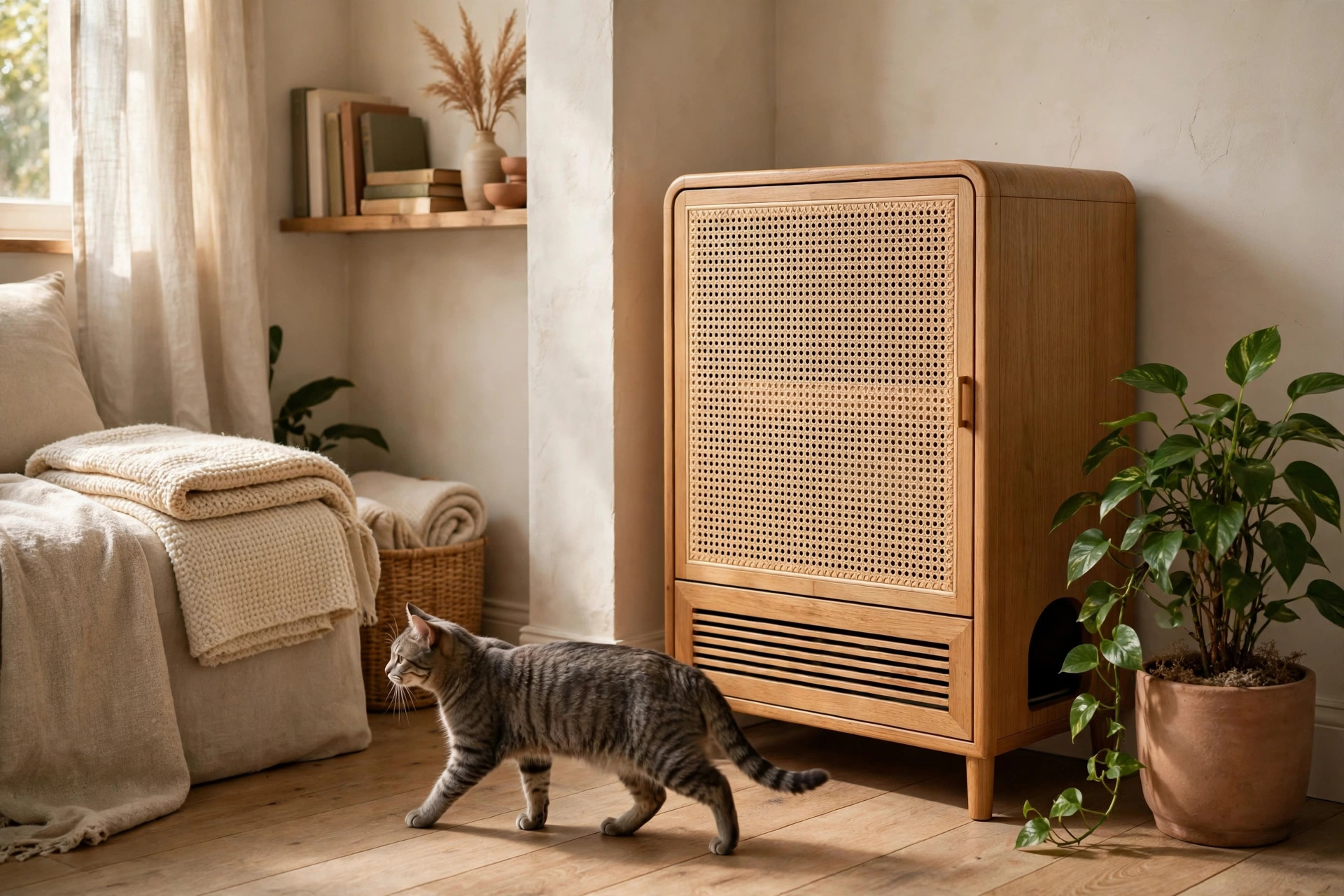
Here is the uncomfortable truth most product roundups skip: a covered litter box does not eliminate odor — it mostly relocates it. The smell that used to drift across your studio now waits inside the box… for your cat, every single visit, and for you, every time you lift the lid. Whether a cover helps or backfires comes down to the box design, the litter inside it, and — honestly — your scooping discipline.
The uncomfortable truth about covered boxes
- Covers trap ammonia inside. Great for your nose between visits; worse for the cat breathing it for several minutes, multiple times a day. Cats have roughly 200 million scent receptors (humans have around 5–6 million) — a stinky enclosed box is a powerful reason for a cat to start avoiding the box entirely.
- Ventilation design is the differentiator. The better hooded boxes include carbon-filter vents or airflow gaps that let air exchange slowly without pouring smell into the room. A sealed plastic dome with no vent is just a smell safe you open twice a day.
- The real odor equation: scooping frequency > litter type > box design > cover. A cover is the last ten percent, not the first ninety.
- When covers genuinely help: the box sits in your main living area; you scoop daily without fail; your cat is comfortable with enclosed spaces. In those cases a good hooded box is absolutely worth it.
- Helps: box in the living area, daily scooping habit, cat already uses enclosed spaces happily.
- Doesn’t help: a cat that avoids covered boxes (some do, especially anxious cats); an owner who scoops less because “it’s covered” — the classic trap; a box already sitting in a ventilated laundry nook.
- Non-negotiable either way: the box must be big enough — at least 1.5 times your cat’s body length. Cramped boxes get rejected, covered or not.
Four covered boxes worth considering
All four are established products with real-world track records in small homes — no unbranded lookalikes, no prototypes.
| Model | Best for | Typical price | Apartment note |
|---|---|---|---|
| Modkat Flip | Style plus versatility | Usually $120–$160 | Three lid positions (open, half, closed); seamless base resists leaks. |
| Modkat XL | Big cats and multi-cat homes | Usually $180–$230 | Extra-large footprint; front or top entry options. |
| IRIS USA Top Entry | Budget and low tracking | Usually $30–$60 | Top entry cuts litter scatter; lid doubles as a landing mat. |
| Catit Jumbo Hooded | Large and simple | Usually $40–$70 | Big pan with hood; carbon filter slot; easy to find liners. |
Modkat Flip — the versatile designer pick
The Flip’s clever trick is a lid that works in three positions — fully open, half-cover, or closed — so you can introduce a nervous cat gradually instead of gambling on day one. The seamless base has no corners for urine to seep into, which is where cheap boxes develop their permanent smell. It looks like furniture, which matters when the box lives in your living room. The price is the obvious hurdle, and replacement liners are a proprietary extra — budget for them.
Modkat XL — for big cats and busy boxes
Maine Coons and multi-cat households break the “one size fits all” promise of standard boxes. The XL’s oversized footprint gives large cats room to turn and dig naturally, and the high sides contain the enthusiastic diggers. Available with front or top entry. It eats more floor space than any other pick here — measure your corner before ordering — but for the cats that need it, nothing smaller will do.
IRIS USA Top Entry — the budget tracking-killer
At usually $30–$60, this is the price-performance champion, and the top-entry design genuinely cuts tracked litter — the cat hops out onto the grooved lid, which knocks granules off paws before they reach your floor. Less tracking means less litter ground into rugs, which is half the “cat smell” battle in small apartments. Caveats: kittens, seniors, and less agile cats can struggle with the hop, and the box itself is a basic pan — the odor control comes from your litter and routine, not the plastic.
Catit Jumbo Hooded — the large simple hood
Sometimes you just want a big box with a lid that works. The Jumbo’s pan is genuinely roomy, the hood includes a slot for a replaceable carbon filter (replace it every month or two — a saturated filter is worse than none), and standard-size liners fit without a treasure hunt. It is not beautiful, but it is the easiest recommendation for someone who wants odor containment without overthinking it.
The litter matters more than the lid
You can put the world’s best hooded box around bad litter habits and still have a smelly apartment. The litter decision outweighs the box decision:
- Clumping clay: still the best odor encapsulation per dollar. The tradeoff is dust — low-dust formulas are worth the small premium in a studio where you breathe the same air.
- Tofu and cassava litters: low dust, decent clumping, and often flushable (check your local plumbing rules first). Usually pricier per month than clay.
- Crystal/silica: excellent moisture absorption and less frequent full changes; some cats dislike the texture under their paws, so transition gradually.
- Depth: 3–4 inches. Too shallow and urine hits the bare bottom of the pan, where it stinks no matter what the bag promised.
- No litter deodorizes a box that isn’t scooped. Scented litters just layer perfume over ammonia — many cats hate the fragrance and it does nothing for the actual chemistry.
The 2-minute daily routine that beats any box
- Scoop solids and clumps (60 seconds). Daily. Non-negotiable. This single habit outperforms every product on this page combined.
- Wipe the hood interior weekly. An ammonia film builds up on the inside of covers — a quick wipe with a damp cloth prevents the “why does it smell even after scooping” mystery.
- Top up to 3–4 inches. Litter level drops as you scoop; shallow litter is stinky litter.
- Full dump and wash monthly. Mild soap and water only — harsh cleaners leave residue smells that put cats off the box.
If you buy one thing for odor, make it a good litter mat and a daily scooping habit — not a fancier box. The mat catches the tracked granules that get ground into floors, and tracked litter is half the lingering “cat smell” in small apartments. Pair it with our litter mat guide for the full setup.
FAQ
Do covered litter boxes really reduce smell?
They contain odor between visits, which helps noticeably in open living spaces. But they neutralize nothing — without daily scooping, a covered box smells worse when opened than an open one, and your cat notices long before you do.
Will my cat actually use a covered box?
Most cats do, but some refuse — especially anxious cats, or in multi-cat homes where an enclosed box feels like a trap with one exit. Introduce it with the lid off for the first week, then add the cover. If the cat stops using it, believe the cat.
Top entry vs. front entry — which controls odor better?
For odor specifically, the difference is minor. Top entry wins clearly on tracking (less litter scattered means less smell ground into floors); front entry wins on accessibility for kittens, seniors, and large cats. Choose by your cat, not by the marketing.
How often should I fully change the litter?
With daily scooping: a full dump and wash every 2–4 weeks for clumping clay, following package directions for crystal. The nose test is reliable — if you can smell the box right after scooping, the litter change is overdue.