Best Top-Entry Litter Boxes for Apartments
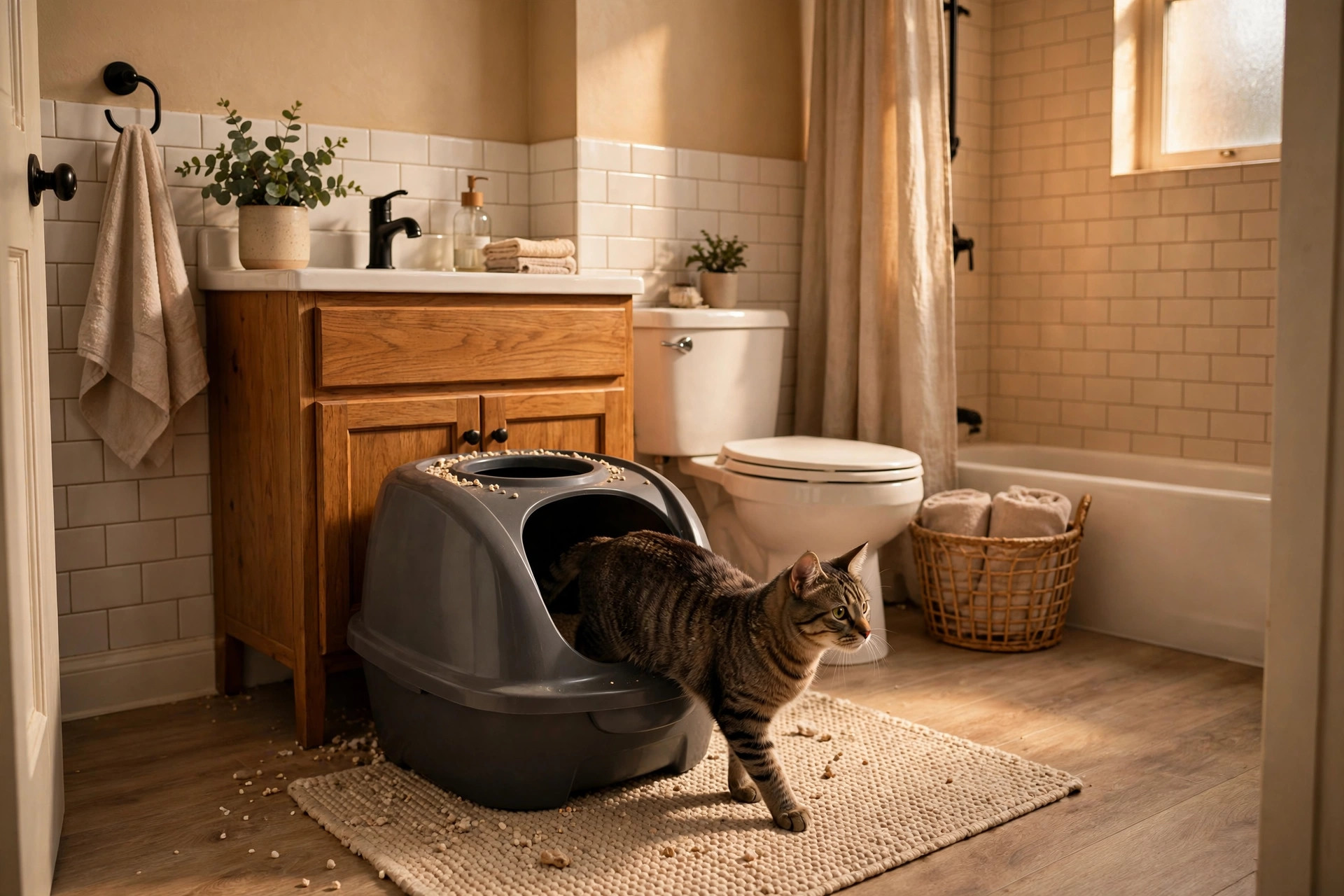
A top-entry litter box asks the cat to hop in through the roof and, crucially, to walk across a grooved lid on the way out. Those three extra steps shake most litter back into the box instead of across your studio floor, contain the enthusiastic digger's spray, and put a solid lid between the litter and a curious dog or toddler. For the right cat, it is the single biggest tracking upgrade available. For the wrong cat, it is a boycott in a box. Here is how to tell which cat you have, and which boxes do the job best.
Who should skip top-entry (read this first)
Top-entry designs require a jump or a confident hop, balance on entry, and comfort in an enclosed space with one exit. Skip or delay this style if your cat is arthritic, post-surgical, heavily overweight, a young kitten under about four months, or a senior who has started missing high-sided boxes. Also pause if your cat has a history of litter box aversion: adding a roof puzzle to a cat already negotiating with the box invites accidents elsewhere. Those households do better with a low-entry open box in a well-planned zone (see our studio placement guide) or the cabinet route in our litter furniture guide from this batch. Everyone else, especially owners battling hallway tracking or litter-raiding dogs, should read on.
Three top-entry boxes that apartment owners keep
The market is narrower than for open pans, which is good: three designs dominate because they work. Prices are typical US street prices in fall 2026. We judged on entry size, lid texture (where tracking is won or lost), wall height for diggers, and how the lid behaves at scoop time.
| Model | Size | Typical price | Apartment strength |
|---|---|---|---|
| IRIS Top Entry Cat Litter Box | Large, 20.5 in long | Usually $25–$40 | Best all-rounder; grooved lid traps litter. |
| Petmate Top Entry Litter Pan | Large, hinged lid | Usually $20–$35 | Easiest scooping; non-slip lid texture. |
| Modko Flip / Modkat Top-Entry | Compact to large | Usually $90–$120 | Seamless liner system; best-looking, priciest. |
IRIS Top Entry — the default recommendation
The IRIS box is the one shelters and foster homes buy in stacks: tall walls that contain a digger's volcano, a wide oval entry that even 14–15 pound cats use comfortably, and a recessed grooved lid that genuinely returns litter to the box as the cat exits. The lid lifts off for scooping and the whole tub rinses clean without seams to trap odor. It needs a footprint of roughly 20 x 16 inches, which fits most apartment bathrooms and the corner zones in our litter zone guide. If you buy one top-entry box to test the concept, buy this one: the price makes the experiment honest, and cats that reject top-entry will tell you within the transition week without a major spend.
Petmate Top Entry — the easiest to live with
Petmate's hinged lid solves the small-bathroom annoyance of finding a place to set a dirty lid while you scoop: it flips back and stays. The lid's textured surface grips paws a fraction longer, which helps with fine litters that cling. The entry is slightly smaller than the IRIS, so it suits cats under about 13 pounds best. Walls are tall, the plastic is thick enough not to flex when carried to the tub for a monthly wash, and replacement is cheap if a determined dog ever cracks a lid. Owners who scoop twice daily (the studio ideal) rate this convenience highest.
Modkat Top-Entry — the design-forward splurge
Modkat treats the litter box as furniture: seamless corners, a reusable liner system that lifts out for full changes, and a scoop that hooks neatly on the side. The liner is the real upgrade for apartments because it prevents the urine-scale etching that makes cheap tubs smell permanently after a year. It costs three times the IRIS, needs Modkat liners on reorder, and the compact size is genuinely compact — measure a large cat carefully. For a design-conscious studio where the box lives in the living area, owners judge the cost per year of odor-free service as fair. Everyone else gets the same tracking physics from the IRIS for less.
What to skip
DIY storage-tote conversions with a hand-cut hole (sharp edges, no grooved lid, tracking benefit lost), top-entry boxes with tiny round entries under 9 inches for adult cats, and any design whose lid cannot be fully removed for washing. Also skip pairing top-entry with heavy crystal litter that cats dislike digging in through a roof; the transition below assumes a litter the cat already accepts.
- Entry opening at least 9–10 inches across for an average adult; larger for big breeds.
- Interior floor at least 20 inches long so the cat can turn and choose a clean spot.
- Leave 6 inches of clearance above the lid for the hop, and a mat at the base for the jump-down.
- Keep a standard box available during the first week; choice reveals preference honestly.
The two-week transition that prevents boycotts
Never swap boxes overnight. Place the top-entry box beside the current box, lid off, filled with the same litter to the same depth (about 3 inches), so it reads as a taller version of a familiar toilet. After two or three voluntary uses, put the lid on but sprinkle litter on top so the cat's scent marks the new exit. Keep the old box available but slightly less pristine (scoop the new one first) to nudge preference. Remove the old box only after a full week of consistent top-entry use. Our general new box transition guide covers the litter-blending variant if you are also changing litters, and persistent avoidance, hovering, or eliminating beside the box are the warning signs to watch for. Most healthy adult cats convert in 4–10 days; a cat still avoiding at day 14 is voting no, and the kind answer is a low-entry box with a better mat.
Making the tracking math real in a small home
Top-entry cuts tracking by roughly two-thirds in typical apartment use, but the remaining third concentrates at the jump-down point. Place a washable mat (at least 24 x 18 inches) where the cat lands, not around the box base where a front-entry mat would go. Lightweight litters track farther on paws regardless of box style; if tracking is your primary complaint, pair the box change with a denser litter after the box transition is complete, using the honest cost and odor timelines in our clumping vs. crystal comparison. Sweep the landing mat into the box daily (five seconds) and wash it weekly. Dogs are the other variable: a determined medium dog can nose a light lid, so choose the latched IRIS or place the box in a gated zone using the gates in this batch if litter-raiding is severe.
The litter-depth rule: top-entry boxes tempt owners to overfill so digging feels substantial through the roof. Resist. Three inches is still the depth cats prefer for burying without excavating to the plastic, and overfilling defeats the lid grooves by giving the cat more to carry out.
Cleaning without the lid problem
Scoop daily from above (the view is actually better than a front-entry pan), lift the lid weekly to wipe the groove channels where fine litter packs, and wash the whole tub monthly with mild soap, rinsing thoroughly. Liners (Modkat) or a light baking-soda dusting under fresh litter extend the wash interval, but plastic still needs the monthly reset in a small home where the box shares your air. Keep the scoop on a hook beside the box, not across the room: our scoop station guide shows a $35 setup that makes the daily scoop a 30-second habit even in a bathroom the size of a closet.
FAQ
Do top-entry litter boxes really reduce odor in apartments?
Modestly, yes, because the lid contains air between uses and walls block spray. The bigger win is tracking, not odor. Odor still depends on scooping frequency and litter choice; an un-scooped top-entry box smells stronger when opened because the air is concentrated. Daily scooping remains the rule in small homes.
Can kittens or senior cats use a top-entry box?
Kittens under about four months and seniors with arthritis, balance issues, or recent surgery should use low-entry boxes. Healthy adults, including most cats up to early senior years, hop in readily. When in doubt, keep a low-entry option permanently; choice is cheaper than cleaning accidents.
What litter works best in a top-entry box?
The litter your cat already accepts, at about three inches deep. Medium-weight clumping litters balance digging satisfaction and tracking. Very light litters ride paws farther even with a grooved lid, and large crystals can be unpopular to dig through an entry roof. Change litter only after the box transition is complete.
Will a top-entry box keep my dog out of the litter?
For most small-to-medium dogs, yes: the roof entry and smooth tall walls defeat casual litter raiding. A large, determined dog can displace an unlatched lid, so choose a latched model or place the box behind a cat-door gate. If raiding persists, the gated room solution is more reliable than any box alone.