Best Apartment Cat Litter Scoop and Storage Setup
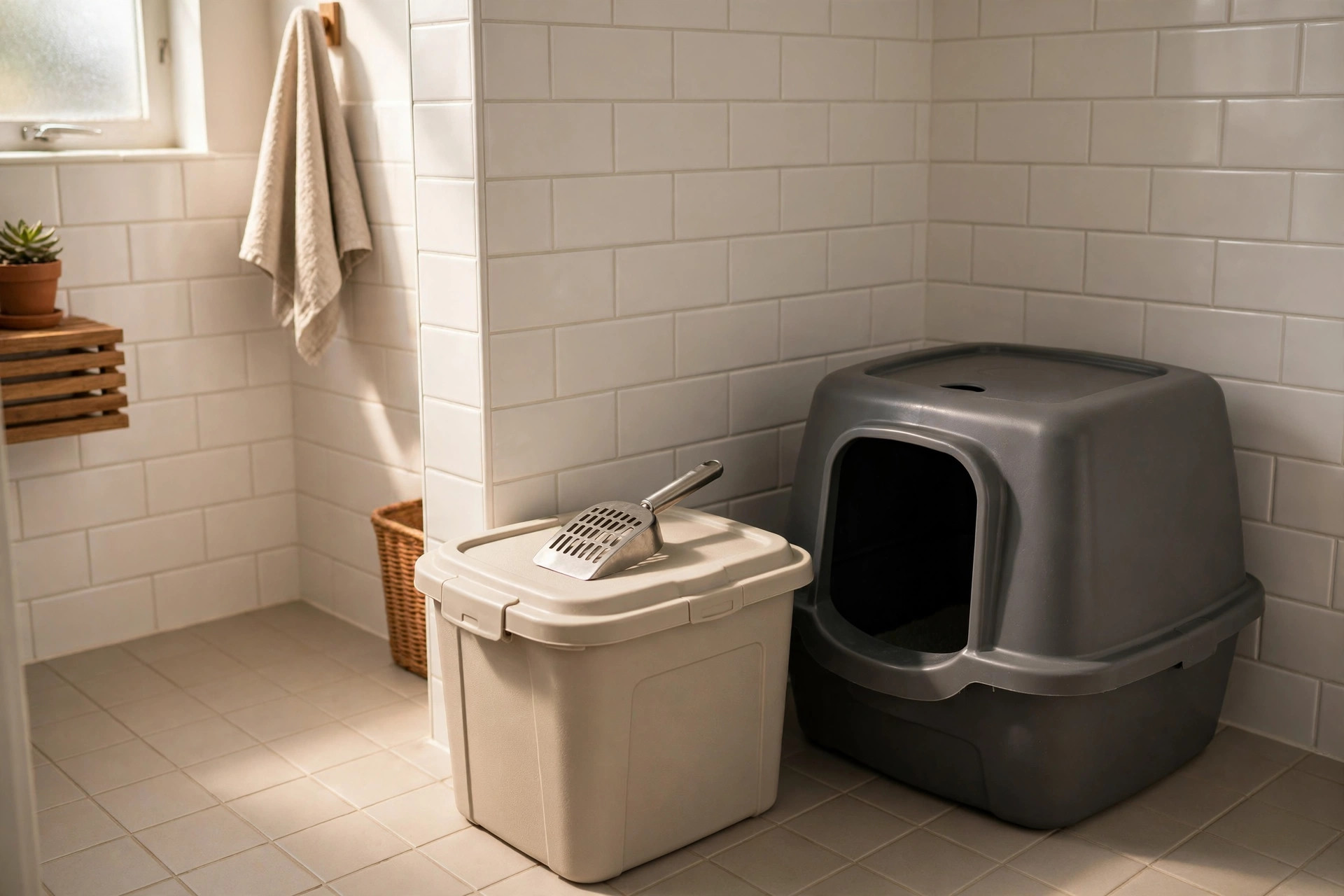
The litter scoop is the most-used pet tool you own — twice a day, every day, for years. Yet most owners use whatever flimsy plastic scoop came free with the litter, then wonder why scooping feels like a chore. A good scoop plus a sealed storage setup turns the whole job into a 30-second non-event, which is the real reason this $30 upgrade matters more than a $200 gadget: it determines whether you actually scoop twice daily.
- A solid metal scoop (usually $12–$20) is the single best upgrade: it doesn't flex, doesn't snap, and sifts faster than any plastic scoop.
- Waste needs a sealed home: a Litter Genie-style pail or any small lidded can with a gasket, emptied every 3–4 days. Never the open kitchen trash.
- Total setup cost for scoop + storage + bags: usually $35–$65. Everything below lasts years except the bags.
- Match the scoop to your litter: fine-grain litters need narrow slots; pellet and crystal litters need wide ones.
- The station rule: scoop, sealed container, and spare bags all within arm's reach of the box — every extra step is an excuse skipped.
Scoops compared: the only four types that matter
Ignore the novelty shapes. Every scoop worth buying falls into one of four designs:
| Type | Best for | Typical price | Apartment note |
|---|---|---|---|
| Flat metal sifter (DuraScoop style) | Daily driver for most homes | Usually $14–$20 | Rigid, fast, lasts years; the default pick |
| Deep metal scoop (iPrimio style) | Deep litter beds, big clumps | Usually $12–$17 | Holds more per pass; heavier in hand |
| Jumbo plastic scoop | Tight budgets, lightweight preference | Usually $6–$11 | Replace yearly; flexes on packed clumps |
| Non-stick coated scoop | Sticky litters, humid bathrooms | Usually $10–$16 | Clumps release easier; coating wears off |
DuraScoop — the daily driver
The DuraScoop is a flat, all-metal sifter — essentially a rigid slotted shovel — and it has a cult following among multi-cat owners for good reason. The flat profile slides under clumps instead of pushing litter around, the slots are sized for standard clumping clay, and the solid aluminum construction doesn't flex when you lever out a cemented clump. At usually $14–$20 it costs triple the free plastic scoop and lasts roughly forever; owners report 3+ years of daily use without bending. Downsides: it's heavier than plastic (noticeable if you have wrist issues), and the flat design holds less per pass than a deep scoop — you make more trips to the waste container, but each trip is faster.
iPrimio — the deep metal scoop
iPrimio's stainless steel scoop takes the opposite approach: a deep, ladle-like bowl with slots, usually $12–$17. Where the DuraScoop sifts, the iPrimio scoops — it carries a full load of clumps in one pass, which suits deep litter beds (4+ inches) and large clumps from big cats. The long handle keeps hands clear of the box, a genuine plus in small bathrooms where you're working at awkward angles. Trade-offs: the deep bowl is slower to sift fine litter through, and the whole thing is top-heavy when full. If your cat is a prolific digger who buries everything under three inches of litter, this design digs it back out faster than a flat sifter.
Jumbo plastic scoops (Petmate, WePet) — the honest budget pick
A big plastic scoop from Petmate or WePet, usually $6–$11, is perfectly serviceable — this is what most owners start with, and there's no shame in it. The jumbo size moves a lot of litter per pass, and the light weight suits anyone who finds metal scoops fatiguing. The honest limitations: plastic flexes, so prying up a dried-on clump bends the scoop instead of breaking the clump free; slots clog with damp litter and need tapping out; and the whole thing should be replaced about yearly as micro-scratches start harboring odor. If the budget is tight, buy the plastic scoop now and upgrade to metal when it wears out — you'll appreciate the difference more for having lived with the cheap one.
Non-stick coated scoops — the humid-bathroom specialist
Several brands sell scoops with a non-stick coating (usually $10–$16) aimed at the eternal annoyance of clumps cementing to the scoop. In dry conditions the difference is marginal; in a humid bathroom — where many apartment litter boxes live — damp litter genuinely sticks less to the coating, and a quick rinse cleans it fully. The catch is durability: the coating scratches and wears with daily scraping against litter, typically losing effectiveness within a year. Treat it as a consumable with a 12-month life, not a lifetime tool.
Match the slots to the litter. Fine-grain clumping litters need narrow slots (under ~1/4 inch) or clean litter pours through with the clumps. Pellet, crystal, and walnut-shell litters need wide slots or the scoop just pushes everything around. When in doubt, bring a pinch of your litter to the pet store and test the display model.
Sealed storage: where the smell actually stops
Scooping twice daily accomplishes nothing if the waste then sits in an open bag. In an apartment's small air volume, an unsealed waste bag announces itself within hours — this is the step most odor guides skip, and it's the one that matters most after scooping frequency itself.
- Litter Genie pail (usually $20–$26, refills $6–$9). The category standard: a tall pail with a trap-door mechanism and a continuous-bag refill cartridge. Drop clumps through the slot, pull the handle to seal them into the bag below. Each refill cartridge lasts roughly 2 months for one cat. The ongoing refill cost is the real price — budget about $40 a year in cartridges. Worth it for the odor seal and the one-handed operation.
- Litter Locker II (usually $30–$40). The main alternative, with a similar trap-door design and its own refill system. Slightly larger capacity than the Genie, slightly pricier refills. Choose between them on availability of refills in your area — a pail you can't buy cartridges for is just a tall trash can.
- Small step-can with gasket (usually $25–$45). A 1–2 gallon stainless step-can — simplehuman's 4.5L is the popular pick — lined with any small trash bag. No proprietary refills, the gasketed lid seals odor well, and the step pedal gives one-handed operation. Empty every 3–4 days. The only real downside versus a Genie: you tie off a whole bag instead of sealing individual deposits, so there's a brief odor puff on emptying day.
- Budget lidded bin (usually $8–$15). Any small plastic bin with a snapping lid, lined with grocery bags. Seals adequately if the lid fits tightly; fails if it warps. Replace when the plastic starts retaining odor — usually 6–12 months. The honest minimum viable option.
Whichever you choose, it lives within arm's reach of the box — not across the bathroom, not in the kitchen. The waste container's distance from the box is directly proportional to how often scooping gets "done later." For the full zone layout, our litter zone setup guide covers placement for studios, one-bedrooms, and shared bathrooms.
Bags and liners: the unglamorous essentials
Three bag decisions, each small, each compounding:
- For the sealed pail: use the manufacturer's refills. Third-party "compatible" cartridges for the Genie and Locker exist and cost less, but fit and odor-seal vary — a cartridge that doesn't seat properly defeats the entire purpose of the pail. This is the wrong place to economize.
- For the step-can or bin: small (4-gallon) trash bags with odor-neutralizing baking soda built in, usually $5–$8 for a box that lasts months. Tie off every 3–4 days regardless of fullness; a half-full bag sealed beats a full bag straining.
- Skip scented bags near the box. Heavily perfumed bags can put sensitive cats off the whole station — the cat associates the chemical smell with the litter area and starts avoiding it. Unscented bags plus a sealed container control odor better than fragrance ever will. (The same logic applies to litter itself: our tofu litter guide covers low-dust, low-scent options.)
Assembling the 30-second scoop station
Put it all together as a station, not a collection of items. The layout that works in every apartment:
- Scoop parked on the container lid (or hung on a Command hook beside the box) — never balanced on the box edge where it falls in, and never across the room.
- Sealed waste container immediately beside the box, on the side you naturally stand when scooping. Right-handed? Container on the right.
- Spare bags tucked inside the container's lid or taped to its side — the tie-off happens without leaving the station.
- Small sealed bin of spare litter within two steps, so top-ups happen instead of being postponed until the level is embarrassingly low.
The whole station occupies about 4 square feet next to the box. Run the motion once: scoop, drop through the trap door, done — genuinely under 30 seconds. That speed is the entire point. Nobody resents a 30-second task; everybody resents a 5-minute production involving a trip to the kitchen trash. Twice-daily compliance lives or dies on this layout.
Cleaning and replacing: the boring part that matters
- Wash the scoop monthly. Hot water, dish soap, a stiff brush — thirty seconds. Urine residue builds up in the slots and starts smelling; a monthly wash resets it. Metal scoops can take a diluted vinegar soak for stubborn buildup.
- Wipe the pail's trap door weekly. The mechanism that makes the Genie and Locker work is also the part that gets grimiest. A damp paper towel once a week prevents the slow-motion gunking that eventually jams it.
- Replace plastic scoops yearly, coated scoops yearly, metal scoops... basically never. When a plastic scoop's slots stay clogged after washing, or the handle flexes permanently, it's done. A quality metal scoop's lifespan is measured in years — the $15 upfront is cheaper than three $8 plastic replacements.
- Retire any storage bin that smells after washing. Plastic absorbs odor over time; when a bin smells like a litter box even empty and clean, the plastic is saturated and no amount of baking soda will fix it. Budget bins hit this at 6–12 months; stainless cans effectively never do.
FAQ
Is a $15 metal scoop really better than the free plastic one?
Yes, and it's the highest value-per-dollar upgrade in litter care. Metal doesn't flex on packed clumps, sifts faster, doesn't absorb odor, and lasts years instead of months. The free scoop works; the metal scoop makes you not dread the job, which is what actually keeps the box clean.
Litter Genie or a regular small trash can with a lid?
The Genie seals better between deposits thanks to the trap-door mechanism — meaningful in a studio where the pail shares air with your bed. A gasketed step-can is close behind and has no refill costs. A plain lidded bin works but needs emptying every 2–3 days without fail. Pick based on your emptying discipline, honestly assessed.
How often should I empty the sealed waste container?
Every 3–4 days for one cat, every 2–3 for two. "Sealed" slows odor escape; it doesn't stop decomposition. Mark it on the same schedule as trash day and you'll never think about it again.
My scoop slots clog with damp litter constantly. Fix?
Three fixes in order: switch to a metal scoop (rigid slots clear with a tap), check that your litter depth is 3–4 inches (thin litter stays damp at the bottom), and scoop twice daily so clumps never sit long enough to weld themselves to anything.