How to Protect Dog Paws From Hot Pavement
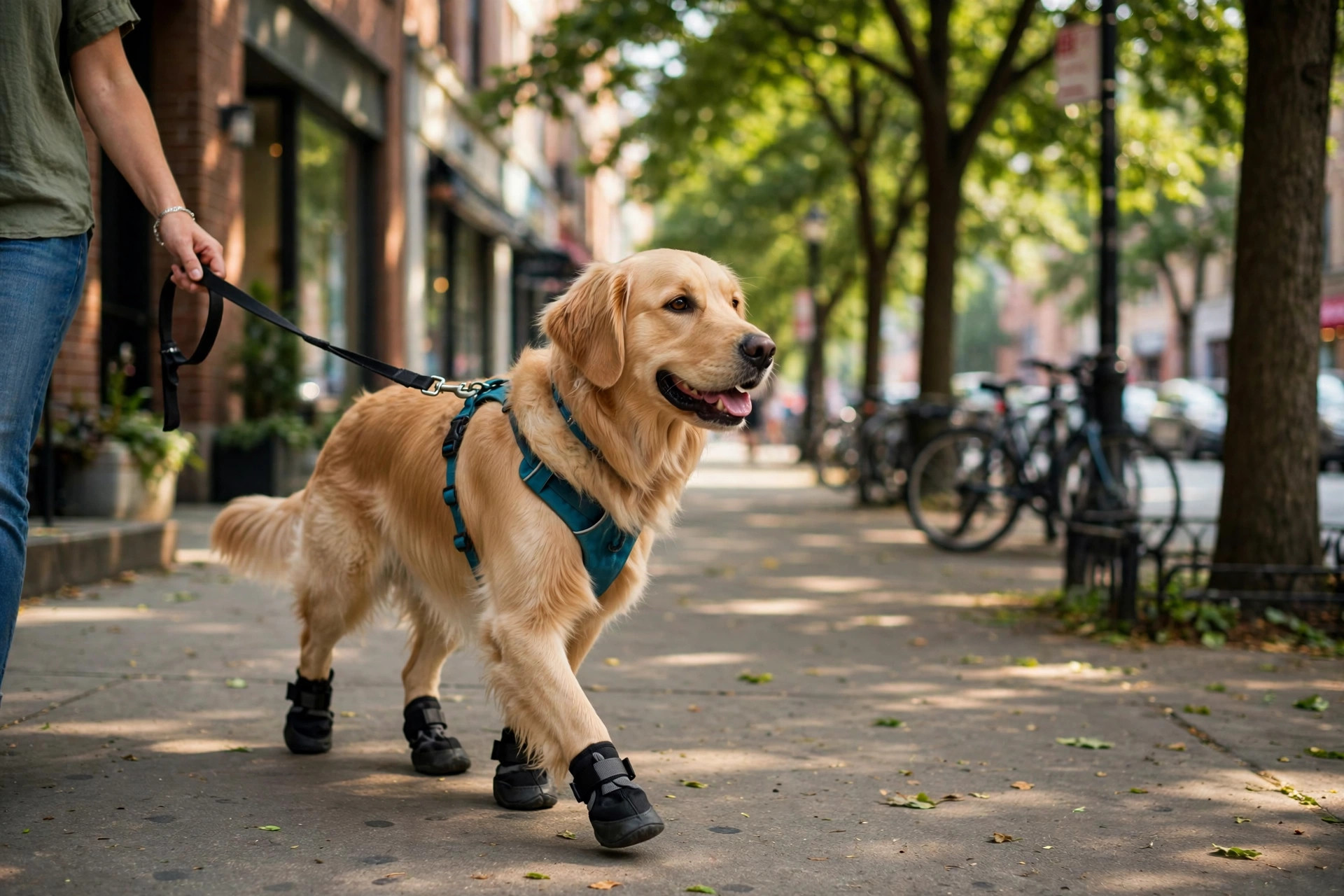
Asphalt does not care what the weather app says. On an 85°F afternoon, city asphalt in full sun can exceed 130°F — hot enough to blister paw pads in under a minute, while you stand comfortably in shoes wondering why your dog is dancing, limping, or refusing the crosswalk. Apartment dogs cannot choose a grassy detour; the sidewalk is the yard, the bathroom, and the exercise track. This guide gives you the test, the timing, and the gear that keep summer walks safe without canceling them.
The numbers: air temperature lies, surfaces tell the truth
Sun-heated surfaces run far hotter than the air. Commonly cited veterinary guidance places asphalt at roughly 125°F when air is 85°F in direct sun, and near 145°F when air reaches the mid-90s, with dark asphalt, fresh sealcoat, and metal surfaces (manhole covers, plates) running hotter still. Concrete is meaningfully cooler than asphalt, grass cooler than both, and shade can drop a surface 20–30 degrees over a few feet. Paw pads are tough but not shoes: prolonged contact above about 120°F risks burns, and dogs mask pain while excited, so injury often declares itself at home as licking, limping, or pads that look red, blistered, or peeled. Puppies, seniors, and dogs new to the city (soft pads) burn fastest.
Use the 7-second test every warm walk: press the back of your hand firmly to the sunniest surface on your route for seven seconds. If you cannot hold it comfortably, your dog cannot walk it comfortably. Test again mid-walk, because a cloudy morning route becomes a furnace on the return leg. When the test fails, the walk does not have to fail with it; the next sections are the workaround.
- Back of hand, seven seconds, sunniest patch. Fail means reroute, reschedule, or boot up.
- Walk before 10 a.m. and after 6 p.m. in heat waves; midday is a shaded bathroom break only.
- Boots are the only full protection. Wax helps with brief crossings, not with a hot mile.
- Carry water for drinking and for a paw rinse. Hot dogs cool poorly; shade and rest beat pushing home.
Timing and routes for apartment schedules
City dogs still need midday relief, so plan two tiers of outing in hot months. Full walks (30–60 minutes of exercise and sniffing) belong in the early morning, when surfaces have cooled overnight, and the evening after surfaces shed heat, roughly an hour after shade covers your route. Midday outings become five-minute shaded missions: the tree-lined side of the street, the grass verge, the covered parking lane. Choose concrete over asphalt, walk the building shadow line even if it adds a block, and let the dog choose grass whenever it exists. For the exercise gap this creates, move play indoors with the low-noise games and sniff work in our hot-weather exercise guide and the busy-owner schedule rather than borrowing cool by walking a hot mile at noon.
Heat risk is whole-dog, not just paws. Brachycephalic breeds, seniors, overweight dogs, and thick-coated dogs overheat quickly, and hot pavement radiates onto a body already close to the ground. Carry water and a collapsible bowl (our travel bottle guide compares leak-proof options), offer small drinks often, and know the stop signs: heavy panting that does not settle in shade, thick drool, disorientation, or a dog seeking to lie on cool surfaces and refusing to rise. Those mean shade, water, and a call to your vet, not a determined walk home. An indoor relief option for dangerous days, tested before you need it, is the responsible backup described in our high-rise potty guide.
Gear that works: boots first, wax second
Boots with real soles are the only gear that makes a hot route honestly walkable. Fit them indoors over several treat-filled sessions before the first hot day, because a dog learning boots on hot asphalt learns to hate both. These models are established and widely available, at typical US street prices in fall 2026:
| Option | Type | Typical price | Heat note |
|---|---|---|---|
| Ruffwear Grip Trex | Sole boot, pair/quad | Usually $40–$75 | Best heat barrier; secure for long walks. |
| Pawz Waterproof Boots | Disposable rubber | Usually $14–$20 / 12 | Thin but effective for short crossings; no insulation bulk. |
| Musher's Secret Wax | Paw wax barrier | Usually $15–$28 | Brief-contact help; reapply, not a boot substitute. |
| QUMY Dog Boots | Rugged sole boot | Usually $28–$42 | Budget sole; check strap fit on slim legs. |
Ruffwear Grip Trex is the summer standard: a Vibram sole insulates and grips hot concrete, the Velcro closure survives a city mile, and pairs let you replace a lost boot. Measure each paw (front and back often differ by a size) and expect a prancing first fitting. Pawz rubber booties look like balloons and work like condoms for paws: zero insulation value in cold, but the rubber layer blocks direct surface burn for short bathroom missions and stays on surprisingly well; carry spares because a snagged Pawz tears. Musher's Secret and similar beeswax blends reduce brief-contact sting and protect against hot sand or a single sunny crossing, but wax melts, wears in hundreds of steps, and must never justify a full hot walk. QUMY and similar rugged-sole boots suit budget households if straps fit your dog's leg shape; a boot that twists is worse than none. Whichever you choose, condition the dog to love the boots before July, store them by the door with the leash from our harness guide, and check between toes after every booted walk for trapped grit baking against skin.
The hot-day walk protocol
- Test at the door and mid-route. Back of hand, seven seconds, sunniest patch. Fail means shade route, grass, or boots, with no negotiation from the dog's enthusiasm.
- Keep crossings short. Cross asphalt to reach shade or grass rather than walking its length. Waiting for a light, stand the dog on a shaded patch, a grass edge, or your own shadow, never idling on sun-baked asphalt.
- Water and shade breaks. Offer water every 15–20 minutes in heat, rest in shade at any sign of lagging, and shorten the walk without guilt. A sniffy ten minutes in safe temperatures tires a dog more honestly than a forced hot march.
- Cool return. Rinse paws with room-temperature (never ice-cold) water at home, check pads, and let the dog rest on a cool floor. A cooling mat by the door closes the routine for dogs that run hot in stuffy apartments.
Recognizing and responding to a paw burn
Signs include limping or paw lifting during or after the walk, obsessive licking or chewing at a pad, red, blistered, darkened, or peeling pads, and reluctance to walk on hard floors at home. If you suspect a burn, move to shade or grass immediately, carry a small dog if possible to end contact, and cool the pads with room-temperature water for several minutes. Do not apply butter, oils, or human burn creams, and do not wrap tightly. Contact your veterinarian the same day for any blistering, peeling, bleeding, or limping that persists beyond the cooling period; pad burns infect easily and pain control matters. While healing, walk only on grass or in boots your vet approves, keep pads clean and dry, and use an indoor relief setup rather than testing toughness. Most mild cases heal in one to two weeks, but the dog will not warn you reliably next time, which is why the hand test remains the owner's job. In winter, the same paw-check habit catches salt irritation, covered in our companion guide on pet-safe ice melt from this batch.
The parking-lot rule: never leave a dog standing on hot asphalt while you chat, queue, or load a car. Humans shift weight in shoes without thinking; dogs absorb the full temperature in still contact. Meet on grass or shade, or keep the dog in the air-conditioned car with supervision per local law and safety guidance.
FAQ
How hot is too hot for dog paws on pavement?
If the back of your hand cannot rest comfortably on the sunniest surface for seven seconds, it is too hot for sustained paw contact. As a guide, asphalt near 125°F (common at 85°F air in sun) can burn with prolonged contact. When in doubt, choose shade, grass, concrete, cooler hours, or boots.
Does paw wax replace boots on hot sidewalks?
No. Wax reduces brief-contact discomfort and helps across a single sunny crossing or on hot sand for minutes, but it wears quickly and provides no insulation for a hot mile. Boots with soles are the protection for any route that fails the hand test for more than a crossing.
What time should I walk my apartment dog in summer?
Full walks before about 10 a.m. and after 6–7 p.m., adjusted by shade on your actual route. Midday should be a short, shaded bathroom mission only. Move exercise indoors on dangerous days and carry water on every warm walk, offering it often.
What should I do if my dog's paws look burned?
End pavement contact, cool with room-temperature water, avoid home remedies and tight wraps, and contact your veterinarian the same day for blistering, peeling, bleeding, or persistent limping. Walk only on grass or as your vet advises while pads heal, and use the hand test rigorously afterward; dogs do not reliably self-limit on exciting walks.