Best Indoor Dog Potty Solutions for High-Rise Living
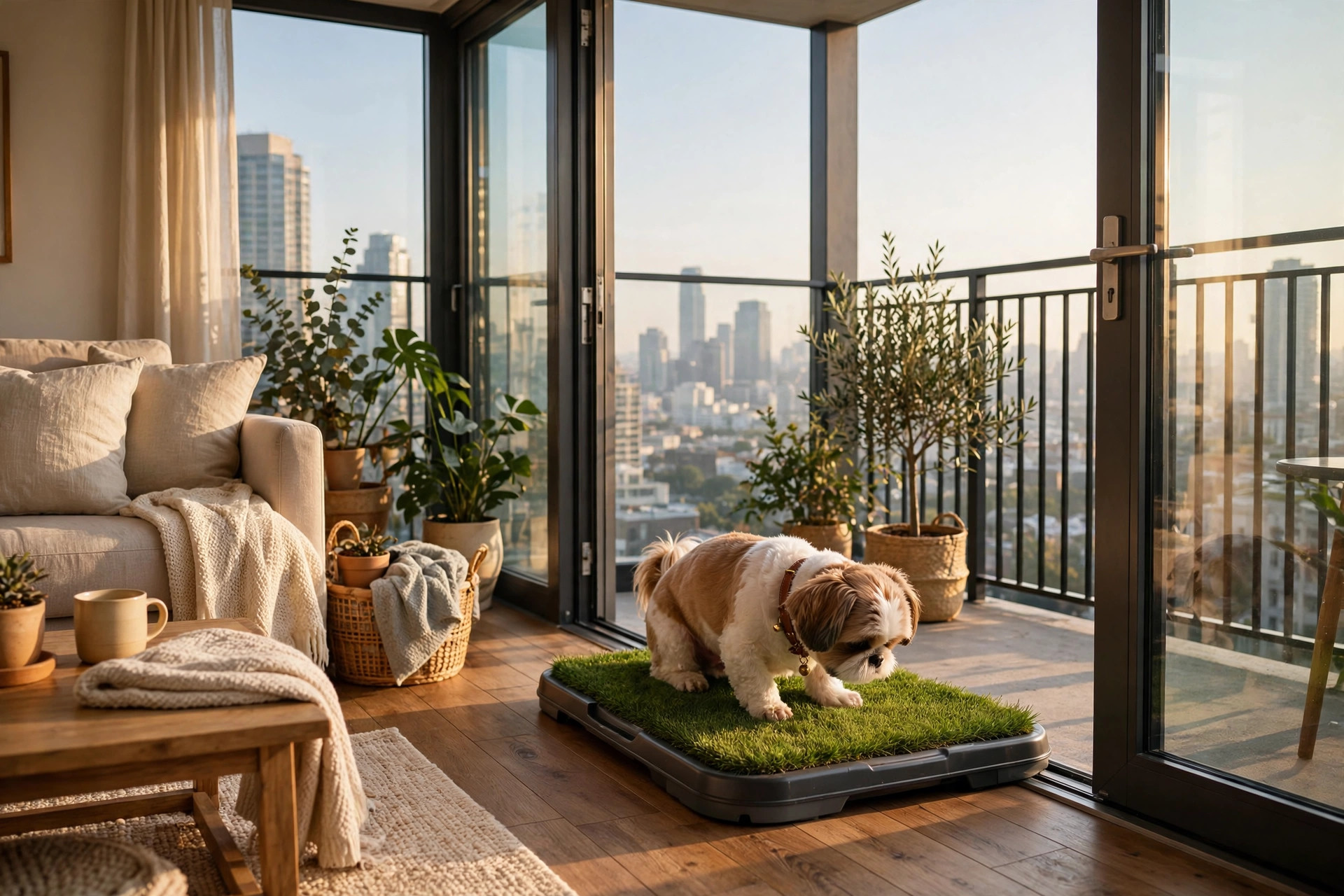
The elevator math is brutal: a 90-second ride down, a two-minute walk to the nearest patch of grass, and the trip back turns every bathroom break into a 10-minute round trip. For puppies, seniors, stormy nights, and post-surgery weeks, that math fails — and the dog pays for it with an accident on the rug. An indoor potty setup is the backup system that keeps everyone sane: the dog gets a dignified option, and you stop sprinting for the elevator at 3 a.m.
- Real grass boxes (Fresh Patch, DoggyLawn) win for most dogs: the scent is instinctive, so training takes days instead of weeks.
- Budget $30–$80 per month for grass subscriptions, or $120–$230 once for a self-draining tray like Porch Potty.
- Place the potty far from the bed and the food bowl. Dogs resist using a bathroom next to the kitchen — instinct, not stubbornness.
- Odor control is a cleaning schedule, not an air freshener: rinse or swap on cadence, and it stays apartment-safe.
- Puppies take to grass almost instantly. Adult dogs need one to two weeks of patient retraining — the plan below works.
The high-rise bathroom math: why indoor matters
Work through the numbers before deciding this is a luxury. A typical high-rise elevator cycle — call, ride, lobby, door — takes 2 to 4 minutes each way depending on floor, elevator count, and time of day. Add the walk to a legal relief spot and one break costs 8 to 12 minutes. Three to four breaks a day is 30 to 45 minutes of your life, every day, mostly spent standing in a hallway.
Then compare it to the dog's bladder. The loose rules: puppies can hold it roughly one hour per month of age (a 4-month-old puppy gets about 4 hours), healthy adults manage 6 to 8 hours, and seniors or dogs on diuretics often need a break every 3 to 4 hours. The mismatch is where accidents happen — not because the dog is badly trained, but because the building's plumbing is vertical. An indoor option removes the tightest deadlines: the 6 a.m. scramble, the midnight storm, the elevator that gets stuck on the 22nd floor.
It is also worth naming who benefits most: puppies in pre-vaccination weeks (many vets advise avoiding shared dog areas before shots are complete), dogs recovering from spay/neuter surgery with limited stair use, senior dogs whose legs fail before their bladders do, and owners who work long shifts. If none of those describe your household and your dog cruises to 8 hours comfortably, you may not need one. Everyone else should read on.
Five indoor options, honestly compared
Every product below is widely sold in the US with an established track record — no crowdfunding experiments. Prices are typical street prices and shift with subscriptions and sales.
| Solution | What it is | Typical cost | Best for |
|---|---|---|---|
| Fresh Patch | Hydroponically grown grass in a box | Usually $30–$76 per delivery | Dogs that already prefer grass; fastest training |
| Porch Potty | Self-draining tray with grass or synthetic turf | Usually $119–$229 one-time | Owners who want one purchase and minimal fuss |
| Bark Potty | Natural bark-chip box, fully disposable | Usually $39–$90 per box | Odor-sensitive apartments; bark lasts ~1 month |
| DoggyLawn | Farm-grown grass subscription | Usually $33–$77 per delivery | Rotation users; slightly heartier grass |
| Washable pee pads | Reusable absorbent pads (Pet Magasin, Simple Solution) | Usually $15–$30 for a multi-pack | Budget setups and early house-training |
Fresh Patch — the fastest training option
Fresh Patch ships a cardboard tray of hydroponically grown grass, no soil, sized from 16 x 24 inches ($30–$38) up to 24 x 48 inches ($60–$76). Because it smells like the outdoors, most dogs need almost no convincing — this is the go-to recommendation in high-rise dog groups for that reason. The trade-off is cadence: one box lasts 1 to 2 weeks for a single dog (less for large breeds or multiple dogs), so it is a recurring cost of $60–$150 a month. Subscribe and you set the delivery interval; pause anytime. The boxes are compostable, which matters if your building sorts waste.
Porch Potty — the buy-once system
Porch Potty is a rigid tray with a drainage system: liquid flows into a removable reservoir (or drains through a hose on the outdoor model) instead of pooling under the grass. The Standard runs $119–$169 and the Premium $189–$229; you then use real grass on top or their synthetic turf. Where it earns the price: the reservoir empties in seconds, which beats carrying a sodden grass box to the trash chute. Add their sprinkler kit ($30–$50) and cleanup is nearly hands-off. Best for owners who hate the weekly replacement ritual of subscription grass.
Bark Potty — the odor sleeper pick
Bark Potty is a box of shredded bark and natural fibers that absorbs liquid and suppresses odor far longer than grass — most users get about a month per box. Sizes run roughly $39–$90 depending on footprint. It is the quiet favorite for studio and one-bedroom apartments where smell is the number-one concern, and for chewers who shred grass patches for sport. The catch: bark feels and smells nothing like a lawn, so grass-trained dogs sometimes need a week of adjustment, and at $40+ a month it is not cheaper than grass — just less smelly.
DoggyLawn — the subscription alternative
DoggyLawn is farm-grown grass cut to order, in a soil-free hydroponic tray like Fresh Patch. Pricing is similar: about $33–$77 per delivery depending on size, with weekly or biweekly subscriptions. The grass tends to be slightly thicker and heartier, which large-dog owners notice — a 50-pound dog destroys thin hydroponic grass in days. If Fresh Patch feels flimsy for your dog, DoggyLawn is the natural second try rather than a whole different approach.
Washable pee pads — the budget entry
A multi-pack of washable pads from brands like Pet Magasin or Simple Solution costs $15–$30 and lasts months if you own four to six pads and rotate them. They do not smell like grass, so training takes longer, and they need a waterproof layer underneath for hardwood floors. Where they genuinely make sense: early house-training when accidents are frequent and pads are sacrificial, or as a backup layer under a grass box. They are not the long-term answer for most high-rise setups, but they are the cheapest way to start today.
Matching the solution to your dog and your floor
Size comes first. A 16 x 24 inch patch is plenty for a chihuahua or a cat-sized terrier; a 35-pound dog needs at least 24 x 24, and a 60-pound lab mix wants 24 x 36 or larger, or the dog will hang off the edge and miss. Measure twice — a patch the dog can't fully stand on is a patch the dog won't use.
Then consider the dog's personality. Shredders and diggers destroy subscription grass within days; those dogs do better on Bark Potty or a Porch Potty with the turf option, where there is nothing to tear up. Grass-trained adults adapt fastest to real grass and may reject bark entirely for the first week. Puppies are the easy case: put the grass down, praise like they invented it, and most figure it out in a day or two. If crate training is also on your agenda, place the potty outside the crate, not inside — dogs avoid soiling their sleeping space, and our dog crate setup guide covers the placement logic in detail.
Renters: put a waterproof barrier under everything, even "no-leak" systems. A $15 washing-machine drip pan or a boot tray under the potty protects hardwood and laminate from the one leak that happens eventually, and it is the cheapest insurance against deposit disputes.
The 10-foot rule: put the potty at least 10 feet from where the dog sleeps and eats, ideally in a quiet corner the dog already passes through. Bathrooms, laundry nooks, and the far end of a balcony all work. Next to the front door is the worst spot — too much foot traffic, too much excitement.
Odor and hygiene: the part nobody budgets for
Every indoor potty thread eventually becomes an odor thread, and the answer is always cadence, not products. Solid waste goes in a bag and out to the trash immediately — no product fixes a pile sitting for six hours. Liquid is where the systems differ: grass boxes wick it into the grass and tray liner, so the whole box needs replacing every 7 to 14 days (stretch to 3 weeks and the smell turns). Porch Potty's reservoir gets emptied daily; Bark Potty gets stirred weekly and replaced monthly.
For daily maintenance, keep an enzymatic cleaner by the setup — Nature's Miracle ($10–$20) or Rocco & Roxie ($15–$25) both break down urine proteins instead of masking them, which is what actually stops a dog from re-marking the same corner. Spray the tray between grass swaps; wash reusable pads on hot with a cup of white vinegar. A thin layer of baking soda under the tray liner buys an extra day of freshness in warm weather.
Studios need one extra move: ventilation. A bathroom exhaust fan or a window cracked 2 inches near the potty does more than any scented plug-in — and plug-ins near a dog's nose are a bad idea anyway. If odor is a recurring theme across your apartment, our guide on reducing dog smell in small apartments covers the whole-apartment playbook.
The two-week training plan for adult dogs
Puppies usually need no plan — set the grass down and celebrate. Adult dogs who have spent years holding it for the elevator need retraining, and this sequence works for most within 10 to 14 days:
- Days 1–3: introduction, zero pressure. Place the potty in its final spot and let the dog sniff it freely. Put it next to the leash and shoes before walks — the dog will start associating it with the bathroom routine. No luring, no commands yet.
- Days 4–7: scheduled visits. After meals, naps, and play, walk the dog to the potty on leash and give your usual outdoor cue ("go potty"). The moment the dog uses it, reward with a high-value treat — real chicken beats kibble for this. If nothing happens in 5 minutes, go back inside and try again in 20.
- Days 8–14: fade the leash. Start sending the dog to the potty without the leash, keeping the treat payoff. Most dogs are independent by day 10; slow down if the dog still waits for you.
Three failure modes to watch: moving the potty around the apartment (pick a spot and commit), scolding accidents (it teaches the dog to hide, not to use the potty), and inconsistent rewards — pay every success for the first month, then taper. Dogs that learned on grass outdoors almost always prefer grass indoors; if yours refuses bark or pads after a week, switch to grass before blaming the dog.
FAQ
Will an indoor potty confuse my dog about going outside?
No — dogs distinguish locations just fine. The indoor spot becomes a weather-and-schedule backup, and most high-rise owners keep the outdoor walks anyway. The confusion risk only appears if the indoor potty sits next to the door the dog uses for walks, so keep them separated.
How often does subscription grass need replacing?
Every 7 to 14 days for one dog; large breeds and multi-dog homes go through a box in about a week. Stretching past 3 weeks is false economy — the grass dies, the smell rises, and the dog starts avoiding it.
My dog shreds the grass patch instead of using it. What now?
Switch to something unshreddable: Bark Potty or a Porch Potty with the synthetic turf topper. Then add a 10-minute chew session before potty visits — many shredders are just under-stimulated, and a tired jaw leaves the grass alone.
Is indoor potty okay for a puppy before vaccinations are complete?
Many vets actually prefer it: until shots are complete, shared elevator lobbies and dog areas carry real disease risk for puppies. An indoor grass setup keeps the puppy's world clean while house-training starts early. Confirm the timeline with your own vet.