Best Small Dog Harnesses for City Walks
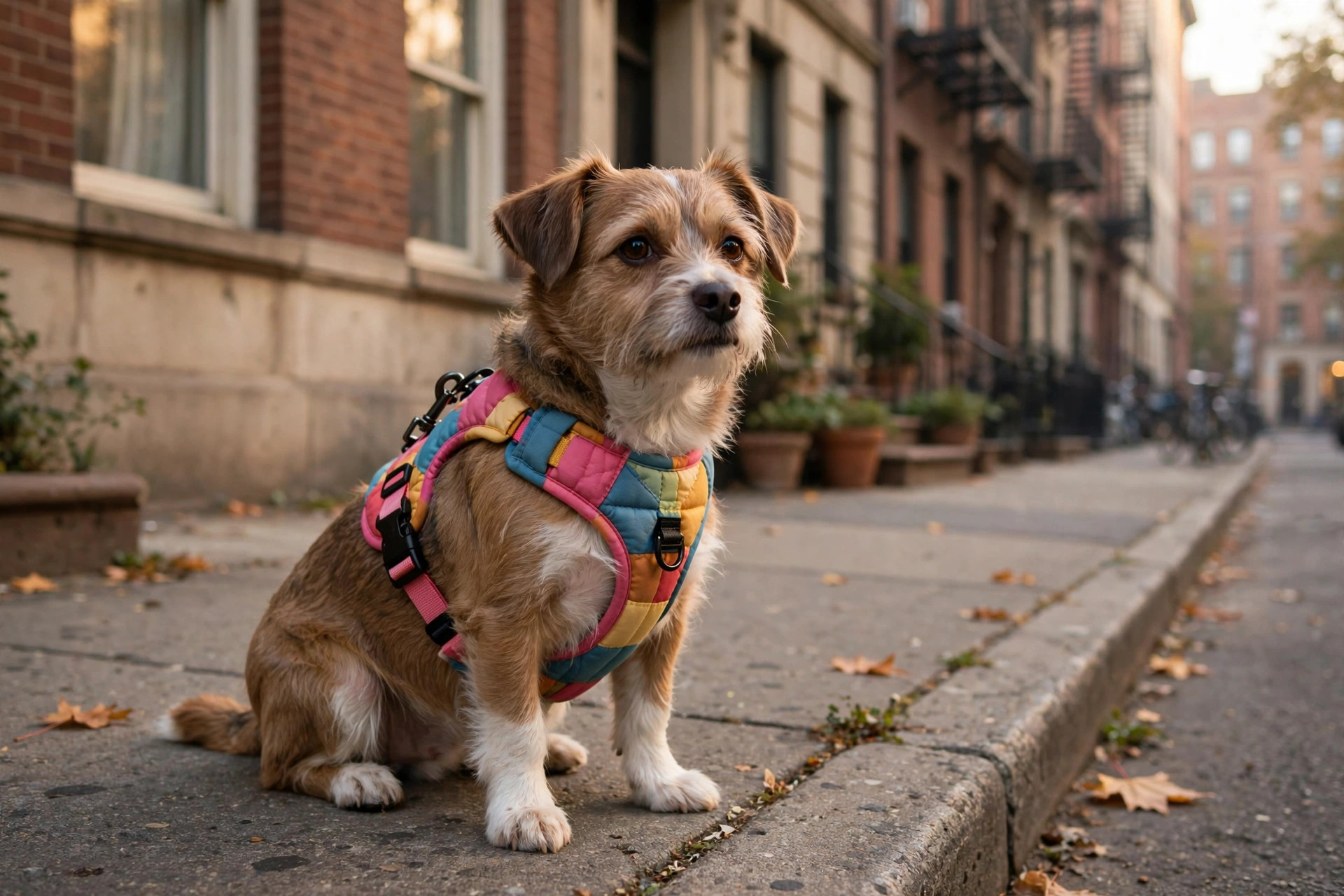
A 12-pound dog on a downtown sidewalk lives at ankle height in a world of scooters, stroller wheels, and sudden door swings. A collar puts every startled lunge on the throat; a badly fitted harness lets a small dog back straight out of it. The best small dog harness for city walks solves both problems at once: pressure spread across the chest, a fit a spooked dog cannot reverse out of, and a handle or front clip that gives you steering without a wrestling match.
- Measure chest girth behind the front legs, not weight. Most small-dog escapes happen because the girth was guessed from a breed chart.
- Step-in mesh wins for daily comfort; a dual-clip harness with a front ring wins for pullers and reactive dogs.
- Budget $16–$40 for a good everyday harness. Reflective trim and a top handle are worth it on night walks.
- Two-finger rule: snug enough that you cannot twist the harness sideways, loose enough for two fingers flat under any strap.
Fit first: the three measurements that prevent escapes
Small dogs escape harnesses in one specific way: they plant their front feet, drop their shoulders, and back up while you are still moving forward. Any harness that relies on a single chest strap will lose that contest. Escape resistance comes from geometry, not tightness: a strap that sits behind the ribcage, a neck opening the head cannot slip through when the dog reverses, and no stretch in the webbing.
Before you look at brands, take three numbers with a soft tape while your dog is standing:
- Chest girth — around the widest part of the ribs, about an inch behind the front legs. This is the sizing number every brand uses. A 14-inch girth and a 16-inch girth are different sizes even if both dogs weigh 11 pounds.
- Neck base — low on the neck where a collar would sit loosely. Harness neck openings should clear this without sliding down onto the shoulders.
- Back length — base of neck to base of tail. Useful for vest-style harnesses that can bunch or ride up on short-backed dogs like Dachshunds and Corgi mixes.
Then do the sidewalk test at home: clip the leash on, walk to the end of the hall, and gently keep walking while your dog stops. A well-fitted harness stays centered. If the whole thing rotates 30 degrees or the neck opening gapes, size down or change styles before the first real walk. Our guide to leash training for crowded sidewalks shows the handling that pairs with a good fit.
Five harnesses that hold up on city sidewalks
Each pick below is a long-running, widely available model with replacement sizing that is easy to reorder. Prices are typical US street prices in fall 2026 and move with sales. We judged on escape resistance, chest padding for thin-coated small breeds, hardware that works with cold or gloved hands, and how the harness behaves when a dog hits the end of the leash sideways — the classic pigeon-or-squirrel moment.
| Model | Style | Typical price | City-walk strength |
|---|---|---|---|
| Puppia Soft Dog Harness | Step-in mesh vest | Usually $16–$24 | Softest on thin chests; best first harness. |
| Ruffwear Hi & Light | Dual-clip padded | Usually $35–$45 | Front clip steering; lightest trail-grade build. |
| Voyager Step-In Air | Step-in mesh | Usually $15–$22 | Triple closure; strong budget escape resistance. |
| Gooby Escape Free Easy Fit | Neoprene-framed | Usually $22–$32 | Tightens gently when the dog pulls forward. |
| Blueberry Pet Step-In | Step-in polyester | Usually $18–$28 | Wide pattern range; easy to spot at night. |
Puppia Soft Dog Harness — the comfort default
The Puppia Soft is the harness groomers and small-dog rescues hand out first, and for good reason: the air-mesh vest spreads pressure over a broad padded panel instead of two narrow straps, so Chihuahuas, Italian Greyhounds, and other thin-skinned dogs do not chafe on a 30-minute walk. It steps in and closes with Velcro plus a buckle, which matters when you are gearing up in a small entryway with a dog spinning in circles. Limits: the Velcro loses grip when caked with winter grit, and determined backer-outers can defeat a worn closure — replace it yearly if you walk in slush, and pair it with the backup tab in the Voyager below if your dog is a known escape artist. Pair it with a city raincoat that has a harness portal so you are not layering straps over wet nylon.
Ruffwear Hi & Light — the steering pick
At roughly half the weight of Ruffwear's Front Range, the Hi & Light is built for small frames: four points of adjustment, a front chest clip that turns a lunging dog gently sideways instead of letting them lean into the pull, and a rear clip for relaxed sniff walks. The front clip is the city feature. On a narrow sidewalk with an approaching stroller, a light sideways redirect beats a backward drag every time, and it protects the trachea better than any collar correction. It costs more, but the aluminum hardware does not freeze up in January and the shell sheds rain instead of soaking through. If your dog is reactive in elevators and lobbies, this plus the handling in our elevator etiquette guide is the calmest combination we recommend.
Voyager Step-In Air — the budget escape resistor
Voyager closes three ways: Velcro, a buckle, and double D-rings that take the leash load off the fabric entirely. That redundancy is why it survives the plant-and-back-up test better than most mesh vests at twice the price. The all-weather mesh dries fast after a rainy walk — hang it on a hook by the door and it is ready for the evening round. Sizing runs small; most 10–14 pound dogs with deep chests need the size the chart suggests for a heavier dog, so trust your girth tape over the weight column. Reflective piping is standard, which helps drivers see a low dog at dusk crosswalks.
Gooby Escape Free Easy Fit — for dedicated backer-outers
Gooby's frame is neoprene edged with a strap that snugs down a fraction when the dog pulls forward, then relaxes when the leash is slack. It does not choke; it simply removes the slack a dog uses to start a reverse escape. The fit window is narrower than the others, so measure carefully and expect to exchange once. Owners of Houdini-grade Yorkies and Papillons swear by it for vet-visit walks and fireworks-season outings when startle risk is highest. It is not the softest on bare skin, so short-coated dogs do better with a thin tee underneath in winter.
Blueberry Pet Step-In — the visible, washable spare
Every city dog needs a second harness for the day the first one is in the wash or soaked through. Blueberry's step-in is that spare: sturdy polyester webbing, bright patterns that read well under streetlights, and a price that makes owning two painless. It lacks a front clip and the padding is thinner, so it is not the training pick — but as a clean, dry backup hanging by the door, it prevents the worst small-apartment outcome, which is skipping the walk because the only harness is still damp.
What to skip
Retractable leash plus harness combos with thin cord housings, no-name harnesses sized only by weight (S/M/L with no girth chart), and any harness whose neck opening is larger than the dog's head circumference. If the listing does not publish a girth range in inches, do not buy it for city use.
The sidewalk system: harness, leash, and handling together
A harness is only half the setup. In apartment buildings, most pulling incidents happen in the same three choke points: the elevator, the lobby door, and the first ten feet of sidewalk where every neighborhood dog has left a headline. Keep a 4–5 foot standard leash for these zones (a 6-footer is fine mid-block) so the dog stays in the steering range of a front clip. Clip to the front ring in choke points and switch to the back ring once you have open sidewalk — dogs learn the geography within a week and relax when the clip moves.
Two handling rules multiply the value of any harness above. First, stop before the lunge: when you see the trigger (another dog, a skateboard), shorten the leash by gathering it, not by wrapping it around your hand, and step sideways to create distance. Second, protect the chest on stairs: small dogs in vests can be lifted briefly by the harness handle or back panel for a crowded stairwell, but only if the harness is rated for it — of the picks here, only the Ruffwear is built for repeated lift assists. For daily paw care after those walks, see our winter boots guide and hot pavement guide in this batch.
The lobby test: if you cannot get the harness on, clipped, and out the door in under 60 seconds with the dog wiggling, you will start dreading walks. Step-in styles win apartment life because they remove the over-the-head negotiation entirely.
Washing and rotation in a small apartment
City harnesses pick up salt, diesel film, and sidewalk grit that break down mesh and Velcro. Rinse in the sink after slushy walks, wash on gentle every 2–3 weeks, and air-dry on a hook — never the dryer, which warps buckles and kills elastic. Keep the spare by the entryway with the leash already clipped so a wet morning does not turn into a missed bathroom break on the hall carpet. If your entryway is tight, our entryway setup guide shows a two-hook system that fits on a single door.
FAQ
Harness or collar for a small dog in the city?
Harness for walks, collar for ID only. Small breeds have delicate tracheas, and a single startled lunge on a collar can cause lasting cough. A chest-spreading harness gives you steering without throat pressure, and the collar stays on as a backup ID carrier if the dog ever slips.
How tight should a small dog harness be?
Snug enough that two fingers lie flat under the strap but cannot bunch, and the vest does not rotate when the dog shakes. After clipping, try the backup test: gentle steady leash pressure while the dog plants and leans back. Movement of an inch is normal; a shoulder slipping toward the neck opening is not.
Front clip or back clip for a puller?
Front clip for training and crowded zones because it redirects sideways; back clip for relaxed sniff walks once loose-leash habits exist. Dual-clip harnesses like the Ruffwear Hi & Light let you switch by location without changing gear.
Can my small dog wear a harness all day in the apartment?
No. Even soft mesh traps moisture and rubs armpits during indoor play and naps. Harness for walks and training, off at home. Dogs that wear vests indoors also learn to ignore the gear, which makes the walk signal less clear.