Elevator Etiquette With a Reactive Dog
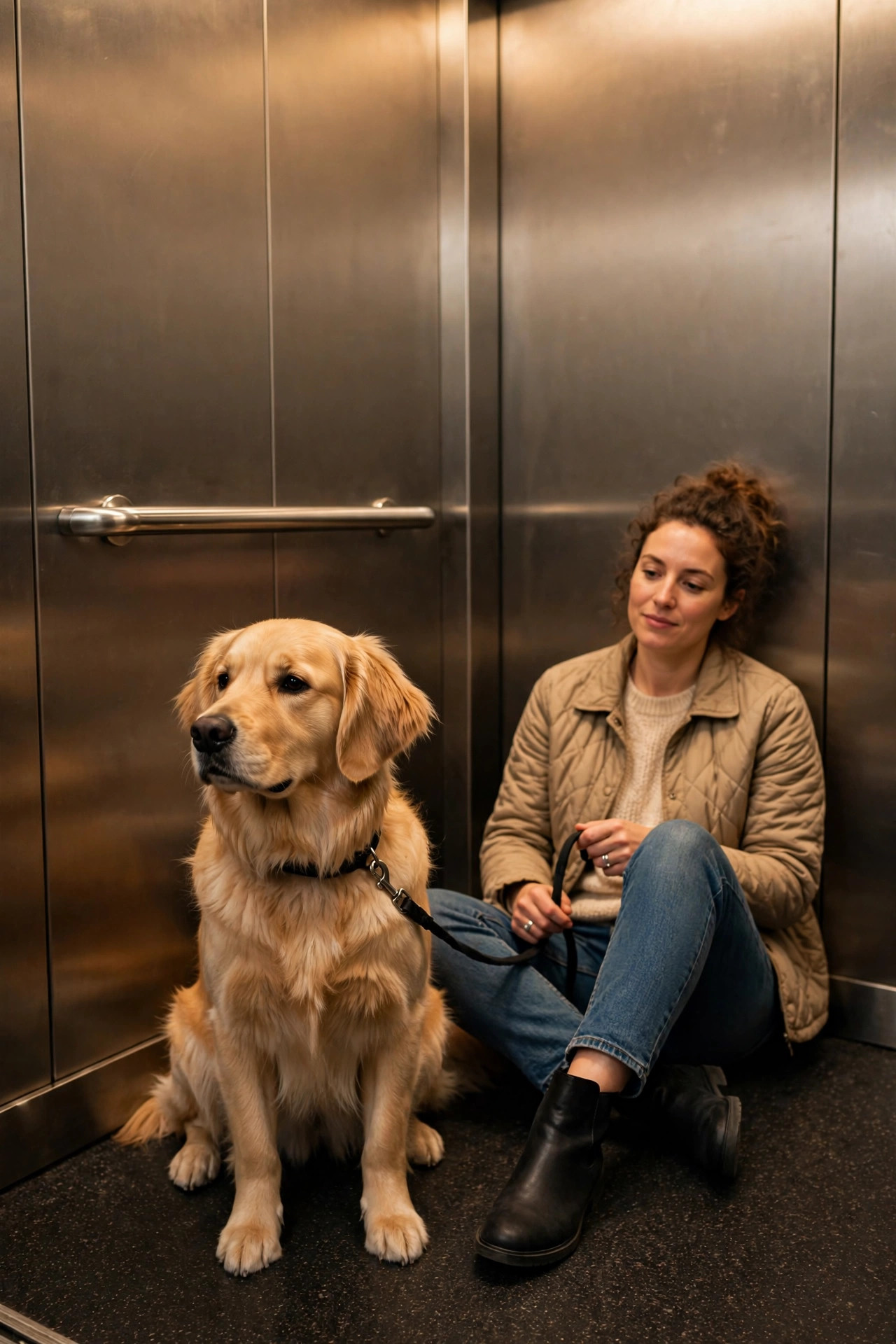
The elevator removes the one tool reactive-dog training runs on: distance. This guide replaces it with position, ritual, and rehearsed phrases — a corner system, a treat magnet, and a 2–4 week progression that makes the hardest ten feet of the day boring.
Why elevators are the hardest ten feet in a reactive dog's day
A reactive dog can be making real progress on walks and still fall apart in the elevator, and the reason is architectural: the elevator is the one place where distance — the tool every reactivity protocol runs on — is set by the building instead of by you. The doors open on a dog you did not see coming, the cab gives you four feet when your dog needs fifteen, the ride lasts exactly long enough for staring to escalate, and the lobby deposits you into a crowd at the door. If you live above the third floor, you run this gauntlet four to six times a day. It deserves its own protocol, and it deserves it before the next ride, not after the next lunge.
Start by reframing what success looks like. Elevator success for a reactive dog is not friendliness and it is not even calm — it is boredom: a dog that rides in its corner, looks at you when asked, and exits without an opinion about the other passengers. That is trainable, and it is trainable in most buildings within a few weeks of short, deliberate practice. What it requires is a consistent position, a consistent exit order, a few rehearsed phrases for neighbors, and honest scheduling around the building's rush hours.
Two ground rules before the technique. First, if your dog has ever bitten or come close, a basket muzzle conditioned positively over 1–2 weeks is part of elevator equipment ($20–$35), not a stigma — it converts every ride from risk management to training, and neighbors read it correctly as responsibility. Second, know your building's alternatives: the stairwell, the service elevator, and the low-traffic hours are all legitimate parts of the system. The goal is reliable, relaxed exits — not winning the main elevator at 8:30 a.m. on a Monday.
The position system: corner, orientation, and the treat magnet
Every ride should look the same. Dogs — reactive ones especially — relax into rituals, and the elevator ritual that works has three elements: a fixed corner, a fixed orientation, and a continuous job for the dog's mouth and eyes.
- Claim the back corner furthest from the door. Enter, turn, and back your dog into the corner so its body faces the door at an angle rather than squaring up to it. You stand between your dog and the cab's center — your body is the first visual barrier, the leash is short (1–2 feet of slack, never taut, because a taut leash transmits your tension straight to the dog), and your dog's world becomes: corner, your legs, treat. Other passengers enter facing a person's back, not a staring dog.
- Face the dog toward the wall if needed. For dogs whose reactivity is visually triggered, facing the corner with you dispensing treats is not a punishment; it is distance by other means. Many dogs visibly exhale when the visual problem is removed. If your dog rides better watching the door, fine — the rule is 'the orientation in which your dog can eat treats,' because a dog that can eat is a dog under threshold.
- Run the treat magnet for the whole ride. Small, high-value treats delivered every few seconds (the same extraordinary tier as your sidewalk kit — cheese, hot dog, freeze-dried meats), or a lickable tube ($8–$14) the dog works continuously. Licking and chewing are incompatible with fixating and lunging. On a 40-second ride, expect to spend 6–10 small treats; that is the price of a boring elevator, and it is cheap.
- Exit last, or first — but decide as a rule. Most reactive dogs do best exiting last: let the cab empty, then walk out on a loose leash into a lobby you can see. If the lobby is the problem (crowds at the door), exiting first, immediately, before the cluster forms wins instead. Pick the one your building's geometry favors and make it the house rule, so the dog can predict the ride's shape.
- High-value treats, enough for a full ride, every ride.
- Short leash setup: standard 4–6 ft leash, never a retractable in the cab.
- Basket muzzle if bite history exists, conditioned in advance.
- Optional: 'in training, needs space' leash sleeve ($8–$15) — it speaks so you do not have to.
Scripts for neighbors: the four phrases that run the system
Most elevator stress is social, not canine: the neighbor who advances cooing at your dog, the owner who lets their dog tow them across the cab for a greeting, the offended stranger when you ask for space. Rehearsed, cheerful, non-negotiable phrases remove the improvisation that makes these moments awkward — deliver them early, smiling, while moving your dog rather than after your dog has reacted.
- At the doors, before entering: 'We'll catch the next one, thanks!' — said as you step aside and let the car go. This is the single most valuable elevator habit for reactive dogs: skipping a car costs 90 seconds and prevents the entire category of too-close encounters. Use it without apology whenever the cab holds a dog your dog cannot handle yet. You do not owe anyone an explanation of your training.
- When someone moves to enter with a dog: 'Come on in — we're in training, so we'll stay tucked in our corner.' It welcomes the person, sets the geography, and frames your dog's corner-keeping as a project rather than a problem. Most people respond by keeping their dog short and their body between — which is all you ever needed.
- When a greeting is proposed: 'She's not doing hellos right now, but thank you.' Then treat your dog. The 'right now' and the 'thank you' do the social work; the treat does the dog work. Do not negotiate at length while two dogs stare at each other — short answer, eyes back to your dog, ride continues.
- When something goes wrong anyway: 'Sorry about that — we're working on it' as you exit at the next floor. Getting out one floor early and taking the stairs the rest of the way is not defeat; it is the pressure valve that keeps a bad ride from becoming a lobby incident, and it gives your dog a success (leaving) to end on.
A quieter note on etiquette in the other direction: stand so your dog does not block the buttons, keep the leash off the floor where doors and feet tangle, and if your dog does bark, do not apologize in a continuous stream while tightening the leash — treat, breathe, exit. Neighbors take their emotional cue from you far more than from the dog. The same composed scripting helps with the hallway negotiations in handling off-leash encounters, where distance is available but manners still matter.
The training progression: from empty cabs to rush hour in 2–4 weeks
Do not debut the full system at 8:30 on Monday. Build the ride in stages, at the building's quiet hours first (mid-morning and mid-afternoon in most buildings), with each stage repeated until it is boring before advancing. Most dogs complete the progression in 2–4 weeks of short daily practice folded into real potty trips.
- Stage 1 — the parked elevator (days 1–4). Ride empty cabs: in, corner, treat magnet, out. Two or three rides a day that are only rides. You are teaching 'elevator = corner = treats' with zero social content. End every ride with the exit ritual so the whole loop becomes one behavior.
- Stage 2 — people, no dogs (days 4–10). Ride with human passengers at quiet hours. If your dog can eat treats and glance at you with people aboard, the visual system is working. Any ride where the dog stops eating is information: that configuration was over threshold, so drop back half a stage rather than pushing through.
- Stage 3 — one calm dog, maximum distance (week 2–3). Choose rides with dogs you know are neutral, take your corner, and let the other owner keep theirs. Skipping cars is still allowed and still smart — pick your repetitions like a trainer, not like a commuter. The first time your dog notices a dog, looks back at you, and eats, the system has clicked; pay that moment extravagantly.
- Stage 4 — real life, with valves (week 3+). Normal hours, with the skip-a-car rule and the early-exit rule permanently in place. Progress in reactivity is not measured by enduring the worst ride; it is measured by the valves never being needed. Track it loosely: rides per week with any reaction. When that number trends to zero, the elevator has become what it should be — the most boring ten feet of the day.
Throughout, protect the dog's wider training: elevator work fails if the dog is already over threshold from a chaotic hallway or lobby, so sequence the whole exit — door, hallway, elevator, lobby — as one calm chain, using the landing-zone and threshold habits from our entryway setup guide. And if progress stalls or the dog is a bite risk, a certified behavior professional (look for CAAB or a veterinary behaviorist; one to two sessions typically run $150–$400) will spot the variable you are missing faster than another month of solo reps.
Building strategy: stairs, service elevators, and schedules
Technique wins rides; strategy wins months. Three building-level decisions determine how often your technique is even tested.
Schedule against the rush. Every building has two daily surges — roughly 7:30–9:00 a.m. and 5:30–7:30 p.m. in commuter buildings. Shifting your main walks 20 minutes earlier or later can halve your elevator encounters at zero cost, and it is the change owners most often report as transformative. The midday and late-evening rides then become your natural training reps at low difficulty.
Claim the alternatives without guilt. Stairs for two or three floors are not a failure of elevator training; they are a sensible route on the days the lobby is hosting a birthday party, and they are free exercise. A service or freight elevator, where the building allows pet use, is a legitimate low-traffic option — ask management once, politely, and accept the answer as permanent policy rather than a grievance. Some buildings will also agree to let reactive-dog owners use a side entrance; you will not know until you ask with a training plan in hand, which is a very different conversation from asking after an incident.
Recruit the building gently. Doormen, concierges, and the neighbors on your floor become allies when they know the system: 'we're training; we'll always wait for the next car if yours looks full' makes you the considerate owner rather than the problem owner, and people begin holding cars, warning you about the loose dog on 4, and keeping their dogs short without being asked. That social infrastructure is worth more than any single technique in this guide, and it is built entirely out of the four phrases above, used consistently.
Final measure: elevator etiquette with a reactive dog is not about producing a dog that loves elevators. It is about producing rides so routine that nobody in the building — including your dog — remembers them. Corner, treats, last out, skip when needed. Boring is the goal, and boring is achievable.
FAQ
Should I just always take the stairs with a reactive dog?
Stairs are a valid tool for a few floors and a smart pressure valve, but total avoidance prevents training and is impractical in high-rises. The stronger strategy is staged elevator practice at quiet hours plus scheduling around rush hour, keeping stairs as the occasional alternative rather than the permanent rule.
Is a muzzle a good idea for elevator rides?
If there is any bite history or close calls, yes — a properly fitted basket muzzle, conditioned with treats over 1–2 weeks so the dog wears it happily. It lets you train calmly instead of managing risk, and neighbors generally read it as responsible ownership.
What do I say when someone insists their dog is friendly and advances for a greeting?
Use the short, cheerful script: 'She's not doing hellos right now, but thank you,' while treating your dog and turning it toward your corner. Do not debate. If they persist, exit at the next floor. Your dog's threshold matters more than the social moment.
My dog is fine with people but loses it at dogs in the cab. Can I still ride with people?
Yes — that is exactly Stage 2 of the progression, and most dogs can reach it within the first week. The skill you are building is the corner-and-treats ritual with mild distraction, which then transfers when the distraction becomes a dog. Skip cars with dogs until Stage 3 rather than flooding the dog early.