Best Small Dog Winter Coats for City Walks
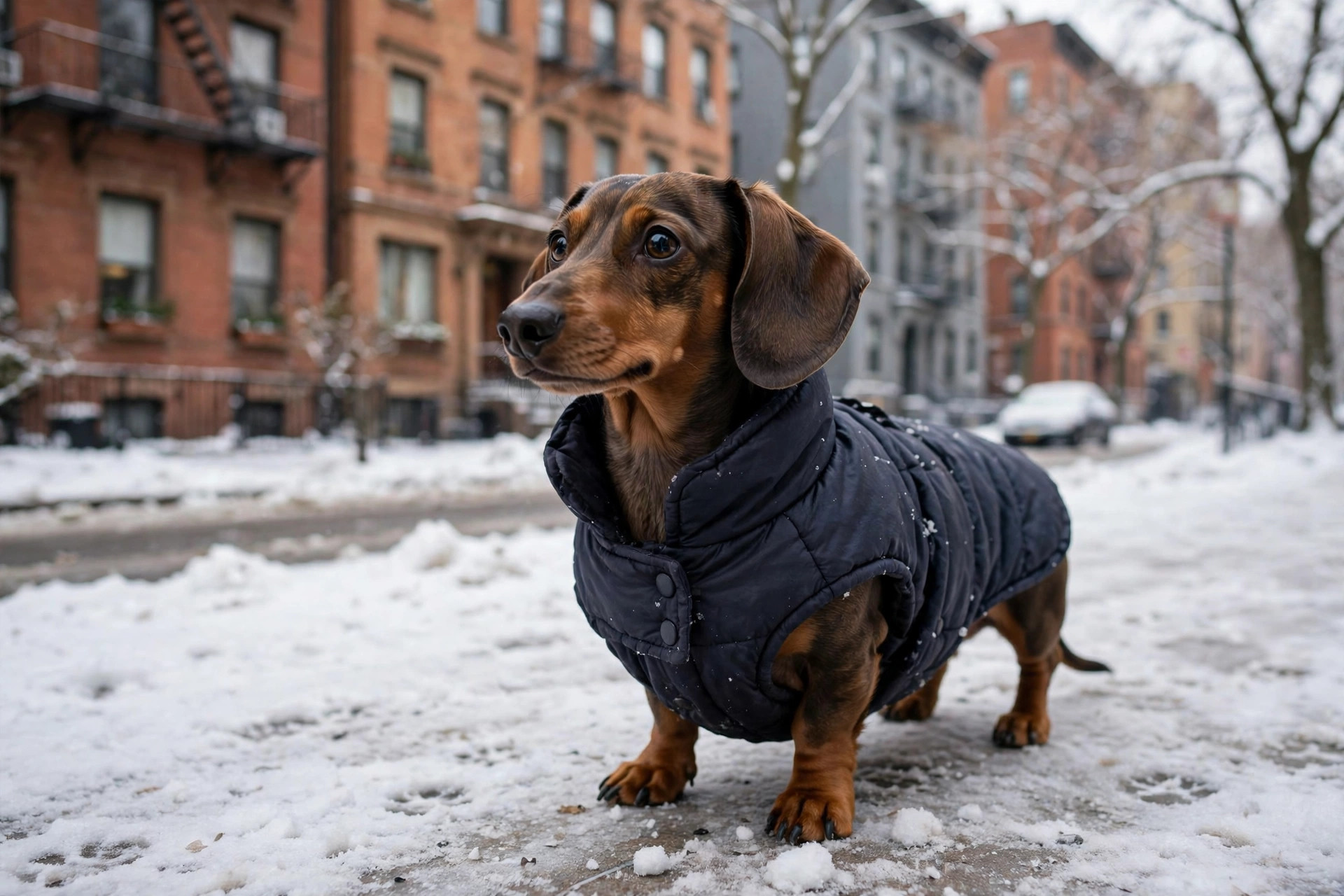
A 12-pound dog standing in slush is, thermally speaking, a very different animal from a 70-pound one: more surface area per pound, a belly inches from the frozen ground, and no long coat to speak of if the breed is short-haired. Small dogs start shivering well before you feel cold, and a shivering dog is not being dramatic — she is burning energy she cannot spare. A good winter coat turns a miserable 15-minute potty walk into a normal one. Here is how to pick one that fits, stays on, and survives city winter.
Do small dogs actually need coats?
Yes, most of them, with a few exceptions. The general rule veterinarians use: short-haired small breeds (Chihuahuas, French bulldogs, dachshunds, Italian greyhounds, mini pinschers) need a coat below about 45°F, and truly need one below freezing. Small long-haired breeds (Shih Tzus, Yorkies) manage longer but still benefit below freezing, especially in wind. Puppies, seniors, and dogs with thin body condition lose heat fastest. Watch the dog, not the thermometer: shivering, a tucked tail, reluctance to keep walking, or lifting paws off the ground are all "we are going home" signals. And city winter adds two insults suburbia skips: wind tunnels between buildings that drop the effective temperature 10–15 degrees, and road salt that forces you to manage paws as well as the torso (see our winter boots guide).
Six coats that survive city winter
All of these are real, widely reviewed coats with small-dog sizing that actually fits small dogs — a rarer property than it should be. Prices are typical street prices.
| Coat | Warmth level | Typical price | City note |
|---|---|---|---|
| Ruffwear Powder Hound | Heavy insulation | $80–$100 | The technical pick; storm flap, leash portal. Best for sub-20°F wind. |
| Hurtta Downpour Suit | Insulated + waterproof | $70–$95 | Full-body coverage; the slush-splash answer for low bellies. |
| Canada Pooch True North Parka | Heavy insulation | $50–$80 | Excellent fit range; faux-fur hood is cosmetic but the body is serious. |
| Gooby Padded Vest | Medium insulation | $35–$55 | Escape-proof design for Houdini small breeds; great daily driver. |
| Kuoser Dog Winter Coat | Medium insulation | $25–$45 | Budget workhorse; reversible, waterproof shell. Sizing runs small. |
| Chilly Dog Sweater (wool) | Light insulation | $30–$50 | Hand-knit wool for crisp fall days; not waterproof, layer under a shell. |
Ruffwear Powder Hound — the serious winter pick
When the wind chill is in the teens and you still have to do the evening walk, this is the coat. Recycled polyester insulation comparable to a human puffy jacket, a full storm flap over the zipper, and a leash portal that works with a back-clip harness underneath — no threading the leash through a too-small hole. The cut covers the chest and extends well back over the hips, which is where small dogs lose the most heat. At $80–$100 it is an investment, but the construction survives multiple winters of daily use, which the $30 coats do not.
Hurtta Downpour Suit — for slush season
City winter’s worst enemy is not cold air, it is the gray salty slush that soaks a low-slung belly in one block. The Downpour Suit’s full-body design covers the chest, belly, and upper legs with a waterproof, breathable shell over insulation. For dachshunds and corgis whose undersides act as snowplows, this is transformative: the dog comes home dry underneath instead of needing a full towel-down and a dryer session. Fit is Hurtta’s strength — their size charts by back length and chest are the most accurate in the category, so actually measure.
Gooby Padded Vest — the escape artist’s coat
Small breeds famous for backing out of gear (Italian greyhounds, whippets, skinny rescues) need the Gooby’s dual-closure system: a chest strap plus a belly band that distributes pressure so there is nothing to wriggle out of. As a daily driver for typical 25–40°F city walks it is the right weight — warm enough to stop shivering, light enough that the dog still moves naturally. This is the coat most small-dog owners end up using 80% of the time.
Kuoser — the budget pick that is actually fine
The rare budget coat with a waterproof shell, fleece lining, and a leash hole that is actually positioned correctly. Two caveats from owner reviews: sizing runs a full size small (measure, then order up), and the Velcro belly closure collects fur and weakens after a season of daily use. At $25–$45 it is a perfectly good first coat or a backup for the dog-walker’s bag. Buy it knowing you may replace it next winter.
Measuring for fit: the 3 numbers that matter
Coat sizing fails more often than any other dog gear because people guess. Take three measurements with a soft tape:
- Back length: base of neck to base of tail. This is the primary size determinant — match it first.
- Chest girth: the widest point of the ribcage, just behind the front legs. If the dog is between sizes, size up for the chest; a tight chest restricts breathing and movement.
- Neck: where a collar sits. Matters for high-collar designs on short-necked breeds like French bulldogs.
Fit checks after it arrives: you should fit two fingers under every strap; the coat should not shift sideways when the dog shakes; the rear edge should end before the tail base (coverage past that point interferes with bathroom breaks — the most common design flaw in cheap coats); and the dog should walk, sit, and lie down without the coat riding forward over the shoulders.
Introduce the coat indoors first. Treat for wearing it around the apartment for 10 minutes, twice, before the first outdoor walk — a dog meeting a coat and a blizzard simultaneously will hate both forever.
City-slush care: salt, drying, and washing
A winter coat in the city is a salt-management tool as much as a warmth tool, and salt destroys gear. After slushy walks: shake the coat outside, wipe the shell with a damp cloth to remove salt before it wicks into the insulation, and hang it to dry — never ball it wet into a closet, where mildew follows. Machine-wash on gentle with the Velcro closed (open Velcro shreds linings) every 2–3 weeks of daily use, or when it smells. Pair the coat system with paw care: boots for the worst days, a paw-wash cup or damp towel at the door every day, and a water bottle on longer outings since heated indoor air plus winter exercise still dehydrates. A raincoat layer over a sweater handles the 35–45°F wet days when a full parka is overkill.
FAQ
At what temperature does my small dog need a coat?
For short-haired small breeds: around 45°F and below for comfort, mandatory below freezing. Adjust for wind (city wind tunnels count double), wet conditions, and the individual dog — a shivering dog needed the coat ten minutes ago regardless of the thermometer.
Coat or sweater — which is better?
A coat with a windproof/waterproof shell beats a sweater in real winter; sweaters are for crisp dry fall days or as a layer under a shell. Wool sweaters (like Chilly Dog) insulate even when damp, which acrylic knits do not.
Will a coat make my dog overheat indoors?
Take it off inside — every time. Overheating in a 72°F apartment in a parka is a real risk, and dogs that learn "coat equals uncomfortably hot" start resisting it. Coat on at the door, coat off at the door.
How do I wash a dog winter coat?
Close all Velcro, machine wash cold on gentle, hang dry. Never use fabric softener — it kills the water-repellent coating on the shell. Re-treat the shell with a spray-on DWR product once a season if water stops beading.