Best Pet-Safe Floor Cleaners for Apartments
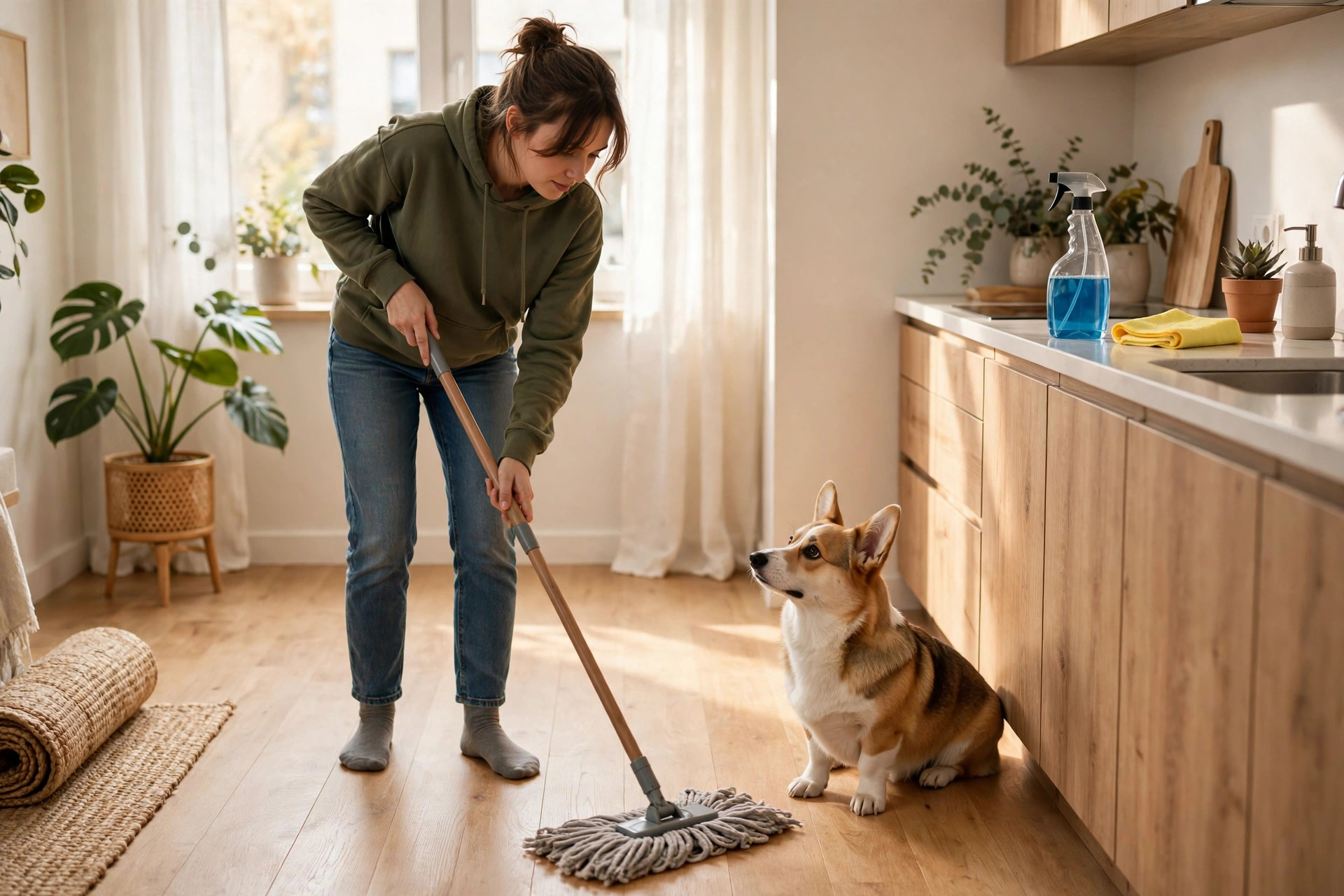
Your dog licks its paws. Your cat walks the counter with feet that just crossed the kitchen floor. In a pet apartment, “floor cleaner” is not a surface product — it is something your animals ingest in small doses, every day, for years. Most conventional cleaners were never designed with that in mind. The good news: the genuinely pet-safe options are not exotic or expensive. They are the ones that skip a short list of harsh ingredients and still cut through the muddy-paw grime of city life.
What “pet-safe” actually means on a label
There is no regulated definition of “pet-safe” on cleaning products — it is marketing language, not a certification. So read the ingredient panel instead and screen for these:
- Phenols and pine oils. The classic “pine scent” cleaners contain phenolic compounds that cats especially cannot metabolize — their livers lack the pathway. Pine-oil cleaners are the number-one cleaner category to keep away from cats, period.
- Glycol ethers (2-butoxyethanol and relatives). Common in “powerful degreaser” formulas. Irritating to airways and skin at the concentrations in mop water, and dogs lying on a freshly mopped floor get prolonged skin contact.
- Phthalates in fragrance. The vague word “fragrance” on a label can hide phthalates, which are endocrine disruptors. Pets, with their small body mass and paw-licking habits, get a proportionally larger dose than you do.
- Bleach (sodium hypochlorite). Effective disinfectant, but the residue irritates paws and the fumes in a small, poorly ventilated apartment are rough on everyone. Reserve bleach for true disinfection jobs (a parvovirus-level event), not routine mopping.
- Ammonia. Beyond the fumes, ammonia smells like urine to pets — mopping with it can actually encourage repeat marking on the “cleaned” spot. A spectacular own goal.
A genuinely pet-safe floor cleaner, then, is one that cleans with surfactants and mild solvents, rinses clean without residue, and skips the five categories above. Every pick below clears that bar.
The vinegar question, answered honestly
Every pet forum recommends the DIY vinegar-and-water mop. Here is the honest version:
- What vinegar does well: cuts light grease, dissolves mineral deposits, deodorizes mildly, costs almost nothing, and is genuinely non-toxic once dry. For a quick damp-mop of a lightly dirty floor, it is fine.
- What it does not do: disinfect (vinegar kills some bacteria, not the ones you worry about), cut heavy grime, or handle muddy-paw season. It also leaves no surfactant action — it does not lift dirt, it just moves wet dirt around.
- Where it damages: never on natural stone (marble, travertine, granite) — the acid etches the surface permanently — and use caution on hardwood, where repeated acidic mopping dulls the finish over time. Most rental apartments have LVP or sealed laminate, where vinegar is safe but underpowered.
The verdict: vinegar is a fine maintenance rinse, not a cleaner. For the weekly real clean — muddy paws, kitchen grease near the bowls, the mystery stickiness by the door — use an actual pet-safe floor cleaner below.
Five cleaners that are safe and actually clean
Every product below is real and widely sold, with a readable ingredient list and no phenols, pine oils, bleach, or ammonia. Prices are typical street prices.
| Cleaner | Best for | Usually | Apartment note |
|---|---|---|---|
| Bona Pet System Hardwood Floor Cleaner | Hardwood and LVP | $9–$14 | Residue-free, dries fast; the renter-floor pick |
| Aunt Fannie’s Floor Cleaner Vinegar Wash | Everyday damp-mopping | $8–$12 | Vinegar-based but properly formulated; light jobs |
| Better Life Floor Cleaner | Plant-based all-rounder | $7–$10 | No harsh fumes; good for tile and laminate |
| Puracy Multi-Surface Cleaner | One bottle for everything | $12–$18 | Concentrate option; floors plus counters |
| Nature’s Miracle Hard Floor Cleaner | Pet-mess zones | $8–$12 | Enzymatic odor control for accident-prone areas |
Bona Pet System — the floor-type pick
Bona built its reputation on hardwood care, and the Pet System version keeps the residue-free, fast-drying formula while dropping the harsh stuff. This matters in rentals because residue is what makes floors look dull and feel tacky under bare feet — and tacky floors collect paw dirt faster. Spray-mop compatible, safe on sealed hardwood, LVP, and laminate. If your apartment has real wood floors and a pet, this is the default.
Aunt Fannie’s — the everyday pick
Aunt Fannie’s takes the vinegar idea and does it properly: a vinegar base with added surfactants so it actually lifts dirt, in scents from essential oils at pet-appropriate levels. It is a light-duty cleaner — perfect for the twice-weekly damp mop that keeps paw-print buildup from becoming a project — not the choice for a post-mud-season deep clean. Keep a stronger option (below) for the monthly real clean.
Better Life — the sensitive-nose pick
Plant-derived surfactants, no synthetic fragrance, no dyes. Better Life is the pick when someone in the home — human or animal — reacts to scented products: the sneezing cat, the owner with fragrance headaches. It cleans tile and laminate well; on heavy grime it needs a second pass where the Bona would do it in one. The tradeoff is gentleness, and for daily use in a small space, gentleness wins.
Puracy — the minimalist pick
Puracy’s concentrate dilutes into a multi-surface cleaner that handles floors, counters, and the mystery spots on the baseboards — one bottle instead of five under the sink, which in a small apartment kitchen is a real quality-of-life upgrade. The formula is free of the harsh categories above and the company publishes full ingredient lists, which is more than most brands manage. Slightly pricier per bottle, cheaper per use if you buy the concentrate.
Nature’s Miracle Hard Floor Cleaner — the accident-zone pick
For the hallway by the door, the area around the litter box, and anywhere accidents happen: this pairs a hard-floor-safe cleaner with enzymatic odor control, so it cleans the visible mess and breaks down the urine compounds that tell the pet to go there again. It is not the everyday whole-apartment mop — save it for the zones that need it. For rug accidents, see the dedicated enzyme cleaner guide.
- LVP / luxury vinyl (most rentals): nearly anything here works; avoid abrasive powders and steam mops (heat can warp planks).
- Sealed hardwood: Bona or another pH-neutral hardwood formula; minimal water — damp mop, never wet mop. Standing water is what damages wood, not the cleaner.
- Tile: the most forgiving; any pick works, and grout lines benefit from the occasional scrub with Better Life and a brush.
- Natural stone: pH-neutral only, no vinegar, no acidic cleaners. If your rental has stone floors, congratulations and condolences.
The 20-minute apartment mop routine
Order matters — mopping before dealing with the dry dirt just makes mud:
- Dry first (5 minutes). Rubber broom or vacuum the whole floor. Mopping over hair and grit grinds it into the finish.
- Two-bucket method, apartment edition (10 minutes). One bucket with the diluted cleaner, one with clean rinse water — or a spray mop plus a rinse of the pad halfway through. The rinse step is what separates “clean” from “moved the dirt into the corners.”
- Damp, not wet. Wring the mop until it is barely damp. On LVP and laminate this prevents water seeping into seams; on hardwood it is non-negotiable.
- Ventilate while drying (5 minutes). Open a window or run the bathroom fan. Even pet-safe cleaners should dry with airflow, and the floor is walkable sooner.
- Keep pets off until dry. Ten to fifteen minutes. This is the one rule that matters most — wet cleaner on paws defeats the entire point of buying the safe version.
Three floor-cleaning mistakes pet owners make
2. Mopping around the water bowl. The bowl area gets mopped last and rinsed best, because it is where the pet’s face goes. Better yet, put the bowls on a washable mat and mop under it separately.
3. Storing the mop wet in a closed cabinet. A damp mop head in a dark cabinet grows exactly the bacteria you just cleaned up, which then get mopped back onto the floor next time. Rinse the head, wring it hard, and store it where air circulates.
FAQ
Is it safe to let my cat walk on a freshly mopped floor?
Once fully dry, yes — with any of the picks above. While wet, no: keep pets off until the floor is completely dry, about 10–15 minutes with ventilation. Wet cleaner on paws gets licked off, which is the exposure route you are trying to avoid.
Can I use a steam mop with pets in the apartment?
Steam sanitizes without chemicals, which sounds ideal — but the heat can damage LVP and hardwood finishes common in rentals, and the pads need frequent changing or they just spread dirty water. If your floors are tile and you maintain the pads, steam is a fine chemical-free option; otherwise stick with a pet-safe liquid cleaner.
What about the “pet-safe” claim on conventional brands?
Treat it as a starting point, not a verdict. Check the ingredient list for the five categories in this guide’s first section. Some conventional brands have genuinely cleaned up their formulas; others added “pet-safe” to the label and changed nothing. The ingredient panel does not lie.
How often should I mop with pets?
A quick damp-mop of high-traffic zones (entryway, kitchen, around bowls) once or twice a week, plus a full mop every 2–4 weeks depending on the season. Muddy-paw months need the frequent schedule; dry summer weeks can stretch it. The dry sweep or vacuum before each mop matters more than the mop frequency itself.