Best One-Bedroom Apartment Pet Cleaning Caddy Setup
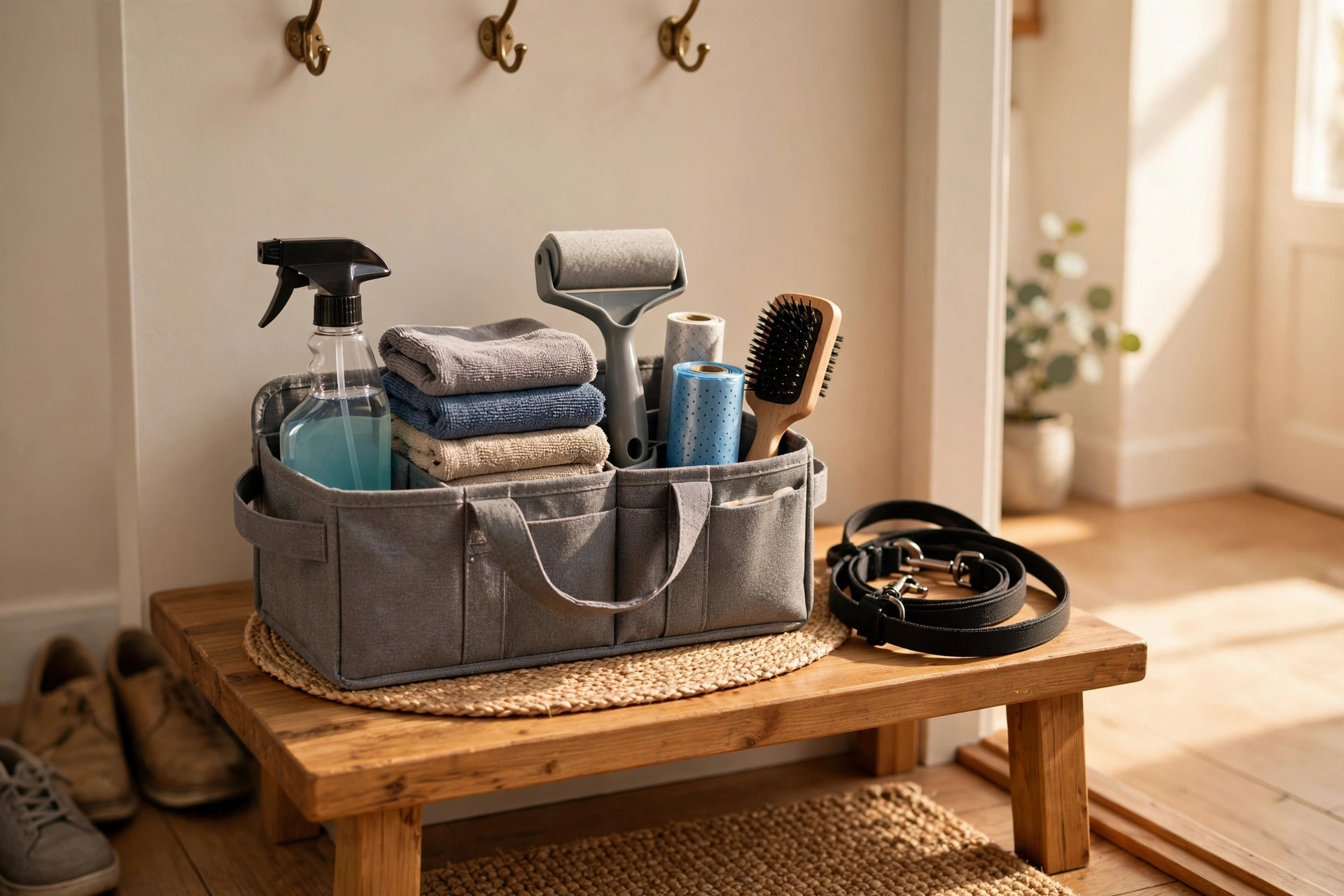
Pet messes in a one-bedroom don't wait for you to gather supplies from three rooms. The muddy paw prints dry into the rug while you're hunting for the spray bottle; the hairball sits on the rug for two days because the gloves are in the bathroom. A pit crew doesn't run to the garage for each tool — everything arrives at the car at once. Your caddy is the pit crew: nine items, one handle, zero excuses.
The inventory: 9 items, nothing more
Every item earns its slot by being used at least weekly. If you haven't touched it in a month, it doesn't live in the caddy — it lives in a closet.
- Enzyme cleaner spray (Nature's Miracle or Rocco & Roxie Stain & Odor Eliminator, usually $10–$15) — the only cleaner that actually breaks down the proteins in urine, vomit, and drool instead of masking them. One bottle, not three "specialty" sprays.
- All-purpose pet-safe surface spray — for muddy paws on tile, nose prints on windows, food bowls area. Any plant-based multisurface spray works.
- 6 microfiber cloths, color-coded: 3 for pet messes, 3 for everything else. Wash the pet set separately on hot weekly.
- Roll of poop bags + a spare leash clip — because the accident cleanup and the "we're going out right now" moment are the same moment.
- Rubber brush (Fur-Zoff style) — for the couch pass during the circuit below.
- Mini lint roller — for your clothes before you give up and sit in the hair anyway.
- Disposable gloves (a dozen, in a zip bag) — for the jobs you'd otherwise postpone until tomorrow.
- Old towel — the designated "gross jobs" towel: muddy paws at the door, wet dog after rain, mystery puddle triage.
- Small trash bags (3–4) — so used cloths, gloves, and hair clumps leave the apartment immediately instead of marinating in your kitchen bin.
The caddy itself: a handled tote about 12 x 9 inches (the mDesign plastic caddy, usually $12–$18, is the standard for a reason — it fits under most sinks). Two compartments minimum: wet side (sprays) and dry side (cloths, bags). If it doesn't have a handle, it's a box, not a caddy, and you won't carry it room to room.
- The vacuum (too big; it has its own home).
- Bulk refills (closet, not caddy).
- Anything "just in case" you haven't used in a month.
- Scented plugins or sprays — they mask odor instead of removing it and irritate sensitive pets.
The 10-minute room circuit
Grab the caddy, set a timer, move in this order. The sequence matters: dry mess before wet, top before bottom, so you're never re-cleaning.
Minutes 0–2 — Entryway: shake the doormat outside the door (or over the tub), wipe paw prints off tile with the all-purpose spray, check the old towel — if it's damp from this morning, swap it for a dry one from the linen stack.
Minutes 2–5 — Living room: rubber-brush the couch seat and the pet's spot (2 min), quick enzyme-spray check of the usual accident corners — sniff, don't just look — and spot-treat anything you find (spray, wait 5 min while you continue, blot on the way back).
Minutes 5–7 — Bedroom: strip hair off the bed edge or pet bed with the rubber brush, lint-roll your pillow if the pet sleeps with you (be honest with yourself), check under the bed for the toy-and-hair tumbleweeds.
Minutes 7–9 — Kitchen / feeding zone: wipe the food and water bowl area (kibble dust + water slime is a real thing), shake the feeding mat into the trash, refill water if it's below half.
Minute 10 — Reset the caddy: toss used cloths in the laundry pile, replace the trash bag, check spray levels. A caddy with an empty enzyme bottle is just a basket of disappointment.
Run this circuit 2–3 times a week. Daily is better but 3x weekly is the realistic threshold where a one-bedroom with one pet stays ahead of the mess instead of behind it.
The restock schedule
- Weekly: wash the 3 pet microfiber cloths on hot; replace the old towel if it smells after washing (towels have a lifespan — about 3–6 months of gross-job duty).
- Monthly: check enzyme spray level (a one-dog home goes through a 32 oz bottle every 6–10 weeks); restock poop bags and gloves; wipe down the caddy itself — it gets grimy.
- Quarterly: audit the inventory. Anything unused for a month gets evicted to the closet. The caddy stays at 9 items or fewer — that's the discipline that keeps it portable.
Where it lives in 600 square feet
The caddy's home determines whether you use it. Criteria: reachable in under 20 seconds from the front door and from the living room, because those are the two places messes happen. In most one-bedrooms that's under the kitchen sink, on top of the washing machine, or on a hallway shelf at hip height. Not: the back of a closet, under the bathroom sink behind the bleach, or anywhere requiring you to move something else first. If grabbing the caddy takes more than 20 seconds, you'll "do it later" — and later is how stains set.
Households with cats: store sprays in a caddy with a latching lid or on a shelf above counter height. Curious cats chew spray nozzles, and enzyme cleaner is not a cat toy.
FAQ
Can't I just keep supplies under each sink instead?
You can, but duplicates cost more and half of them dry out unused. The caddy's real advantage is portability: one trip, every room, 10 minutes. Under-sink stashes work for bathrooms; they fail for the "muddy paws at the front door right now" scenario.
What's the single most important item if I buy one thing?
The enzyme cleaner. Regular cleaners and soap remove the visible stain but leave the proteins — the dog smells them and re-marks the spot, and you get the mystery odor that survives every cleaning. One $12 bottle of enzyme spray solves more problems than any other single purchase.
How do I keep the caddy itself from smelling?
Wipe it monthly with the all-purpose spray, never put a damp cloth back in (laundry pile immediately), and keep the enzyme bottle upright — leaks make the whole caddy smell like a kennel. A plastic caddy beats fabric for this reason.
Two pets — does the system change?
Double the cloths (6 pet cloths instead of 3) and run the circuit 4x weekly instead of 3x. The inventory stays the same; only frequency and laundry volume change. With two heavy shedders, add a second rubber brush — they're cheap and you'll fight over one.