Best Pet Vacuum for Small Apartments
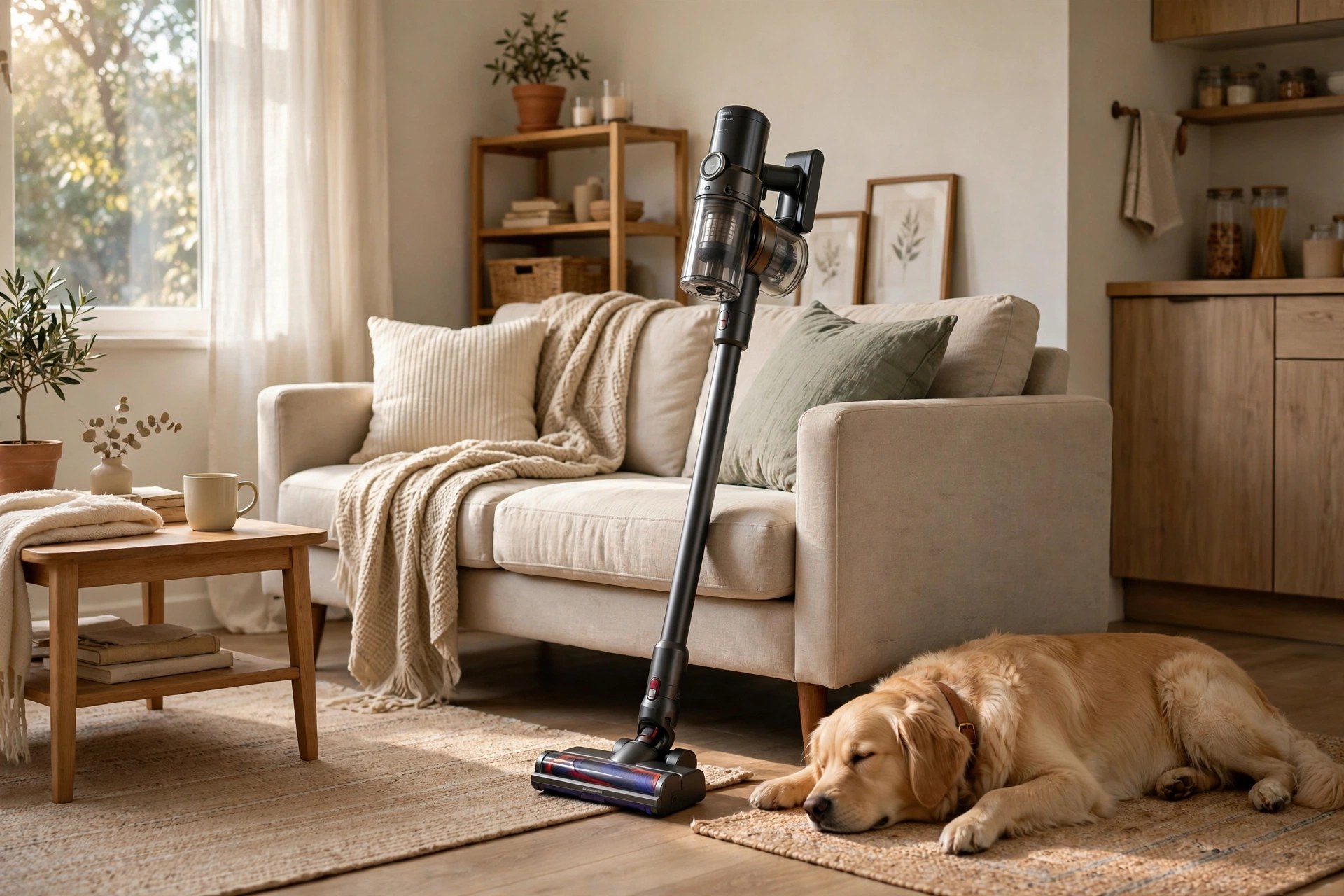
In a 600-square-foot apartment, one shedding dog can undo a whole weekend of cleaning by Tuesday. The right vacuum for small-space pet life is not the most powerful machine on the market — it is the one light enough to grab every day, quiet enough to run at 8 p.m. without the neighbors noticing, and slim enough to live in a hall closet without a fight.
- Cordless stick vacuums win for most apartments: no cord to wrestle around furniture, easy to store, and strong enough for hair and tracked litter.
- Budget roughly $200–$500. Above that you are paying for extras most small homes never use.
- Noise matters more than suction specs. Look for models that stay near conversation level (around 70–75 dB) on their standard mode.
- A dustbin you can empty one-handed beats a bigger bin you dread touching.
- Whatever you buy, the best vacuum is the one you will actually use three or four times a week.
Four vacuums worth your closet space
Every model below is a real, widely sold machine with a track record in pet homes — no obscure brands, no Kickstarter experiments. Prices move with sales, so treat the ranges as typical street prices, not promises.
| Model | Best for | Typical price | Small-apartment note |
|---|---|---|---|
| Dyson V15 Detect | Deep-cleaning performance | Usually $550–$750 | Slim wall dock; laser head reveals dust on hard floors; premium price. |
| Shark Stratos Cordless | All-around value | Usually $300–$450 | Bendy wand reaches under sofas; strong hair pickup for the money. |
| Bissell Pet Hair Eraser Turbo Plus | Tight budgets | Usually $180–$280 | Upright with pet tools; bulkier to store than a stick. |
| Tineco Pure One S15 Pet | Smart features | Usually $300–$450 | Sensor auto-adjusts suction; display shows what it picked up. |
Dyson V15 Detect — the performance pick
The V15’s party trick is a laser on its slim hard-floor head that makes microscopic dust visible — oddly satisfying, and genuinely useful for seeing where litter dust settles. Its piezo sensor counts and sizes particles, cranking up suction when it hits a dirty patch. Dyson lists around an hour of runtime on the lowest setting; expect far less on boost, which is normal for every cordless. Whole-machine HEPA filtration matters if anyone in the home has allergies. Downsides: the price, and hair still wraps around the brush bar — it just takes longer than on cheaper machines.
Shark Stratos Cordless — the value sweet spot
Shark’s dual brush-roll system (a soft front roller plus a bristle roller) is genuinely good at pulling hair off both rugs and hard floors in one pass, which means fewer passes in a small rooms. The flexible wand bends so the head slides under sofas and beds without you lying on the floor. Its Clean Sense IQ mode adjusts suction automatically. For a one-bedroom with a medium shedder, this is the price-to-performance pick most owners land on.
Bissell Pet Hair Eraser Turbo Plus — the budget upright
If your rental is mostly carpet and your budget is tight, this is the honest cheap option. The tangle-free brush roll lives up to its name better than most, LED headlights expose hair on dark rugs, and it comes with a pet upholstery tool that works. Two caveats for apartments: it is an upright, so it needs real closet floor space, and the Febreze-scented filter bothers sensitive noses (human and canine). If anyone in the home is scent-sensitive, run it with the standard filter.
Tineco Pure One S15 Pet — the smart pick
Tineco’s dust sensor adjusts suction in real time and the LED display shows particle counts dropping as you clean — gimmicky until you realize it teaches you which spots you always miss (for most people: along baseboards and under the dining chairs). It converts to a handheld for stairs, car seats, and the sofa. The app is entirely optional; the vacuum works fine without ever pairing it.
What to skip
Two categories consistently disappoint pet owners in apartments. Full-size canister vacuums clean well, but dragging the hose-plus-body combo down a ten-foot hallway gets old fast, and the canister never has a good parking spot. Ultra-cheap off-brand sticks — the sub-$100 ones flooding marketplaces — tend to lose suction within months as their filters clog beyond cleaning. If $200 is truly out of reach, a mid-range Bissell or a refurbished name-brand stick beats a brand-new no-name every time.
Small-space math: what actually matters under 800 sq ft
Marketing sheets push suction numbers. In an apartment, five other specs decide whether you love or resent your vacuum:
- Noise. Walls are shared. Most stick vacuums run around 70–78 dB on standard mode — roughly conversation level. If you can hold a phone call while it runs, your neighbors will survive it. Uprights tend to run louder.
- Weight. You will carry this up stairs, onto the sofa, and into the bathroom. Under about 7 lbs for a stick is the sweet spot for daily use; uprights run 12–17 lbs and feel like a commitment.
- Storage footprint. A wall mount needs one drilled bracket — check your lease first. Freestanding docks need about one square foot of floor. Measure your closet before you buy, not after.
- Bin size. Pet hair fills bins fast. A 0.5–0.8 L bin is fine if you empty it every one or two sessions; a tiny bin you must empty mid-clean will make you quit halfway.
- Real runtime. Forty-plus minutes on standard mode covers a one-bedroom twice over. Ignore the headline number — boost mode drains most sticks in about ten minutes, and you will rarely need it.
The 10-minute apartment vacuum routine
Frequency beats intensity. Three or four quick sessions a week keep hair from embedding in rugs, where it becomes a weekend project. Here is the whole routine:
- Entryway and litter zone (2 minutes). This is where 80% of tracked mess lives. Hit it first while motivation is high.
- Main rug and sofa (4 minutes). Use the upholstery tool on the sofa — it is where dander settles and where you sit.
- Bedroom quick pass (2 minutes). Around the bed and any pet sleeping spot.
- Empty the bin, check the brush (2 minutes). Future you will be grateful.
Empty the bin before it is full. A half-full bin can cut suction noticeably on bagless models — twenty seconds after each session saves you from wondering why the vacuum “stopped working” six months in.
FAQ
Do I need a pet-specific vacuum, or will any good vacuum work?
Any strong vacuum works, but pet models earn their keep in small spaces: tangle-resistant brush rolls, upholstery tools for the sofa, and better filtration for dander. If the price gap is small, get the pet version.
Cordless or corded for a 700 sq ft apartment?
Cordless for most people — one charge covers the whole place, and there is no cord to drag around furniture. Go corded only if you have wall-to-wall thick carpet plus a heavy shedder, where sustained suction matters more than convenience.
How often should I vacuum with a shedding dog?
Three to four quick sessions a week beats one long weekend session. Hair embeds into rug fibers within days; frequent light passes prevent the buildup that requires a deep clean.
Should I just get a robot vacuum instead?
A robot is a great supplement for daily maintenance, but most struggle with litter piles, thresholds, and stairs — and none clean your sofa. In a pet apartment, think robot plus stick, not robot instead of a vacuum.