Best Pet Air Purifier for Apartments With Cats and Dogs
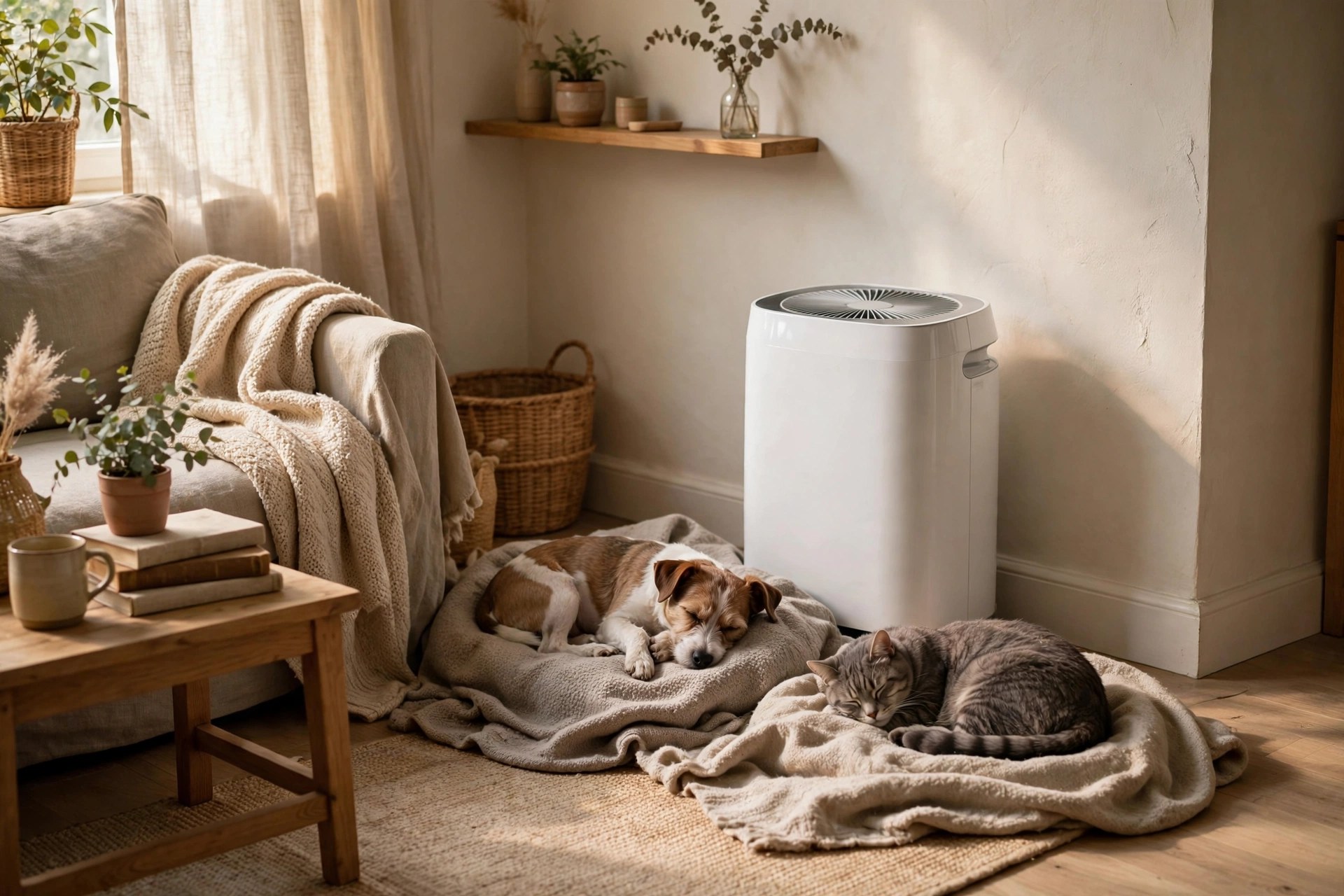
Pet dander is the glitter of the animal world: invisible, everywhere, and nearly impossible to fully remove. If someone in your home sneezes, itches, or wakes up congested, an air purifier is one of the few interventions with real evidence behind it — but only if it is sized right, filtered right, and actually left running.
The dander problem, honestly explained
Before comparing machines, it helps to know what you are actually fighting — because it shapes every buying decision below:
- Dander is skin, not hair. Those microscopic skin flakes are the real allergen carrier. Hair is just the visible delivery vehicle.
- Cat allergen (Fel d 1) is exceptionally sticky. It stays airborne for hours and clings to walls, curtains, and upholstery for months — which is why cat owners’ homes test positive for allergen long after deep cleaning.
- Dog allergen (Can f 1) is less sticky but still airborne, especially in homes with active, large, or double-coated breeds.
- A purifier only handles what is airborne right now. It cannot pull dander out of your sofa — that is the vacuum’s job (see our pet vacuum guide). The purifier and the vacuum are a team, not alternatives.
Set expectations honestly: the right purifier means fewer symptoms, visibly less dust settling on surfaces, and better sleep — not a dander-free home. Anyone promising the latter is selling something.
- Shop by CADR (Clean Air Delivery Rate), not by the “covers up to X sq ft” marketing line.
- AHAM’s widely used guidance: CADR should be at least two-thirds of the room’s square footage. A 300 sq ft living room wants a CADR around 200 or higher.
- Size for the room the purifier sits in, not the whole apartment — walls and doors divide airflow.
- In most one- and two-bedroom layouts, one strong unit in the main living area beats two weak ones scattered around.
Four purifiers for pet-dander apartments
All four use true HEPA filtration plus activated carbon — the combination that handles both allergen particles and the general “pet home” smell. No ionizer-only gadgets, no filterless gimmicks.
| Model | Best for | Typical price | Apartment note |
|---|---|---|---|
| Winix 5500-2 | Best all-rounder | Usually $160–$250 | True HEPA plus carbon; ~360 sq ft; washable pre-filter catches hair first. |
| Coway Airmega 250 | Bedrooms and large rooms | Usually $250–$350 | Very quiet sleep mode; strong coverage; clear filter indicator. |
| Levoit Core 600S | Large open layouts | Usually $200–$300 | High CADR; app control; display dims for bedrooms. |
| Levoit Vital 200S | Pet-specific pick | Usually $150–$220 | Marketed for pet allergies; washable pre-filter; U-shaped inlet for hair. |
Winix 5500-2 — the all-rounder
The 5500-2 has been the default recommendation in pet forums for years because it gets the fundamentals right: true HEPA, a real carbon filter (not a token sheet), and a washable pre-filter that traps cat hair and dog fur before it can clog the expensive filters. Around 360 sq ft of coverage fits the average apartment living room. Its PlasmaWave function can be switched off with one button if you prefer — the HEPA and carbon do the meaningful work either way. Replacement filter sets are mid-priced and widely available.
Coway Airmega 250 — the bedroom specialist
You spend roughly eight hours a night breathing bedroom air, which makes the bedroom the highest-value room to purify — and the 250’s sleep mode is genuinely whisper-quiet, not marketing-quiet. Coway rates it for large spaces (up to around 930 sq ft on paper; realistically excellent for any apartment living room or bedroom), and the filter-life indicator takes the guesswork out of replacements. It costs more up front than the Winix, but the build quality and low noise make it the “buy once” option.
Levoit Core 600S — the open-layout pick
Open-plan apartments — kitchen flowing into living room, no doors — need raw CADR, and the 600S delivers among the highest in its price class. The laser air-quality display is more than a toy: watching the numbers spike when the dog shakes off after a walk teaches you exactly when to run it harder. App scheduling means it can run high while you are at work and drop to near-silent at bedtime. Just remember replacement filters cost more than budget models’ — factor that in.
Levoit Vital 200S — the pet-specific design
Levoit built the Vital line specifically for pet homes: a washable pre-filter for hair, a U-shaped air inlet that the company says captures airborne fur more effectively, and a dedicated pet mode. Whether the pet-specific engineering beats a good general purifier is debatable — but at usually $150–$220, you are not paying much premium for it, and the high CADR for the price is real. A sensible pick if pet allergens are the entire reason you are shopping.
Filter math: the real yearly cost
The sticker price is only the down payment. Here is how the ongoing math usually works out:
- Replacement filters run roughly $30–$70 each depending on brand and model; most manufacturers suggest replacing every 6–12 months.
- With pets, plan on the shorter end. Hair and dander load filters faster than the lab conditions on the box — expect 6–9 months in a two-pet home rather than 12.
- Rough yearly cost: $60–$140 per purifier. That means a cheap machine with $70 filters costs more over three years than a mid-range one with $40 filters. Do this arithmetic before you buy.
- Washable pre-filters save real money. Vacuuming or rinsing the pre-filter monthly (Winix and Levoit Vital both have them) keeps the main HEPA filter breathing easy for noticeably longer.
Where to put it when you have a cat tree and a dog bed
- Living area first, bedroom second. The main room gets the biggest unit; the bedroom gets the quietest one.
- Three to six feet from where the pet sleeps most. Dander concentration is highest near the source — the dog bed, the favorite armchair, under the cat tree.
- Not behind furniture. A purifier wedged behind the couch or crammed in a corner starves for airflow. It needs clear space on its intake sides to actually move room air.
- Where you will leave it running. The purifier in the closet cleans nothing. If the only practical spot is slightly less than ideal, a running purifier there still beats a perfectly placed one you keep turning off because it is in the way.
Run it on medium for everyday life, not turbo. Turbo is for cooking disasters and post-bath wet-dog emergencies. Medium 24/7 moves more total air per week than turbo for an hour a day — and at medium you will forget it is even on.
FAQ
Do air purifiers really help with pet allergies?
They reduce airborne dander and dust, which eases symptoms for many people — but they cannot remove allergens already settled into bedding and upholstery. Pair the purifier with washing bedding weekly in hot water and vacuuming soft furnishings with a HEPA vacuum for the full effect.
How big a purifier do I need for a two-bedroom apartment?
Size for the room, not the apartment. The common effective setup is one unit covering 300–400 sq ft in the living room plus a smaller, quieter one in the bedroom. A single undersized unit in the hallway helps nobody.
Are ionizers safe around cats and dogs?
Some ionizers produce ozone, which irritates airways in people and animals alike. Stick to true-HEPA-plus-carbon models, and switch off optional ionizer or PlasmaWave features if you are unsure — you lose nothing that matters.
How often do filters really need changing with two pets?
Check monthly and expect replacement every 6–9 months rather than the 12 months printed on the box. The quick test: hold the filter up to a light — if you can barely see light through it, it is done.