Weekly 30-Minute Apartment Cleaning Routine With Pets
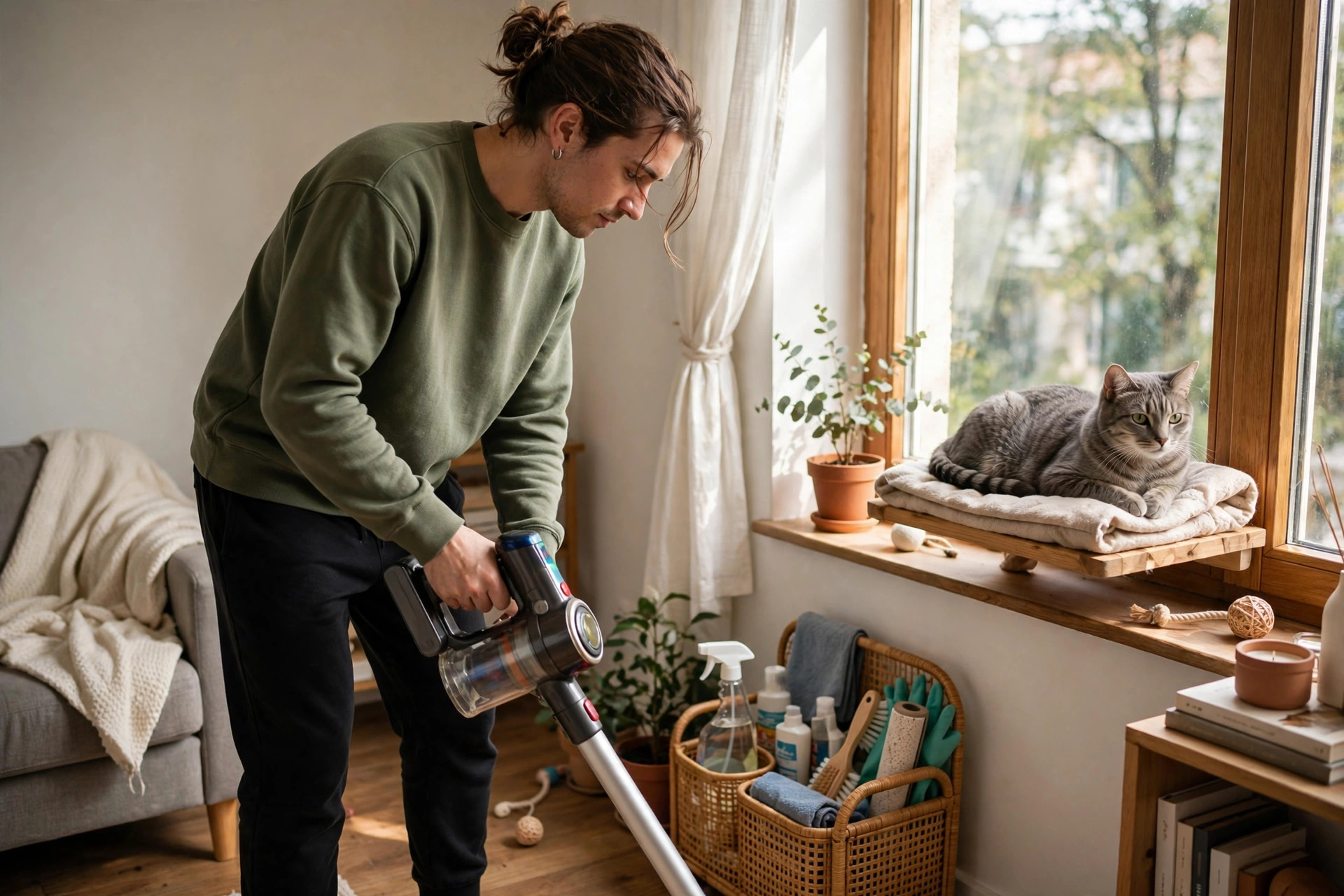
Pet apartments do not need marathon cleans; they need frequency in the right places, because hair, litter, and odor compound daily in 600 square feet. This routine compresses the whole weekly reset into 30 timed minutes — one pass that handles hair capture, litter zone, floors, fabrics, air, and the small resets (bowls, beds, entryway) that stop smell at its sources. It assumes the daily 2-minute habits already exist: litter scooped, paws wiped, accidents handled when they happen. The weekly half hour then maintains a home that never needs rescuing.
- Order is the system: dry hair removal first, wet cleaning second, fabrics and air last. Reverse it and you mop hair into corners.
- Six timed blocks: entryway and litter zone (5), floors (8), fabrics and bed (6), kitchen and bowls (4), air and vents (3), trash and reset (4).
- Tools ready in one caddy beat perfect tools scattered: vacuum, rubber broom, enzyme spray, microfiber, lint roller.
- Twice-weekly becomes necessary only in shedding season or with two-plus pets — the routine splits cleanly in half.
Before the timer: the daily baseline and the caddy
Weekly routines fail when they try to absorb a week of neglected daily tasks. The prerequisites are tiny: litter scooped daily, accidents enzyme-sprayed when they happen, paws wiped at the door, and a 60-second floor pass around the entryway and food zone most days. Given that baseline, the weekly clean is maintenance. Without it, the same 30 minutes becomes triage, which is why our messy-day reset guide exists separately for recovery weeks.
Stage everything in one caddy or closet bin before starting: charged stick vacuum with upholstery tool, rubber broom, spray bottle of pet-safe floor cleaner, enzyme spray for spot checks, two microfiber cloths, lint roller, trash bag, and replacement litter supplies. The kit mirrors our one-bedroom cleaning caddy setup, sized for a hall closet shelf. Music or a podcast on, timer visible, pets given a chew or closed out of the wet-floor half for the final block. Thirty focused minutes beat two drifting hours partly because staged tools remove the six trips to find things that quietly kill cleaning momentum.
The 30 minutes, block by block
| Minutes | Block | Actions | Why in this slot |
|---|---|---|---|
| 0–5 | Entryway + litter zone | Shake mats outside; scoop and top-up litter; wipe zone floor; empty litter trash | Dirtiest dry debris removed before floors; odor source reset first |
| 5–13 | Floors dry pass | Rubber broom hard floors; vacuum rug, sofa, dog zone; baseboard line in pet zones | Dry before any wet step; hair exits instead of relocating |
| 13–19 | Fabrics + bed | Bed cover swap per bedding guide; lint-roll sofa; throws into laundry | Odor reservoir handled mid-routine so laundry starts now |
| 19–23 | Kitchen + bowls | Wash bowls and mat; wipe feeding zone walls; check food storage seal | Biofilm and splash zone reset weekly; pests stay uninterested |
| 23–26 | Air + surfaces | Empty purifier pre-filter; wipe vents and window sills in pet zones | Captures the fraction dry cleaning raised into the air |
| 26–30 | Wet pass + trash out | Damp-mop hard floors pet zones; trash and recycling out; reset entryway towel | Wet last so floors dry while you are done; smell leaves with trash |
Technique notes per block keep the times honest. Floors: the rubber broom pass groups hard-floor hair into lines the stick vacuum takes in one go, which is why the block holds eight minutes even for a shedding dog; our vacuum guide's 10-minute standalone routine expands into this block for deep-rug weeks, replacing rather than adding to it. Fabrics: the bed cover swap is the two-cover rotation from the bedding guide, 90 seconds when the spare is folded in the caddy closet. Kitchen: bowls carry a slippery biofilm by day five that rinsing never removes; weekly hot soapy wash — dishwasher top rack for most stainless and ceramic — resets it, and mats go in the same sink water since the splash zone under them ferments quietly.
Scaling: studios, multiple pets, shedding season
Studios compress naturally: every zone is the pet zone, so the litter and entryway blocks merge and the routine finishes closer to 22 minutes, but the studio litter placement decisions in our studio guide decide whether the air block is a formality or a fight. Two-pet and three-pet homes scale the fabrics and floors blocks, not the kitchen or air: add three minutes of floor time per additional shedding animal and run the routine twice weekly at half length (floors and fabrics only, 15 minutes) rather than once at double, because hair compounding across ten days embeds past what a broom recovers. Seasonal shedding upgrades the floors block to every-other-day 5-minute dry passes while the weekly 30 keeps its shape.
Households with building laundry or no in-unit vacuum adapt tools, not structure: a robot vacuum running three times weekly substitutes for the floors block's vacuum portion, leaving the broom and upholstery pass manual; laundromat households move the fabrics block's laundry start to the building run and wipe the bed insert with the soda treatment instead of swapping covers on laundry day. Allergy households add a bedroom-priority pass inside the floors block and keep pets' access rules consistent with the effort — cleaning a room the dog then naps in for six hours is theater, not hygiene, and the rest-corner setups in our cat and dog guides help allocate zones so cleaning effort lands where humans actually breathe overnight.
What the weekly routine deliberately skips (monthly list)
Thirty minutes stays thirty because monthly tasks live elsewhere: machine reset and gasket wipe from the laundry routine, insert deep-clean per the bedding schedule, HVAC filter check, litter box full replacement wash (monthly for clumping systems per the litter guides), toy washing, and supply inventory. Write the monthly list on the caddy itself; the first Saturday rhythm absorbs it in an extra 20 minutes without bloating every week. Skipping the monthly tier is how weekly routines mysteriously stop working at month three — the routine did not fail, its supporting cast did.
Finally, protect the habit rather than the standard. A 20-minute partial — floors, litter zone, bed swap — on a brutal week preserves the system; a skipped week doubles the next one. Roommates split blocks rather than alternating weeks, because continuity lives in the blocks nobody sees (air, kitchen) that alternating owners each assume the other did; our roommate agreement template has language for exactly this split. The goal was never a showroom; it is an apartment where a guest cannot tell a shedding dog lives there until the dog introduces itself.
In a small home, cleanliness is a frequency problem, not an effort problem. Thirty honest minutes weekly outperform four resentful hours monthly every single time.
FAQ
Do I still need daily cleaning if I do this weekly?
Only minutes of it: litter scooped daily, paws wiped, accidents treated, and a quick entryway pass. The weekly routine assumes that baseline and maintains it — it cannot substitute for a week of unscoped litter in any home size.
What if I only have 15 minutes this week?
Run blocks one, two and three (entryway/litter, floors, bed swap) and defer kitchen, air and wet pass. Those three hold the odor and hair line; the deferred blocks rejoin next week without compounding.
Which vacuum style keeps this routine at 30 minutes?
A light cordless stick you can grab without assembly, with an upholstery tool for the sofa pass. Our vacuum comparison ranks small-apartment models by exactly the grab-and-go criteria this routine depends on.
How does the routine change with a robot vacuum?
The robot takes the mid-week floor maintenance (three runs weekly); your floors block shrinks to broom detail, upholstery and baseboards, about four minutes. Total routine lands near 24 minutes.