How to Reset a Small Apartment After a Messy Pet Day
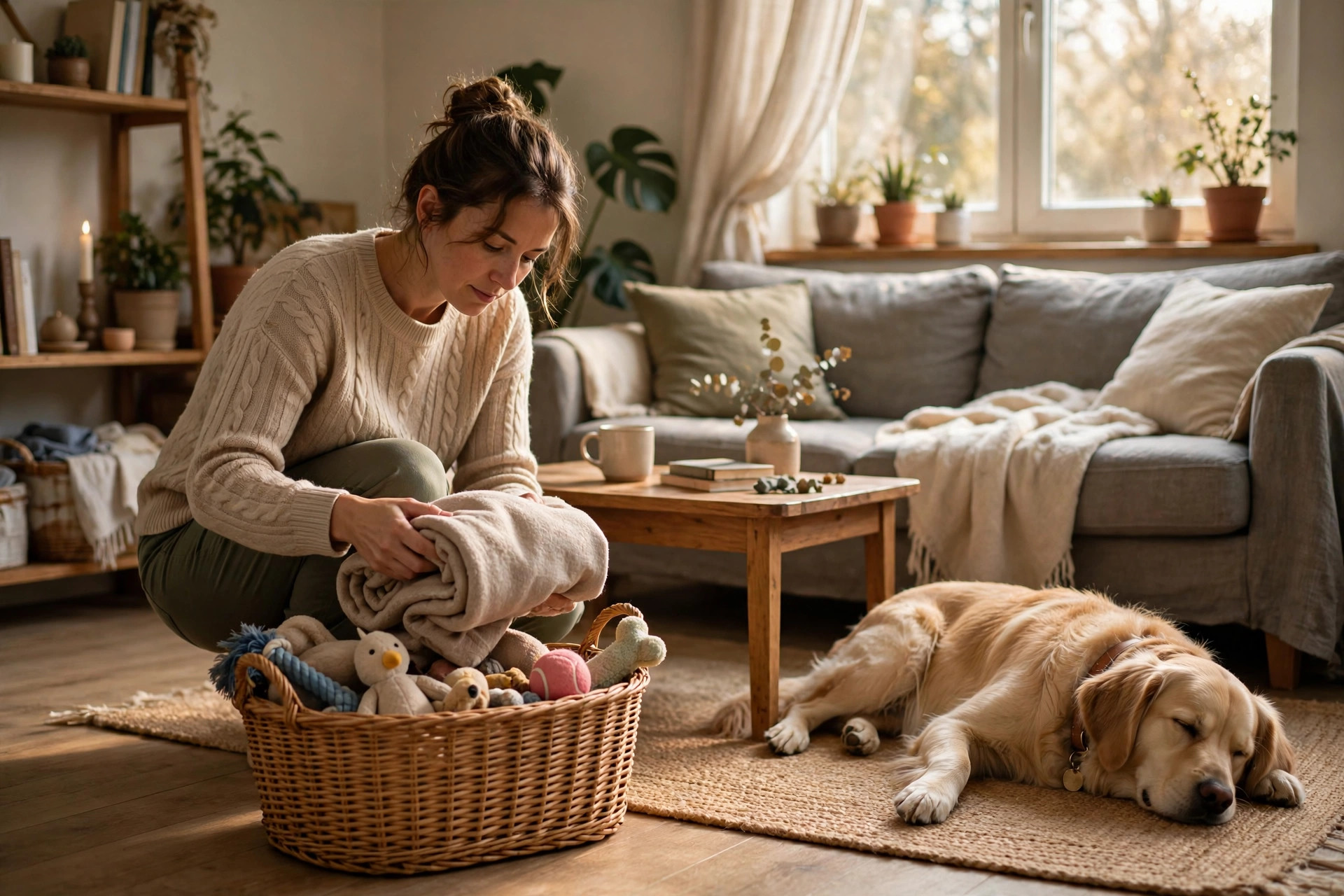
Muddy paws on the rug, a knocked-over trash can, litter tracked into the bedroom — messy pet days happen, and in a small apartment the damage is concentrated in about 400 square feet. This is a timed 45-minute reset playbook: what to clean first, what to skip, and the $30 caddy that makes the whole thing possible.
The triage rule: smell first, stains second, hair last
Most people clean in the wrong order. They start vacuuming because hair is visible, while the smell from the actual mess sets deeper into fabric every minute. On a messy day, work in this order and you will finish faster with a better result:
- Smell sources (0–10 min). Anything wet, organic, or bacterial: vomit, urine, spilled wet food, the trash the dog raided. Blot and treat these first because odor compounds bond to fibers within 15–30 minutes.
- Visible stains (10–25 min). Muddy paw prints, litter-box misses, nose prints on the sliding door. Enzyme cleaner, dwell time, blot — never rub.
- Hair and debris (25–40 min). Vacuum hard floors, then upholstery. Hair is cosmetic; it can wait until the biological stuff is handled.
- Reset (40–45 min). Empty the vacuum, take out the pet trash, put the caddy away. The reset of the reset.
The 45-minute reset timeline
Set a timer. The deadline is what keeps a messy-day cleanup from swallowing your whole evening.
| Minutes | Zone | Do this |
|---|---|---|
| 0–5 | Whole apartment | Walk through with a trash bag. Pick up everything the pet displaced: toys, chewed items, trash-can contents, scattered litter. Bag it, don't sort it yet. |
| 5–15 | Worst spot first | Blot wet messes with paper towels, apply enzyme cleaner, and let it dwell while you move on. Open one window near the mess for airflow. |
| 15–30 | Entry → living room | Wipe paw prints off hard floors with a damp microfiber mop. Shake out the doormat outside. Blot the enzyme-treated spots and check with your nose, not just your eyes. |
| 30–40 | Bedroom + soft surfaces | Vacuum the bed throw and sofa with the upholstery tool. Lint-roll the one chair the cat claims. Swap the throw blanket if it took the hit — washing a blanket beats scrubbing a sofa. |
| 40–45 | Finish | Empty the vacuum canister, tie off the pet trash bag and take it to the chute or outside bin, return the caddy to its spot. Run the air purifier on high for 20 minutes. |
Build the $30 reset caddy
The reason messy days spiral is friction: the enzyme cleaner is under the sink, the mop is in the closet, the trash bags are somewhere else. Put everything in one handled caddy that lives by the entry closet, and a reset starts in 60 seconds instead of 20 minutes of gathering supplies.
- Unscented enzyme cleaner (usually $10–14 for a 32 oz bottle) — the only product that actually breaks down urine and vomit proteins instead of masking them.
- Stack of microfiber cloths — 6 to 8 cloths, because one cloth per mess beats rinsing one cloth six times.
- Small trash bags — for the walk-through pickup round.
- Lint roller + spare sheets — for the 30-second furniture pass.
- Spray bottle of diluted dish soap and water — for muddy paw prints on hard floors; cheaper and safer than specialty floor cleaners around pets.
- Rubber grooming glove — doubles as a miraculous upholstery hair remover when damp.
Total cost is usually $25–35, and the caddy pays for itself the first time you catch a mess in the critical first 10 minutes.
What to skip: the official permission slip
A reset is not a deep clean. On a messy day, deliberately skip these — they eat time without changing how the apartment feels:
- Inside the oven, the microwave, or behind the fridge. The dog's muddy day has nothing to do with them.
- Reorganizing the supply closet you opened to get the mop. Close the door.
- Washing all the throw blankets "while you're at it." Wash the dirty one; the rest keep.
- Scrubbing baseboards throughout the apartment. Spot-wipe the ones near the mess only.
Make messy days rarer: the 10-minute nightly reset
The apartments that bounce back fastest from messy days are the ones that never drift far from clean. A 10-minute nightly routine — done while dinner heats up — prevents the slow accumulation that turns one bad day into a lost weekend:
- 2 min: Scoop the litter box and tie off the waste bag.
- 3 min: Quick vacuum or sweep of the entry and the litter zone — the two places debris concentrates.
- 2 min: Wipe the food and water station; refill water.
- 2 min: Toy pickup round — basket by the sofa, done.
- 1 min: Shake the doormat, check paws if it rained.
Do this five nights a week and the "big reset" becomes a 20-minute job instead of 45, because there is simply less layered grime for a messy day to build on.
Renter's damage control: protecting your deposit
A messy pet day can turn into a deposit dispute if damage isn't handled right. The order matters:
- Photograph first, clean second. If the pet damaged something beyond normal wear — chewed blinds, scratched door frames, a stained carpet patch — take dated photos before you clean. You need the "before" for any landlord conversation.
- Know your lease. Most leases distinguish pet damage (your responsibility) from normal wear. A muddy paw print you cleaned the same day is wear; a urine stain left for a month is damage. Same-day resets keep you on the right side of that line.
- Report proactively if it's structural. Scratched-through carpet, damaged flooring, or chewed fixtures? Tell the landlord before move-out. Surprise damage discovered at inspection costs more — landlords price in the hassle.
- Keep receipts. Enzyme cleaner, replacement blinds, professional carpet cleaning — a small folder of receipts shows good faith if there's ever a disagreement.
FAQ
My dog has a muddy-paw day every time it rains. Any prevention?
Yes — set up a paw-washing station at the entry: a small basin, a towel, and a lick mat with peanut butter to keep the dog still for 60 seconds. Wiping paws at the door eliminates most rainy-day floor mess.
Enzyme cleaner vs. regular pet stain spray — does it matter?
It matters for urine and vomit. Regular cleaners remove the visible stain but leave the proteins that cause lingering smell — and the smell is what draws the pet back to the same spot. Enzyme cleaners digest those proteins. For mud, plain soap and water is fine.
How do I get the smell out if I found the mess hours later?
Re-wet the spot with warm (not hot) water, apply enzyme cleaner generously, and cover with a damp towel for 2–4 hours so it stays moist — enzymes only work while wet — then blot and air-dry. Dried urine may need two rounds.
Is it worth buying a small carpet cleaner for an apartment?
If you have wall-to-wall carpet or a large area rug and a pet with a sensitive stomach, yes — a compact spot cleaner (usually $100–150) pays for itself versus one professional cleaning. For hard floors and washable rugs, the caddy is enough.