Potty Train a Puppy in a High-Rise Apartment
High-rise potty training has one variable ground-floor owners never face: the elevator. Your puppy signals at your door, and then there is a hallway, a wait, a ride, a lobby, and a door — five to ten minutes between “I need to go” and grass. Puppies cannot bridge that gap at eight weeks, so the high-rise plan runs on two tracks: an interim indoor station the puppy may use without shame, and a tightly scheduled elevator routine that gradually makes outdoors the habit. Fight the elevator and you get hallway accidents; work with it and most puppies are reliable in four to eight weeks.
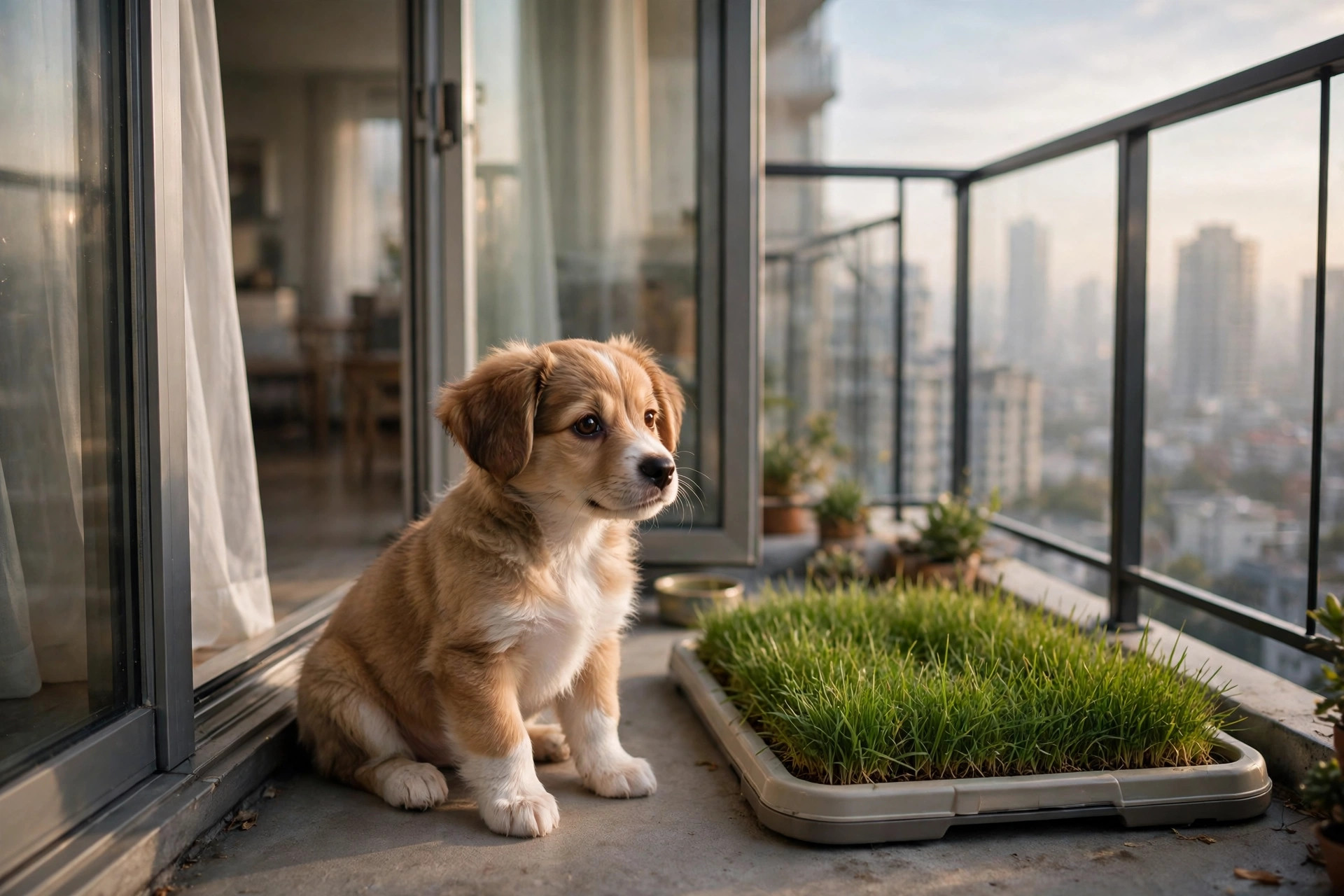
- Start with an interim station (grass patch or pads on the balcony or by the door) — a young puppy physically cannot wait out an elevator ride.
- Schedule by age: a puppy can hold roughly one hour per month of age, so an 8-week puppy needs a trip every 1–2 hours while awake.
- Take the same route, same door, same patch of outdoor ground every trip; predictability is what turns trips into a habit.
- Reward outdoors within 3 seconds of finishing — the treat must happen at the spot, not back upstairs after the ride.
- Keep an enzyme-cleaner kit by the door; cleaned-wrong spots (regular cleaner) keep smelling like a toilet to a puppy nose.
The two-track system: interim station plus elevator routine
Track one is the interim station: a real-grass patch or quality pee pads in a tray, placed on the balcony or on a washable mat just inside the door. This is not “giving up” on outdoor training — it is the bridge that keeps the puppy successful while bladder capacity grows. Grass patches ($25–$40 per delivery on subscription services, or a DIY tray with sod) transfer to outdoor grass more smoothly than pads, and they are the better pick if your building allows balcony use. Pads ($15–$25 for a multi-pack) are the fallback for balconies that freeze or buildings that prohibit them. Either way, put the station where you can get the puppy to it in under 30 seconds.
Track two is the elevator routine, and it runs on the clock rather than on signals at first. Wake-up, after every meal, after play, after naps, and last thing at night — carry the puppy (carried puppies rarely eliminate mid-route) to the interim station or straight downstairs if the trip is short. Use one elevator, one lobby door, one outdoor spot. Puppies learn location habits fast; scattering your outdoor spots around the block slows the lesson. When the puppy goes outdoors, throw the small party there: praise plus a pea-size treat within three seconds of finishing, then a short sniff-walk as the bonus.
As weeks pass, quietly shrink track one. Move the station closer to the door, then remove it during the day while keeping a night option, then retire it. Most puppies start waiting for the elevator trip on their own once they can hold two to three hours — usually somewhere between 12 and 16 weeks — because the outdoor habit pays better. If you remove the station too early, the accidents simply relocate to the hallway carpet, and the building learns your puppy's name for the wrong reason.
A realistic schedule by age (with elevator math)
The textbook rule — one hour of holding per month of age — assumes the toilet is a few steps away. In a high-rise, subtract your elevator time from the puppy's budget, because the clock starts when the puppy feels the urge, not when you reach the grass. An 8-week puppy with a 2-hour theoretical hold and a 10-minute elevator routine really has about 90 minutes, and a just-woken puppy has far less. Plan trips at the conservative end and you will clean less carpet.
A workable day for a 10-week puppy: 6:30 a.m. wake and immediate trip, 7:00 breakfast then trip, trips at roughly 9:00, 11:00, 1:00, 3:00, and 5:00 (walker or interim station covering work hours), dinner at 5:30 then trip, evening play then trip at 7:30, final trip at 10:00 p.m. That is nine to eleven trips — normal for the first month, and it halves by month four. At night, set an alarm rather than waiting for crying for the first two weeks: one quiet 2 a.m. trip, boring and quick, protects both sleep and training.
Owners who work full-time need coverage, not guilt. The realistic stack is: your morning and evening trips, one midday walker or friend visit, and the interim station as the safety net. Our full-time-worker puppy routine lays out that day in detail. What does not work is expecting an 8-week puppy to hold from 9 to 5 — the accidents that follow are physiology, not defiance, and punishing them only teaches the puppy to hide the evidence.
Accidents: the 10-minute reset that protects your deposit
Accidents will happen; the response decides whether they become a habit. If you catch the puppy mid-squat, interrupt with a mild “ah-ah” (not a shout), carry them to the station or downstairs, and reward any outdoor finish. If you find the accident later, skip the correction entirely — the puppy cannot connect your displeasure to a puddle from an hour ago, and scolding near old accidents mostly creates a puppy who eliminates behind the sofa where you cannot see.
Cleanup is chemistry, not elbow grease. Blot (never rub), soak with an enzyme cleaner made for pet urine ($10–$18 a bottle — it digests the proteins regular cleaners leave behind), cover, and give it the full dwell time on the label. On carpet, work a small blacklight ($12–$20) into your weekly check for the first month; spots you missed keep advertising “toilet here” to a nose 40 times stronger than yours. Our enzyme-cleaner comparison covers which formulas handle set-in smells best. For the hallway outside your door — the highest-risk real estate in the building — a washable runner rug ($25–$60) catches the near-misses and saves both your deposit and your reputation.
Track accidents on a sticky note for two weeks: time, place, and what happened just before. Patterns jump out fast — always 20 minutes after dinner, always in the bedroom doorway — and each pattern is a schedule fix rather than a character flaw. Most high-rise puppies show a steep drop in week three once the schedule matches their actual capacity.
Graduating: balcony rules, elevators, and polite public space
Check your lease and building rules before the balcony station becomes permanent. Many buildings allow a contained grass tray but prohibit pads draped over railings or any setup that drips to the balcony below; keep the tray inside a waterproof pan and rinse it indoors. In winter, frozen balconies retire the outdoor station — move it just inside the door on a washable mat and lean harder on scheduled elevator trips.
Teach the elevator as its own skill while you potty train. Ride during quiet hours for the first week, reward calm standing, and let the puppy watch doors open without charging out. A puppy who can ride calmly, wait in the lobby, and toilet at one outdoor spot is welcome in most buildings — and that welcome matters, because your neighbors' tolerance is the invisible third track of high-rise training. Pair the routine with calm hallway manners early, and by six months the whole system fades into an ordinary dog day.
| Age | Typical hold (awake) | Trips per day | Night trips |
|---|---|---|---|
| 8 weeks | 1–1.5 hours | 10–12 | 1–2 |
| 12 weeks | 2–2.5 hours | 8–10 | 1 |
| 16 weeks | 3–4 hours | 6–8 | 0–1 |
| 6 months | 5–6 hours | 5–6 | 0 |
FAQ
Should I use a grass patch or pee pads for the interim station?
Grass transfers to outdoor toileting more smoothly and most puppies prefer it, so choose a real-grass patch if your balcony and lease allow it. Pads work as the fallback — pick unscented, keep them in a tray so they read as a location, and retire them on the same shrink-the-station schedule.
How do I stop accidents in the elevator itself?
Carry young puppies — most will not eliminate while held. Time trips so you leave before the urge peaks (right after waking, play, or meals), take the fastest route, and reward the outdoor finish generously. Elevator accidents usually mean the schedule, not the puppy, needs adjusting: add one more trip per day.
My puppy goes outside, then again ten minutes after we return. Why?
Young puppies often do not empty fully, especially when the outdoor trip is exciting. Linger two or three extra minutes after the first elimination, walk a small loop, and wait for the second go before heading up. This double-void pattern typically fades by four to five months.
When can I remove the interim station completely?
When the puppy reliably holds two to three hours, signals or waits at the door, and has had a clean week. Move the station to the door first, then remove it during the day, then at night. Most high-rise puppies retire the station between four and six months.
What if my building bans balcony potty stations?
Move the station just inside the door on a washable mat and tray, and add one extra scheduled elevator trip. The two-track logic is unchanged — you still need a fast, legal option for a puppy who cannot yet wait out the elevator. A midday walker shortens the indoor station's working day considerably.