Best Balcony Grass Patches for Apartment Dogs
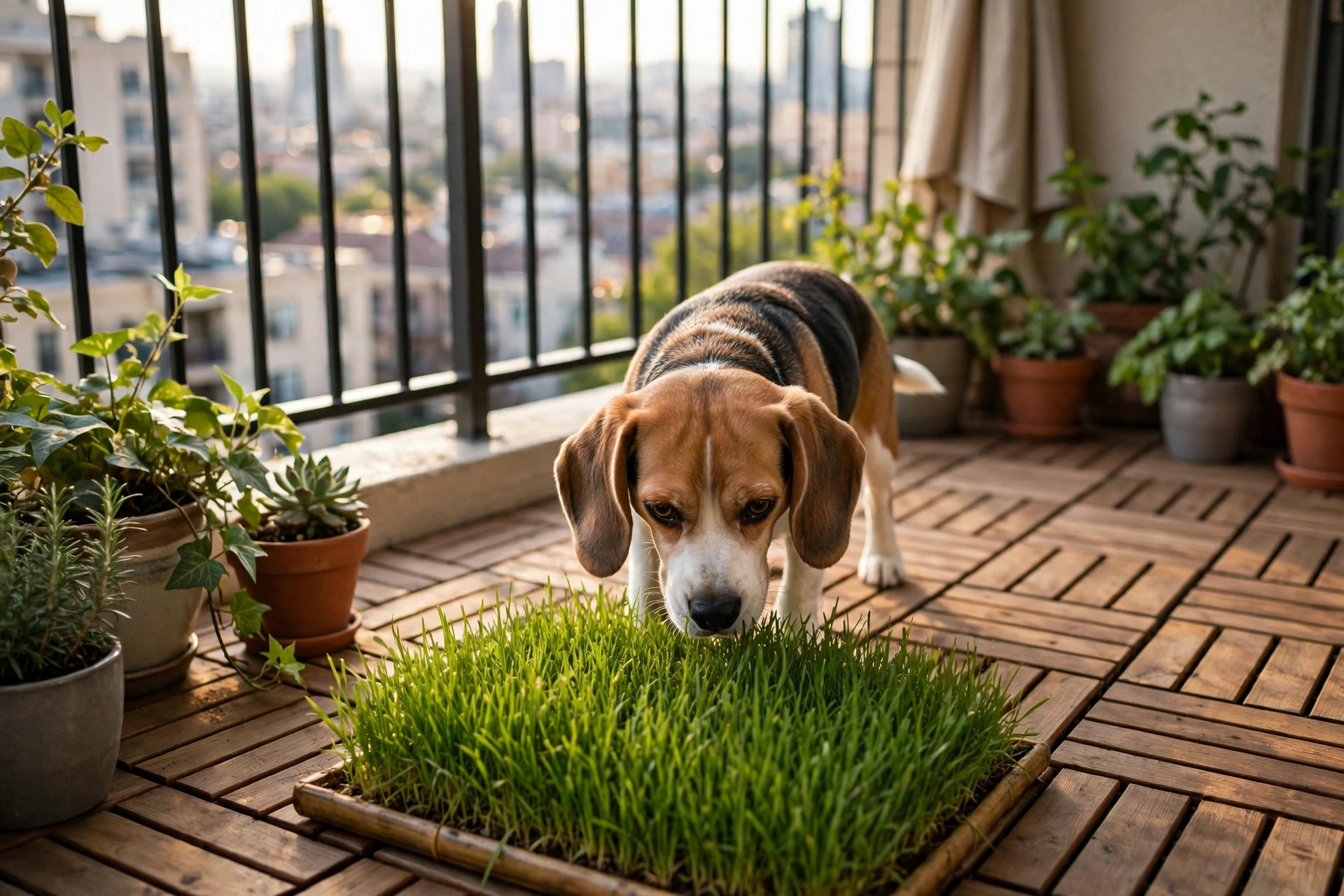
A balcony grass patch is the closest thing a high-rise dog gets to a backyard: real turf underfoot, a familiar scent, and a bathroom option that doesn't involve an elevator ride. Done right, it's a 4-square-foot lawn that costs less than a streaming subscription per month. Done wrong, it's a swampy slab that drips on the downstairs neighbor. This guide walks through the services that ship grass to your door, the trays that keep it clean, the routine that keeps it alive, and the lease fine print worth checking first.
- Real grass beats artificial turf on scent, drainage, and training speed — turf traps odor and feels wrong under paws.
- Delivery subscriptions (Fresh Patch, DoggyLawn, PawPatch) run $30–$77 per box, and one box lasts 1–2 weeks for a single dog.
- Always put a waterproof tray underneath: a washing-machine drip pan ($25–$50) or a Porch Potty tray ($119–$229) protects the slab and the neighbor below.
- Water lightly 1–2 times a day and replace the grass every 7–14 days in warm weather, or it turns into a smell factory.
- Check your lease or HOA before installing anything permanent — many buildings restrict balcony pet structures.
Why real grass wins (and turf usually loses)
Dogs choose where to go by scent and feel, and real grass is the answer key they've used since puppyhood. That's the entire training argument: put real grass on the balcony and most dogs walk over and use it with minimal coaching, because it smells like every lawn they've ever visited. Artificial turf smells like a doormat, holds urine in its fibers, and gets hot in direct sun — owners consistently report that dogs prefer the real stuff and that turf starts smelling within days even with rinsing.
Drainage is the second reason. Real grass on a perforated tray lets liquid pass through to a collection layer; turf sits on plastic and the liquid sits on the plastic too, pooling underneath where you can't see it. By week two, flipping a neglected turf pad is a smell event the whole balcony remembers. If you've ever wondered why some balcony setups reek by August, nine times out of ten it's turf on a flat surface with no drainage.
Turf has exactly one legitimate use case: dogs that destroy grass by digging or shredding it within hours. For those dogs, a tough turf layer on a draining tray beats a daily grass massacre. Everyone else should start with the real thing.
Grass at your door: the delivery services
Three services dominate the ship-to-you grass market, and they're more similar than their marketing suggests. All three sell hydroponic, soil-free grass in a cardboard tray; all three price by size; all three run weekly or biweekly subscriptions you can pause. The differences are grass heartiness, size range, and how the subscription handles skips.
Fresh Patch is the category pioneer and the default recommendation. Boxes run from 16 x 24 inches ($30–$38) to 24 x 48 inches ($60–$76), with subscriptions every 1, 2, 3, or 4 weeks. The grass is hydroponic and soil-free, so there's no dirt tracking back inside — a real advantage for light-colored floors. Delivery coverage is broad across US metros; rural ZIPs should check before committing. One box lasts a single small dog about 2 weeks, a medium dog about 10 days.
DoggyLawn ships farm-grown grass cut to order, and owners of larger dogs swear by it: the blades are thicker and the root mat denser, so a 50-pound dog doesn't turn it into confetti in three days. Pricing is comparable at roughly $33–$77 per delivery by size. If your dog destroyed a Fresh Patch box fast, DoggyLawn is the natural next try rather than a different category entirely.
PawPatch sits in the same lane — hydroponic grass, similar sizes, typically $35–$65 per delivery. Its niche is flexible scheduling: easy week-to-week changes, which suits households whose dog splits time between apartments or travels. If none of the big two serve your ZIP, PawPatch is worth checking.
The DIY budget route: garden centers and home-improvement stores sell grass sod squares for roughly $5–$12 each. Two or three squares in a shallow plastic tray gets you a grass patch for under $30 — no subscription, no shipping box. The catches: sod has soil (tracked dirt, heavier, potential pests), it browns faster than hydroponic grass, and you'll be hauling it up the elevator yourself. For renters testing whether their dog will use a balcony patch at all, this is the cheapest experiment. Buy a fresh square every 1–2 weeks and the ongoing cost lands around $15–$30 a month.
The tray underneath: what stands between grass and slab
The grass gets the glory; the tray does the actual work. Anything sitting directly on a balcony slab will stain it, breed mold underneath, and — worst case — seep through to the balcony below. Three tray setups, from cheapest to most polished:
- A washing-machine drip pan ($25–$50). Sized 24 x 24 to 32 x 30 inches, these catch runoff and are shallow enough to slide a grass box into. The no-frills option: you still lift the grass out to dump the pan every couple of days. Get one with a slight lip and you're done.
- A boot tray or large plastic tub ($15–$35). Less elegant, same function. Line it with a puppy pad for easier disposal of liquid, and replace the pad every 2–3 days.
- Porch Potty tray ($119–$229 one-time). A purpose-built tray with a drainage reservoir or hose port, so liquid drains instead of pooling. Over a year it often beats the drip-pan routine on convenience alone — empty the reservoir in seconds instead of wrestling a full pan. Pair it with subscription grass on top for the closest thing to a real yard.
Whatever you use, tilt it very slightly toward one corner so liquid doesn't pool in the middle, and never let it drain over the balcony edge onto the unit below — that's the single fastest way to turn a neighbor into an enemy and your HOA into a problem. A short length of garden hose from the drain port into a bucket handles this cleanly on most balconies.
Placement tip: put the patch where the dog already likes to stand on the balcony — near the railing's sunny corner, not tucked behind the storage box. Dogs use the spot that already feels like "their" corner, and fighting that instinct adds weeks to training. Keep it at least a few feet from any spot where you eat or lounge.
Keeping the patch alive: the 5-minute routine
Grass in a box is a cut plant with a countdown. How long it stays fresh depends almost entirely on your watering and replacement cadence:
- Water lightly 1–2 times daily. A spray bottle or small watering can, just enough to dampen the roots — you're not growing a lawn, you're keeping cut grass alive. In summer heat or full sun, twice a day is mandatory; in cool shade, once is fine. Soggy is worse than dry: standing water breeds flies and funk.
- Pick up solids immediately. Bag and trash them right away. This is the single biggest odor lever — more than any product.
- Rotate the box weekly. Dogs wear a "pee spot" into one corner. Flipping the box 180 degrees spreads the wear and buys a few extra days per box.
- Replace on schedule, not on smell. Every 7–14 days in warm weather, up to 3 weeks in cool weather. If you're replacing because it smells, you're replacing too late — and in small apartments, a ripe grass box will announce itself through the sliding door. Our guide to reducing dog smell in small apartments covers the whole-odor playbook if it's already a problem.
- Watch for flies in summer. A fan near the patch (even a cheap USB fan) keeps air moving and flies away; it also helps the grass dry between waterings.
Apartment-size branches: on a small Juliet balcony, one 16 x 24 inch box is plenty for a small dog — don't crowd the railing. On a full 6 x 10 foot balcony, a 24 x 36 or 24 x 48 setup for a medium-large dog still leaves room for a chair. Measure the slab and the door swing before ordering; the delivery box is bigger than the grass tray inside it.
Lease, HOA, and neighbor rules worth checking
Before anything becomes permanent, read the lease. Many high-rises restrict what lives on balconies — pet structures, visible items, anything attached to railings. A grass box is usually fine where planters are fine, but "usually" isn't "always," and a formal complaint is more expensive than a 5-minute email to the building manager. HOAs can be stricter than landlords: some ban anything that drains or drips, period.
Weight is rarely an issue (a wet grass box weighs 15–25 pounds, well within balcony limits), but appearance can be: some buildings require balcony items to be below railing height or hidden from the street. A low tray satisfies this; a tall framed structure might not. And the golden rule of vertical living: nothing drips down. Your balcony is someone's ceiling — route drainage into a bucket, empty it daily, and you stay on everyone's good side.
Winter changes the math. Grass freezes solid in sustained sub-freezing weather and dogs refuse to use it; in cold-climate cities, plan to switch to an indoor tray (like the crate-adjacent indoor setups) from roughly December through February, or budget for heated-mat experiments that rarely work well. Treat the balcony patch as a 3-season system unless you're in a warm climate year-round.
FAQ
How long does one grass patch actually last?
For one small-to-medium dog: 1–2 weeks in cool weather, 7–10 days in summer heat. Large dogs and multi-dog homes burn through a box in about a week. Replace on a schedule rather than waiting for the smell — a fresh box trains better than a tired one.
Can I just use artificial turf instead of real grass?
You can, but most owners who try it switch back. Turf traps urine odor in its fibers, heats up in sun, and many dogs simply refuse it after trying the real thing. Turf only wins for dogs that shred real grass for sport — put it on a draining tray and rinse it daily if you go that route.
What size patch does a 50-pound dog need?
At least 24 x 36 inches, and 24 x 48 if the balcony allows it. The dog should be able to stand fully on the grass with all four paws — a patch the dog hangs off the edge of gets ignored. Budget for weekly replacements at that size.
What if my building bans pet items on balconies?
Move the setup just inside the sliding door: a low grass tray in a laundry nook or bathroom corner works nearly as well and faces no lease restrictions. Keep the waterproof tray and the same replacement cadence — indoors, odor discipline matters even more.