Best Apartment Dog Towel Setup for Rainy Walks
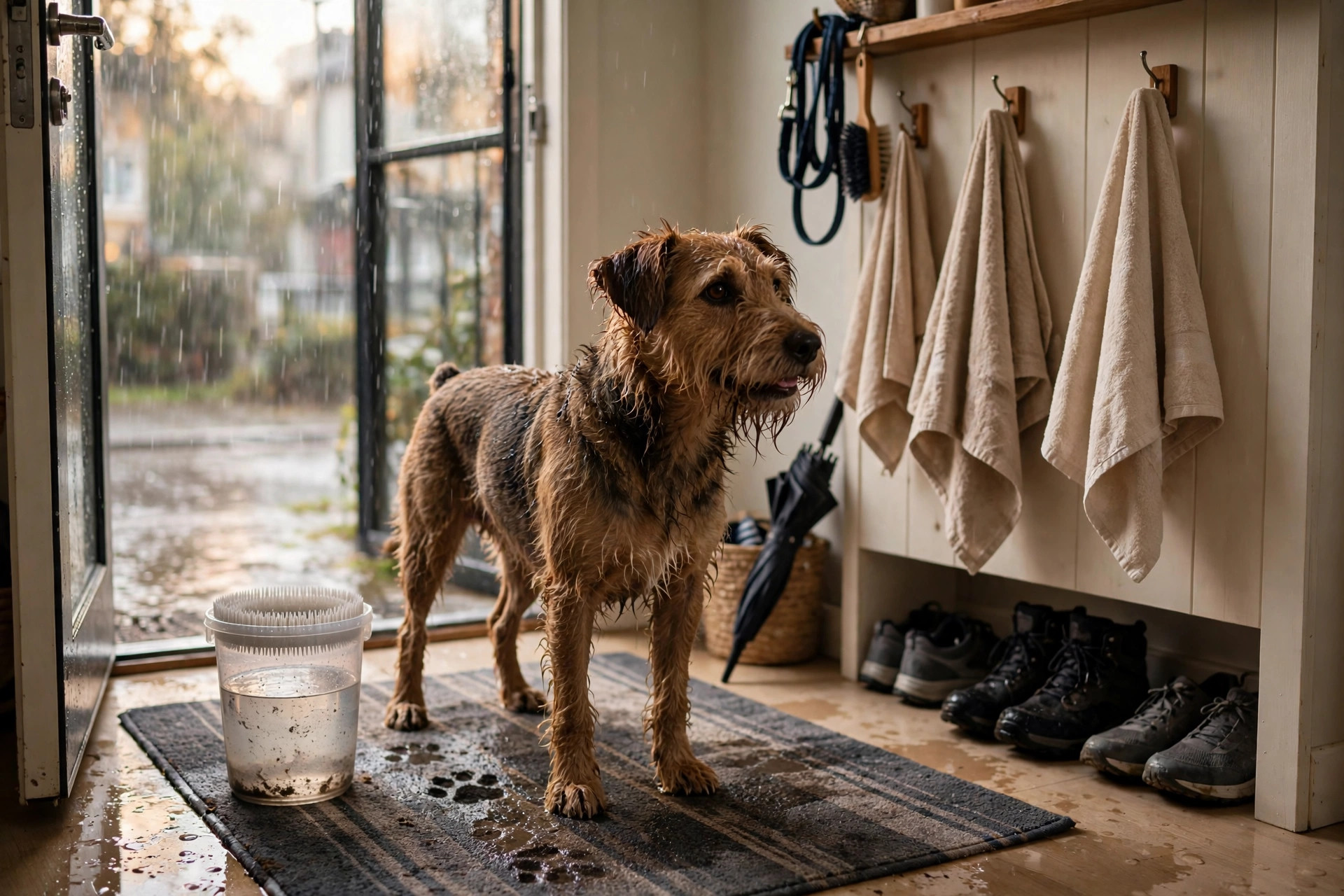
Every rainy walk ends the same way: a wet dog exploding through your front door onto floors you do not own. A proper towel setup — the right towels, in the right spot, with a 30-second routine — is the difference between a quick dry-off and a mopping session. In an apartment with no mudroom, this system is essential gear.
The 30-second entryway drill
The secret is not the towel; it is the choreography. Before you open the door, everything must already be in place. Here is the drill:
- Stage before you leave. Hang one large towel on the entryway hook and place the paw washer (filled) by the door. This takes 60 seconds and saves 10 minutes later.
- Doorway stop. Enter, close the door behind the dog, and cue a sit-stay on the doormat. The dog does not get hallway privileges until dry.
- Paws first (15 seconds). One paw at a time into the paw washer, twist gently, then press each paw into the towel. Muddy paws are 80% of the mess.
- Body rub (15 seconds). Drape the big towel over the back and rub with the grain. Belly and legs hold the most water — do not skip them.
- Release. Done. The dog is 90% dry and your floors survive.
Towel material science: GSM and why it matters
Not all towels dry dogs equally. Two specs matter:
- Microfiber vs. cotton: microfiber absorbs up to 7x its weight in water and dries fast between uses; cotton holds less and stays damp for hours in an apartment with no laundry line. For dog duty, microfiber wins on every axis except softness.
- GSM (grams per square meter): the density rating. 300–400 GSM is the sweet spot for dog towels — absorbent without being a heavy sodden blanket. Below 250 GSM feels thin and pushes water around; above 500 GSM takes forever to dry in a small apartment.
- Size: go bigger than you think. A 30×50 inch towel wraps a medium dog fully; large breeds need 36×60. A bath-towel-sized dog towel is not overkill — it is the minimum that works one-handed while holding a leash.
Four towel-setup picks compared
| Product | Best for | Usually | Apartment note |
|---|---|---|---|
| Soggy Doggy Super Shammy | The gold standard | Usually $20–$30 | Chamois-style microfiber; wrings out nearly dry and reuses immediately. Hangs on a hook without bulk. |
| Bone Dry Microfiber Dog Towel | Soft everyday towel | Usually $12–$20 | Plush microfiber in large sizes; embroidered bone motif. Great second towel for the rotation. |
| Dexas MudBuster Portable Paw Washer | Muddy-paw days | Usually $15–$25 | Fill with water, insert paw, twist — silicone bristles scrub mud out. The single biggest mess-reducer in the system. |
| Soggy Doggy Doormat | The sit spot | Usually $35–$55 | Super-absorbent chenille mat the dog waits on. Machine-washable; defines the "dry zone" at your door. |
The full entryway setup (under $80)
Here is the complete system, in purchase order:
- Two large microfiber towels ($25–$40 for two) — one Soggy Doggy shammy for heavy days, one Bone Dry for daily use. Rotation means you are never caught with a damp towel.
- One paw washer ($15–$25) — lives by the door, filled fresh on rainy days. Empty and rinse after use so it does not become a swamp.
- One absorbent doormat ($35–$55) — the designated sit-and-wait spot. Trains the dog that the door area has rules.
- One hook or over-door hanger ($5–$10) — the towel must live within arm's reach of the door, not in a closet down the hall.
- Rinse, don't just wipe. The paw washer becomes mandatory, not optional — salt needs water to dissolve off. A towel wipe alone leaves residue between the toes, where burns start.
- Paw balm before walks. A wax-based balm (such as Musher's Wax, usually $15–$25 for a tin that lasts months) creates a breathable barrier against salt and ice. Apply to pads and between toes before heading out; it also prevents snowball buildup in furry feet.
- Boots for extreme cases. Most dogs hate boots at first, but for heavy-salt city blocks they are the only full protection. Introduce them indoors with treats for a week before expecting a real walk.
- After every rainy walk: hang the used towel to air-dry (over the shower rod or a hook). Microfiber dries in a few hours with airflow.
- Every 2–3 uses: machine wash warm, no fabric softener — softener coats microfiber and kills absorbency. This is the most common way people ruin good dog towels.
- Weekly in rainy season: wash the doormat. It collects everything the towels miss.
- Monthly: deep-clean the paw washer with a bottle brush; check towels for sour smell, which means the wash routine needs tightening.
Total: roughly $80–$130 for the full setup, or under $50 for just the two-towel starter version. Either way, it is cheaper than one professional carpet cleaning.
Winter add-on: road salt, paw balm, and boots
Rain is one thing; winter road salt is another. De-icing salt burns paw pads, and dogs lick it off — which means ingestion. In salt season, upgrade the drill:
Keep the balm tin next to the leash hook with the towels — if applying it requires a trip to another room, it will not happen on a rushed morning.
The laundry cadence
FAQ
Can I just use old bath towels instead of dog towels?
You can, but microfiber dog towels absorb more and dry faster between uses — important when it rains three days straight. Old bath towels work as backups in the rotation.
Do paw washers really work, or are they a gimmick?
They genuinely work for mud and surface dirt: warm water plus the silicone bristles cleans paws far better than a towel wipe alone. They do not replace a full bath for truly filthy paws, but they handle 90% of rainy-day walks.
My dog hates having paws touched. Any tips?
Desensitize gradually: treats for touching one paw, then for holding it two seconds, then for the washer with no water, then with water. Most dogs accept it within a week of short positive sessions. Pair it with the lick mat for a calm association.
How do I keep the entryway itself from smelling like wet dog?
Ventilation plus routine: air-dry towels promptly (never ball them up wet), wash the doormat weekly in wet season, and wipe the floor by the door after rainy walks. An enzymatic spray on the mat monthly handles residual odor.
Is a dog dryer worth it for apartment life?
High-velocity pet dryers work brilliantly but are loud — a real problem with shared walls — and they blow loose fur everywhere in a small space. For most apartment owners, the towel-plus-paw-washer system dries the dog well enough without the noise complaint risk. Save the dryer for post-bath deep dries.