Best Small-Space Dog Feeding Mat for Messy Eaters
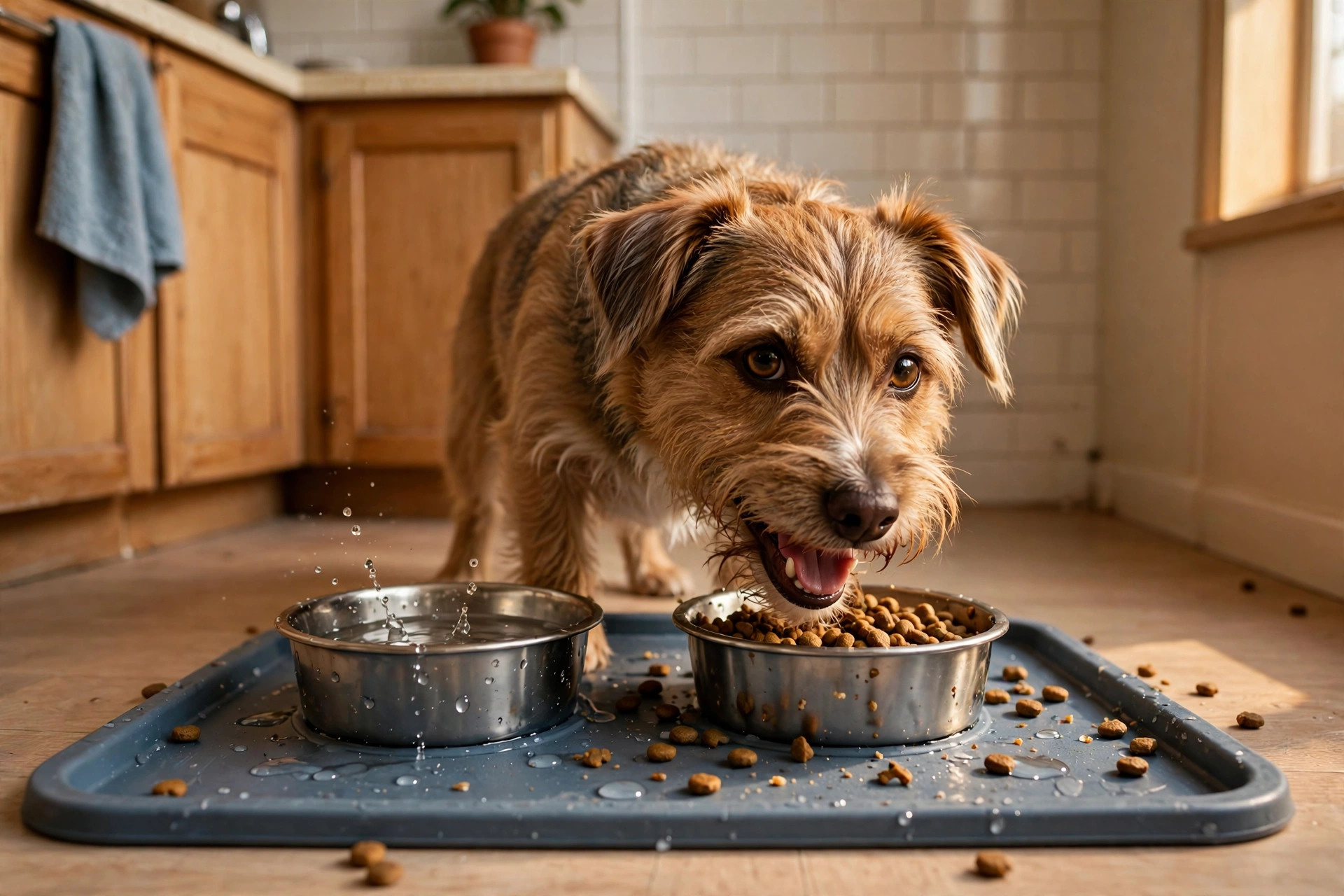
Some dogs eat like the bowl insulted them: kibble everywhere, water sloshed three feet in every direction, and a permanent damp halo on the floor. A feeding mat is the cheapest apartment upgrade there is — a defined, waterproof zone that catches the chaos and protects your floors and your security deposit.
Containment geometry: what actually catches mess
Not all mats contain equally. Two design features determine whether a mat works or just decorates the floor under the mess:
- Lip height. A raised edge of even half an inch stops water from running off and keeps kibble from scattering. Flat placemats look tidy but contain nothing — spilled water runs straight past the edge onto hardwood. For genuine messy eaters, a lipped tray-style mat is non-negotiable.
- Coverage area. The mat must extend well beyond the bowls. Dogs fling food outward in roughly a 12–18 inch radius; water slosh travels further. A mat that is exactly bowl-sized is a coaster, not containment.
Material grip matters too: the mat's underside should grip hard floors so the whole setup does not skate when a 60-pound dog hits the bowl at speed.
Material showdown: silicone vs. fabric vs. PVC
Feeding mats come in three materials, each with a real tradeoff:
- Silicone — waterproof, dishwasher-safe, grippy, nearly indestructible. The downside: thin silicone can feel flimsy, and cheap ones curl at the edges. Look for food-grade silicone at least 2mm thick.
- Fabric (microfiber/polyester with waterproof backing) — softer, absorbs dribbles instead of letting them pool, and looks more like home decor. The downside: it needs machine washing every few days or it starts to smell, and heavy chewers can shred it.
- PVC/vinyl — cheap and waterproof, but it cracks over time, can off-gas when new (air it out), and slides on smooth floors unless it has texture. Fine as a stopgap, not a long-term pick.
Four feeding mats compared
| Product | Best for | Usually | Small-space note |
|---|---|---|---|
| Gorilla Grip Waterproof Pet Feeding Mat | Best all-rounder | Usually $12–$20 | Silicone with a raised edge; multiple sizes up to 24x36. Grippy enough for enthusiastic eaters on tile. |
| Drymate Pet Bowl Placemat | Soft and absorbent | Usually $15–$25 | Fabric top wicks moisture, waterproof backing protects floors. Machine-washable; great for water-sloshers. |
| Reopet Silicone Dog Food Mat | Budget silicone | Usually $8–$14 | Large sizes for under $15. Thinner than Gorilla Grip, so best for light-to-medium mess makers. |
| Bone Dry Pet Feeding Mat | Looks like decor | Usually $14–$22 | Microfiber with non-slip backing in home-friendly patterns. For owners who hate the "pet corner" look. |
The sizing formula
Measure the footprint of your bowls side by side (length × width), then multiply each dimension by 1.5. That is your minimum mat size:
- Two 7-inch bowls side by side ≈ 14 × 7 inches → mat at least 21 × 11 inches (a standard 24 × 16 works).
- Large-breed setup with 8-inch bowls ≈ 16 × 8 → mat at least 24 × 12 inches.
- Water-bowl sloshers: add 6 inches to the water side. Water travels.
When in doubt, go one size up. An oversized mat in a small kitchen looks fine; an undersized one fails at its only job. And keep the mat's total footprint in mind against your kitchen layout — a 36-inch mat in a galley kitchen becomes a trip hazard. Measure your floor space before ordering: most mat returns happen because the mat looked bigger in the product photo than it is on a real kitchen floor.
Beyond the bowl: three more uses for the mat
A good feeding mat earns its floor space several ways:
- Under the water bowl — separately. Water deserves its own mat a few feet from the food. Dogs splash water further than they fling kibble, and a dedicated water mat near a wall stops the slow baseboard rot that costs deposits.
- Under slow feeders and lick mats. Maze bowls get shoved; lick mats get enthusiastic. A grippy silicone mat underneath keeps both in place on hard floors and catches what the maze does not.
- Travel and car use. A silicone mat rolls up and goes in a tote bag — instant clean feeding zone at a friend's apartment, an Airbnb, or the back of the car. Fabric mats fold flat for the same job.
What to avoid: flat "placemats" with no raised edge marketed as feeding mats (they contain nothing), and any mat that slides on your specific flooring — test it with a shove before the dog does. If it moves under your hand, it will move under a hungry Labrador.
The cleaning playbook
- Silicone mats: shake crumbs into the trash daily; dishwasher or hot soapy sink wash weekly. They do not hold odor, which is their superpower.
- Fabric mats: shake daily, machine wash every 3–4 days on warm. Keep two and rotate — one in use, one in the wash — so you never skip.
- Under the mat: mop or wipe the floor underneath weekly. Mats trap humidity; a quick wipe prevents the musty ring that renters discover at move-out.
FAQ
Will a mat stop my dog from pushing the bowls across the kitchen?
A grippy mat helps a lot — the bowls sit on high-friction silicone instead of slick tile. For dedicated bowl-pushers, combine the mat with a weighted or elevated bowl stand.
Are silicone mats safe if my dog chews them?
Food-grade silicone is non-toxic, but no mat survives a determined chewer intact — and swallowed chunks can cause blockages. If your dog chews the mat, switch to a heavy tray-style mat or supervise meals.
Can I use a feeding mat on carpet?
Yes, and you should — carpet is where feeding mess does the most lasting damage. Use a fully waterproof mat (silicone or vinyl-backed fabric) and check underneath weekly for trapped moisture.
How often should I replace a feeding mat?
Silicone mats last years; replace when the edges curl permanently or the surface gets gouged. Fabric mats typically last 6–12 months of regular washing before the waterproof backing degrades.
My dog drags the mat around the kitchen. Fixes?
First, check the mat's underside grip on your specific flooring — texture that grips tile may slide on laminate. If grip is fine and the dog still drags it, the mat is probably too light for the dog: switch to a heavier lipped silicone mat, or place the mat against a wall so it cannot travel far. As a last resort, a small strip of double-sided carpet tape under two corners (on hard floors only) ends the migration.
Should the mat go under both food and water bowls?
One large mat works if the bowls sit side by side, but separate mats are better in practice: water splashes further than kibble flies, and you can wash the water mat on a different schedule. At minimum, make sure the water side has extra coverage.