Best Slow Feeder Bowl for Apartment Dogs
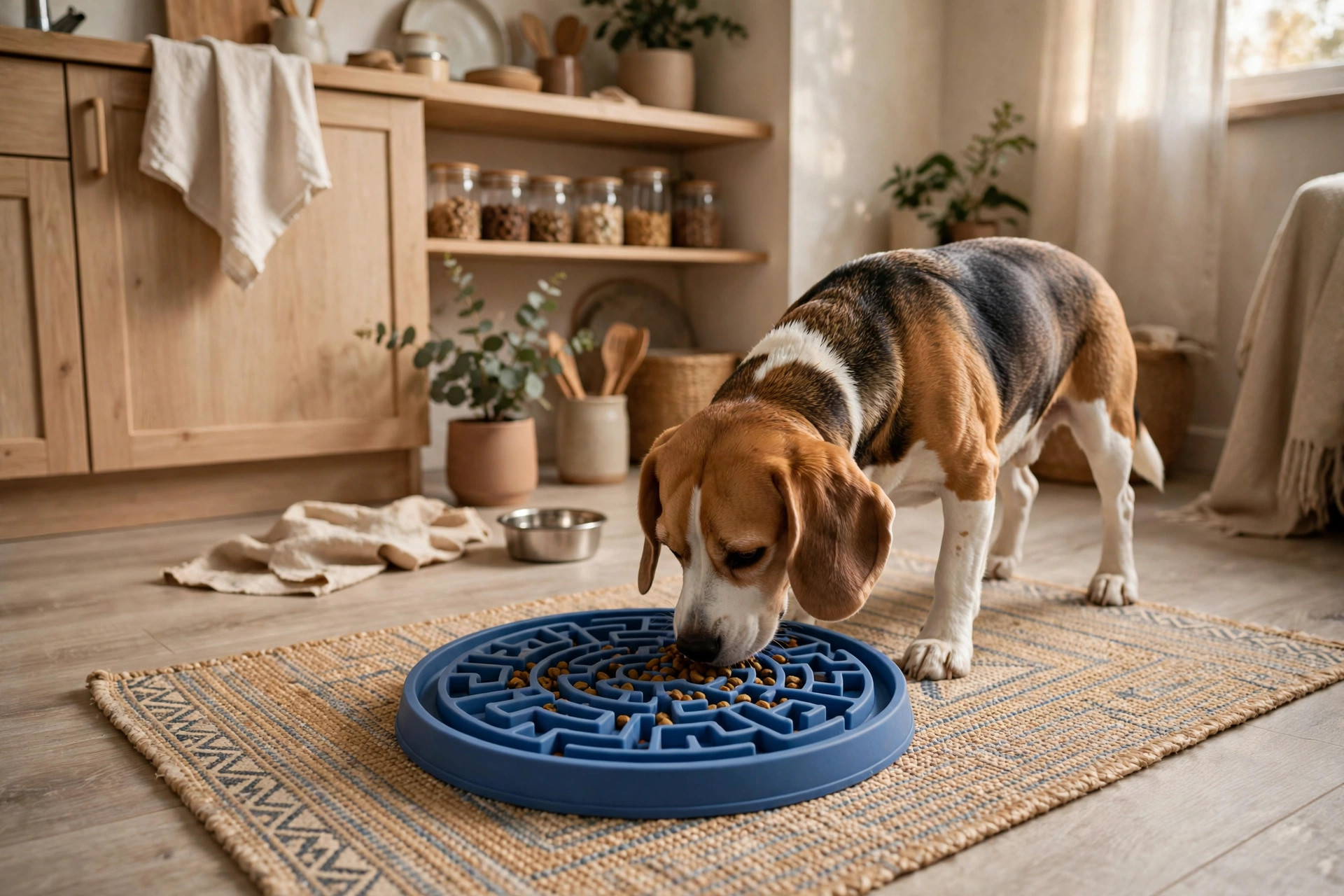
Some dogs do not eat dinner so much as inhale it. A slow feeder bowl — with ridges, mazes, or bumps molded into the base — forces your dog to work around obstacles, stretching a 90-second scarf into a 5–8 minute meal. In an apartment, that slower pace also means less post-meal zoomies, less vomiting from speed-eating, and a calmer transition into evening rest.
The 90-second problem
Speed-eating is not just untidy. Dogs that bolt their food swallow excess air, which causes regurgitation minutes after the meal — a special joy when it happens on a rental carpet. Fast eating is also linked to a higher risk of bloat (gastric dilatation-volvulus), a genuine emergency, particularly in deep-chested breeds like German Shepherds, Boxers, and Great Danes. A slow feeder will not eliminate bloat risk, but slowing intake is one of the few at-home measures vets consistently recommend.
Time your dog's current meal with your phone. Under two minutes for a full portion is the threshold where a slow feeder starts paying for itself. Most owners are surprised: "fast eater" usually means 45–90 seconds.
Maze difficulty: pick the right tier
Slow feeders come in difficulty levels, and this is where most buyers go wrong — they buy the hardest maze and create a frustrated dog. Match the tier to your dog:
- Easy (shallow swirls): for beginners, seniors, flat-faced breeds, and any dog new to slow feeders. Slows meals roughly 2–3x. This is where 80% of dogs should start — and many never need more.
- Medium (deeper channels): for healthy adult dogs that mastered easy and still finish under 4 minutes. Slows meals roughly 3–5x.
- Hard (tight spirals, narrow gaps): for puzzle-obsessed dogs only. Can frustrate average dogs into flipping the bowl. Also harder to clean — narrow channels trap wet food.
Four slow feeders compared
| Product | Best for | Usually | Small-space note |
|---|---|---|---|
| Outward Hound Fun Feeder Slo-Bowl | The standard pick | Usually $9–$16 | Comes in three maze patterns and four sizes; non-slip base. The turquoise "drop" pattern is the ideal starter. |
| Frisco Bone Slow Feeder Bowl | Budget multi-dog homes | Usually $7–$12 | Simple bone-channel maze, dishwasher-safe. Cheap enough to buy two if you have two dogs. |
| Mighty Paw Slow Feeder Bowl Insert | Keep your current bowls | Usually $12–$18 | A maze insert that drops into a standard bowl — no extra bowl to store, which matters in tiny kitchens. |
| Mr. Peanut's Slow Feed Bowl | Stainless steel fans | Usually $20–$30 | One of the few stainless slow feeders; heavier and harder to flip. Worth it for determined bowl-flippers. |
The sizing math
A slow feeder that is too small overflows; too large and the maze does nothing because kibble spreads thin. Here is the formula:
- Measure one meal's volume in cups (most 30–50 lb dogs eat 1.5–2.5 cups per meal).
- Add 25%. A 2-cup meal needs a bowl rated for at least 2.5 cups, because the maze ridges displace volume.
- Check the base diameter against your feeding spot. Most medium slow feeders are 8–9 inches across — confirm it fits your mat or tray.
- Flat-faced breeds (pugs, bulldogs, shih tzus) need shallow, wide mazes regardless of size — deep channels they cannot reach cause frustration, not slower eating.
The 7-day transition plan
Do not swap the regular bowl for a hard maze overnight. Dogs that find mealtime suddenly difficult can develop anxiety around the bowl itself. Follow this ramp instead:
- Days 1–2: easy-tier maze, half the normal portion in the slow feeder and half in the old bowl. Let the dog discover the maze is rewarding, not punishing.
- Days 3–4: full portion in the easy maze, old bowl retired. Time the meal — you are aiming for 3–5 minutes.
- Days 5–6: if meals are still under 3 minutes and the dog is relaxed, try the medium tier. If the dog paws, barks, or walks away, stay on easy — there is no prize for difficulty.
- Day 7: assess. A good outcome is a 4–8 minute meal with a calm dog that lies down afterward. That is your permanent setup.
Two troubleshooting notes. First, wet food works in shallow easy-tier mazes but becomes a cleaning nightmare in deep hard-tier channels — for wet-food dogs, pair an easy maze with a lick mat rather than fighting the deep maze. Second, in multi-dog homes, feed slow-feeder dogs separately or behind a barrier; a fast eater watching a slow eater can trigger resource tension that did not exist before.
When not to use a slow feeder
Slow feeders are not for every dog. Skip them — or ask your vet first — if your dog:
- Is a puppy under 4 months still learning that the bowl is safe (frustration can create food anxiety).
- Has dental pain, missing teeth, or a jaw condition that makes licking around ridges painful.
- Resource-guards and becomes more tense when meals take longer — for these dogs, a longer meal can mean a longer guarding episode.
- Eats wet food exclusively in a deep maze — the cleaning burden becomes unreasonable. Use a lick mat instead (see our lick mat guide).
FAQ
How much slower will my dog actually eat?
Expect 2–5x slower depending on the maze tier: a 90-second meal typically becomes 4–8 minutes on easy/medium patterns. Time it before and after — most owners underestimate the change.
Are slow feeder bowls dishwasher-safe?
Most plastic ones (Outward Hound, Frisco) are top-rack dishwasher-safe, which matters because maze channels trap residue. Stainless options like Mr. Peanut's can go anywhere in the dishwasher.
My dog flips the slow feeder over. What now?
Three fixes, in order: put a non-slip mat underneath, switch to a heavier stainless feeder, or use a maze insert inside a heavy ceramic bowl the dog already respects.
Can I use a slow feeder for water too?
No — dogs should never have water intake restricted or complicated. Slow feeders are for food only; water stays in a plain bowl.
Can I put a slow feeder inside the crate?
Yes, and it is a great combination: the crate becomes the calm feeding zone and the maze extends the settle time. Just make sure the crate is large enough that the dog can stand, turn, and lie down comfortably with the bowl inside — for most medium dogs that means a 36-inch crate minimum.
How long do slow feeder bowls last?
Plastic maze bowls typically last 1–2 years of daily use before the ridges wear smooth or the base warps in the dishwasher. Stainless options last much longer. Replace any bowl with deep scratches or cracks, which harbor bacteria.