Best Freeze-Dried Dog Treats for Training in Small Spaces
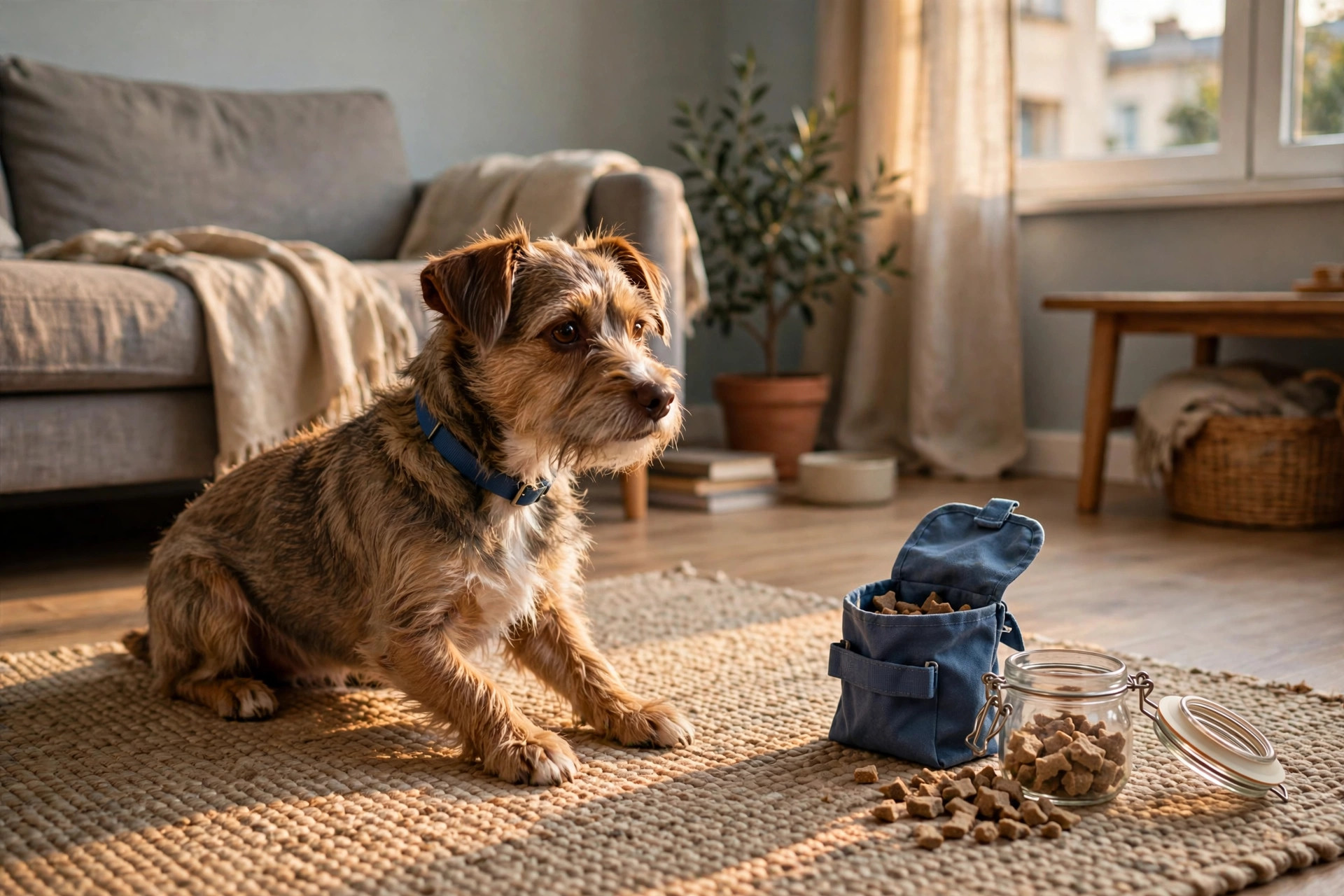
Training a dog in an apartment means training in your living room, hallway, and kitchen — often in short bursts between work calls. Freeze-dried treats are the indoor trainer's best friend: high value for the dog, low mess for you, and easy to break into tiny pieces for rapid-fire reps.
Why freeze-dried wins indoors
Freeze-drying removes moisture while keeping the raw ingredient nearly intact, which gives you three apartment advantages at once. First, value: a pea-sized piece of freeze-dried beef liver outranks a whole biscuit in most dogs' minds, so you need less. Second, low crumb: unlike baked biscuits that shatter into rug-bound debris, freeze-dried pieces snap cleanly and do not grease your floors. Third, portion control: the pieces break easily, so one "treat" can become six micro-rewards — critical when you are doing fifty reps in a ten-minute hallway session.
Compare that to soft commercial treats, which leave residue on your hands and your couch, or cheese cubes, which are effective but turn your treat pouch into a dairy crime scene by day two. For small-space training, freeze-dried is simply the cleanest high-value option.
The treat math nobody does (but should)
The standard veterinary guideline is that treats should stay under 10% of daily calories. Here is what that means in practice for apartment training:
- A 20-pound dog eating ~600 kcal/day gets a 60 kcal treat budget. At ~5 kcal per small freeze-dried liver piece, that is about 12 pieces — one solid training session.
- A 50-pound dog eating ~1,100 kcal/day gets ~110 kcal, roughly 20+ small pieces or two short sessions.
- Doing two sessions a day? Halve the pieces per session, or cut the evening meal by a matching amount. Dogs in apartments already run a calorie surplus risk from lower activity.
Also check the bag's kcal/kg or kcal per piece — reputable freeze-dried brands print it. If a brand hides its calorie content, that is a small red flag. And prefer single-protein recipes: if your dog develops itchy skin or soft stool, you will know exactly which protein to suspect.
Four freeze-dried treats compared
| Product | Best for | Usually | Small-space note |
|---|---|---|---|
| Stella & Chewy's Freeze-Dried Raw Dinner Patties | Widest availability | Usually $25–$40 per bag | Patties crumble easily into training-size bits; sold in nearly every pet store for emergency restocks. |
| Primal Freeze-Dried Nuggets | Single-protein clarity | Usually $28–$45 per bag | Nuggets are pre-portioned and low-crumb; the turkey and beef formulas are single-protein. |
| Instinct Raw Freeze-Dried Bites | Budget-friendly training | Usually $18–$30 per bag | Smaller bite size out of the bag means less breaking work; good value for high-rep sessions. |
| Vital Essentials Freeze-Dried Raw Treats | Minimal ingredients | Usually $15–$28 per bag | Often literally one ingredient (e.g., beef liver). The simplest label of the four — ideal for sensitive stomachs. |
If you are just starting out, grab Vital Essentials beef liver for training value and keep a bag of Instinct bites for everyday reps. That two-bag system covers high-distraction work (doorbell, hallway) and routine practice (sit, place) without overspending.
The three-minute session protocol
Apartment training works best in micro-sessions. Here is the format professional trainers recommend for small spaces:
- Set a timer for 3 minutes. End while the dog still wants more — quitting early builds drive for the next session.
- One skill per session. "Place" on the mat, or "quiet" at the doorbell sound. Do not mix.
- Reward every 3–5 seconds at first (rapid-fire pea-sized pieces), then stretch the interval as the dog gets it. A 3-minute session uses roughly 15–25 micro-pieces.
- End with a jackpot — three pieces at once — then put the treats away. The session ending becomes part of the routine.
Two or three of these sessions a day beats one exhausting 20-minute drill, and it fits between meetings without anyone leaving the apartment.
How to read a freeze-dried label in 30 seconds
You do not need a nutrition degree — just check four things:
- Ingredient list length. For training treats, shorter is better. "Beef liver" as the sole ingredient is ideal. Long lists with glycerin, "natural flavors," and multiple meals are not deal-breakers, but they make the treat harder to break cleanly and add calories you cannot account for.
- Calorie content. Look for kcal/kg or kcal per piece. Reputable freeze-dried brands print it; brands that hide it make your 10% budgeting guesswork. As a rough guide, single-ingredient meat treats run about 3,500–4,500 kcal/kg.
- Guaranteed analysis. Crude protein above 40% and moderate fat (15–30%) is typical for meat-based freeze-dried treats. Extremely high fat (40%+) means richer treats — fine in tiny pieces, but cut the count.
- Origin and AAFCO statement. US, New Zealand, or Canadian sourcing is the norm for the brands above. An AAFCO "complete and balanced" statement only matters if you are feeding it as food; for treats, its absence is normal and fine.
One more label trap: "freeze-dried coated" kibble is not the same as freeze-dried treats — it is regular kibble with a dusting of raw coating, and it crumbles like kibble. For training value, you want actual freeze-dried pieces.
Storage: the part everyone gets wrong
Freeze-dried treats go stale fast once opened — moisture is the enemy. Reseal the bag tightly, squeeze the air out, and store it in a cool, dry cabinet (not above the stove). In humid climates, toss the bag in an airtight container; a $5 cereal container works perfectly. Most bags stay fresh 4–6 weeks after opening if sealed well. If pieces feel soft or spongy instead of crisp, they have absorbed moisture — still safe, but less appealing to the dog and harder to break cleanly.
FAQ
Are freeze-dried treats safe to handle? I heard about bacteria.
Reputable brands use high-pressure processing or testing protocols to control pathogens, but treat them like raw meat: wash your hands after handling, do not let toddlers handle them, and keep them away from kitchen prep surfaces.
Can I use freeze-dried treats as meal replacements?
Complete-and-balanced freeze-dried formulas (like Stella & Chewy's patties) can, but single-ingredient treats (pure liver) cannot — they are not nutritionally complete. Check the bag for an AAFCO statement.
My dog inhales the pieces without chewing. Is that okay?
For pea-sized training pieces, yes — the point is speed of delivery, not chewing. Just make sure pieces are small enough not to be a choking risk for your dog's size.
How do freeze-dried treats compare to training with kibble?
Kibble works for easy reps in low-distraction settings, but most dogs will not work hard for it. Use kibble for maintenance, freeze-dried for teaching new skills or working around distractions like hallway noises.