How to Feed Two Cats in a Small Apartment Without Fights
Two cats, one small kitchen, and a twice-daily standoff over the bowls: feeding friction is the most common multi-cat problem in apartments, and the most fixable. Cats are solitary eaters by design, so the cure is mostly geography — six feet of separation, no shared eye-line, scheduled meals — backed up, only when needed, by slow feeders and microchip technology that ends food theft for good.
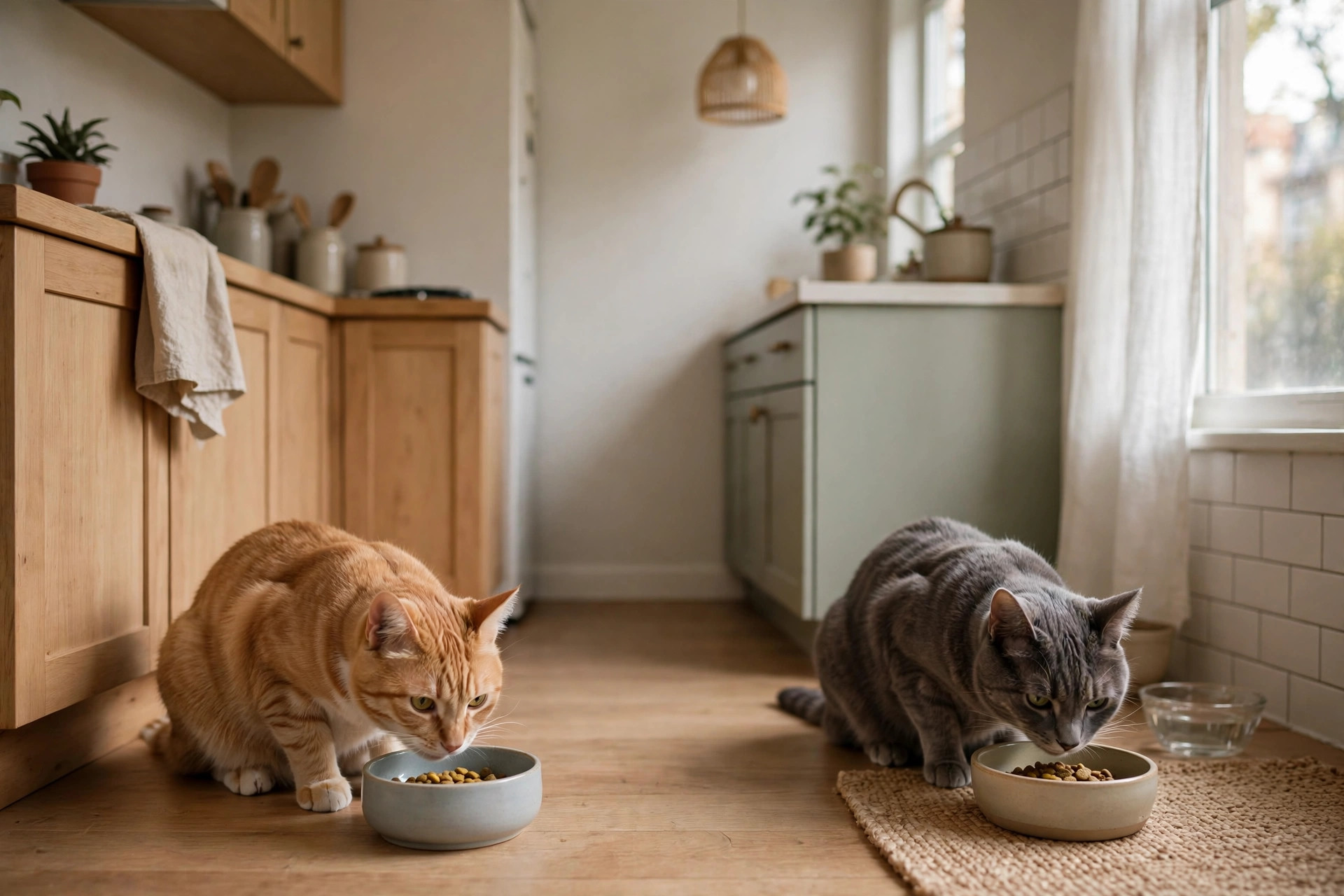
- Cats are solitary eaters. Two bowls side by side force togetherness at the exact moment a cat least wants company.
- Aim for at least 6 feet of separation, out of direct eye-line, before you buy any technology — distance solves most feeding friction for free.
- Slow one eater down before you speed the shy one up: a gulper with a slow-feeder bowl stops patrolling for leftovers.
- Microchip feeders (SureFeed, usually $170–$200) are the reliable fix when one cat needs prescription food or steals meals.
- Fights that escalate to chasing, fur, or a cat who stops eating are a vet-and-behavior conversation, not a furniture problem.
The real problem: cats eat alone in nature
Most feeding fights in small apartments are not about food quality or hunger. They are about geography. A domestic cat's wild relatives hunt, eat, and rest alone, and your two cats carry that software even if they happily share a sofa in the afternoon. Mealtime is the one moment of the day when a cat wants zero social negotiation. Put two bowls a foot apart because the kitchen is small, and you have scheduled a twice-daily staring contest over the exact resource both cats care about most.
The friction usually shows in one of three patterns. The bold cat eats fast, then simply walks to the second bowl and inserts its head; the shy cat yields and later begs, vomits from sneaking gulps, or quietly loses weight. Or the two cats eat in tense silence but one starts guarding the kitchen doorway between meals. Or meals look peaceful, yet one cat begins eating in the litter-box room or another odd corner — it has voted for solitude with its feet. All three patterns have the same cause and mostly the same cure: distance first, barriers second, technology third.
Step one: the 6-foot, no-eye-line setup that costs nothing
Before buying anything, measure your feeding spots. Six feet of separation with a visual interruption — the end of a kitchen counter, a door frame, a low bookcase — removes most tension because neither cat can monitor the other's bowl while eating. In a studio, that may mean one bowl in the kitchenette and one in the bathroom doorway, or one on the floor and one on a wide, stable shelf the shy cat already uses. Feed on washable mats in genuinely separate zones, and put the water somewhere else entirely: cats prefer water away from food, and a shared water station near the bowls recreates the chokepoint you just removed.
Feed at the same two times daily and pick the bowls up after 20–30 minutes. Scheduled meals end the all-day buffet that lets a bold cat snack-patrol, and they give you information: you see exactly what each cat ate, which is the earliest warning system for illness in a multi-cat home. If one cat eats on a raised spot, add a non-slip surface and make sure the route up does not cross the other cat's bowl — the journey to dinner should not require passing the rival.
- Studio layout: bold cat in the kitchenette corner, shy cat behind the sofa's visual break, water by the entry.
- One-bedroom layout: one bowl in the kitchen, one just inside the bedroom door; close neither door — escape routes matter more than closed doors.
- Two bold cats: opposite ends of the same room can work if both eat at the same pace and leave together; test with cameras before trusting it.
Step two: slow the fast cat before managing the shy one
In most pairs, one cat finishes in three minutes and spends the next ten looking for a second shift. A slow-feeder bowl changes that arithmetic. The LickiMat Casper or a ceramic puzzle bowl (usually $12–$22) stretches a wet-food meal to ten minutes, and the Catit Senses food tree (usually $20–$28) does the same for kibble. Meanwhile a simple raised, tilted bowl suits the shy cat, who then eats comfortably in fewer minutes and leaves on its own schedule. Our slow-feeder guide compares shapes for cats who inhale food.
Puzzle feeders also turn the bold cat's leftover-hunting energy into work. A Doc & Phoebe's NoBowl-style mouse (usually $15–$25 per set) hidden in the bold cat's zone after meals keeps the patrol instinct busy away from the shy cat's mat. What does not work: scolding the thief, or feeding the shy cat on your lap 'to protect it.' Both teach the cats that meals are a high-emotion human event, which raises the stakes of every future dinner.
Step three: microchip and RFID feeders compared
When one cat needs prescription food, medication in meals, or a strict calorie count, separation by room is fragile and a selective feeder is the honest fix. Three models cover most apartment situations:
| Model | How it opens | Typical price | Small-apartment note |
|---|---|---|---|
| SureFeed Microchip Pet Feeder | Reads implanted microchip or collar tag | Usually $170–$200 | Quiet lid, small footprint; the benchmark for prescription diets. |
| Petlibro One RFID Feeder | Collar tag, one cat per unit | Usually $80–$110 | App scheduling; collar tag required, so best for collar-tolerant cats. |
| Cat Mate C500 | Timer only — no identity check | Usually $50–$70 | Five timed meals with ice pack; schedules meals but cannot stop a thief. |
Budget one selective feeder for the cat whose food must be protected, and keep the other cat on a puzzle feeder. Training takes most cats three to seven days: lid open and still, then moving with treats under it, then normal meals. Place the unit against a wall so the rightful cat cannot be shouldered aside mid-bite, and keep its 12-inch approach lane clear — in a small kitchen, that lane is usually the difference between a cat who uses the feeder confidently and one who gives up on it.
If neither cat wears a collar happily and neither is microchipped, the low-tech equivalent is a feeding station inside a large storage tote or a bathroom with a microchip cat flap (SureFlap, usually $120–$160) fitted to a door or a panel. It costs more carpentry than money, and renters should put the flap in a removable panel rather than the landlord's door.
The 10-day reset when meals have already turned tense
If the cats currently hiss, swat, or chase around food, do not start at six feet in the same room. Days 1–3: feed on opposite sides of a closed door, bowls two feet back from the door, so each cat smells the other while eating without any visual contact. Days 4–6: same door, now open two inches with a door strap, or feed across a baby gate (usually $35–$70) with a towel over the lower half. Days 7–10: gate without the towel, bowls six feet apart, and a person reading a book in the room — present, boring, and not refereeing.
Advance only on two consecutive peaceful meals: both cats eat promptly, leave when finished, and show no doorway guarding afterward. Any day with a chase means repeat the previous step for two days. Weight is your objective scorecard — weigh both cats weekly during the reset (a $25–$40 baby scale works for most cats) and write it on the fridge. A shy cat gaining or holding weight tells you the plan is working even before the body language looks relaxed.
Escalate to your veterinarian if a cat stops eating for more than 24 hours, loses weight despite access, or if fights break skin. Appetite change in cats is a medical symptom as often as a social one, and no feeding layout fixes a sore tooth.
FAQ
How far apart should two cats' bowls be?
At least 6 feet and out of direct eye-line is the working rule; more distance is better in a studio. Opposite sides of a visual break — a counter end or door frame — beats side by side at any distance.
Do I need two microchip feeders for two cats?
Usually one: protect the cat whose food is prescription, medicated, or calorie-controlled, and give the other cat a puzzle feeder. Two selective feeders make sense when both cats eat different therapeutic diets.
My cats share a sofa but fight over food. Are they bonded or not?
Both can be true. Affectionate resting together does not change solitary eating instincts. Treat feeding as a separate system from the rest of their relationship and the fights usually stop without touching the friendship.
Should I feed cats on a schedule or free-feed?
Scheduled meals, twice a day, picked up after 20–30 minutes. Free-feeding makes intake invisible, keeps food worth guarding all day, and is the single most common setup behind feeding friction.
What if one cat finishes and watches the other eat?
Watching from a distance while lying down is usually fine. Watching from inside the other cat's escape route is not — move the bold cat's bowl so its natural post-meal path does not pass the shy cat, and add a post-meal puzzle toy in the bold cat's zone.