Best Slow Feeder Bowls for Cats That Inhale Food
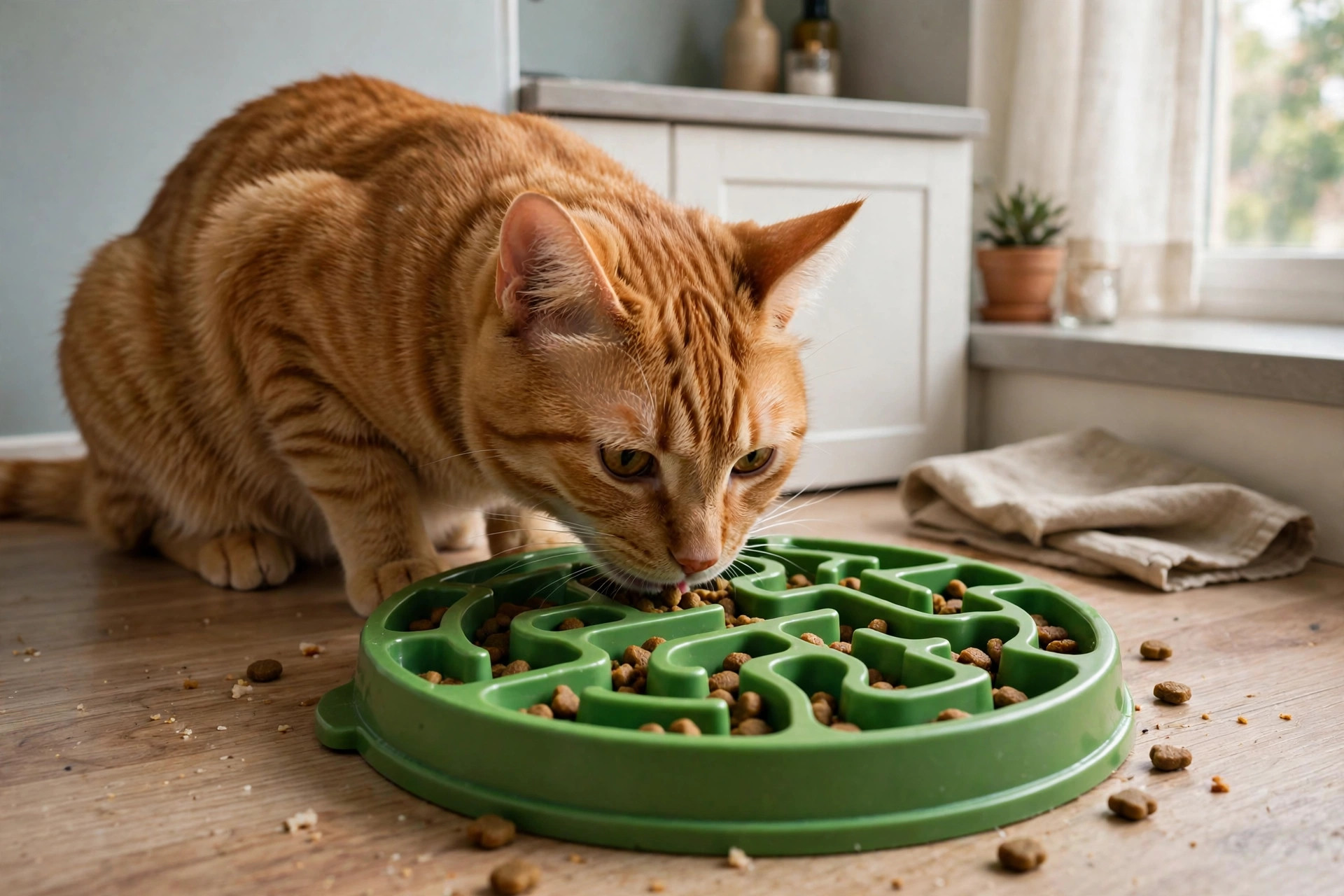
Some cats don’t eat — they vacuum. If yours finishes dinner in ninety seconds and redeposits it on the rug five minutes later, a slow feeder is the cheapest fix in pet gear. But not every maze bowl suits apartment life: the wrong one is a 2 a.m. percussion instrument on hard floors, and the wrong material is a cleaning chore you will abandon by week three.
- Vomiting minutes after meals is the classic sign that eating speed — not the food — is the problem. Rule out medical causes with a vet first if the vomiting is new or frequent.
- A good puzzle feeder slows a determined gobbler 3–5x — not 20x, whatever a product page promises.
- Noise is the hidden apartment spec: hard plastic mazes batted across tile at night are loud. Silicone mats are nearly silent.
- Dishwasher-safe beats hand-wash-only. You will clean this thing every single day; design for the laziest version of yourself.
- Start easy. A brutally hard puzzle on day one just frustrates a hungry cat into flipping the bowl — or giving up on dinner.
Why cats inhale food — and when speed is a vet question
Fast eating is usually normal cat logic. In the wild, small predators eat quickly in case a bigger one shows up, and indoor cats keep the instinct: past or present competition, boredom that makes meals the day’s highlight, and former-stray food insecurity all produce gobblers.
The mechanics of “scarf and barf” are simple: swallowed air plus a stomach filled faster than it can signal fullness, and the whole meal comes back up within minutes, mostly undigested. A slow feeder fixes the mechanics by forcing pauses. But speed up the timeline to a vet visit if any of these are true:
- The speed is new. A lifelong gobbler is a personality; a cat that suddenly starts inhaling food may have a thyroid issue, diabetes, or intestinal parasites driving real hunger.
- Weight is dropping despite the appetite. Eating fast and losing weight is a medical pattern, not a feeding-style problem.
- Vomiting persists after slowing down. If a slow feeder fixes the speed but the vomiting continues, the cause was never speed. Food sensitivities, hairballs, and inflammatory bowel disease all need a vet, not a maze bowl.
5 slow feeders ranked for serious gobblers
Every product below is a real, widely sold feeder — no obscure brands. Prices are typical street prices. They are ordered by how much they actually slow a determined cat, not by popularity.
| Product | Best for | Typical price | Apartment notes |
|---|---|---|---|
| Northmate Catch Interactive Feeder | Maximum slowdown, dry food | Usually $12–$18 | The green “grass” of flexible spikes forces true nose-and-paw work — the biggest slowdown on this list. Downsides for apartments: cats bat it around on hard floors (noisy at night without a mat underneath), and the spikes need a bottle brush to clean properly. |
| LickiMat Casper | Wet food, silent operation | Usually $9–$13 | A textured silicone mat you spread wet food or purées across — licking is inherently slow and nearly silent, ideal for thin walls. Dishwasher-safe and cheap enough to own two. Less effective for dry kibble, which determined cats can still Hoover off the grooves. |
| Catit Senses 2.0 Digger | Paw-digging fun, easy cleaning | Usually $14–$20 | Kibble goes into tubes of varying widths; the cat fishes pieces out with a paw. Good middle-ground slowdown, and the smooth tubes rinse clean in seconds. Small capacity per tube — best for meals split into two fillings or for treat-based slowing. |
| Doc & Phoebe’s NoBowl Feeding System | Full hunting simulation | Usually $25–$35 | Five mouse-shaped feeders you hide around the home; the cat “hunts” each portion. The best enrichment on this list and zero bowl footprint — a genuine plus in tiny apartments. The cost is your effort: filling five mice daily, and retrieving the one that migrated under the sofa. |
| Catit Senses 2.0 Food Tree | Vertical batting, visual fun | Usually $22–$30 | A tower the cat bats kibble down through, level by level. Moderate slowdown and genuinely entertaining to watch. Needs a stable, level floor — wobbly on uneven tile — and enthusiastic batters can make the top chamber rattle. |
Our take: start with the LickiMat Casper for wet-food cats (silent, cheap, dishwasher-safe) or the Northmate Catch for dry-food gobblers who need maximum slowdown. Add the Catit Digger for paw-work enrichment without the noise. The NoBowl system is the endgame for boredom-driven gobblers — it replaces the bowl entirely — but only if you commit to the daily hiding ritual. For the canine version of this problem, see our slow feeder guide for apartment dogs.
The 2 a.m. problem: slow feeders make noise too
Irony of slow feeders: the harder a cat works for food, the more sound the work makes. In a house nobody cares. In a studio at 2 a.m., a plastic maze skittering across tile is a neighbor complaint with extra steps. Match the feeder to your floors and your schedule:
- Hard floors + light sleeper: stick to silicone (LickiMat) or felt-based designs. If you already own a plastic maze, a $10 silicone mat underneath cuts the skitter dramatically — it is the highest-ROI accessory in this whole guide.
- Carpet or rugs: you have far more freedom. The Northmate and Catit toys are all fair game; carpet absorbs most of the batting noise.
- Move the last meal earlier. A puzzle feeder at 10 p.m. is a noise event; at 7 p.m. it is evening entertainment. Shifting the final meal earlier solves most nighttime noise without new gear.
- Feed away from shared walls. The wall you share with the neighbor’s bedroom is the worst possible feeder location. A kitchen corner or entryway keeps the percussion on your side of the building.
The maze tax: cleaning effort by feeder type
Every crevice that slows your cat also traps food — that is the maze tax, and it is paid daily. Biofilm and dried food in grooves turn bacterial within days, so be honest about which cleaning routine you will actually sustain:
- Silicone mats (LickiMat): the easiest — dishwasher top rack or a 30-second hand wash. Own two and rotate so one is always clean.
- Smooth tubes and towers (Catit Digger, Food Tree): rinse clean in seconds; a bottle brush once a week handles the corners. Among the lowest-effort puzzle options.
- Spike and groove mazes (Northmate): the highest tax. Kibble dust packs between the spikes and needs a dedicated brush; plan on a real scrub every few days, not just a rinse.
- Fabric mice (NoBowl): machine-washable, but they hold odor over time — replace the set every few months, and keep a spare set so washing day does not cancel dinner.
Material note: some cats develop chin acne from plastic dishes. If your cat is prone to it, favor silicone, stainless, or ceramic-touch surfaces and wash the feeder daily — the acne usually clears once the irritant is gone. This is also a good reason to keep the rest of the feeding setup clean; see our small-kitchen feeding station guide for the full layout.
How to switch a gobbler without a hunger strike
Dropping a starving-fast cat in front of a maximum-difficulty puzzle is how feeders end up flipped, ignored, or peed next to. A 7–10 day transition works far better:
- Days 1–3: easy mode. Fill the puzzle loosely — fewer obstacles engaged, food sitting on top where it is visible. The goal is only “this new thing contains food,” not a workout.
- Days 4–6: raise the difficulty. Fill grooves properly, engage all the maze features, or hide the NoBowl mice in slightly trickier spots. Most cats show curiosity rather than frustration by now.
- Days 7–10: full difficulty, split meals. Divide the daily portion across 3–4 puzzle servings. Smaller, more frequent challenges slow eating more than one big difficult meal — and match a cat’s natural grazing rhythm.
- Never use hunger as the teacher. If the cat has not figured it out in 15 minutes, help — tap the feeder, drop a treat on top, or temporarily go back a difficulty step. A frustrated cat does not learn; it just gets stressed, and stress eating is faster eating.
FAQ
Will a slow feeder stop my cat vomiting after meals?
Often yes — if speed is the cause. Most “scarf and barf” episodes disappear once meals take several minutes instead of seconds. But if vomiting continues after the eating pace is fixed, the cause was never speed: food sensitivities, hairballs, eating non-food items, or intestinal issues all need a vet visit, not a different bowl.
Are slow feeders safe for flat-faced breeds like Persians?
Choose shallow, wide designs — lick mats and low-profile mazes work well. Avoid deep, narrow grooves that a flat face cannot reach into; the cat will just get frustrated and flip the bowl. Brachycephalic cats also benefit most from the LickiMat style, since licking needs no muzzle depth at all.
Can I use a slow feeder for wet food?
Lick mats are ideal for wet food — that is their home turf. Most hard-plastic maze bowls are designed for dry kibble; wet food in the grooves turns into a cement that is miserable to clean. If your cat eats wet food exclusively, the LickiMat plus a second mat in rotation is the whole solution.
My cat just flips the feeder over. Now what?
Three fixes, in order: put a silicone anti-slip mat underneath, move the feeder against a wall so it cannot be shoved, and drop back to an easier difficulty — flipping is usually frustration, not athletic ambition. Heavier designs (ceramic-touch or weighted bases) also resist flipping better than ultralight plastic.
Do slow feeders help with boredom too?
Yes — that is the underrated benefit. A puzzle feeder turns a 60-second meal into 5–10 minutes of mental work, which is real enrichment for an indoor cat. Our cat enrichment guide for tiny apartments pairs well with anything on this page.