Crate Train Without Annoying Your Neighbors
Every crate-training guide says some crying is normal. In an apartment, “normal crying” at 11 p.m. is a text from the neighbor below. So apartment crate training is really two trainings at once: teach the dog that the crate predicts good, boring things, and engineer the whole setup — crate size, room, wall, schedule — so the learning happens at hours and volumes your building can absorb. Done in phases over one to two weeks, most dogs settle with far less noise than owners fear, and many end up choosing the crate on their own.
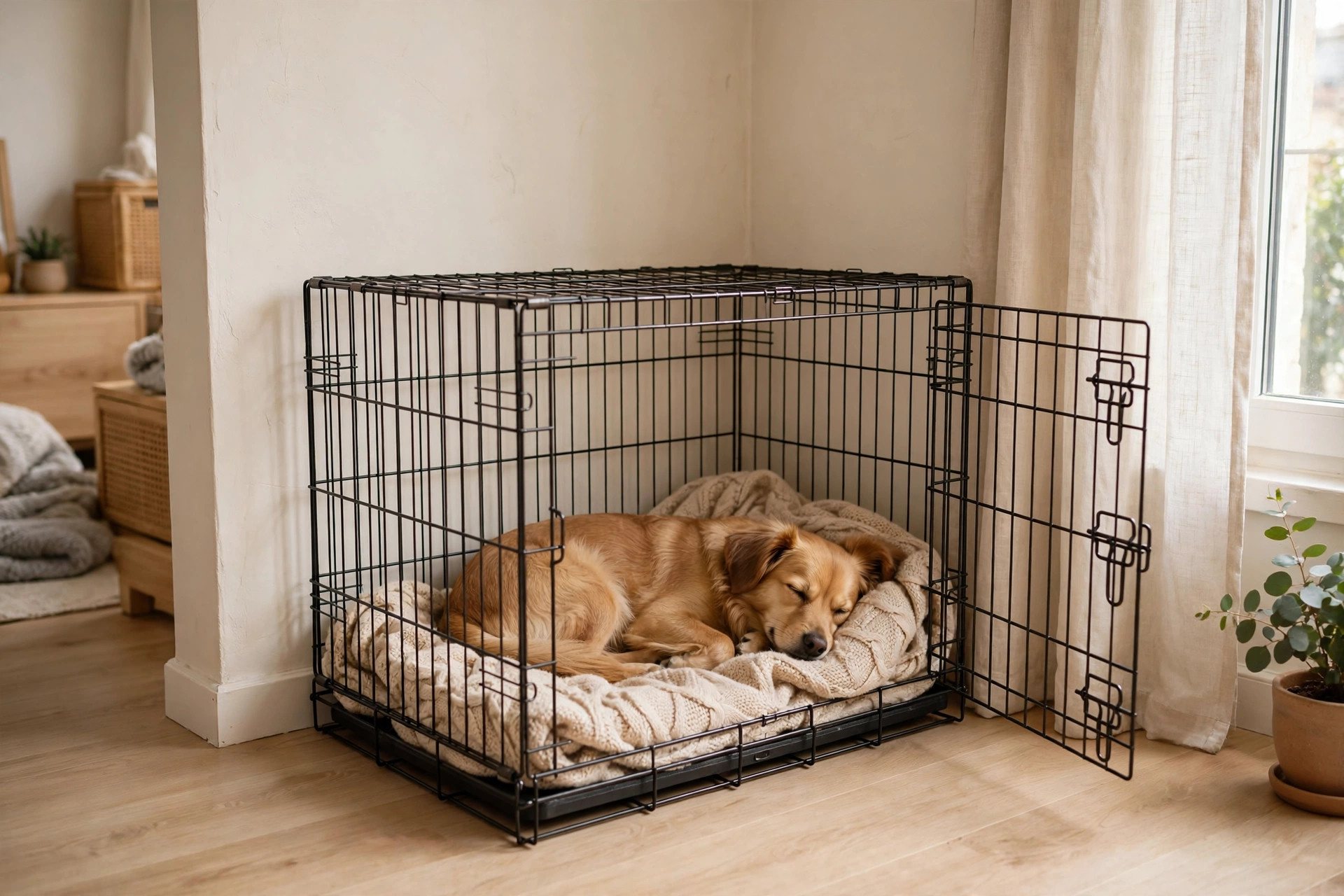
- Size the crate to the dog, not the apartment: enough room to stand, turn, and lie flat — roughly body length plus 4–6 inches. Too big invites a bathroom corner; too small is genuinely uncomfortable.
- Place the crate against an interior wall away from the neighbor's bedroom side if you can, on a rug, with a blanket over the top two-thirds for den effect.
- Build value before duration: feed meals in the crate for the first days, then add door-closed seconds, then minutes — always ending before the dog needs to complain.
- Never use the crate as punishment and never leave a dog crated to “cry it out” for hours; both poison the crate and maximize noise.
- Keep total crate time age-appropriate: puppies need breaks every 1–2 hours while awake; no dog should be crated through a full workday without a midday break.
Pick and place the crate for a quiet building
For apartments, a standard wire crate ($40–$90 for most sizes) is usually the practical pick: it folds flat for storage, ventilates well in summer, and takes a blanket drape for darkness. Plastic airline-style crates ($50–$110) muffle sound slightly better and suit dogs who prefer enclosed spaces, but they store bulky. Furniture-style crates ($150–$400) look better in a living room and do nothing acoustically special — buy one for looks only after the dog already loves crating. Whatever the style, use a divider panel while your dog is growing; the right size today beats the adult size with a toilet corner.
Placement matters more than padding. Put the crate in the room where you spend evenings, against the wall that borders your own bathroom or kitchen rather than a neighbor's bedroom where you have a choice. A rug underneath kills the rattle of paw shifts on hard floors. Drape a breathable blanket over the top and sides, leaving the door side open for airflow. If your dog will be crated while you are out, a pet camera aimed at the crate ($25–$60) turns guesswork into data: you will see whether the dog settles in five minutes or fusses for forty, and you can adjust the plan to facts.
One honest limit: egg-crate foam and “soundproof” crate covers sold online do not soundproof anything. They reduce light and visual triggers, which helps some dogs settle — that is the real benefit. Nothing you drape will make a genuinely distressed dog inaudible, which is why the training phases below matter more than accessories.
The phased plan: value first, duration second
Phase 1 (days 1–2): the crate is a restaurant. Door stays open. Every meal is served inside, plus a few surprise treats tossed in during the day. Most dogs start walking in on their own by day two. Scatter a small handful of kibble in the bedding each morning so entering the crate gets checked like a mailbox.
Phase 2 (days 3–4): the door learns to close. While the dog eats or works on a stuffed chew, close the door for 5 seconds, open, repeat. Stretch to 30 seconds, then 2 minutes, staying in the room. The rule: the door opens during quiet, never during a bark or whine — wait for a breath of silence, even one second, then open. You are teaching that quiet makes doors move.
Phase 3 (days 5–7): you learn to leave. Add short absences: step out of the room for 1 minute, then 5, then step out of the apartment for 5–10 minutes. Leave before the dog finishes a frozen lick mat or stuffed toy so the crate predicts the good stuff arriving with your exit. Keep departures boring — no long goodbyes, no party when you return.
Phase 4 (week 2): real durations. Build toward your actual need — a work block with a midday walker, or overnight. Overnight crating usually goes fastest once daytime value is built, because a tired dog at 10 p.m. mostly wants to sleep. If any phase produces sustained crying, you moved too fast: drop back one phase for a day. Regressions after a phase jump are information, not stubbornness.
The neighbor plan: timing, honesty, and a crying protocol
Run your door-closing practice at neighbor-friendly hours — late morning and early evening — never first at midnight. Tell the adjacent neighbor what you are doing and for roughly how long; people tolerate ten announced minutes of puppy noise far better than a surprise. If your building has posted quiet hours, treat them as hard edges for training sessions, and front-load exercise before evening crate time so the dog arrives tired.
Decide your crying protocol before the first night. Brief fussing (under a few minutes, winding down) can be waited out. Escalating panic — continuous barking, drooling, crate biting, or elimination in a dog who was clean — means the dog is over threshold; end the session calmly, shorten the next step, and add more value work. True panic in the crate, especially paired with distress when alone generally, is a separation-anxiety pattern, and forcing crate duration makes it worse; that dog needs a gradual alone-time plan and possibly a vet conversation, not a sturdier crate.
Puppies will need a middle-of-the-night toilet trip, and that trip should be silent and boring: leash, outside, toilet, back to crate, no play. Expect the 2 a.m. whine to fade within one to two weeks as bladder capacity grows. A small frozen lick mat for re-settling after the trip helps the dog (and the floor below) get back to sleep.
Fit the crate into a real apartment day
The crate works when the rest of the day works. A workday shape that suits most adult dogs: morning walk and breakfast, crate block with a midday walker break, evening exercise and training, then crate or open sleep overnight. Puppies run on shorter loops — out, play, train, crate nap — because awake puppies who miss naps become overtired, mouthy, and loud. Notice that crate naps after activity are usually the quietest wins of the whole plan: the dog rehearses settling exactly when settling is easy.
Keep a one-line log for the first two weeks: time in, settle time, any fussing, time out. You will see settle time shrink from 10 minutes to under 1, which is both your progress chart and your evidence if a neighbor ever asks how it is going. Most owners can fade the camera checks and the log by week three — the crate has become furniture with a dog in it, which is precisely the goal.
The door opens during quiet, never during noise. That single rule, repeated thirty times, is most of crate training — everything else is scheduling and snacks.
FAQ
How big should the crate be for my dog?
Big enough to stand without crouching, turn around, and lie flat on one side — usually the dog's length from nose to tail base plus 4–6 inches. Use a divider to shrink a full-size crate for a puppy. If your dog consistently eliminates in one corner, the crate is almost certainly too big right now.
What if my dog cries the first night?
Brief, winding-down fussing is normal; wait for a pause and let the dog settle. Escalating panic — nonstop barking, drooling, biting the bars — means end the session and step back a phase tomorrow. First nights go best when the crate is near your bed, the dog is exercised, and a pre-bed toilet trip is already done.
Can I crate my dog while I work all day?
Build to it gradually and always include a midday break — a walker, a friend, or your lunch trip home. Puppies need breaks every 1–2 hours. No crate turns an 9-hour absence into a humane plan on its own; pair crate training with a realistic daytime relief schedule.
Wire crate or plastic crate for an apartment?
Wire folds flat, ventilates well, and accepts a blanket drape for darkness — the default apartment pick. Plastic feels more enclosed and slightly muffles sound, suiting den-preferring dogs, but stores bulky. Choose by your dog's preference and your storage, not by acoustic marketing claims.
My dog already hates the crate. Can we restart?
Yes — restart at Phase 1 as if the crate were new, ideally in a new spot, and move slower. Feed every meal inside with the door open for several days before any door work. If the hatred includes panic signs, screen for separation anxiety first; crate retraining alone will not fix that.