Best Window Bird Feeders for Indoor Cat Entertainment
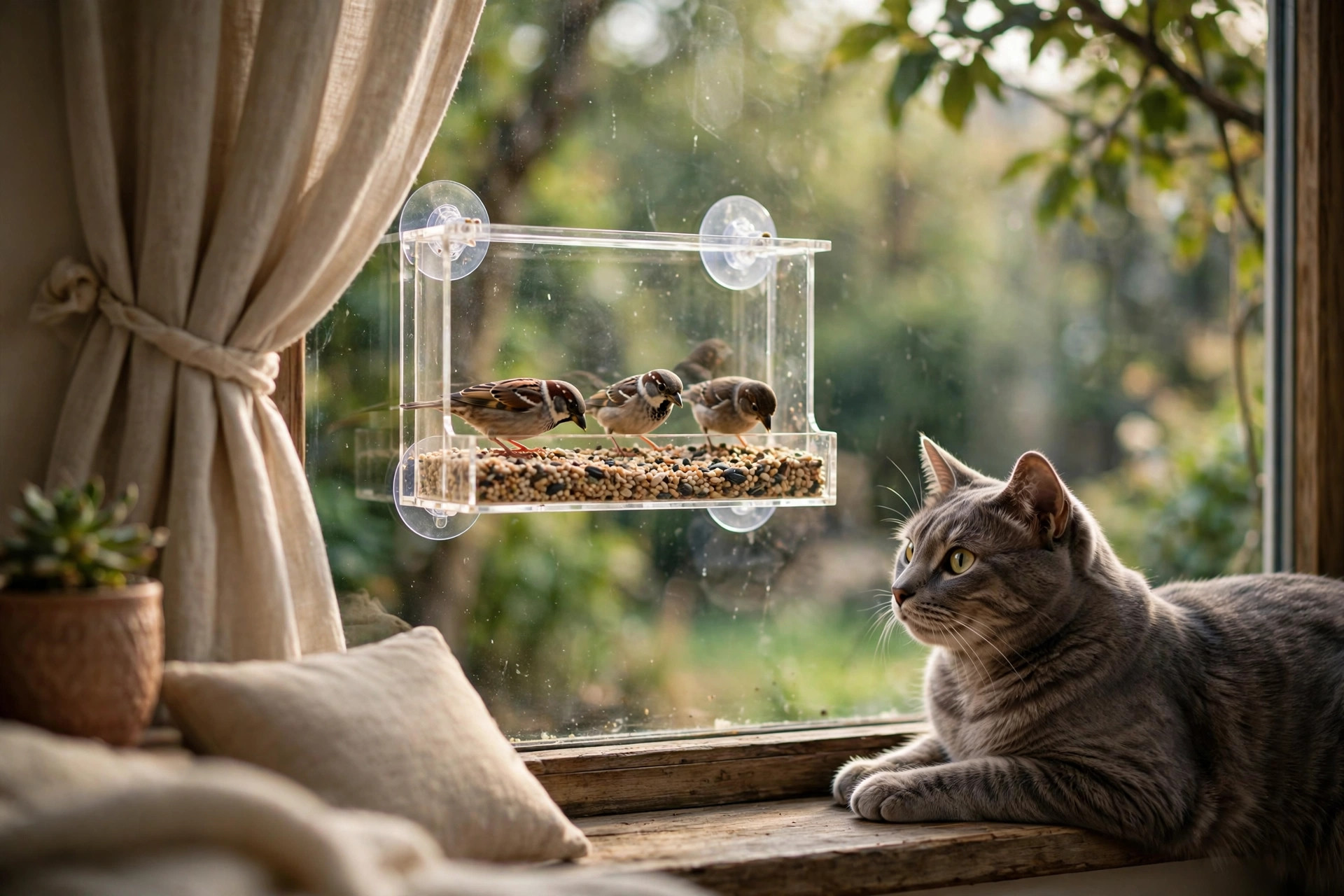
Cat television beats human television. A window bird feeder — a small seed tray suction-cupped to the outside of your glass — puts live birds inches from your cat’s nose, close enough to trigger the full predatory sequence: the locked stare, the chattering jaw, the butt wiggle. For indoor cats, it is the single highest-value enrichment you can install, and it costs less than a bag of premium kibble.
- Suction-cup strength is everything. Cheap cups fail in heat and cold; quality cups with locking levers hold for years.
- Black-oil sunflower seed attracts the widest variety of birds. Mixed “wild bird seed” mostly attracts sparrows and waste.
- Install on a clean window on a warm day, then wait 24 hours before loading seed. Patience is the whole trick.
- Check your lease first — some buildings and HOAs ban exterior feeders. Suction-cup models are usually fine, but confirm.
- Clean the feeder monthly. Dirty feeders spread disease among birds, which is the opposite of the point.
Four feeders that actually stay stuck
Every feeder below is a real, widely sold model — no flimsy novelty trays. Prices are typical street prices.
| Feeder | Best for | Usually | Apartment note |
|---|---|---|---|
| Nature’s Way Cedar Window Feeder | Durability | $30–$40 | Cedar body weathers well; strong suction cups, easy-clean tray |
| Songbird Essentials Clear View | Closest bird views | $40–$50 | Fully clear acrylic; birds feed inches from the glass |
| Nature Anywhere Acrylic Feeder | Value | $25–$33 | Clear tray with drainage holes; sliding feed tray for easy refills |
| Perky-Pet Window Mount | Tight budgets | $20–$28 | Simple plastic tray; works, but cups need seasonal re-seating |
Nature’s Way Cedar — the durable pick
Cedar is the right material for something that lives outside your window year-round: it resists rot, insects, and weather without chemical treatments that could harm birds. The tray is deep enough to hold a real quantity of seed (fewer refills), the roof keeps rain off, and the whole tray slides out for cleaning without disturbing the suction cups. The mounting cups are the locking-lever type — the kind that actually holds through summer heat and winter contraction. This is the feeder you buy once.
Songbird Essentials Clear View — the front-row pick
Fully transparent acrylic on all sides, so birds feed essentially inside your window frame — your cat watches from inches away with only glass between them. For the entertainment value, nothing beats it: chickadees and finches will feed while the cat’s nose is pressed to the pane. The tradeoff of all-clear construction is that seed husks and droppings are visible from inside, so it needs wiping more often to stay attractive. The suction system uses three large cups; seat them properly and they hold.
Nature Anywhere Acrylic — the value pick
The best balance of price and function. The clear tray gives the close-up views, drainage holes keep seed from rotting after rain, and the sliding tray design means refills take ten seconds from inside — you never lean out the window. The acrylic is thinner than the Songbird Essentials model, so treat it gently in freezing weather, but for the price it is remarkably well thought out. The most common “first feeder” for good reason.
Perky-Pet Window Mount — the budget pick
The honest cheap option: a simple plastic tray with basic suction cups that does the core job — seed outside, birds visible, cat mesmerized. The cups are the weak point; expect to clean and re-seat them with the seasons, especially after the first heat wave softens the seal. For a ground-floor or second-floor window where a dropped feeder is a retrieval rather than a disaster, it is a perfectly reasonable way to test whether your local birds show up before investing more.
Installation: the 24-hour rule
Almost every “my feeder fell off” story traces to installation impatience. Suction cups need time to form a full seal, and loading two pounds of seed onto fresh cups is asking for a 6 a.m. crash. The method that holds:
- Clean the glass thoroughly. Rubbing alcohol on a paper towel, both the window and the cup surfaces. Any film of dust or grime is a future air leak.
- Warm everything slightly. Suction cups seat best above about 50°F. In cold weather, warm the cups in your hands and press them onto a sun-warmed window.
- Wet the cups lightly. A thin film of water — not soap, which degrades the seal over time — helps the initial grip.
- Press, lock, and wait 24 hours. Press each cup firmly, engage any locking levers, and leave the empty feeder alone for a full day before adding seed.
- Check seasonally. Re-seat cups with each season change. Temperature swings are what eventually break seals.
Height matters too: mount the feeder at a height where the cat watches comfortably from its favorite perch — usually the windowsill itself or a nearby window seat setup. Too high and the cat strains; too low and ground predators (or the neighbor’s off-leash dog) scatter your birds.
- Black-oil sunflower seed. The universal winner — high energy, thin shells, attracts chickadees, finches, nuthatches, and cardinals. If you buy one seed, buy this.
- Nyjer (thistle) seed. Finch magnet, especially goldfinches. Needs a finch-specific feeder or a mixed tray; goes stale faster, so buy small bags.
- Suet cakes (winter). Woodpeckers and nuthatches love them; they are the highest-energy option for cold months.
- Skip the cheap mixes. Bags heavy on millet and cracked corn get shoveled aside by desirable birds and eaten by house sparrows and pigeons — which your lease may specifically prohibit attracting.
The cat side of the equation
A feeder is only half the setup; the viewing station is the other half. Give the cat a proper perch at that window — a wide sill, a suction-cup window seat, or a cat tree parked against the glass — with a soft surface for long stakeouts. Expect the chattering: that rapid jaw-trembling cats do at birds is a redirected predatory response, completely normal and, frankly, delightful.
One caution for the highly aroused hunter: some cats get frustrated by unreachable prey and redirect onto ankles, other pets, or curtains. If your cat escalates after bird sessions — dilated pupils, tail lashing, attacking the nearest moving thing — follow each viewing with an active play session to complete the hunt-catch cycle. A wand toy session right after “bird TV” lets the cat catch something, which is what its brain was building toward.
Expect a quiet first week. Birds are neophobic — a new object on the window is suspicious — and it typically takes 7–14 days for the first brave chickadee to land, then days more before it becomes a regular stop. Do not move the feeder, do not change the seed, do not give up on day five. The birds are watching it long before they trust it.
FAQ
Will a window feeder damage my window or violate my lease?
Suction cups leave no marks on glass — they are the most renter-friendly feeder mount that exists. The lease question is about the birds, not the hardware: some buildings and HOAs prohibit feeding wildlife because of droppings, noise, or pigeons. Check your lease’s pet and balcony clauses, and when in doubt, ask management before the seed goes up. A feeder that gets you a lease violation is not enrichment.
Is it cruel to tease my cat with birds it can never catch?
The evidence says no — most cats settle into relaxed observation, and the mental stimulation is genuinely beneficial. The exception is the frustration-redirecting cat described above; for those cats, always follow bird-watching with an active play session so the predatory sequence completes. Watch your individual cat for the first two weeks and adjust.
How do I keep the feeder from getting gross?
Monthly cleaning minimum: dump old seed, scrub with a 1:9 bleach-water solution, rinse thoroughly, and let it dry completely before refilling. Wet, moldy seed spreads avian diseases like salmonellosis and trichomoniasis between birds. Drainage holes and a roof help, but nothing replaces the scrub. In rainy climates, clean every two weeks.
What if only pigeons show up?
Pigeons are drawn to flat trays with mixed seed scattered loosely. Switch to black-oil sunflower in a feeder with a roof and smaller perches, and the songbirds return while pigeons move on — they prefer easy platform feeding. If your building specifically struggles with pigeons, take the feeder down rather than feeding the problem; your cat will forgive you.