Best Apartment Cat Scratching Post for Small Rooms
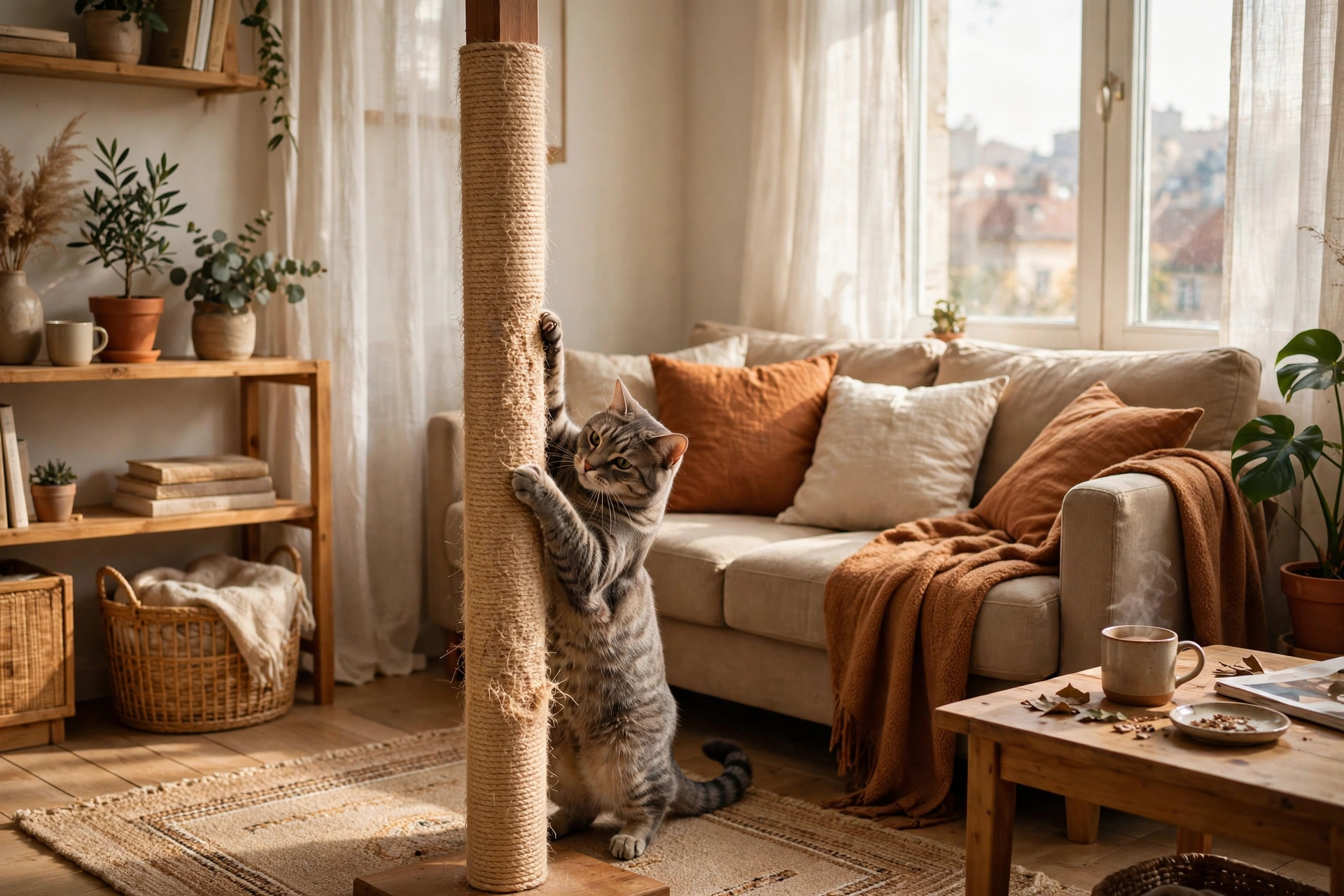
Scratching is not misbehavior. It is how cats stretch their backs, shed old claw sheaths, and mark territory — and they will do it on something, whether you provide the something or not. In a small room, the math is brutally simple: a $40 scratching post now, or a shredded couch arm and a lost chunk of your security deposit later.
- A decent scratching post costs $25–$60 and lasts years.
- Reupholstering one couch arm starts around $150–$300; landlords routinely deduct for claw damage.
- Cats don’t scratch furniture out of spite — they scratch whatever is tall, stable, and near where they nap. Give them that, and the couch loses its appeal.
- Bottom line: the post is not pet furniture. It is furniture insurance.
Material matters more than brand
Before comparing products, understand the four surfaces — because the wrong surface is why most scratching posts get ignored:
- Sisal rope (the twine-wrapped look): the gold standard. Tough, shreddable in a satisfying way, and nothing like your carpet or sofa — which is the point. Most cats prefer it.
- Sisal fabric (flat woven sheets): also excellent, slightly less common, and easier on the eyes. The SmartCat Pioneer below uses it.
- Corrugated cardboard: cats love the texture, and horizontal cardboard scratchers are cheap ($10–$20). The tradeoff is lifespan — a daily scratcher turns to confetti in a few months — and the mess. Good as a supplement, weak as the only post.
- Carpet: actively avoid it. A carpet-covered post teaches the cat that carpet texture is for scratching, and your apartment has a lot more carpet than the post does.
The 30-inch rule
A scratching post exists so a cat can do a full vertical stretch — front paws high, back arched, the whole satisfying pull. An average adult cat stretched upright is about 24–30 inches from floor to paw tips, and long or large breeds go beyond that. A 24-inch post forces a tall cat to crouch-scratch, which feels wrong, so the cat goes back to the couch arm — which is, conveniently, about 26–30 inches tall. Funny how that works.
Buy 30 inches minimum; 32 inches is the sweet spot for most homes. Taller is fine if the base is wide enough to keep it stable. Which brings us to the other half of the equation: a post that wobbles gets abandoned. Look for a base at least 18–20 inches square on a 32-inch post, or a design with a low center of gravity. In a small room you cannot brace it against much, so the base does all the work.
Three posts that survive small rooms
| Post | Height / surface | Typical price | Small-room note |
|---|---|---|---|
| SmartCat Pioneer | 32″ · sisal fabric | $50–$60 | Slim ~21″ square footprint; the enthusiast pick, lasts for years |
| Frisco 32-inch scratching post | 32″ · sisal rope | $25–$35 | Best value tall post; slightly wider base, still fits a corner |
| MidWest Homes for Pets tower scratcher | Multi-level · sisal + perch | $40–$70 | Scratcher + lookout in one footprint; good when you have room for exactly one piece of cat furniture |
The SmartCat Pioneer is the connoisseur’s choice: 32 inches of sisal fabric on a post barely wider than a dinner plate. It has survived years in homes where cheaper posts died in months, and its slim footprint is genuinely small-room friendly. The Frisco 32-inch post is the rational buy — same useful height, classic sisal rope, roughly half the price. The MidWest tower-style scratcher is for the one-furniture household: scratching surface below, nap perch on top, one footprint doing two jobs.
Skip anything under 28 inches unless it is a deliberate second post (more on that below). And skip carpet-covered posts at any height, for the reason in the material section.
Placement: the “next to the couch arm” rule
Cats scratch after napping and near territory boundaries — which in apartment terms means right next to where they already scratch. The single most effective placement trick is embarrassingly literal: put the new post directly beside the couch arm (or curtain, or rug edge) the cat currently uses. You are not asking the cat to change habits; you are offering a better version of the same spot.
For small rooms, the two-post strategy punches above its weight: one tall vertical post in the living area, one cheap horizontal cardboard scratcher near the bedroom or wherever the cat naps. Total footprint is under three square feet, and it covers both scratching styles. When the cat uses the post, reward it — a treat in the first week builds the association faster than catnip ever will. (Catnip helps too; rub dried catnip into sisal to spark initial interest.)
The 48-hour test: put the post beside the targeted furniture, rub in catnip, and place a treat on the base. If the cat hasn’t touched it in two days, don’t buy a different post — move this one six inches closer to the furniture being scratched. Location fixes more “ignored post” cases than any product swap.
Stability fixes that don’t involve drilling
A wobbling post is a dead post — cats abandon anything that feels unsafe mid-stretch. Renter-safe fixes, in order of effort:
- Wedge it into a corner. Two walls do what a wide base does. This alone solves most wobble.
- Add weight to the base. A flat barbell plate or a bag of dry rice slipped under the base cover lowers the center of gravity invisibly.
- Museum putty under the base. The removable adhesive putty used for picture frames grips hard floors without residue and stops the slow slide-across-the-room problem.
- Choose carpet-adjacent placement. A post half on rug, half on hard floor wobbles less than one fully on slick flooring.
What not to do: lean a tall post against furniture and call it stable. The first time it tips mid-scratch, the cat files it under “dangerous” permanently.
FAQ
My cat ignores the scratching post completely. Now what?
Move it before replacing it. Put the post directly against the furniture the cat actually scratches, rub dried catnip into the sisal, and drop treats on the base for a few days. Nine times out of ten, an “ignored” post is a misplaced post — too far from the nap spot, too close to the litter box, or wobbling. Only if placement is perfect and the cat still ignores it should you try a different surface, like cardboard instead of sisal.
How tall should a scratching post be?
At least 30 inches for an average adult cat to stretch fully upright; 32 inches is the practical sweet spot and the most common height among well-reviewed posts. Shorter posts force a crouch-scratch that most cats reject in favor of your couch arm — which, not coincidentally, is about 26–30 inches tall.
Is sisal rope or cardboard better?
For the main post, sisal — rope or fabric — wins on durability by a wide margin; a good sisal post lasts years while a cardboard scratcher used daily becomes confetti in a few months. Cardboard is excellent as a cheap second scratcher near a nap spot. Avoid carpet-covered posts: they teach the cat that carpet texture is for scratching.
Can a scratching post really save my couch?
Yes, with correct placement. Cats scratch tall, stable, well-located surfaces — the couch arm qualifies on all three counts today. A 32-inch stable sisal post placed directly beside the targeted arm gives the cat a better version of the same experience, and most cats switch within days once treats and catnip sweeten the deal. The post costs $25–$60; reupholstering a couch arm starts around $150.