Best Washable Dog Diapers for Senior Apartment Dogs
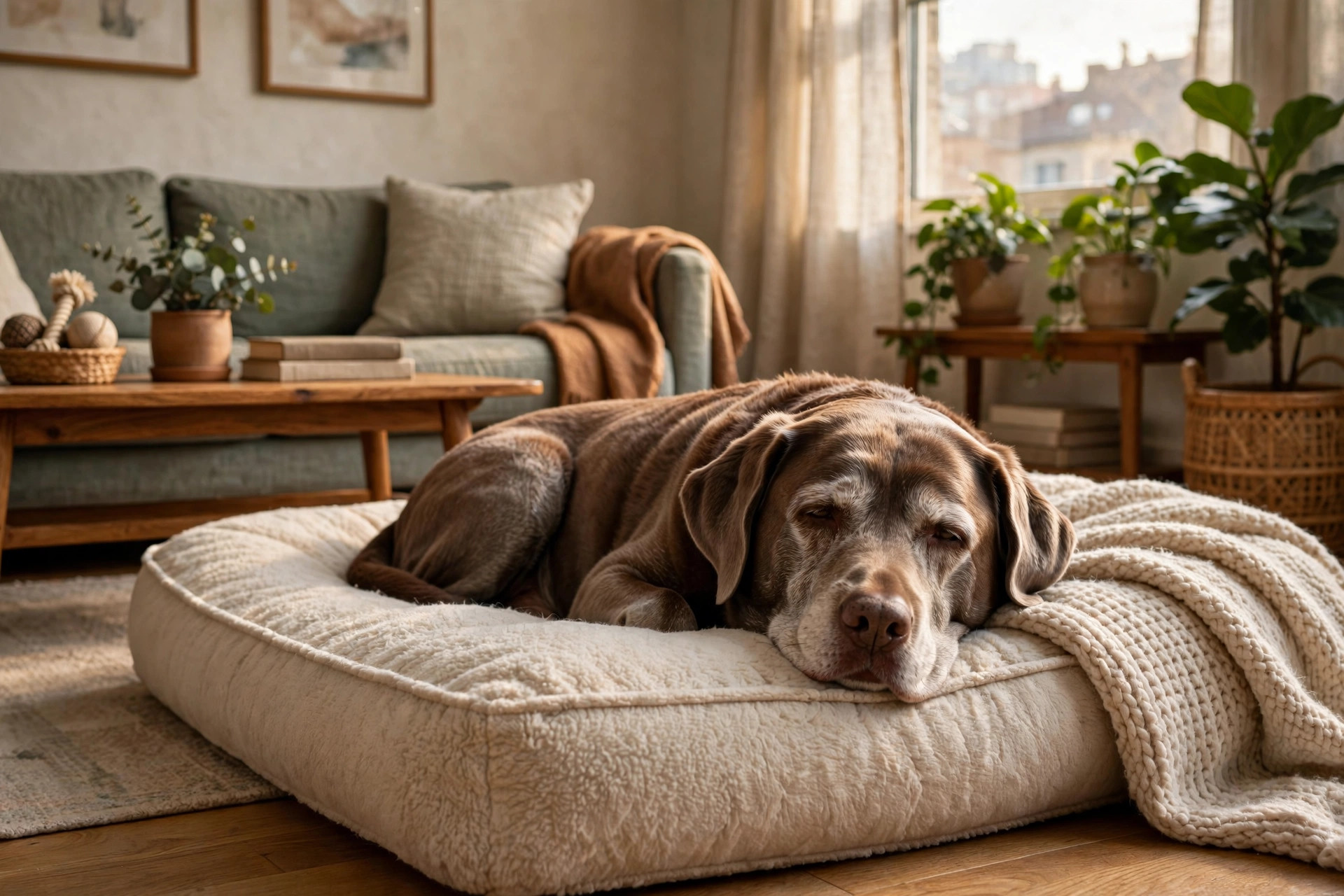
Nobody plans for the day their dog starts leaking. It begins subtly — a damp spot on the dog bed, a wet patch where the dog was sleeping — and it is not a training failure. Senior incontinence is plumbing, not behavior: weakening sphincter muscles, kidney changes, the medications that keep an old dog comfortable. In an apartment, where the dog sleeps on your rug and the elevator ride is twelve minutes long, a good washable diaper is what keeps a senior dog’s dignity — and your floors — intact.
- Washable beats disposable for daily use: a 3-pack of reusables ($13–$25) replaces roughly $40–$60/month in disposables and fits better.
- Fit is everything. Measure the waist in front of the back legs; a diaper that gaps at the leg holes leaks, and one that binds causes sores.
- Males usually need belly bands (wraps around the waist), females need full diapers (covers the rear). They are not interchangeable.
- Change every 3–4 hours minimum, and never leave a wet diaper on overnight without a fresh change before bed. Trapped moisture causes urine scald.
- New or worsening incontinence deserves a vet visit — UTIs, kidney disease, and diabetes all present as “suddenly leaking,” and some are very treatable.
First: the vet visit that might fix it
Before buying diapers, rule out the fixable causes. A urinary tract infection makes an otherwise continent dog dribble, and a course of antibiotics resolves it in days. Kidney disease and diabetes increase urine volume beyond what any bladder can hold — both manageable once diagnosed. In spayed females, urethral sphincter weakness responds well to medication (phenylpropanolamine or estrogen therapy, vet-prescribed) in a large share of cases. Prostate issues in older intact males cause similar signs.
Diapers manage the symptom while you and your vet address the cause — or, when the cause is simply age, they manage it indefinitely with dignity. Neither replaces the checkup. If the leaking started suddenly, changed in character, or comes with increased thirst, straining, or strong-smelling urine, that appointment moves to this week.
Four washable options worth buying
| Product | Type | Typical price (3-pack) | Best for |
|---|---|---|---|
| Pet Parents Washable Dog Diapers | Full diaper (female/unisex) | Usually $20–$25 | The benchmark; best leak guards, true sizing. |
| Wegreeco Washable Dog Diapers | Full diaper (female/unisex) | Usually $13–$17 | Budget pick; solid for light to moderate leaking. |
| Paw Legend Reusable Belly Bands | Belly band (male) | Usually $10–$14 | Male dogs; the simplest effective solution for dribbling. |
| Simple Solution Washable Diapers | Full diaper (female/unisex) | Usually $15–$20 | Widely available; good middle ground. |
Pet Parents — the benchmark
Pet Parents’ diapers are the ones senior-dog communities recommend by name, and the reasons are structural: elastic leak guards around the leg holes (the feature that separates diapers that work from diapers that wick), a waterproof outer layer that actually stays waterproof through dozens of washes, and sizing that runs true to the measurement chart. The hook-and-loop closures are wide and hold through a full day of an old dog shifting on the couch. They also make a matching belly band for males. At $20–$25 for three, they cost more than the budget options and outlast them — owners routinely report a year-plus of daily rotation.
Wegreeco — the budget workhorse
Wegreeco’s 3-packs at $13–$17 are the value entry: soft outer fabric, a sewn-in absorbent pad, and a waterproof layer that handles light to moderate leaking well. The trade-offs are honest: the absorbent core is thinner than Pet Parents’, so heavy wetters need a booster pad added, and the sizing runs slightly small — measure carefully and size up if between sizes. For a dog that dribbles rather than floods, they are perfectly adequate, and at this price you can own two 3-packs for rotation without thinking twice.
Paw Legend Belly Bands — for male dogs
Male anatomy makes full diapers unnecessary for most dribbling: a belly band — a wide wrap around the waist covering the penis — catches it all with far less bulk, less heat, and much easier changes. Paw Legend’s 3-pack at $10–$14 is the standard recommendation: soft fleece-like outer, absorbent core, strong hook-and-loop that survives washing. Size by waist measurement taken just in front of the back legs. For marking behavior in unneutered males, the same band works — though training, not the band, is the long-term fix.
Simple Solution — the available-everywhere middle
Simple Solution’s washables sit between the budget and premium picks at $15–$20 for three, and their real advantage is availability: pet stores stock them, so you can buy the first pack today rather than waiting on shipping. The adjustable fit accommodates the weight fluctuations common in senior dogs, and the machine-washable construction holds up. A sensible first purchase while you learn your dog’s size and absorbency needs.
A diaper is assistive equipment, like a ramp or an orthopedic bed. It is not a failure — of training, of the dog, or of you. The dogs that wear them best are the ones whose owners treat the change as matter-of-factly as putting on a raincoat.
Fit: the measurement that decides everything
A diaper that does not fit does not work — it either leaks at the gaps or injures at the pressure points. Measure twice:
- Waist: the circumference just in front of the back legs, where the diaper’s waistband will sit. Measure snug but not tight, with the dog standing.
- Weight: a sanity check against the size chart, but waist rules. Senior dogs lose muscle and gain or lose weight; re-measure every few months.
The fit tests: slide two fingers under the waistband (snug, not tight); check that the leg holes sit in the groin crease without gaping when the dog walks; watch for the first hour — red marks mean too tight, shifting or sagging means too loose. For dogs between sizes, size up and use the adjustable closures to take in the slack; a slightly large diaper with good closures beats a too-small one every time. Tail hole position matters for females: the opening should sit at the tail base without pulling.
Skin care: the part that actually matters most
The diaper is easy. The skin underneath is the real project. Urine against skin causes scald — redness, then sores — within hours in a warm diaper. The protocol:
- Change every 3–4 hours during the day. Set phone reminders. A fresh change right before bed covers the night; most senior dogs leak less while sleeping, but check first thing in the morning.
- Clean the skin at every change. Unscented baby wipes or a damp cloth, then pat dry. For dogs with recurring redness, a thin layer of zinc-free barrier cream (coconut oil or a pet-safe balm) protects the skin.
- Give diaper-free time daily. An hour on a washable pee pad or a waterproof blanket lets the skin breathe. More is better if the leaking pattern allows — many dogs only leak when sleeping or after drinking, and are dry for stretches.
- Trim the fur. Long hair around the rear traps moisture against the skin. A sanitary trim (your groomer does this in minutes, or careful clipper work at home) dramatically reduces scald risk.
Watch for: persistent redness, a yeasty smell, or the dog licking the area raw. Those mean the change interval is too long, the fit is trapping moisture, or a skin infection has started — all vet-conversation topics, not wait-and-see ones.
Washing without ruining them (or your machine)
Washable diapers are laundry, and the routine is simple once established:
- Rinse solids first. A quick rinse in the sink or a dunk in the toilet — no one enjoys this step, but it keeps the machine clean and the diapers fresh.
- Machine wash warm with unscented detergent. No fabric softener, ever — it coats the absorbent fibers and kills absorbency within a few washes. A half-cup of white vinegar in the rinse cycle neutralizes ammonia odor.
- Tumble dry low or line dry. High heat degrades the waterproof layer over time. Line drying in particular extends diaper life substantially.
- Own enough for rotation. Six diapers (two 3-packs) is the practical minimum: two in use rotation, two in the wash, two clean. Laundry every 2–3 days instead of daily.
Cost math: two 3-packs at ~$20 each is $40 upfront. Disposable dog diapers run $0.80–$1.50 each, and a senior dog uses 2–4 a day — $50–$150/month. The washables pay for themselves in the first month and keep paying for a year or more.
- Waterproof mattress protector on the dog’s bed ($15–$25) — the diaper handles the dog, the protector handles the bed during diaper-free time.
- Washable pee pads ($20 for 2) under the water bowl and in the dog’s favorite sleeping spot — seniors dribble where they drink and where they nap.
- More frequent, shorter outings. A senior dog that went 4 times a day at age 6 may need 6 at age 14. Shorter intervals mean less to leak between trips.
- Night light in the hallway. Old dogs with fading vision hesitate at dark thresholds and may simply give up on reaching the door. Light the path.
FAQ
Will diapers make my dog forget its housetraining?
No. Incontinence is involuntary — the dog is not choosing to go. Diapers do not cause or worsen leaking, and dogs do not “get lazy” about holding it. Keep the normal outing schedule; the diaper is insurance between trips, not a replacement for them.
Can male dogs wear regular diapers instead of belly bands?
They can, but belly bands are better for most male leaking: less bulk, less heat, easier changes, and they stay positioned better on male anatomy. Full diapers suit males only when there is also bowel incontinence to contain.
How do I stop the diaper from falling off?
Nine times out of ten it is sizing: re-measure the waist and size down, or choose a brand with wider, stronger closures. Suspenders-style diaper harnesses exist for chronic escape artists. Also check that you are not over-stuffing booster pads, which changes the fit.
Is it okay to leave a diaper on all night?
With a fresh change right before bed and a high-absorbency diaper (or a booster pad added), most dogs are fine overnight — leaking slows during sleep. Change immediately in the morning, clean the skin, and give diaper-free time. If the morning diaper is soaked through, add absorbency or set a mid-night change.
When is leaking an emergency rather than a diaper situation?
Straining to urinate with little output, blood in the urine, sudden inability to urinate, or leaking paired with vomiting, lethargy, or loss of appetite — those are same-day vet visits. Gradual age-related dribbling is the diaper scenario; sudden changes are the vet scenario.