Best Undercoat Rakes for Double-Coated Apartment Dogs
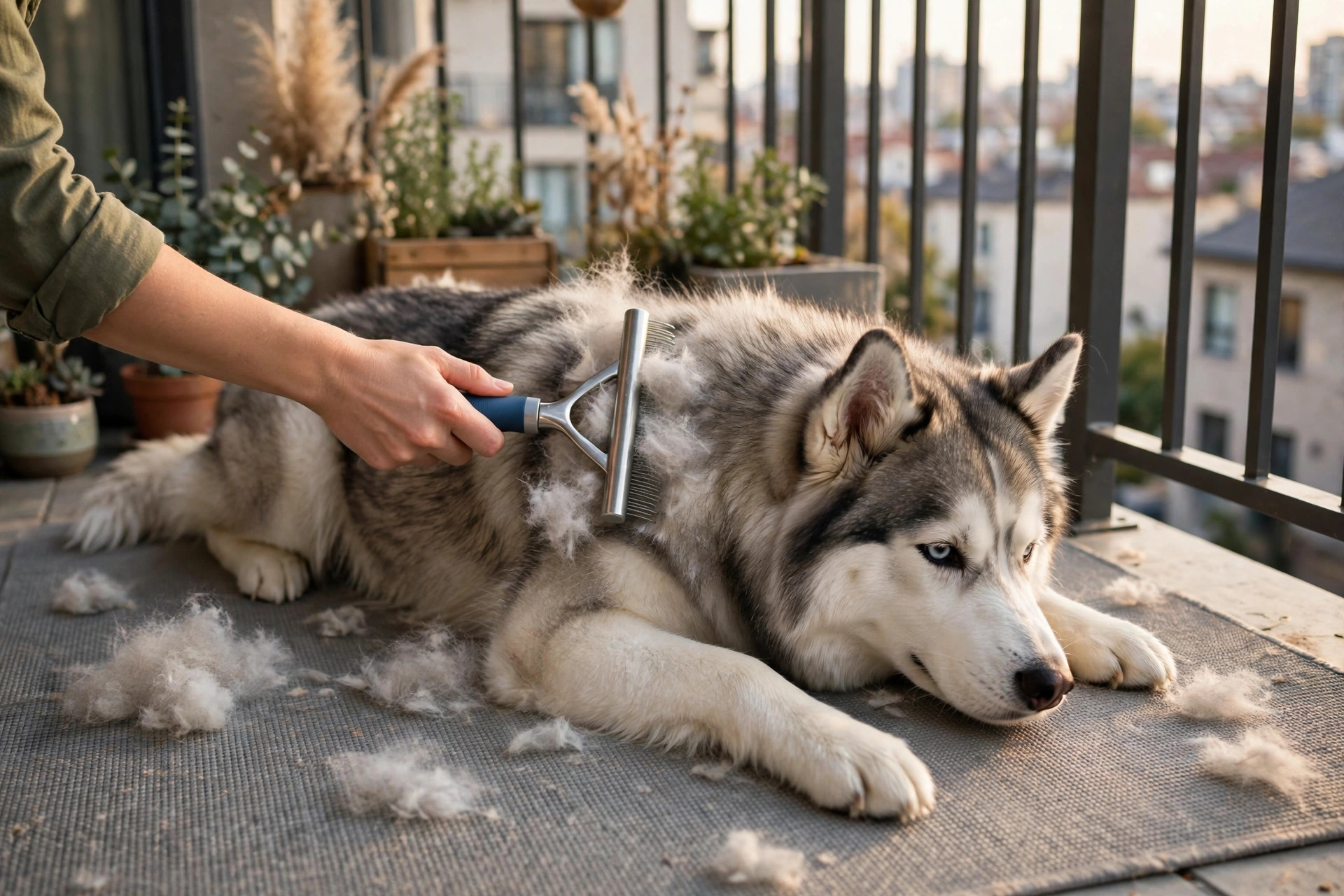
Twice a year, the double coat does its thing: the dense winter undercoat releases in clumps, and for about three weeks your apartment looks like it snowed indoors. This is the coat blow, and no amount of vacuuming manages it — the fur is coming from inside the dog, continuously, until the loose undercoat is out. An undercoat rake is the one tool built for exactly this job: long rounded teeth that reach through the guard hairs and pull the dead undercoat free without cutting or thinning the coat the dog still needs.
- Never shave a double-coated dog to “fix” shedding. The coat regulates temperature both ways; shaving ruins it and the shedding continues from the stubble.
- An undercoat rake is the coat-blow tool; a slicker is the everyday tool. You need both if you live with a husky, shepherd, malamute, or golden.
- Budget $10–$20. Undercoat rakes are simple tools — the expensive ones buy ergonomics, not magic.
- Rake 10–15 minutes, 3–4 times a week during a blow; once a week the rest of the year.
- Line brushing — parting the coat in sections — removes three times the undercoat of random top-brushing.
What a coat blow actually is (and why your vacuum cannot win)
Double-coated breeds — huskies, malamutes, shepherds, chows, goldens, corgis, pomeranians — grow a dense, downy undercoat for insulation under longer guard hairs. In spring (and a lighter round in fall), the undercoat detaches in bulk. Each tuft is already dead; it is just waiting to fall out, and until it does, it mats against the skin, traps heat, and sheds onto everything the dog touches.
The math is what breaks apartment life: a blowing husky can release a grocery bag of undercoat per week. Vacuuming removes what landed; it does nothing about what is still in the coat, which keeps landing. The only move that changes the equation is extracting the loose undercoat directly — which is the rake’s entire job. One thorough raking session can pull out what would otherwise shed across the apartment over the next four days.
Rake, deshedder, or slicker: pick the right weapon
These get confused constantly, and using the wrong one is how coats get damaged:
- Undercoat rake (this guide). Long, rounded, widely spaced teeth. Reaches through guard hairs to the undercoat and pulls dead fluff free. The coat-blow specialist. Gentle enough for regular use because the teeth are blunt.
- Deshedding blade (FURminator-style). A fine metal edge that cuts through to the undercoat. Removes more per stroke but can thin the coat if overused — risky on the precise coat structure double-coated breeds need. Useful in moderation, dangerous as the daily tool.
- Slicker brush. Fine wire pins for the topcoat: finishing, smoothing, catching surface loose hair. Cannot reach a dense undercoat. The everyday brush between rake sessions.
The correct kit for a double-coated apartment dog: rake for blow season and weekly maintenance, slicker for quick daily passes. The deshedding blade is optional and should be used sparingly if at all.
Five rakes that handle real coat blows
Every rake below is a real, widely sold product. Undercoat rakes are mechanically simple, so the differences are tooth design, handle comfort, and size — not technology. Prices are typical street prices.
| Rake | Best for | Usually | Apartment note |
|---|---|---|---|
| GoPets Undercoat Rake | Most double-coated dogs | $12–$18 | Dual-length teeth, comfortable grip; the default pick |
| SleekEZ Grooming Tool | Heavy blow weeks | $13–$19 | Wave blade pulls huge amounts; use with a light hand |
| Andis Undercoat Rake | Dense, thick coats | $10–$15 | Sturdy steel teeth; no-frills and long-lasting |
| DakPets Deshedding Tool | Budgets | $10–$15 | Effective edge at a low price; watch the pressure |
| Pat Your Pet 2-Sided Rake | Two-dog homes | $12–$16 | Wide + narrow tooth sides for different coat densities |
GoPets Undercoat Rake — the everyday pick
The GoPets rake’s dual-length teeth — longer teeth reaching the deep undercoat, shorter teeth catching the mid-layer — make it unusually effective in a single pass, and the rounded tips are forgiving enough for weekly year-round use without coat damage. The non-slip handle matters more than it sounds: a 15-minute raking session with a bad handle is a hand-cramp that makes you quit early, and quitting early is how the blow wins. For the owner of one double-coated dog, start here and you may never need another rake.
SleekEZ — the heavy-blow pick
During the peak two weeks of a coat blow, when the undercoat is practically falling out in sheets, the SleekEZ’s wave-patterned blade removes astonishing quantities with light strokes — it is the fastest way to get ahead of the fur storm. The caution from the cat guide applies doubly here: it is more aggressive than a toothed rake, so keep the pressure light and the sessions to the blow period. Think of it as the emergency tool, with the GoPets as the daily driver.
Andis Undercoat Rake — the dense-coat pick
Malamutes, chows, and the woolliest shepherds have undercoat so dense that flimsier rakes flex and skip. The Andis is a simple, stiff, steel-toothed tool with no gimmicks — it goes where it is pushed and stays straight. It will outlast every other rake here; there is nothing to wear out except your arm. Less comfortable for long sessions than the GoPets, more effective per stroke on the toughest coats.
DakPets — the budget pick
The honest cheap option: a deshedding edge that works, at a price where you can buy two (one for the apartment, one for the car, because blow season does not respect vehicles). The edge is sharper and less forgiving than the toothed rakes — light pressure, short sessions, and stop when the tool comes up clean. For the price it is remarkable; just respect that the low price buys effectiveness, not safety margin.
Pat Your Pet 2-Sided Rake — the multi-dog pick
Two sides, two tooth spacings: the wide side for dense undercoat on the big dog, the narrow side for the medium coat on the smaller one. In a two-dog apartment, one tool that serves both coats beats a drawer of specialists. Each side is competent rather than exceptional — the GoPets outperforms either side individually — but the versatility wins for mixed households.
The golden rule of double coats: brush the undercoat OUT, never cut it OFF. Shaving a double-coated dog does not reduce shedding — it replaces long shed hairs with short, spiky shed hairs while destroying the coat’s insulation. Groomers who offer to “shave the husky for summer” should be declined, firmly.
Line brushing: the technique that triples your yield
Random top-brushing removes the easy surface fur and leaves the deep undercoat untouched. Line brushing — the technique groomers use — works through the coat in layers:
- Part the coat. With your free hand, lift a section of coat to expose a “line” of skin along the dog’s side. On a blowing husky you will see the loose undercoat immediately — it looks like cotton batting.
- Rake the line. Short strokes with the rake, working the exposed undercoat out. The teeth should glide; if they snag, the section is too thick — make the line thinner.
- Move the line. Drop the lifted coat, lift the next section down, repeat. Work from the shoulders toward the tail, then do the other side.
- Finish the trouble spots. Behind the ears, the armpits, the britches (rear feathering), and the tail base mat first and shed most. Give these extra attention every session.
A full line-brushing session takes 15–20 minutes and removes what three days of casual brushing would. Do it on the balcony or in the bathroom if you can — the fur comes off in clouds — and follow with the vacuum for what escapes. During peak blow, 3–4 sessions a week keeps the apartment livable; the rest of the year, one weekly session maintains it.
Three coat-blow mistakes that make it worse
2. Raking the same spot until it is bald. When the rake comes up clean on a section, move on. Continuing past that point pulls live undercoat the dog still needs and irritates the skin. The pink-skin test: if the skin looks flushed, you went too far on that spot.
3. Ignoring the diet angle. A dull, excessively shedding coat is sometimes a nutrition signal, not a grooming problem. Dogs on low-quality food shed more and grow weaker coat. If the shedding seems extreme even for blow season — patchy, with flaky skin — talk to the vet before buying a better rake.
FAQ
How long does a coat blow last?
The heavy spring blow typically runs 2–4 weeks; the fall blow is lighter, usually 1–2 weeks. Indoor dogs with constant heating and lighting may blow more gradually over a longer period rather than in one dramatic wave. Either way, the rake schedule above handles it.
Can I use an undercoat rake on a short-haired dog?
Usually not — short-haired breeds (labs, beagles, boxers) have minimal undercoat, and a rake’s long teeth will just scratch skin. Those dogs do better with a rubber curry brush or a deshedding blade used lightly. The rake is specifically for the dense double coat.
My dog’s undercoat is matted. Will a rake fix it?
Light tangles, yes — work them gently with the rake or a dematting comb. Tight mats against the skin, no: pulling them out hurts and risks tearing skin. Mats need a dematting tool or careful scissor work (slide a comb under the mat first so you never cut skin), and severe matting is a groomer job.
Does raking reduce the fur on my furniture?
Dramatically — that is the whole point. The fur on the sofa is undercoat that left the dog on its own schedule; the rake puts it on your schedule, into a trash bag, before it migrates. Pair raking with a rubber broom for what escapes and the difference is night and day.