Best Pet Stain Removers for Rental Carpets
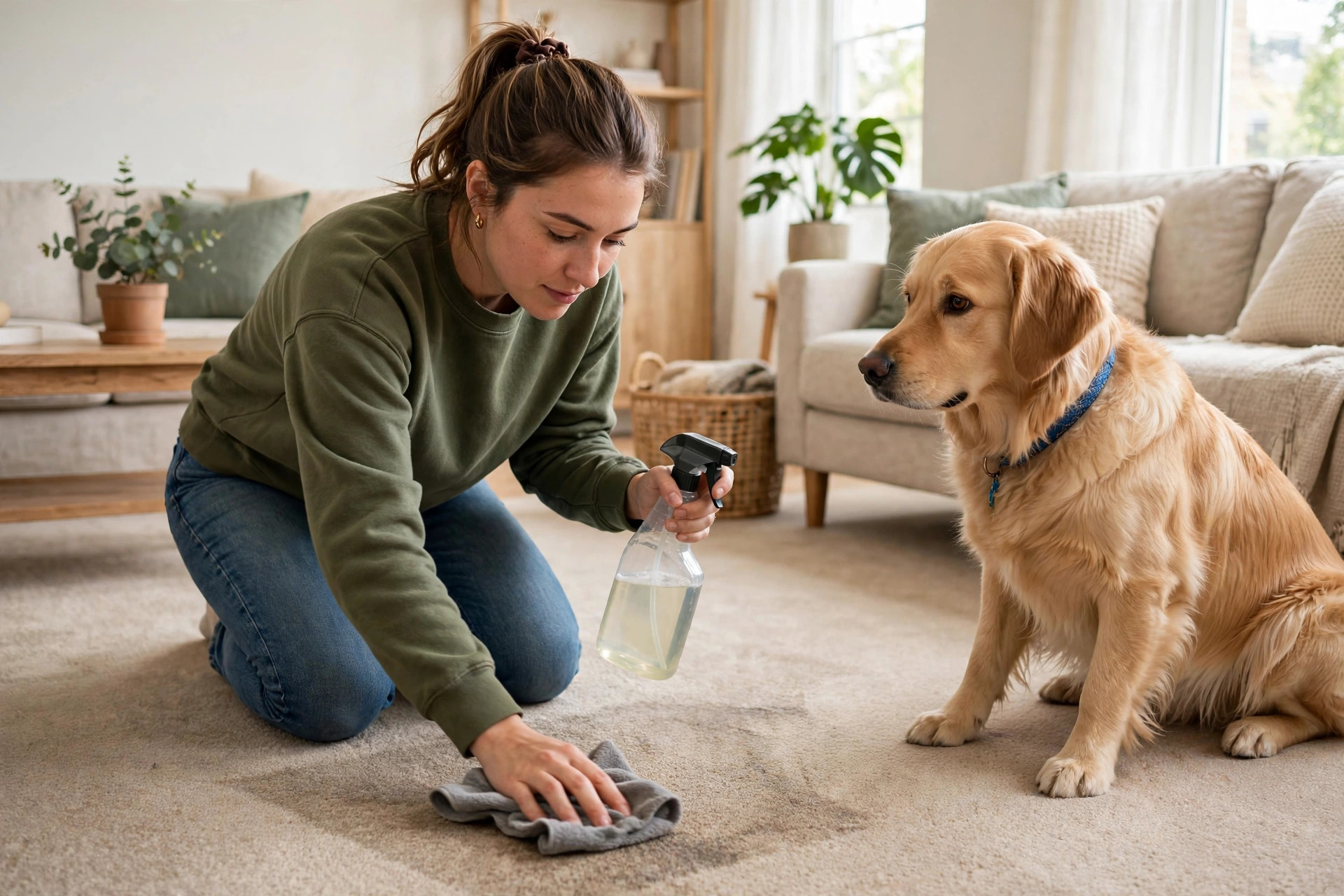
A rental deposit is typically one month’s rent, and a single set-in urine stain can take a meaningful bite out of it. Landlords do not deduct for "a stain" — they deduct for carpet replacement, which runs $200–$500 per room. The economics are simple: $15–$30 on the right remover, used correctly within hours, is the cheapest insurance your deposit has. But not all removers work the same way, and using the wrong type — or the right type wrong — can set a stain permanently.
- Enzyme cleaners win for urine, vomit, and feces: they digest the proteins that cause both the stain and the smell.
- Oxy cleaners win for set-in color stains (muddy paw prints, tracked dirt); solvent cleaners win for grease.
- Dwell time is everything: enzymes need 10–15 minutes of wet contact; rushing them is the #1 reason people think they "don’t work."
- Blot, never rub. Rubbing spreads the stain and frays carpet fibers so the spot stays visible even when clean.
- Keep a bottle where the accident happens, not under the sink three rooms away — speed beats chemistry.
The three chemistries, and what each one beats
Every pet stain remover on the shelf falls into one of three families. Buying without knowing the difference is why junk drawers accumulate four half-used bottles.
- Enzyme (bio-enzymatic): live bacteria or enzymes that break down uric acid, urea, and proteins. The only chemistry that eliminates urine odor rather than masking it — pets return to spots they can still smell, so odor removal is actually a behavior tool. Needs moisture + time to work.
- Oxy (sodium percarbonate / hydrogen peroxide-based): releases oxygen bubbles that lift color from fibers. Excellent on old, dried, set-in stains and tracked-in dirt. Can lighten some dark carpets — always spot-test.
- Solvent: dissolves grease and oils (butt-gland smears, greasy paw salve, food fat). Fast-acting, strong fumes, overkill for urine.
Five removers renters actually keep
| Product | Chemistry | Typical price | Renter note |
|---|---|---|---|
| Rocco & Roxie Stain & Odor Eliminator | Enzyme | $25–$40 (gal) | The reference standard for urine; carpet-safe, money-back reputation. |
| Nature’s Miracle Advanced | Enzyme | $12–$25 | Widely available; the red bottle (Advanced) outperforms the original. |
| Kids ’N’ Pets | Enzyme | $12–$18 | Budget enzyme that punches above its price; lighter scent. |
| Bissell Pet Pro Oxy Urine Eliminator | Oxy + enzyme | $15–$22 | Best for stains you found late; dual action on old spots. |
| Woolite Pet Stain & Odor | Oxy | $8–$14 | Cheapest credible option; good maintenance bottle for dirt marks. |
Rocco & Roxie — the urine specialist
The product professional carpet cleaners name most often for pet urine. Its enzyme blend is formulated specifically around uric acid crystals — the component of urine that survives ordinary cleaning and keeps drawing the pet back. The gallon size (around $25–$40) is the economical buy for a puppy-training season, when you might use it daily. No harsh fumes, safe around pets once dry, and it does not leave the sticky residue that attracts new dirt — a real problem with cheap soap-based cleaners that "work" for a week and then gray.
Nature’s Miracle Advanced — the easy find
Available in virtually every pet store and supermarket, which matters at 11 p.m. when the puppy has an accident and the specialty order is three days out. The Advanced formula (red label) has a stronger enzyme load than the original orange bottle — buy the red one. It foams slightly, which helps you see coverage, and the scent dissipates as it dries rather than lingering like a perfume cover-up.
Bissell Pet Pro Oxy — for the stains you found late
Moved the furniture and found a brown ghost from three months ago? Enzymes struggle with fully dried, oxidized stains; the oxygen action in this dual formula lifts color that enzymes alone leave behind. Use it as your second-wave product: enzyme first for odor, oxy second for the visible remainder. Spot-test on an inconspicuous corner — oxy can lighten dark or natural-fiber carpets.
The protocol that actually works (fresh accident)
- Blot first, within minutes. Stand on a stack of white towels or paper towels over the spot — your body weight pulls liquid up from the pad, which is where the smell lives. Repeat until the towel comes up nearly dry. This step alone removes half the problem.
- Flood with enzyme cleaner. Saturate the spot and about 2 inches beyond it, enough to reach the pad. The #1 failure mode is a light spritz on the surface while the pad underneath stays loaded with urine.
- Cover and wait 10–15 minutes. Lay a damp towel over the spot to keep it moist — enzymes stop working when they dry out. Keep the pet out of the room.
- Blot again, then air-dry. Remove the towel, blot up the excess, and let the spot dry completely (4–8 hours). A fan speeds this. Do not steam-clean the area afterward — heat sets protein stains permanently.
- Sniff-test at nose level. Get down to carpet level once dry. Any remaining odor means the pad still holds urine: repeat steps 2–4. A blacklight ($10–$15) reveals old spots you cannot see in daylight — run one over the whole room before move-out.
Never use ammonia-based cleaners on pet urine. Urine contains ammonia compounds; the smell signals "bathroom here" to your pet more clearly than any training ever could. You would be marking the spot, not cleaning it.
Deposit-day tactics
Two weeks before move-out, blacklight the entire carpet in the dark and treat every glowing spot with the enzyme-then-oxy sequence. Photograph everything after treatment. If a stain will not lift, do not rent a steam cleaner and guess — one wrong pass with heat sets it forever, and then the landlord’s carpet guy finds it anyway. Honest disclosure of a treated spot you attempted beats a discovered stain; some landlords will split professional cleaning costs when they see you tried. For the cleaning routine that prevents most accidents from ever reaching the carpet, our washable pee pad guide and rug-focused enzyme guide pair with this one, and a pet-safe floor cleaner handles the hard floors between carpeted rooms.
FAQ
Can I just use vinegar and baking soda?
For fresh, minor spots: vinegar neutralizes some odor and baking soda absorbs moisture — acceptable as a first response. For urine that reached the pad, no: neither breaks down uric acid crystals, so the smell returns within days and the pet re-marks. Use the household fix to buy time, then treat with enzyme cleaner.
Will enzyme cleaners damage my carpet or void anything?
Quality enzyme cleaners are pH-neutral and carpet-safe, including on wool and stain-resistant treatments. What voids warranties is over-wetting (soaking the subfloor) and heat — not the chemistry. Blot, don’t flood beyond the pad, and ventilate.
How do I find old stains I can’t see?
A UV blacklight flashlight in a dark room: dried urine fluoresces yellow-green. Mark each spot with painter’s tape, treat with enzyme cleaner (two rounds for old spots), then oxy for residual color.
My landlord says pet stains mean full carpet replacement. Is that negotiable?
Often, yes — especially with photo documentation of your treatment attempts and receipts for professional products. Landlords must also account for carpet depreciation (a 5-year-old carpet has little residual value to charge against). Know your state’s deposit itemization rules before you accept a deduction.