Best Washable Pee Pads for Apartment Puppy Training
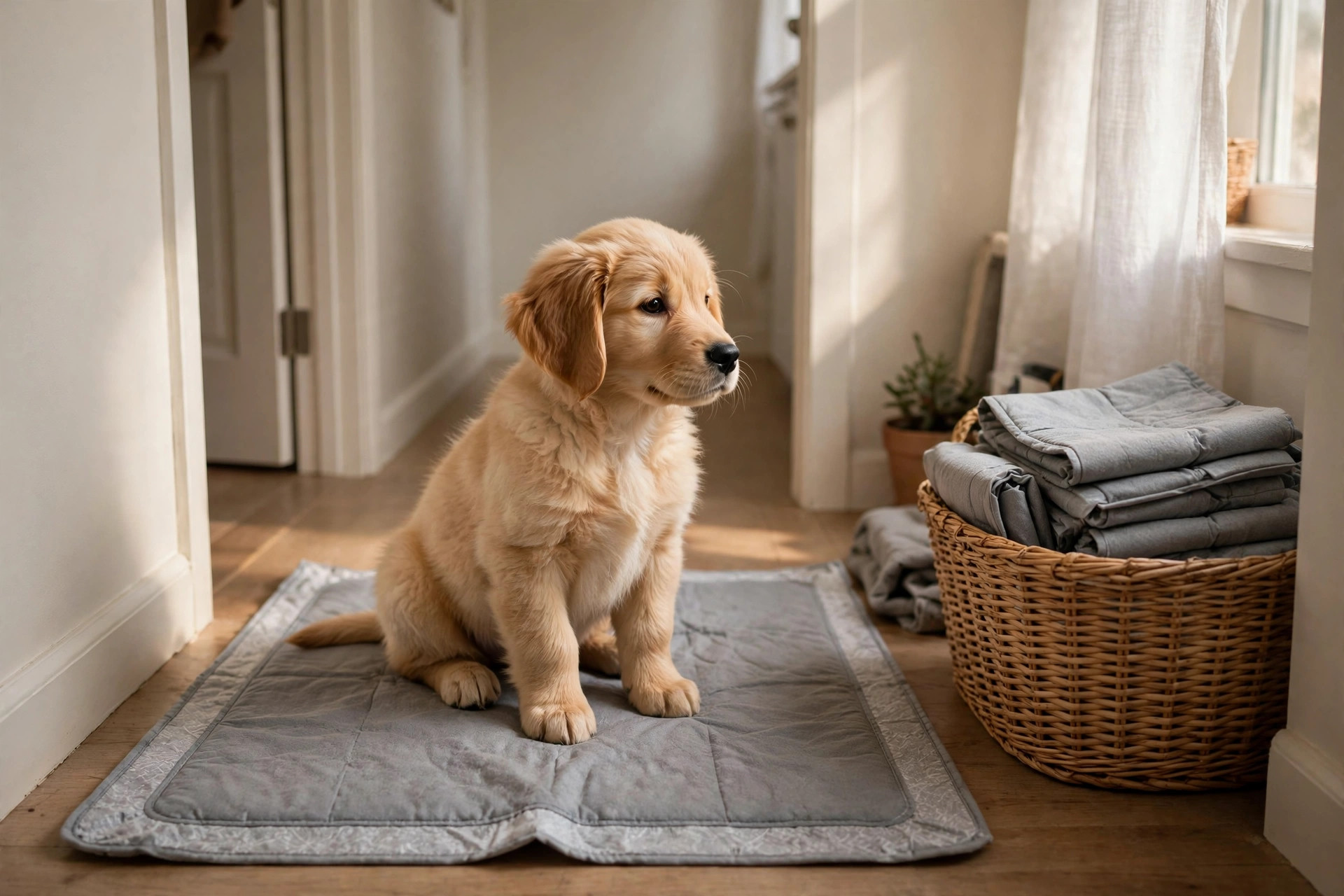
In a fifteenth-floor apartment, a puppy cannot wait for the elevator. Indoor pads are how most city puppies learn where to go — and the pad you choose decides whether training costs you hundreds in disposables plus a weekly trash smell, or about forty dollars once and a simple laundry habit. This guide compares the washable pads that survive real apartment use, then walks through the setup, the washing routine, and the training basics that make pads work.
Washable pads stay put. Disposables crinkle, slide, and shred — and a pad that moves mid-use teaches the puppy exactly nothing. Consistency is half of house training; a pad that is always in the same place, always dry on top, is doing half your training work for you.
The honest math: washable vs. disposable
Run the numbers before you choose, because they are lopsided:
- Disposables run about $0.25–$0.60 each. A young puppy uses 2–4 pads a day for roughly 4–6 months — 300–600 pads, or roughly $100–$300 before the dog is reliably trained. Used pads also pile up in your apartment trash between takeouts, and in a small kitchen that smell is noticeable fast.
- Washables cost roughly $12–$30 per pack of 2–4 pads. A starter rotation of 4–6 pads runs about $30–$60 total and survives hundreds of wash cycles — typically a year or more. Your cost after purchase is one or two extra laundry loads a week.
- The waste angle. One puppy’s disposable-pad habit is several hundred pads in the landfill. Washables cut that to near zero. If that matters to you, it’s a free bonus on top of the money.
The one fair point for disposables: travel and boarding, where laundry access is uncertain. Keep a small pack for trips. At home, washables win on every axis.
Anatomy of a pad that actually works
A washable pad is four layers doing four jobs. Cheap pads skimp on the middle two, which is why they leak and stink:
- Wicking top layer. A quick-dry mesh or bamboo-blend fabric that pulls liquid through so the surface stays dry. This is what keeps paws dry between changes and keeps the puppy from tracking footprints across your floor.
- Absorbent core. Microfiber or bamboo-foam filling that holds the liquid. Decent pads hold several cups — far more than a single puppy trip — so one pad can handle a full day or an overnight stretch.
- Waterproof backing. PUL (polyurethane laminate) or TPU film that keeps everything off your floor. This is the layer that fails first on cheap pads — after enough hot washes it cracks and starts wicking through.
- Bound edges. Sewn binding around all four sides stops fraying in the wash. Unbound pads come apart at the corners within a couple of months.
Two more things to check: grip dots or rubber backing on the underside, so the pad doesn’t surf across hardwood when the puppy circles on it, and size — 18×24 inches suits small breeds and tight hallway setups; 24×36 inches (or 30×36) fits medium puppies and gives wiggly ones a bigger target. Undersized pads are the top cause of “he peed on the floor next to the pad.”
Five washable pads that survive the wash
Real, widely sold pads with long track records — all machine-washable, all with waterproof backings. Prices are typical street ranges per multi-pack.
| Pad | Best for | Typical price | Small-apartment note |
|---|---|---|---|
| Pet Parents Pawtect Pads | Overall reliability | Usually $16–$25 (2-pack) | Consistently reviewed; wicks fast, backing holds up over many washes. |
| Rocket & Rex Reusable Pads | Maximum absorbency | Usually $20–$30 (2-pack) | Quilted core holds multiple trips — good for long workdays away. |
| GOOFFY Washable Pee Pads | Budget bamboo top | Usually $12–$20 (2-pack) | Bamboo top dries quickly; great value if you buy two packs to start. |
| Paw Legend Washable Pads | Stay-put stability | Usually $15–$22 (2-pack) | Rubberized underside grips hard floors better than most. |
| PetAmi Premium Washable Pads | Bulk starter sets | Usually $12–$18 (4-pack) | Cheapest way to build a 6-pad rotation; perfectly adequate for a single puppy. |
Pet Parents Pawtect Pads — the reliability pick
Pawtect pads (from Pet Parents) are the reference standard in the washable-pad world — the ones trainers and breeders name when asked. The wicking top dries fast enough that paws stay dry between changes, the absorbent core handles a full day for a small puppy, and the PUL backing survives heavy wash counts. Available in multiple sizes including 24×24 and 36×36; for apartments, the 24×24 fits most hallway and bathroom setups. Slightly pricier than budget brands, but the per-month cost is still pennies.
Rocket & Rex — the absorbency pick
If you’re a full-time worker who can’t swap pads midday, Rocket & Rex is the one. The quilted core is genuinely thicker and holds multiple trips without pooling, which matters on the long days. Pricier and bulkier in the wash, but for long-absence days that capacity is the point.
GOOFFY — the budget bamboo pick
GOOFFY’s pads use a bamboo-blend top that wicks well and dries quickly, at a price that makes it painless to buy the 6-pad rotation you actually need. For a first-time puppy owner on a budget, two packs of these plus the washing routine below will carry you through training.
Paw Legend — the stay-put pick
The rubberized underside on Paw Legend pads grips hardwood and tile better than the quilted pads that rely on weight alone. If your puppy circles three times before going, pad migration is what defeats you — and this is the fix. Mid-range price, solid construction, bound edges.
PetAmi — the bulk starter pick
PetAmi sells 4-packs at the price other brands charge for 2, making it the cheapest way to build a proper rotation in one order. The pads are thinner than the Rocket & Rex, so plan on changing them a bit more often — fine for a small puppy in a normal training routine.
- Bound stitched edges — not raw-cut or heat-sealed.
- PUL or TPU waterproof backing, stated in the product specs.
- Grip dots or rubberized underside if you have hard floors.
- Size: 18×24 minimum for small breeds, 24×36+ for medium ones.
- Buy 4–6 pads total: one down, one spare, the rest cycling through laundry.
The setup and washing routine
Placement: pick one spot and never move it — a bathroom corner, a hallway alcove, or a laundry area. Confine it with a low plastic tray if you like (an IRIS USA pet pad holder tray, usually $10–$15, keeps edges from curling and gives the spot a defined border); otherwise the pad alone on a washable floor mat works. Keep the spot away from the food and water bowls — dogs resist eliminating near where they eat, which you can use to your advantage.
How many pads: 4–6 for one puppy. One is down, one is the clean spare by the door, the rest are in the laundry cycle. Change the active pad once or twice a day (morning and evening), more often in the first few weeks.
Washing: machine wash warm — not hot — with a normal detergent. Two rules that determine whether your pads last 300 washes or 60: no fabric softener (it coats the fibers and kills absorbency) and tumble dry low or line dry (high heat cracks the waterproof backing). Skip bleach; for odor, add half a cup of white vinegar to the rinse cycle once a month.
Retire a pad when: the backing develops visible cracks, the pad starts leaking through onto the floor, or it holds odor after a proper wash. With the routine above, expect roughly 200–300 wash cycles — about a year of training use.
Pad training that works in an apartment
The pad is equipment; the schedule is the training. It pairs with the crate setup and your daily routine:
- Take the puppy to the pad on a schedule: immediately after waking, within 15 minutes after eating, after every play session, and at least every 1–2 hours during the first weeks. At this age puppies can’t “hold it” — go before they need to.
- Reward within 3 seconds of finishing. A tiny treat and calm praise the instant they finish on the pad. The reward must land while they’re still on the pad, not a minute later in the kitchen.
- Never punish misses. Rubbing a nose in it, scolding, or startling a mid-stream puppy teaches them to hide it — behind your couch. Just clean silently and adjust your schedule.
- Clean misses with enzyme cleaner. Regular cleaners leave protein traces the puppy can still smell; an enzyme cleaner (Nature’s Miracle or Rocco & Roxie, usually $10–$15) breaks the proteins down so the spot stops reading as “bathroom” to the dog’s nose.
- Shrink and shift gradually. As accuracy improves over weeks, fold the pad to reduce the target area, then move it toward the door you’ll eventually use for outdoor trips.
Most puppies in apartments get reliable on the pad within 4–8 weeks of consistent scheduling. For more on structuring the whole day around work hours, see our puppy routine for full-time workers.
FAQ
Do washable pads start to smell after a few uses?
Only if the washing routine is wrong. Changed daily, washed warm without fabric softener, and fully dried, good pads stay neutral for hundreds of cycles. The pads that stink are the ones left down for three days or run through a dryer on high heat — both bake odor into the core.
Can I use human incontinence pads instead?
You can — the technology is nearly identical and they’re often cheaper per pad. Two caveats: they rarely have grip undersides, so they slide on hard floors, and the sizing targets humans, not puppies. Dedicated pet pads are worth it for the stay-put backing and puppy-appropriate sizes.
How do I stop the puppy from chewing the pad?
Usually it’s boredom or the crinkly-soft texture. Fix it with a rigid pad holder/tray so the edges aren’t accessible, redirect to a chew toy the moment the mouth opens, and make sure the puppy is getting enough play before pad time. Chewing phases usually pass within a few weeks of training.
Should I keep disposables around too?
A small pack for travel, vet stays, and boarding — places without laundry access. At home, washables. Mixing both as the daily system just means you pay for disposables and do laundry.
When is it time to retire a pad?
Visible cracking or stiffness in the waterproof backing, any leaking through to the floor, or odor that survives a proper vinegar-rinse wash. With the care routine in this guide, that’s roughly 200–300 washes — about a year of daily training use.