Best Heated Cat Beds for Drafty Apartments
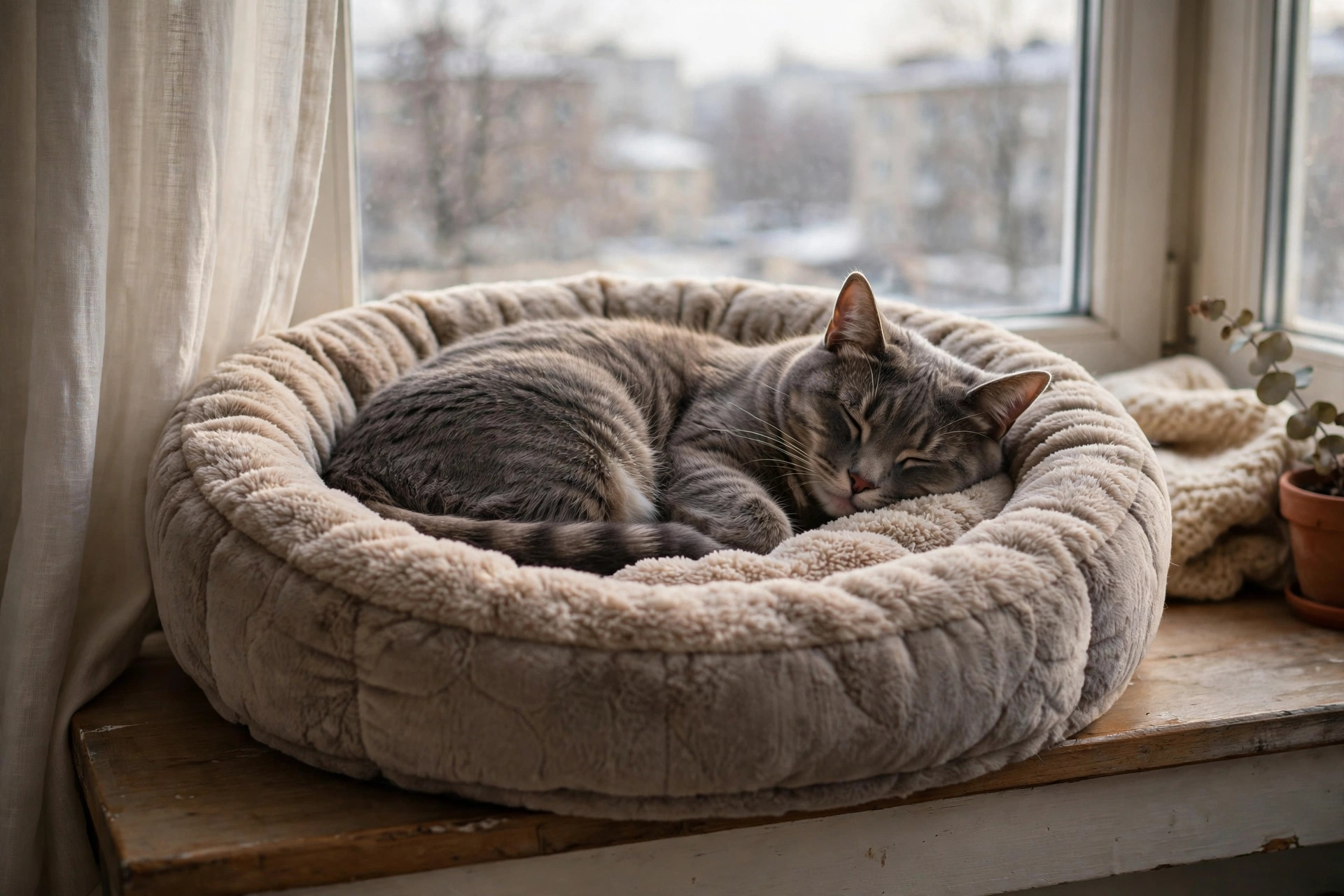
A cat’s normal body temperature runs around 102°F — several degrees warmer than yours — which is why your cat treats you like a space heater and why the sunny spot on the rug is contested territory all winter. In a drafty apartment with old windows and a landlord-controlled thermostat, a heated bed is not a luxury: it is the warmest square foot in the home, available on demand, for pennies a day in electricity.
- Thermostat control is the safety feature that matters. The bed should warm to the cat’s body temperature and hold there — never climb.
- Low wattage (4–7W) is a feature, not a weakness. These beds sip electricity; a 60W human heating pad is a different, dangerous product.
- Chew-resistant cords and UL/MET safety listings separate real pet products from fire hazards.
- Place the bed where the cat already naps — a heated bed in a location the cat dislikes stays empty.
- Senior and arthritic cats benefit most; the gentle warmth loosens stiff joints noticeably.
Four beds worth plugging in
Every bed below is a real, widely sold product with proper safety listings — no unbranded heating pads, no “as seen on TV” gadgets. Prices are typical street prices.
| Bed | Best for | Usually | Apartment note |
|---|---|---|---|
| K&H Thermo-Kitty Bed | The all-around winner | $45–$55 | Thermostat-controlled, 4W, washable cover, steel-wrapped cord |
| Toozey Pet Heating Pad | Adjustable warmth | $22–$30 | 7 heat levels + timer; thin pad slips inside existing beds |
| K&H Lectro-Soft Heated Pad | Senior and arthritic cats | $55–$65 | Soft orthopedic foam base; gentle, even heat |
| PetSafe Heated Wellness Sleeper | Nervous first-timers | $50–$65 | Raised bolster edges; constant low warmth, very low profile |
K&H Thermo-Kitty — the default pick
K&H has made thermostatically controlled pet warmers for decades, and the Thermo-Kitty is the refined result: a dual-thermostat heater that warms to roughly the cat’s natural body temperature only when the cat is on it, then idles. At 4 watts it costs almost nothing to run — roughly a dollar or two per month even left on around the clock. The cord is steel-wrapped against chewing, the product carries proper safety listings, and the removable cover is machine washable. For the apartment use case — drafty windowsill, senior cat, all winter — this is the bed to beat.
Toozey Heating Pad — the adjustable pick
The only pick with real temperature control: seven heat levels and a timer with auto shut-off, on a thin waterproof pad that slides inside any existing cat bed or under a folded blanket. That flexibility is genuinely useful — some cats want barely-warm, others want toasty, and the timer handles the “warm for the evening, off overnight” schedule automatically. At around $25 it is also the cheapest way to test whether your cat even likes heated sleeping before committing to a dedicated bed. The tradeoff: it is a pad, not a bed, so it needs a host — and the controller and extra cord add clutter.
K&H Lectro-Soft — the senior-cat pick
For the old cat with stiff joints, heat plus cushioning beats heat alone. The Lectro-Soft pairs K&H’s thermostat-controlled low-wattage heat with a soft orthopedic foam base that does not bottom out under the cat’s weight. Arthritic cats visibly move more easily after sleeping on gentle warmth — it is one of the few comfort products where the benefit is obvious within days. The foam is not machine washable (spot-clean only), so put a washable blanket over it, and size up if your cat likes to sprawl.
PetSafe Heated Wellness Sleeper — the cozy pick
A bolster-style bed with raised edges and constant gentle warmth, designed for cats that like to curl against something. The low profile fits under tables and on closet shelves where taller beds will not, and the plush surface is the most immediately inviting of the four — nervous cats often choose this one first because it looks and feels like a normal bed that happens to be warm. The heat is fixed rather than adjustable, but it is calibrated to the safe low range, and the whole bed is easy to spot-clean.
Safety: what separates a pet warmer from a fire hazard
Heated pet products deserve more scrutiny than most gear, because the failure mode is not disappointment — it is burns or worse. The checklist that matters:
- Thermostat control, not just a heating element. Quality pet warmers cycle to hold a safe surface temperature (around 100–102°F). Cheap pads just run at whatever temperature the element reaches, which climbs over hours.
- Safety listings. Look for UL, MET, or ETL marks — independent testing, not the manufacturer’s promise. Every pick above carries one.
- Chew-resistant cords. Steel-wrapped or heavy-duty cord covers. A cat that chews a live heating-pad cord is in serious danger; this is non-negotiable.
- Low wattage. 4–25W is the pet-safe range. Anything drawing 60W+ is a human heating pad wearing a pet costume — human pads run hotter and their auto-shutoff cycles confuse animals.
- Never use human heating pads for pets. They reach temperatures that burn, they lack chew protection, and their 2-hour auto-shutoff leaves the animal cold half the night anyway.
Also worth knowing: microwavable heat discs (like the PetSafe Snuggle Safe) are the safe travel alternative — no cord at all, a few hours of warmth per microwaving. They belong in carriers and crates, not as the daily bed.
- A 4W bed running 24/7 uses about 3 kWh per month — at typical US rates, well under $1.
- Even a 25W pad on a timer (8 hours nightly) lands around 6 kWh/month — roughly a dollar.
- Compare: running a 1500W space heater for the same corner costs 30–50x more. The heated bed is the efficient answer to “the cat is cold but I cannot heat the whole apartment.”
Placement: put it where the cat already naps
The most common heated-bed failure is perfect product, wrong location. Cats choose sleeping spots by warmth, security, and habit — in that order — and a heated bed cannot overcome a spot the cat dislikes. The winning move: watch where the cat naps for a week, then put the heated bed there. The drafty windowsill it loves despite the cold, the top of the bookshelf, the corner of your bed — augment the existing preference instead of fighting it.
Give it a few days. Cats are neophobic about new objects; the bed may sit empty for 48 hours before the first cautious nap, and that is normal. A worn t-shirt or a familiar blanket draped over it speeds adoption enormously — your scent is the review the cat trusts. And keep the regular favorite bed available too; choice reduces the pressure that makes cats reject new things.
The senior-cat case is where heated beds stop being nice and start being necessary. Old cats lose muscle mass, feel the cold more, and move less — which stiffens joints further in a miserable cycle. Gentle, constant warmth breaks it: the cat sleeps deeper, moves easier on waking, and often becomes visibly more active within a week. If your cat is over twelve, this is the highest-impact comfort purchase you can make.
FAQ
Can I leave a heated bed on 24/7?
Yes — that is what thermostatically controlled pet beds are designed for. They warm when the cat is on them and idle when empty, drawing only a few watts. Unplug during long absences if it gives you peace of mind, but daily on-off cycling is unnecessary and the thermostat handles the safety logic.
Could my cat overheat?
Not on a properly thermostat-controlled pet bed — the surface stays near the cat’s own body temperature, and cats simply move off if they get warm (which is why the bed should never be the only sleeping option in an enclosed space). The risk cases are human heating pads, malfunctioning unregulated pads, and very young, old, or ill cats that cannot move away easily — supervise those individuals.
My cat ignores the heated bed. Now what?
Location first: move it to the cat’s current favorite nap spot. Then scent: drape something that smells like you or the cat over it. Then patience: give it a full week. If it is still empty, the cat may simply run warm — some cats genuinely prefer cool surfaces, especially in heated apartments. The bed is not defective; the cat is just not the customer.
Are heated beds safe for kittens?
With supervision, yes — but kittens under about 8 weeks cannot regulate body temperature well and should not be left on any heat source unsupervised. For older kittens, use the lowest setting, ensure the kitten can crawl off the heat freely, and check that cords are fully chew-protected. When in doubt, the microwavable disc (no cord, no electricity) is the safer kitten option.