Best Dog Sunscreens for Summer City Walks
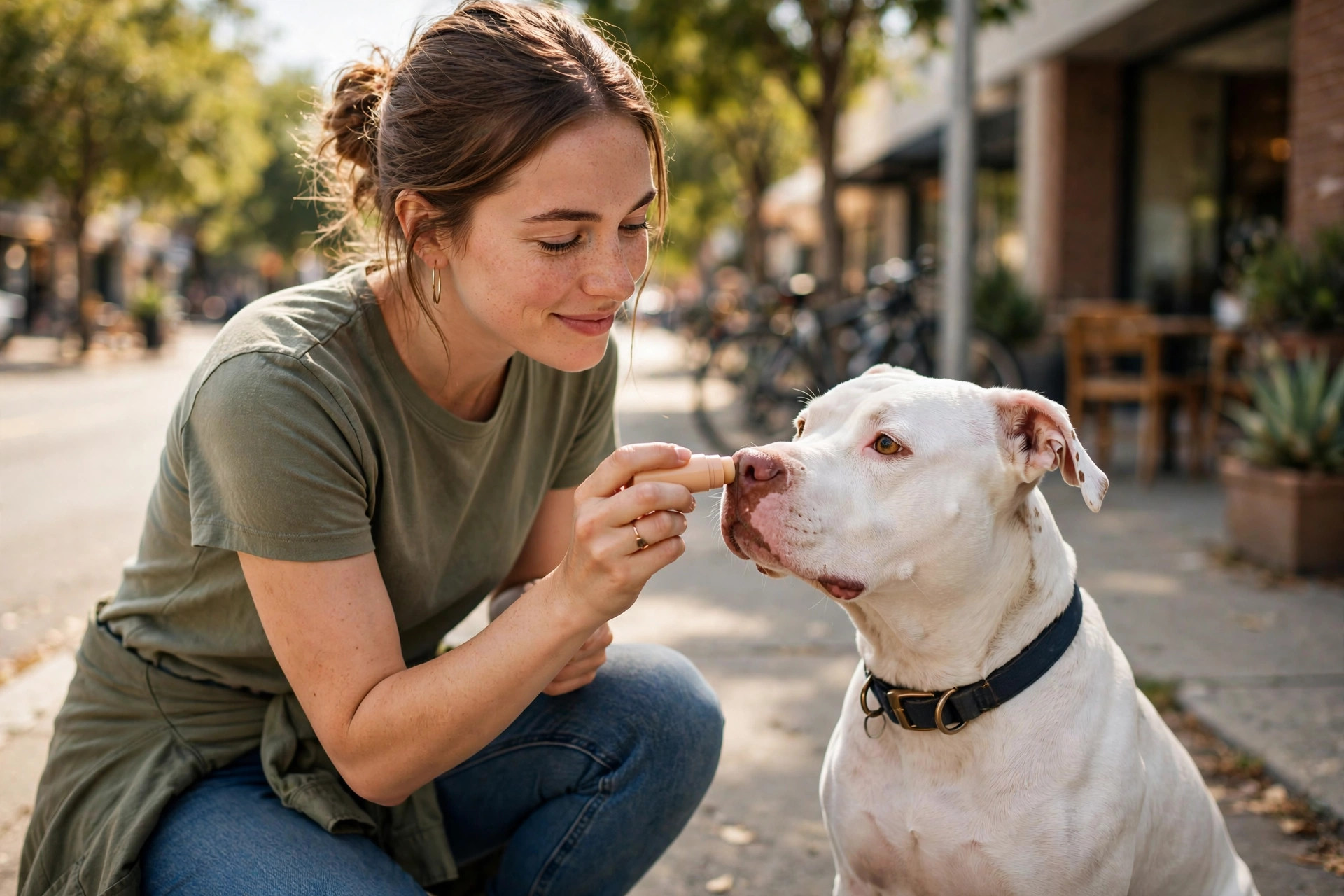
Dogs sunburn. It surprises most owners the first time they see it: a pink nose gone raw, pale ears crisped at the tips, a shaved belly pink after a long July afternoon. City dogs are especially exposed — concrete reflects UV back up at them, there is no tree cover on most blocks, and the midday walk happens whether the UV index cooperates or not. Dog sunscreen is a real, small category with a critical rule: never use human sunscreen on a dog. Here is what to use instead, and where it actually goes.
- Human sunscreen is toxic to dogs — zinc oxide and salicylates cause real harm when licked. Use only products formulated for pets.
- Dogs burn where fur is thin or absent: the nose, ear tips, belly, groin, and around scars or surgical shave spots. White and light-coated dogs burn fastest.
- Budget $10–$20 per product. A spray for the body plus a balm for the nose covers almost every dog.
- Sunscreen is the backup plan, not the plan: shade, timing (walk before 10 a.m. or after 4 p.m.), and short midday outings matter more than any product.
- Reapply every 2 hours on long outings, and after swimming. Like human sunscreen, it wears off.
Why human sunscreen is off the table
This is the one non-negotiable in the category. Human sunscreens rely on ingredients dogs cannot tolerate when — not if — they lick them off. Zinc oxide, the mineral blocker in most “natural” human sunscreens, causes zinc toxicity in dogs: vomiting, lethargy, and in larger ingestions, red blood cell damage. Salicylates (homosalate, octisalate) irritate the GI tract. Even “pet-safe”-labeled human products are formulated for skin that does not get licked for twenty minutes after application.
Pet-formulated sunscreens use dog-tolerated UV filters and are designed around the licking reality: non-toxic if ingested in small amounts, fast-drying so there is less to lick, and unscented or lightly scented so the dog does not spend the walk trying to rub it off. Read the label anyway — “for pets” on the front does not exempt you from checking the ingredient list on the back.
Five pet-safe sun products worth buying
| Product | Format | Typical price | Best for |
|---|---|---|---|
| Epi-Pet Sun Protector | Spray | Usually $15–$20 | Full-body coverage; the category’s benchmark, vet-formulated. |
| Petkin Doggy Sunstick SPF 15 | Stick | Usually $9–$12 | Precision spots: nose bridge, ear tips, around eyes. |
| Natural Dog Company Snout Soother | Balm tin | Usually $12–$16 | Nose protection plus healing for already-dry noses. |
| Warren London Dog Sunscreen | Spray | Usually $12–$16 | Budget spray; aloe-based, easy to find. |
| My Dog Nose It! Sun Protection Balm | Balm stick | Usually $12–$15 | Nose-and-ears stick; pocketable for the walk. |
Epi-Pet Sun Protector — the benchmark spray
Epi-Pet is the only pet sunscreen formulated by a veterinary dermatologist that is widely sold, and it shows in the details: a quick-dry spray that does not leave the coat greasy, an unscented formula dogs mostly ignore once applied, and labeling that is explicit about pet-safe ingredients. Spray it on thin-furred areas — belly, inner thighs, ear flaps — from 4–6 inches away, and rub it in lightly with your hand so it reaches the skin rather than sitting on the fur. One 4 oz bottle lasts a summer of daily walks for one dog. At $15–$20 it is the priciest spray here, and the one vets name most often.
Petkin Doggy Sunstick — the precision tool
A twist-up stick, like deodorant, for the small zones a spray cannot target: the bridge of the nose, the tips of upright ears, the skin around the eyes, a scar from last year’s surgery. SPF 15 is modest, but these areas need reapplication more than high SPF — the dog rubs its face on things, and the stick format makes reapplying mid-walk a five-second job. Keep one in the treat pouch next to the poop bags. $9–$12.
Natural Dog Company Snout Soother — nose balm that protects
The nose is the highest-risk sunburn site on most dogs — it points at the sky, has no fur, and the dog cannot exactly wear a hat. Snout Soother is a balm tin with natural butters and oils plus sun-protective ingredients; it both shields and heals, which matters because many owners only notice the nose problem after it is already dry and cracked. Apply a thin layer before the walk; it is lick-safe by design. $12–$16 for a tin that lasts months.
Warren London — the budget spray
An aloe-based pet sunscreen spray at $12–$16 that does the basic job: UV protection in a lick-tolerated formula, easy to find in pet stores. It is slightly greasier than the Epi-Pet and the scent is noticeable, which some dogs try to rub off on the couch — apply it at the door, not on the sofa. As an entry product to build the habit, it is perfectly serviceable.
My Dog Nose It! — the pocket balm
A stick-format balm specifically for noses and ear tips, designed to live in a pocket or treat pouch for reapplication on long outings. The stick beats the tin when your hands are full of leash — twist, swipe, done. $12–$15. Pair it with a body spray and the dog’s whole exposure map is covered.
Sunscreen goes where the fur isn’t. Run your hands over your dog and note every spot where you feel skin through thin fur — that map is your application guide, and it is different for every dog.
The application map: where it actually goes
Dogs do not need full-body sunscreen — fur is excellent UV protection. They need it on the gaps:
- Nose and muzzle. Every dog, every sunny walk. Balm or stick, applied at the door.
- Ear tips. Upright ears (corgis, huskies, shepherds) expose thin skin at the tips; floppy ears expose the inner flap when they flip. Both burn.
- Belly and groin. The fur is thinnest here, and concrete reflects UV upward. Spray before the walk, especially for dogs that sunbathe belly-up on the balcony — yes, they do, and yes, they burn.
- Around scars and shave spots. Post-surgery shave areas have zero protection for weeks. Ask the vet when sunscreen is safe on healing skin.
- White dogs, everywhere thin. White and light-coated dogs (pit bulls, Dalmatians, white boxers) can burn through thin fur on the back and head. These dogs get the full spray treatment.
Apply 15 minutes before the walk so it dries — wet product transfers to everything and invites licking. On multi-hour outings (the long park day, the hike), reapply every two hours and after water.
The bigger heat plan (sunscreen is step three)
Sunscreen protects skin; it does nothing about heat, which is the actual summer killer. The full hot-day protocol:
- Time the walk. Before 10 a.m. or after 4 p.m. Midday summer walks in the city should be short business trips, not adventures. Pavement at 95°F air temperature can hit 140°F — hot enough to burn pads in a minute. Test with the back of your hand: if you cannot hold it on the pavement for five seconds, neither can the dog’s paws. Our dog boots guide covers paw protection, and boots work for heat as well as winter salt.
- Cool the dog, not just the skin. A cooling mat at home for post-walk recovery, water before/during/after, and shade breaks every 15 minutes on long outings.
- Then sunscreen. On the exposed spots, as mapped above.
Know the overheating signs cold: heavy panting that does not ease in shade, drooling, bright red gums, staggering. That is a cool-down-now emergency — shade, room-temperature water on belly and paws, vet if it does not resolve in minutes.
FAQ
Can I use my own sunscreen on my dog just once?
No — not even once. Zinc oxide and salicylates in human sunscreen are toxic to dogs when licked, and dogs will lick. The risk is not theoretical; zinc toxicity from sunscreen ingestion is a documented veterinary emergency. Keep a pet-formulated product by the door instead.
Do dogs with dark fur need sunscreen?
On the nose and other furless spots, yes — skin is skin regardless of coat color. Dark fur itself blocks UV well, so dark-coated dogs usually only need the nose/ears/belly treatment, while white and thin-coated dogs need broader coverage.
How often should I reapply dog sunscreen?
Every two hours on long outings, and after swimming or heavy sweating (dogs sweat through paw pads). For a normal 30-minute walk, one application at the door is enough.
My dog licks the sunscreen off immediately. What now?
Apply 15 minutes before the walk so it dries, distract with a stuffed Kong or a short training session during the drying window, and prefer unscented formulas — scented products invite licking. Pet-formulated products are designed to be lick-tolerated, so small amounts are not dangerous, but dried product protects better.
Is sunscreen enough for a white dog in strong sun?
It is one layer. White and thin-coated dogs in strong sun also benefit from a lightweight UV-protective dog shirt for long outings, plus timing walks outside peak UV hours. Sunscreen on exposed skin, shirt on thin-furred body areas, shade and water always.