Best Dog Carrier Backpacks for City Commutes
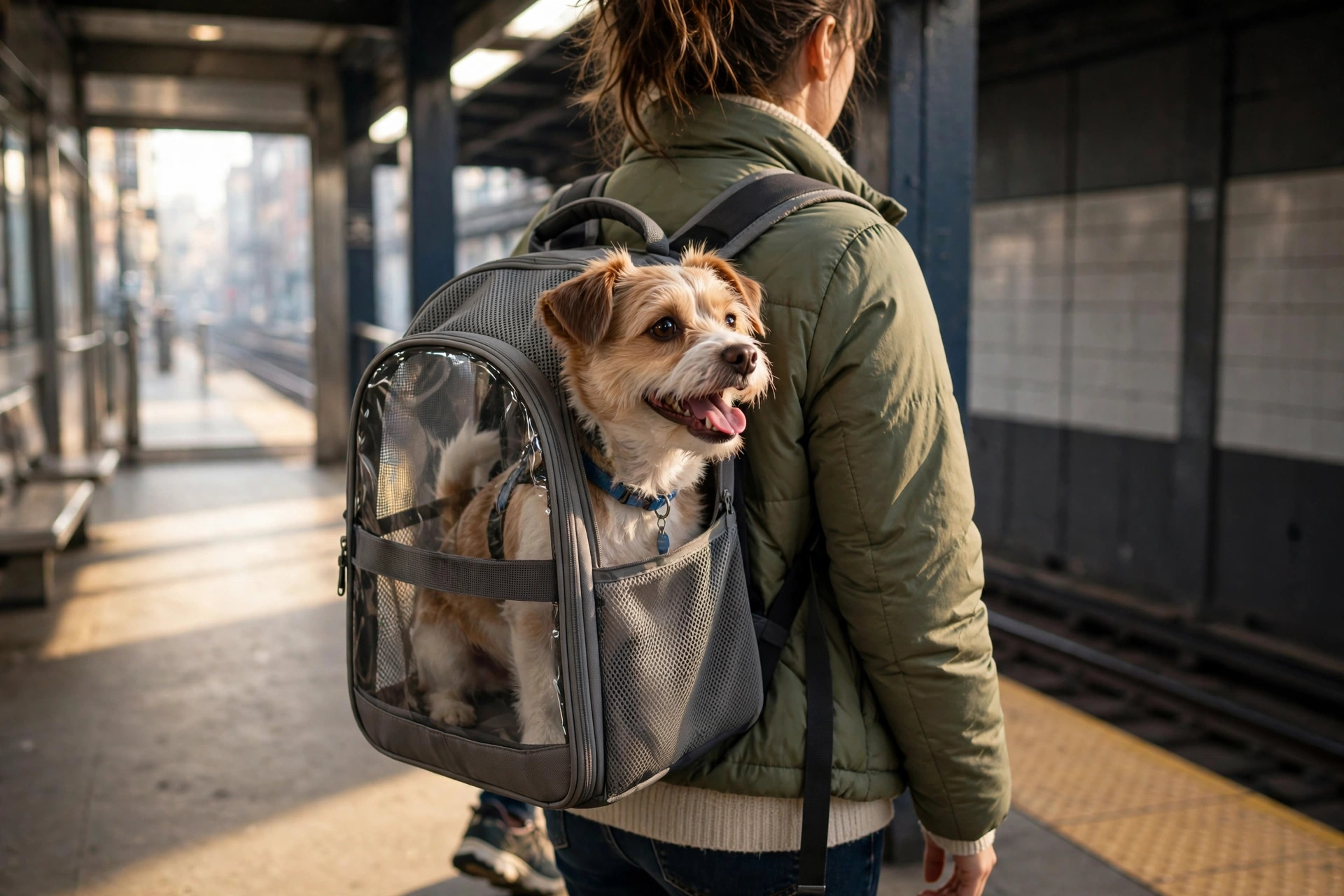
A small dog in a hand-carried bag works for exactly one turnstile before you run out of hands. On a real commute — escalator, stairs, a crowded platform at 8:40 a.m. — a backpack carrier keeps your dog enclosed, your hands free for the railing, and your bag off the platform floor. The right one is not the cheapest bag with straps: it fits your dog’s actual measurements, vents enough air on a packed summer train, and still fits under an airline seat if you ever fly with it.
- Match the pack to your dog’s weight AND body length — weight limits alone mislead, because a long 18 lb dog needs a longer pack than a stocky one.
- Budget $40–$180. Backpacks above $180 rarely add anything a city commuter uses; below $40 the zippers and straps tend to fail under a squirming dog.
- Ventilation beats features. Mesh on three sides and a head-out option matter more than extra pockets or a roll-top you will never roll.
- A padded hip belt turns a 20 lb dog from a shoulder ache into a manageable load on a 30-minute commute.
- If you ride the NYC subway, the dog must be fully enclosed in a container — every pack here qualifies, which is exactly why they exist.
Why a backpack wins on a real commute
On paper, any carrier encloses a dog. On the 6 train at rush hour, the differences get physical. A shoulder-slung bag swings into other passengers and bangs the turnstile; a hard carrier occupies both hands and becomes a tripping hazard on stairs. A backpack sits tight against your body, so you can hold the escalator rail, tap through the gate, and carry a coffee at the same time. Elevators in older subway stations are slow and crowded; a backpack keeps the dog above the crush and away from rolling luggage.
There is also a rules angle. Many transit systems — New York’s MTA being the famous one — allow small animals only if enclosed in a container, with no size exception for “well-behaved” dogs. A purpose-built dog backpack satisfies the letter of the rule and reads as obviously intentional to station staff, which smooths the ride. Train your commute route on an off-peak weekend first: walk the transfer, find the elevator, time the trip with the dog inside.
Five carrier backpacks worth the money
Every model below is a real, widely sold pack with a multi-year track record. Prices shift with sales; treat the ranges as typical street prices.
| Model | Dog size | Typical price | Commuter note |
|---|---|---|---|
| K9 Sport Sack Air 2 | Up to ~30 lbs | Usually $110–$140 | Head-out design, huge ventilation, the commuter default for dogs 15–25 lbs. |
| PetAmi Deluxe Pet Carrier Backpack | Up to ~18 lbs | Usually $48–$65 | Fully enclosed, expandable sides; the value pick for small dogs and cats. |
| Outward Hound PoochPouch Front Carrier | Up to ~20 lbs | Usually $40–$55 | Front-wearing; best for nervous dogs that need to see you. |
| Kurgo Wander Carrier Backpack | Up to ~25 lbs | Usually $110–$140 | Airline-approved dimensions; doubles as an under-seat flight carrier. |
| Little Chonk Backpack Carrier | Up to ~30 lbs | Usually $149–$199 | Ventilation-obsessed design with a structured frame; premium comfort. |
K9 Sport Sack Air 2 — the commuter default
The Air 2 is the pack you see on actual subway platforms for a reason. The dog rides head-out through a drawstring collar, with the body enclosed in a tall pack ventilated on three sides by mesh. It comes in sizes (S through XL) keyed to the dog’s weight and body length — measure both; a long-bodied 20 lb dachshund wears a larger size than a compact 20 lb pug. The shoulder straps are thick and the chest strap keeps the pack from sliding when you lean. Downsides: head-out is not ideal for dogs that snap at strangers’ hands, and nervous dogs may prefer full enclosure. Real-world street price hovers around $110–$140 depending on size and color.
PetAmi Deluxe — the value fully-enclosed pack
For under $65, the PetAmi is the honest budget workhorse. Two of the four sides unzip outward to expand floor space — genuinely useful on a long train ride, where the dog can lie down with legs extended rather than staying curled. A removable fleece pad handles the apartment’s couch-to-train transition, and the included tether clips to a harness so the dog cannot bolt when you open the top. The straps are serviceable rather than plush; if your commute is a 30-minute walk plus a train, your shoulders will notice. For dogs under about 18 lbs and commutes under 20 minutes, it is hard to beat.
Outward Hound PoochPouch — the front carrier for anxious dogs
Some dogs panic when they cannot see their owner. The PoochPouch rides on your chest, front-carrier style, with the dog’s head out and resting against you. That contact genuinely calms many nervous small dogs, and you can monitor them the whole ride — breathing, panting, stress yawning. It holds up to 20 lbs, though most owners find 12–15 lbs is the practical comfort limit for front-carrying. Because the dog is in front, it does not work in truly crush-packed cars where you need your body as a buffer, but on buses, light rail, and off-peak trains it is excellent.
Kurgo Wander — the pack that also flies
If you commute daily and fly once or twice a year, buying one carrier for both is smart economics. The Wander is dimensioned to fit under most airline seats (always confirm with your specific airline — under-seat space varies by aircraft), compresses down when partially empty, and works as a day-to-day backpack carrier for dogs up to about 25 lbs. Kurgo backs its pet gear with a lifetime warranty against manufacturing defects, which matters for something that takes daily subway abuse. The fully-enclosed design is less ventilated than the K9 Sport Sack, so it suits short commutes and air-conditioned cars better than summer platform waits.
Little Chonk — the premium pick for bigger small dogs
Little Chonk’s pack was designed around one complaint: most carriers suffocate dogs above 20 lbs. The structured frame holds mesh panels away from the dog’s body so air actually circulates, and the ventilated bottom panel prevents the dreaded “hot box” on summer commutes. It handles dogs up to about 30 lbs — French bulldogs, stocky beagles — with a real hip belt that shifts weight off your shoulders. At $149–$199 it is the priciest here, but if your dog is 22+ lbs and you commute daily, the ventilation and hip belt pay for themselves in the first month.
Fit math: measure before you buy
Weight limits on product pages are the headline, but length decides the fit. Measure three things on your dog:
- Weight on a home scale (hold the dog and subtract your weight). Stay at least 10% under the pack’s rated limit.
- Body length from the base of the neck to the base of the tail. Compare against the pack’s interior floor length; a dog longer than the floor must curl, which works for short rides but not for a 40-minute commute.
- Chest height from floor to shoulder. The pack’s interior height should exceed it by at least 2 inches so the dog can sit with its head up.
Apartment reality check: try the loaded pack in your hallway before the first commute. Walk the length of your building corridor, climb one flight of stairs, and duck under your apartment door’s top frame if you are tall — the pack adds 8–12 inches behind you, and you will discover every low doorway you have been ignoring. Adjust straps so the pack rides high and tight against your back; a pack bouncing at hip level multiplies the perceived weight and swings into people on stairs.
Size for the dog you have on a hot August afternoon, not the dog you have on a calm October morning. A panting dog needs more air and more room than a resting one, and the commute that tests your carrier will always be the one on the hottest day.
Transit rules worth knowing before the platform
The famous one is New York’s MTA: dogs (and all pets) must be enclosed in a container to ride the subway — no leashed exceptions. Every fully-enclosed pack here complies; head-out designs like the K9 Sport Sack sit in a gray area that riders widely use without issue, but a fully-enclosed pack is the safer bet if your station has strict staff. Most other systems are more relaxed but have their own quirks: many European metros and some U.S. buses require the animal be in a carrier and kept off seats; some ferries restrict pets to outer decks even in a pack.
Two practical rules of your own. First, never set the pack on a train floor and walk away from it — keep a hand or foot on it; unattended bags read as suspicious in every transit system on earth. Second, board at the ends of the platform, where the cars are emptier, and position yourself near a door pocket or corner seat where the pack is shielded on two sides. Rush-hour crushes are stressful for dogs; if your commute allows it, shifting your ride by 20 minutes makes the trip dramatically calmer for the animal.
Ventilation, heat, and your dog’s comfort
A carrier backpack is a small enclosed space with a furry heater inside. On a packed, air-conditioned car it is fine; on a sun-baked platform at 92°F it can get genuinely dangerous within minutes. Mesh on three sides is the minimum you want. Fully-enclosed designs without a head-out option should have mesh on at least the two long sides plus a top vent.
Signs of overheating on the ride: rapid panting with the tongue hanging wide and flat, drooling, restlessness, bright red gums. If you see them, get off at the next stop and move to shade with water — do not wait for the dog to “settle.” In summer, carry the dog in the pack for the ride but let it walk the air-conditioned underground segments on leash where rules permit, reducing enclosed time. In winter, the pack is a wind shelter; add the fleece pad and skip the expandable mesh extensions in freezing wind, which turn ventilation into a draft.
Your comfort: the part nobody reviews
A 20 lb dog is a manageable load in a good pack and a misery in a bad one. The differences that matter on a daily commute:
- Hip belt. Anything above 15 lbs should ride partially on your hips, hiking-pack style. Shoulder straps alone will dig in within 15 minutes.
- Strap padding width. Straps narrower than 2 inches concentrate the load; wide padded straps spread it. Check the stitching where straps meet the pack — that joint takes all the force when the dog shifts.
- Load lifters and sternum strap. They pull the pack’s top toward your body so the weight does not lean you backward on stairs. If the pack sways side to side when you turn, tighten these.
- Breathability of the back panel. On a 30-minute walk in summer, an unvented foam back panel leaves you soaked. Look for channeled or mesh back panels.
And the washing question: commuter packs get grimy. Machine-washable is rare; most are spot-clean only with removable pads. Wipe the interior monthly with a damp cloth and pet-safe cleaner — a pack that smells like a wet dog on a warm train is a pack you will stop using. Our guide to apartment dog beds covers washable pads that can double as carrier liners in a pinch.
The two-week carrier training plan
No dog loves a backpack on day one. Two weeks of apartment training prevents a commute-day wrestling match:
- Days 1–3: the pack is furniture. Leave the carrier open on the floor. Toss treats inside so the dog walks in and out freely. Feed one meal a day in it.
- Days 4–6: closed door, short sessions. Zip the dog in for 5–10 minutes while you sit nearby, rewarding calm behavior. Never let the dog paw its way out — wait for calm, then open.
- Days 7–10: wear it indoors. Put the pack on and walk around the apartment for 10–15 minutes. Practice bending, stair steps, and the turnstile-like squeeze between your kitchen chairs.
- Days 11–14: short real trips. Ride one stop, or walk two blocks and come back. End every trip with a treat and the dog getting out on its own terms. The first full commute should feel boring to the dog by then.
Dogs that bark at strangers on the street will bark inside the pack too — enclosure does not fix reactivity, and a barking pack on a quiet train car earns glares. If your dog is reactive, work on that separately (our separation anxiety tools guide covers calming routines that transfer well to transit) before making the pack the commute plan.
FAQ
What is the maximum dog weight for a carrier backpack commute?
Most packs top out around 25–30 lbs, and your own comfort usually sets the real limit lower. Above 20 lbs you need a padded hip belt and a structured frame; above 25 lbs most commuters switch to a stroller or a rolling carrier for daily rides. Stay 10% under the pack’s rated limit.
Are carrier backpacks allowed on the NYC subway?
MTA rules require pets to be enclosed in a container, which a backpack carrier satisfies — this is exactly why the category exists. Fully-enclosed packs comply unambiguously; head-out designs are widely used without issue but sit in a gray area at stations with strict staff.
How do I keep my dog cool in a carrier on a summer commute?
Choose a pack with mesh on at least three sides, keep enclosed time as short as possible, let the dog walk air-conditioned segments on leash where permitted, and watch for heavy panting, drooling, or bright red gums — those mean get off and cool down, not push through.
Front carrier or backpack for a nervous dog?
Front carriers win for nervous dogs: body contact with you and the ability to see you calms many of them, and you can monitor their breathing. Backpacks are better for your load-bearing and for crowded cars. Try the front style first if anxiety is the main concern.
Can the same pack work for flights?
Sometimes. The Kurgo Wander is dimensioned for under-seat use, and the PetAmi fits many airlines’ size limits — but under-seat space varies by aircraft, so confirm your specific plane’s dimensions with the airline before the trip. Most airlines also cap in-cabin pets around 15–20 lbs total including the carrier.