Pet-Safe Antifreeze & Winter Chemicals at Home
Antifreeze is one of the most lethal everyday substances a pet can encounter, and it does not only live in garages. It pools in parking structures, drips onto the sidewalk outside auto shops, sits in jugs on apartment storage balconies, and hides inside “winter” products like de-icer sprays and some ice melts. The cruel part: ethylene glycol — the active ingredient in conventional antifreeze — tastes sweet, so animals seek it out. This guide covers the safer products worth switching to, how to store winter chemicals in a home with no garage, and the warning signs that mean “vet, now.”
- Conventional antifreeze (ethylene glycol) can be fatal in tiny amounts — as little as a teaspoon for a cat. Treat every puddle and jug as an emergency-level hazard.
- Propylene-glycol antifreezes (Sierra, Prestone LowTox) are markedly less toxic but NOT non-toxic — still store them locked away.
- In apartments, the risk moves: parking garages, shared storage cages, balconies, and sidewalk drips replace the private garage.
- Ice melts vary wildly — calcium chloride and rock salt irritate paws and stomachs; urea-based and “pet-safe” labeled melts are gentler but still not snacks.
- Antifreeze poisoning has a deceptive timeline: the animal looks drunk, then looks better, then crashes. The “looks better” phase is the trap.
Why a teaspoon can kill
Ethylene glycol itself is not the killer — the liver’s breakdown products are. Once ingested, the body converts ethylene glycol into toxic metabolites (including oxalic acid) that destroy the kidneys. The lethal dose is shockingly small: roughly 1–2 teaspoons for an average cat and 1–2 tablespoons for a 20-pound dog, though any suspected ingestion in any amount warrants an immediate vet call. There is no safe “small taste.”
The timeline is what makes this poison so treacherous. Stage 1 (30 minutes to 12 hours): the animal looks drunk — wobbly, nauseous, excessively thirsty, urinating a lot. Stage 2 (12–24 hours): the animal appears to recover. Owners cancel the vet visit. Stage 3 (24–72 hours): acute kidney failure — vomiting, lethargy, no urine, seizures. By stage 3, treatment options narrow drastically. The effective antidotes (fomepizole or ethanol IV) work best within the first 8 hours for dogs and the first 3 hours for cats, which is why “wait and see” is the wrong move. If you suspect ingestion, call your vet or the ASPCA Poison Control line immediately and go — do not wait for stage 2 to pass.
The safer antifreeze options, honestly rated
If you own a car, you likely store antifreeze somewhere — and in an apartment, “somewhere” is often a storage cage, a balcony box, or under the kitchen sink. Switching the product itself is the highest-leverage move you can make.
Propylene-glycol antifreeze is the meaningfully safer category. It takes far larger quantities to cause harm, and it is metabolized into much less dangerous compounds. Two widely available options: Sierra Antifreeze/Coolant (typically $15–$22 per gallon), the original propylene-glycol brand, and Prestone LowTox (typically $14–$20 per gallon). Both protect to similar temperatures as conventional coolant and mix the same way. The honest caveats: “less toxic” is not “non-toxic” — large ingestions can still cause problems, especially in cats — and some mechanics note propylene-glycol coolants need slightly more attentive change intervals in certain engines. For a pet household, the trade is worth it.
What not to buy: any conventional green or orange ethylene-glycol coolant stored where a pet could ever reach it — which, given that cats open cabinets and dogs knock things over, means anywhere in the home. If your building’s maintenance closet or a neighbor’s storage cage holds conventional antifreeze, that is worth a polite conversation, not just your own switch.
| Product type | Active ingredient | Relative risk | Typical price |
|---|---|---|---|
| Conventional coolant (green/orange) | Ethylene glycol | Extreme — teaspoon-scale lethal doses | $12–$18 / gallon |
| Sierra Antifreeze | Propylene glycol | Much lower, not zero | $15–$22 / gallon |
| Prestone LowTox | Propylene glycol | Much lower, not zero | $14–$20 / gallon |
| Windshield de-icer spray | Methanol / ethylene glycol blends | High — store locked | $4–$8 / can |
Storage rules when you have no garage
Apartment life relocates the hazard instead of removing it. Walk through the actual places winter chemicals live in a rental:
Under-sink cabinets. The classic spot for de-icer spray and leftover coolant — and the first cabinet a bored dog noses open. Adhesive child-safety latches ($8–$15 for a multi-pack) are renter-friendly and take five minutes to install. Our full under-sink protocol is in how to store cleaning products away from pets in small kitchens.
Balconies and storage cages. Jugs of coolant and bags of ice melt often live here, where temperature swings can crack cheap containers and where a cat with balcony access investigates everything. Store chemicals in a locking deck box ($40–$80) rather than loose, keep containers upright in a tray that would catch a leak, and check lids each fall before the first freeze.
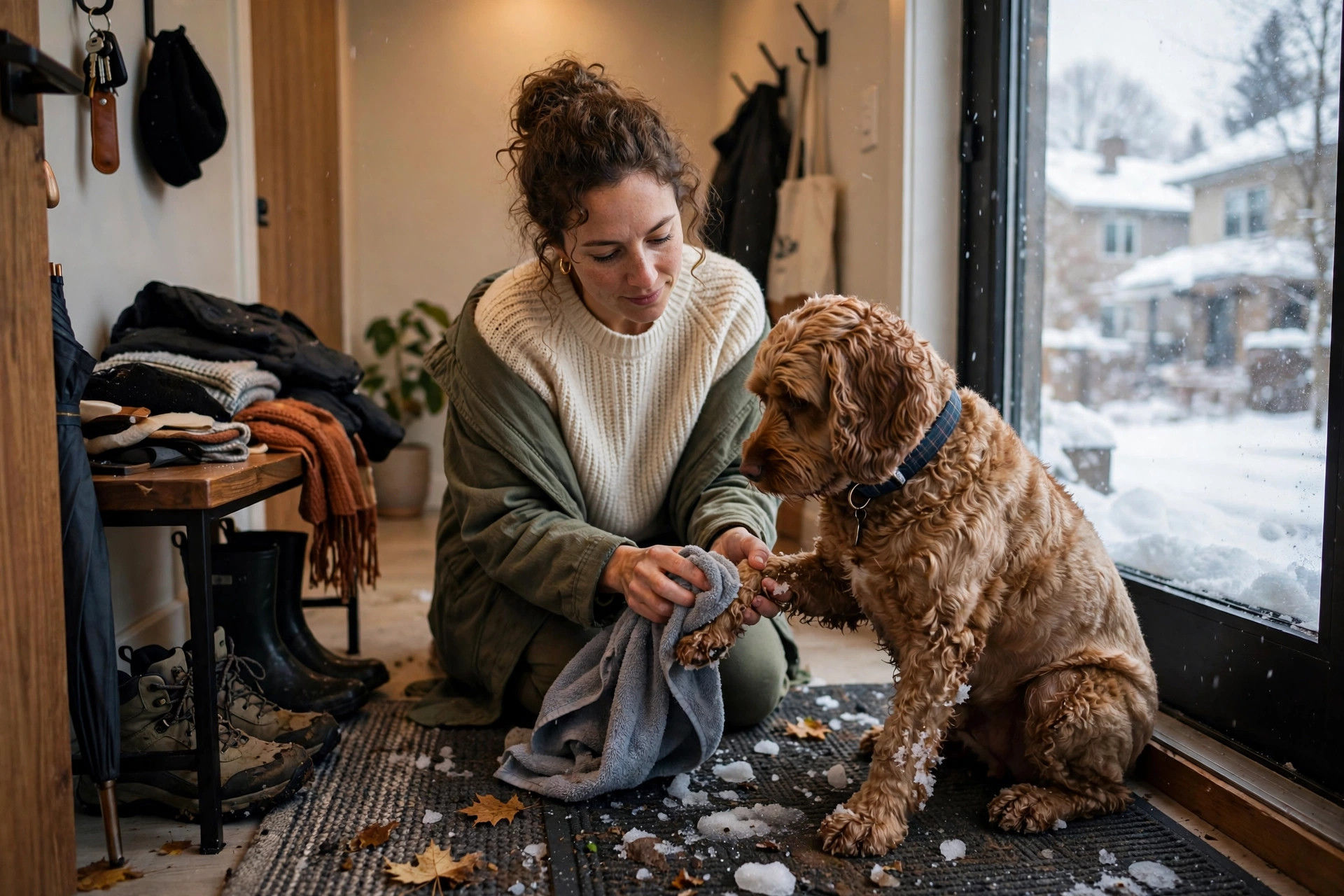
Parking garages and lots. You cannot control what leaks from other cars, so control the exposure: wipe paws after every winter walk (a paw cleaner or even a damp towel by the door), keep dogs from drinking from puddles in parking structures — sweet-smelling puddles are the red flag — and know that cats allowed into shared garages will find the drips you never see.
The universal rule: original container, original label, latched shut, off the floor. Decanting antifreeze into an unlabeled bottle is how tragedies happen — to pets and to the humans who mistake it for something else.
Ice melts: what’s actually in the bag
Not all ice melts are equal, and the bag’s marketing is not a reliable guide. The active ingredients, ranked from harshest to gentlest:
Calcium chloride works at the lowest temperatures (down to about -25°F) but is the harshest on paws — it can cause chemical irritation and it heats up as it dissolves, which startles animals. Sodium chloride (rock salt) is cheap and common but irritates paw pads, dries skin, and causes vomiting if a dog eats it off their paws. Magnesium chloride sits in the middle: effective and somewhat gentler. Urea-based and “pet-safe” labeled melts (like Morton Safe-T-Pet, typically $10–$16 for an 8-pound jug) are the gentlest widely available option — they still are not food, and a dog that eats a mouthful can still vomit, but paw irritation drops dramatically.
Practical winter routine regardless of what your building uses: wipe or rinse paws after every walk from first freeze to last thaw, check between toes for packed salt (a common cause of winter limping), and consider dog boots for city sidewalks if your dog will tolerate them — boots eliminate the problem rather than managing it. For your own stoop or balcony, choose a pet-labeled melt and apply sparingly; more product does not mean more melting, it means more residue on paws.
Poisoning warning signs and the first hour
Memorize this sequence, because the deceptive “recovery” phase kills. After suspected antifreeze ingestion:
- Minutes 0–30: wobbliness, nausea, drooling, excessive thirst. The animal may seem “drunk.”
- Call now. Your vet, the nearest emergency vet, or ASPCA Poison Control. Note the product name, the estimated amount, and the time. Do not induce vomiting unless specifically told to — it rarely helps with antifreeze and can complicate treatment.
- Go. Effective treatment is time-critical: within about 8 hours for dogs, within about 3 hours for cats. The “looks better” phase at 12–24 hours is not recovery; it is the metabolites quietly destroying the kidneys.
- Bring the container. The label tells the vet exactly which glycol and what else is in the mix (some products add other toxins).
For ice-melt ingestion (a dog that licks paws heavily or eats melt directly): drooling, vomiting, and paw irritation are the usual signs. Rinse the paws and mouth with lukewarm water and call your vet for guidance — most cases are managed at home once the exposure stops, but large ingestions of calcium-chloride products warrant a visit.
The most dangerous sentence in antifreeze poisoning is “he seems fine now.” Stage 2 looks like recovery and is actually the quiet middle of kidney destruction. If there was any chance of ingestion, the vet visit happens during stage 1 — when the animal still looks merely drunk — because that is when treatment works.
The renter’s winter chemical audit
Once each fall, before the first freeze, walk your actual space with fresh eyes:
- Your storage: every jug and bag identified, labeled, latched, off the floor. Cracked containers replaced. Conventional antifreeze swapped for propylene-glycol if you stock it.
- Shared spaces: glance at your storage cage, parking spot, and balcony for other people’s leaks and abandoned containers. Report puddles with a rainbow sheen to building management — that sheen is the visual signature of glycol.
- Your walk route: note where melt is heaviest (building entrances, bus stops) and where puddles collect in the parking structure. Adjust the route or commit to the paw-wipe routine.
- Emergency numbers: your vet, the nearest 24-hour emergency vet, and poison control saved in your phone — not looked up during a panic.
Winter chemicals are one of the few pet hazards where the fix is almost entirely preparation. The products are cheap, the storage fixes take an afternoon, and the knowledge — sweet puddle, drunk behavior, go now — costs nothing to carry.
FAQ
Is propylene-glycol antifreeze actually safe for pets?
Safer, not safe. It takes much larger amounts to cause harm compared to ethylene glycol, which makes accidental small exposures far less likely to be fatal. But large ingestions can still cause illness, especially in cats, so it still belongs in a latched cabinet, not on the floor of a storage cage.
My dog licks his paws after every winter walk. Is that an emergency?
Routine paw-licking after walks on salted sidewalks usually causes irritation, not poisoning — but it is a sign to start wiping paws after every walk. Call your vet if you see heavy drooling, repeated vomiting, or lethargy, or if you know the melt used was calcium-chloride based and the dog ate a visible amount.
Can cats be poisoned by walking through antifreeze?
Yes — this is the classic cat exposure. A cat walks through a puddle or drip, then grooms the sweet-tasting glycol off its paws and fur. This is why shared parking areas and storage rooms are risky even for indoor cats that occasionally roam them. Wipe paws after any visit to a parking structure.
What does antifreeze look like on the ground?
Often a bright green, yellow, or orange liquid with a slightly rainbow-like sheen, and it smells faintly sweet. Any vividly colored puddle in a parking area deserves suspicion. When in doubt, keep pets away and report it to building management.