How to Stop a Dog From Barking at the TV in an Apartment
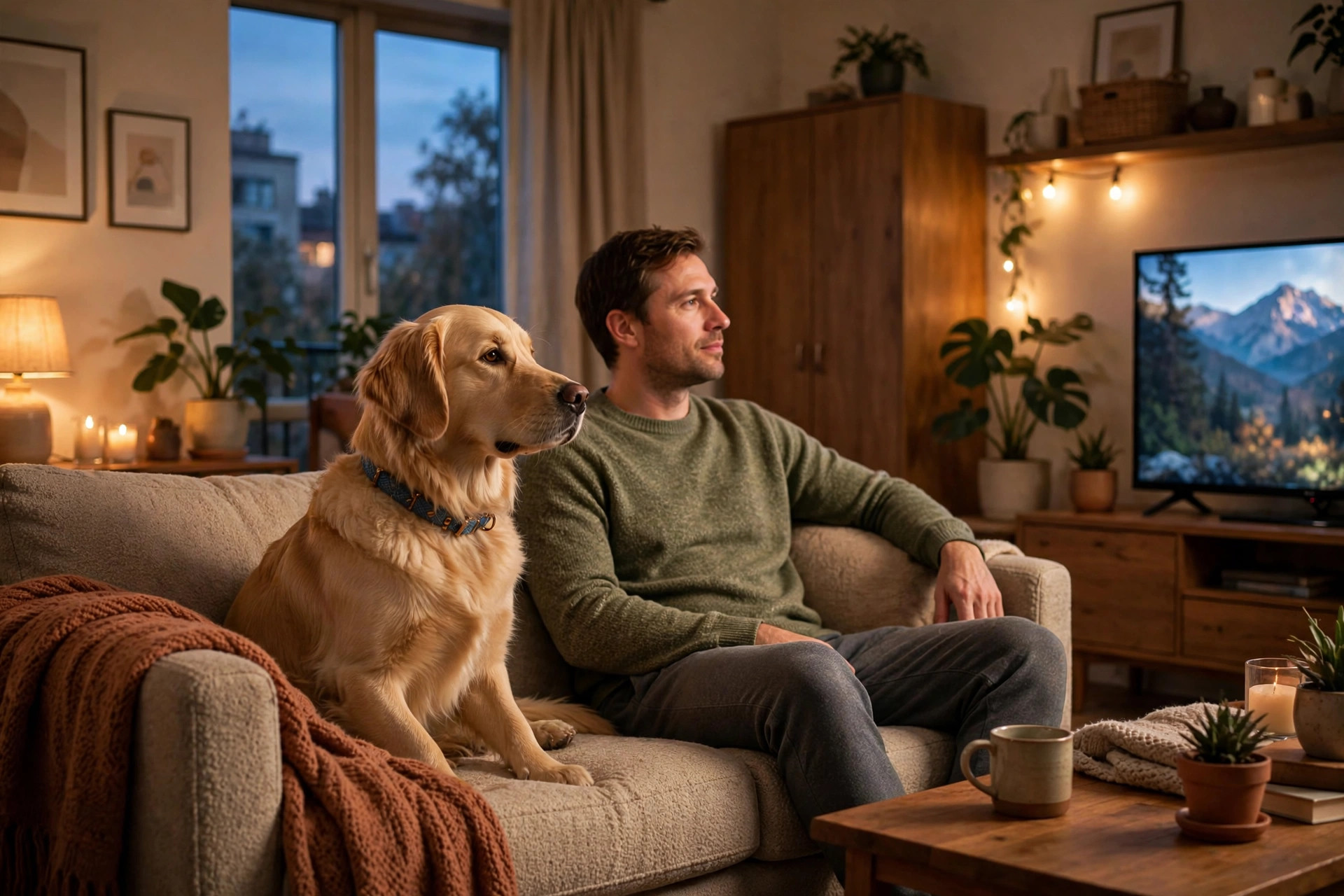
Every nature documentary becomes a home-invasion drama when your dog charges the screen at the first antelope. TV barking is funny exactly once; after that it is a nightly noise event in a building with shared walls. The dog is not being dramatic — modern high-refresh screens finally look like motion to canine eyes, and the sound of another dog through your speakers is, to your dog, another dog in the room. Fixing it takes a month of small, boring sessions — plus a viewing setup that stops feeding the habit while you train.
- Dogs react to screens because modern TVs show real motion to them (older screens looked like flicker); animals, doorbells, and dog sounds are the top triggers.
- Desensitization beats scolding: pair the trigger at low intensity (muted, small window) with treats, and build up over 3–4 weeks.
- Teach a “place” or mat cue so the dog has a paid job during TV time instead of patrolling the screen.
- Manage the environment: move the dog’s bed out of screen sightlines, lower the volume for animal shows, and use captions during training weeks.
- Never punish the barking — a shouted “quiet” sounds like you joining in, and the neighbors hear both of you.
Why your dog thinks the TV is real
Dogs see the world at a higher flicker-fusion rate than humans — roughly 70–80 Hz versus our 50–60. Old CRT televisions refreshing at 60 Hz looked like a strobing mess to dogs, so most ignored them. Modern LCD and OLED screens refresh at 120 Hz and up, which crosses the canine threshold: the image finally reads as continuous motion. Add speakers that reproduce a bark, a doorbell, or a horse’s gallop faithfully, and your dog’s brain files the screen under “things happening in my territory.”
Not every dog reacts, and not every trigger is equal. Herding and terrier breeds — bred to notice and chase movement — are the classic screen-chargers. The most common triggers in order: other dogs (visual plus sound is the jackpot), horses and wildlife on nature shows, doorbells and knocking in commercials, and fast-moving objects like sports balls. Knowing your dog’s specific top three matters, because desensitization works trigger by trigger — you will train against actual clips, not the concept of television.
The 4-week desensitization plan
Week 1 — sound only, low and far. Find a clip of the trigger on your phone. Play it at the lowest audible volume with the screen face-down or in another room, and feed a steady stream of pea-size treats while it plays. Ten treats over two minutes, then the sound stops and the treats stop. You are building the equation: trigger sound predicts chicken. Do this once or twice a day; each session is five minutes max.
Week 2 — add a small, distant screen. Play the clip on a phone or tablet across the room, volume still low. Same deal: clip plays, treats rain, clip stops, treats stop. If the dog fixates or stiffens, the intensity is too high — smaller screen, lower volume, more distance. The dog should look mildly interested, not aroused. Arousal is information: you moved too fast.
Week 3 — graduate to the real TV. Same clip on the big screen, volume at about a quarter of normal, you on the sofa with the treat pouch. Reward calm looking — glances at the screen followed by looking back at you are gold. If the dog barks once, wait it out without reacting, then redirect to a known cue (a hand touch or a “watch me”) and reward the redirect. Do not restart the clip after a bark; end the session on a calm note instead.
Week 4 — real viewing with rules. Watch normally, but keep the treat pouch on the sofa for the first week of real life. Mark and reward the moments the dog notices a trigger and chooses to stay settled — that choice is the entire behavior you are buying. Most dogs show a dramatic drop in charging by the end of week 4; the remaining occasional woof at a surprise doorbell is normal and fine.
Give the dog a job: the mat cue during TV time
Desensitization lowers the reaction; a mat cue gives the dog something to do instead. If you have not trained a settle-on-mat yet, our mat training guide covers it in full — the short version is: mat appears, dog lies on it, treats arrive for staying, duration builds over sessions. During TV weeks, the mat goes in its spot before you press play, and the first ten minutes of every show are heavily paid. A dog holding a down-stay on a mat with a stuffed Kong is a dog that is not sprinting at the screen.
Position matters in a small apartment. Move the mat and the dog’s bed out of the direct screen sightline — a dog lying perpendicular to the TV, or in an adjacent nook, gets a fraction of the visual trigger. In a studio where everything faces everything, a folding screen or even the sofa back between the dog’s spot and the TV breaks the sightline enough to take the edge off while training does the deeper work.
Pay the glance-away. The moment your dog looks at the trigger and then looks back at you is the whole training — that two-second choice, rewarded fifty times, becomes the dog’s default.
Management: stop feeding the habit while you train
Training takes a month; your neighbors need quiet tonight. Four management moves bridge the gap. Volume and captions: drop the TV volume during animal-heavy shows and turn on captions — you lose nothing, and the acoustic trigger halves. Content triage: save the nature documentaries for training sessions (they become your controlled clips) and watch them muted or not at all in the evenings for a few weeks. Pre-show exercise: a dog that has had its evening walk and a sniff session reacts less to everything, screens included — compare your routine with a realistic apartment exercise schedule. White noise at the door: if the dog’s barking is partly hallway-alert barking layered over TV excitement, a white-noise machine near the entry (see our white-noise guide) lowers the total arousal budget.
One thing not to buy: bark-activated ultrasonic boxes aimed at the sofa. They punish the symptom from across the room with no information about what the dog should do instead, and in thin-walled apartments they can trigger on the TV itself — our ultrasonic device review explains the false-trigger problem. The mat plus the treats costs less and teaches a behavior the dog keeps.
FAQ
Why did my dog suddenly start barking at the TV? It never cared before.
Usually a new TV is the cause — upgrading from an old 60 Hz screen to a 120 Hz+ set crosses the threshold where dogs perceive real motion. New content matters too: a household that starts watching nature documentaries or sports introduces triggers the dog never met before.
Should I just let the dog “get used to it” on its own?
Flooding — full exposure with no plan — usually sensitizes instead of desensitizing: the dog rehearses the barking nightly and gets better at it. Controlled, sub-threshold exposure paired with rewards is what actually changes the emotional response.
My dog only barks at doorbells on TV, not animals. Same plan?
Same plan, easier trigger list: collect doorbell and knocking sounds from commercials and shows, and run the four weeks on sound clips. Sound-only triggers often resolve faster since you can train with the screen off entirely.
Is it okay to laugh when the dog charges the TV?
Honestly, laughter is attention, and attention rewards the behavior — the dog reads your delight as approval. Stay neutral during reactions and save the praise for the calm moments. It feels stern; it works faster.