Teach Your Dog the Quiet Command in an Apartment
A dog who barks at the hallway is not being rude — in a building where doors, carts, and voices pass ten feet from your sofa all evening, alert barking is doing exactly what it was bred to do. The problem is not the first bark. It is the forty that follow. The quiet command gives your dog a paid job after the alert: notice, tell you, then stop and get rewarded for stopping. Taught in short indoor sessions, it works in a 400-square-foot studio as well as a three-bedroom, and it spares your neighbors the part of barking they actually hear through the wall.
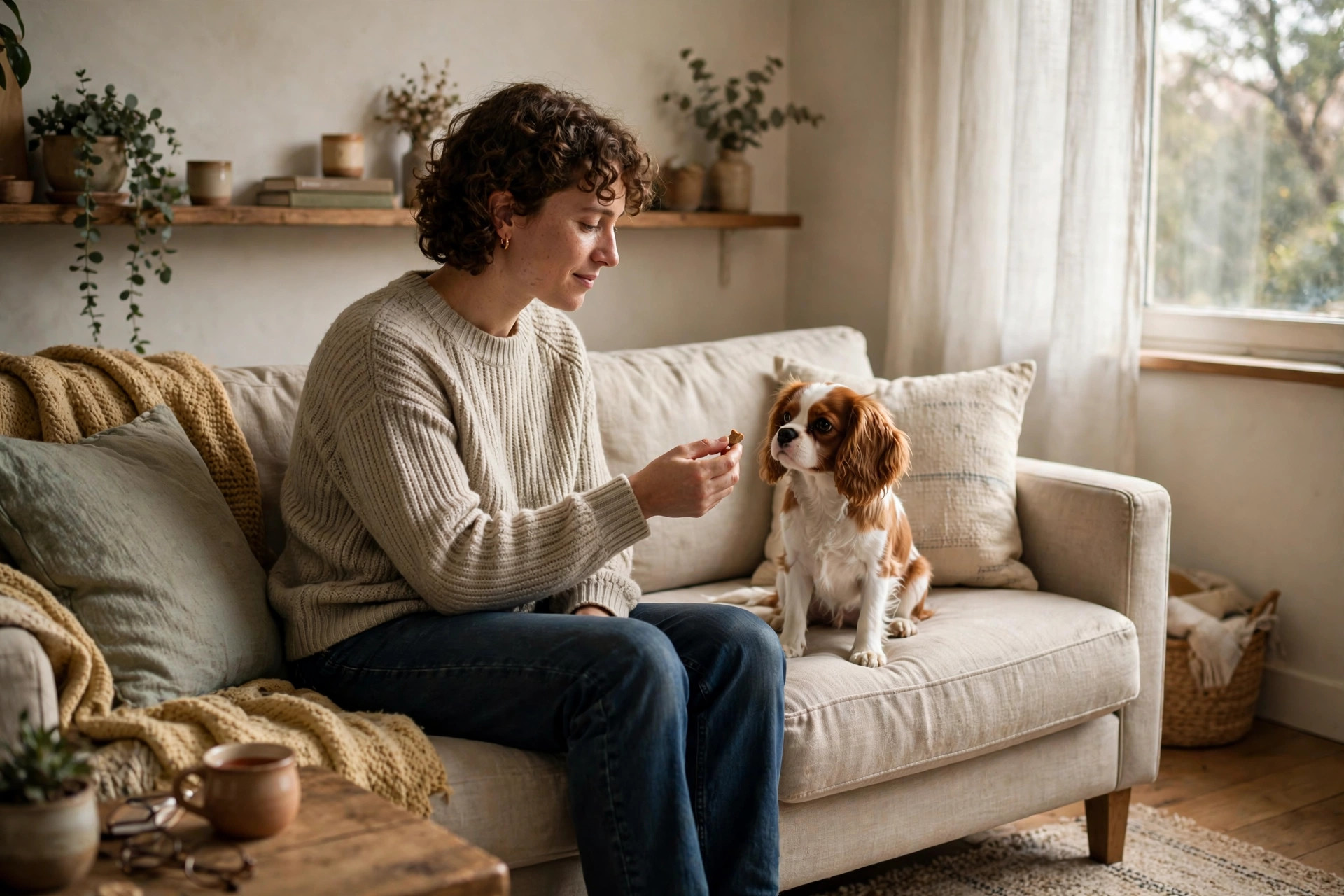
- Teach quiet only after your dog can bark on cue or barks reliably at a mild trigger — you need barks to mark the silence that follows them.
- Reward the pause, not the end of barking: start by marking 2 seconds of quiet, then stretch to 5, 10, and 20 seconds over several days.
- Keep sessions to 3–5 minutes, two or three times a day. Apartment walls make every session a neighborhood event, so short and successful beats long and loud.
- Use pea-size, high-value rewards (tiny hot-dog or cheese bits work well) so 20 repetitions do not become a second dinner.
- Never shout over barking. A raised voice from you reads as joining in, and it is the sound your neighbors hear loudest.
Why “quiet” fails when you teach it during real barking
Most owners first say “quiet” in the worst possible classroom: the dog is already at full volume at the door, arousal is high, and the word competes with the trigger that started the barking. At that moment the dog learns nothing except that the human also gets loud at doors. Trainers fix this by teaching the skill when the dog is calm and the trigger is controllable, then carrying the finished cue into real life. Think of it like teaching a recall indoors before you ever try it at the dog park.
There is also a timing trap. If you hand over a treat the instant the barking stops, a clever dog learns the sequence bark-bark-bark-stop-treat, and the barking becomes the first half of the trick. The fix is a bridge word or clicker: you mark the first half-second of silence with a sharp “yes!” or click, then deliver the treat a beat later. The dog connects the reward to the silence, not to the barking that came before it. Keep your marker identical every time — same word, same tone — so it stays a precise signal instead of background noise.
Finally, match the method to the dog in front of you. Barking at sounds through the wall is usually alert or frustration barking and responds beautifully to quiet training. Barking paired with lunging, hackles, and hard staring at people or dogs is reactivity, and the quiet cue alone will not fix the emotion underneath — that dog needs distance-based work like the engage-disengage pattern covered in our guide to ignoring city distractions, plus a certified trainer if the behavior is intense.
The 5-step quiet lesson (teach it calm, use it loud)
Step 1 — get a bark you control. Knock softly on a table or have a helper knock once on a door, then let your dog bark two or three times. If your dog rarely barks, skip the knock and work with the mail slot or a recorded doorbell at low volume on your phone instead.
Step 2 — present the reward picture. Hold a treat near your nose so your dog looks at your face instead of the door. The second the barking pauses — even for one breath — mark it (“yes!”) and feed. Repeat 5–8 times. Most dogs offer the pause faster on each round because the treat picture is now competing with the trigger.
Step 3 — add the word. Once the pause comes reliably, say “quiet” in a normal speaking voice (not a command barked back) during the barking, then mark and feed the pause. Say it once. Repeating “quiet-quiet-quiet” teaches the dog to wait for the third one.
Step 4 — stretch the silence. Across sessions, require 2 seconds of quiet before marking, then 5, then 10. If the dog restarts barking, you stretched too fast — drop back to the last duration that worked and build again. Deliver two or three treats in a row for longer holds; duration should pay better than speed.
Step 5 — pay the real moments. When hallway noise starts a bark, let the dog alert once or twice, say “quiet” once, mark the stop, and pay generously — the jackpot moment. You are not punishing the alert; you are buying the off-switch that follows it.
A 7-day apartment practice calendar
Short daily reps beat one weekend marathon, and they keep total noise low for the neighbors. Days 1–2: two indoor sessions a day using the knock or phone recording, 3 minutes each, working only on marking the pause. Days 3–4: add the word “quiet” and stretch holds to 5 seconds. Days 5–6: practice at the real front door with a helper knocking from the hallway at agreed times — warn a friendly neighbor first, and keep each round under a minute. Day 7: use the cue with genuine hallway traffic during a busy half-hour, paying jackpots for fast stops.
Track two numbers on your phone: how many barks happen before the stop, and how many seconds the quiet holds. You should see the first number shrink within the week — many dogs go from a 15-bark chain to 2–3 barks plus a look at the human. If the numbers stall for three days, the trigger is too strong for the stage you are on; drop back one level instead of drilling louder repetitions. Progress in a small apartment is mostly about choosing triggers your dog can succeed with six feet from a shared wall.
Gear that helps (and one purchase to skip)
You need almost nothing: pea-size soft treats your dog can swallow quickly ($6–$10 a bag), an optional clicker ($3–$5 for a two-pack) if you want a crisper marker than your voice, and a treat pouch ($8–$14) so rewards arrive fast instead of after a rustle through a cabinet. A baby gate ($35–$70) helps if your dog rehearses barking pressed against the front door — moving the dog six feet back from the door lowers arousal more than any cue can. For noise through the wall itself, a white-noise machine by the door (covered in our separation-anxiety tools guide) lowers how often the trigger fires in the first place.
Skip bark collars for this problem. Citronella and ultrasonic devices punish the alert without teaching the replacement behavior, and in a multi-dog or thin-walled building they can fire on a neighbor's dog or a TV sound — our evidence review of ultrasonic bark devices explains the false-trigger problem in detail. The quiet cue costs $15 in treats and a week of three-minute sessions, and the dog ends up calmer rather than just quieter.
Buy the pause, not the performance. Two seconds of paid silence on Tuesday becomes twenty seconds of quiet on Friday — but only if the two-second version paid really well.
When the cue works indoors but dies at the door
This is the normal halfway point, not a failure. The door adds smell, vibration, and years of rehearsal, so rebuild the same lesson at the door in micro-steps: first with the door closed and a helper making a soft sound, then a real knock, then footsteps that stop, then the full pass-by. Pay double at the door for the first week. If your dog barks at predictable times — the 6 p.m. dog-walk rush, the morning delivery window — pre-empt them: station the dog on a mat with a lick mat two minutes before the rush starts, so the trigger arrives while the dog already has a job.
Also check the unglamorous causes. Under-exercised dogs bark at smaller provocations, so compare your routine against a realistic walk schedule before adding more training. And if barking is worst when you leave, you are likely looking at separation distress rather than alert barking; the quiet cue will not touch it, but the gradual alone-time plan will. When in doubt, film one departure on your phone — the body language in the first five minutes tells you which problem you actually have.
FAQ
My dog barks before I can even say quiet. What now?
That is fine — let the alert happen. Say “quiet” once after the first two or three barks, then mark and reward the pause. You are training the off-switch, not preventing the alarm. With repetition the dog starts checking in with you sooner, and the bark chains get shorter on their own.
Should I use a clicker or just my voice?
Either works if it is consistent. A clicker is crisper and sounds the same at 7 a.m. and 7 p.m., which helps in the first week. A marker word like “yes!” is always with you at the door. Pick one and do not mix them during the teaching phase.
How long until the cue works with real hallway noise?
Most apartment dogs show shorter bark chains within 5–7 days of short daily sessions, and reliable door response in two to three weeks. Reactive barking at people or dogs takes longer and needs distance work as well — judge progress by the trend in your bark counts, not by perfection.
Can I teach quiet to an older dog or a puppy?
Yes to both, with adjusted sessions. Puppies under five months do best with 2-minute sessions and more repetitions of the easy pause. Seniors may need the trigger softer and the rewards smellier, but the pause-mark-reward sequence is the same.
Is it okay that my dog still gives one or two barks?
One or two alert barks are normal, legal in most leases, and useful — that is your doorbell. The goal is a dog who reports and then stops, not a silent dog. If your building has a strict noise clause, pair the cue with door-distance management so alerts stay brief.