How Often to Wash Dog Bedding in an Apartment
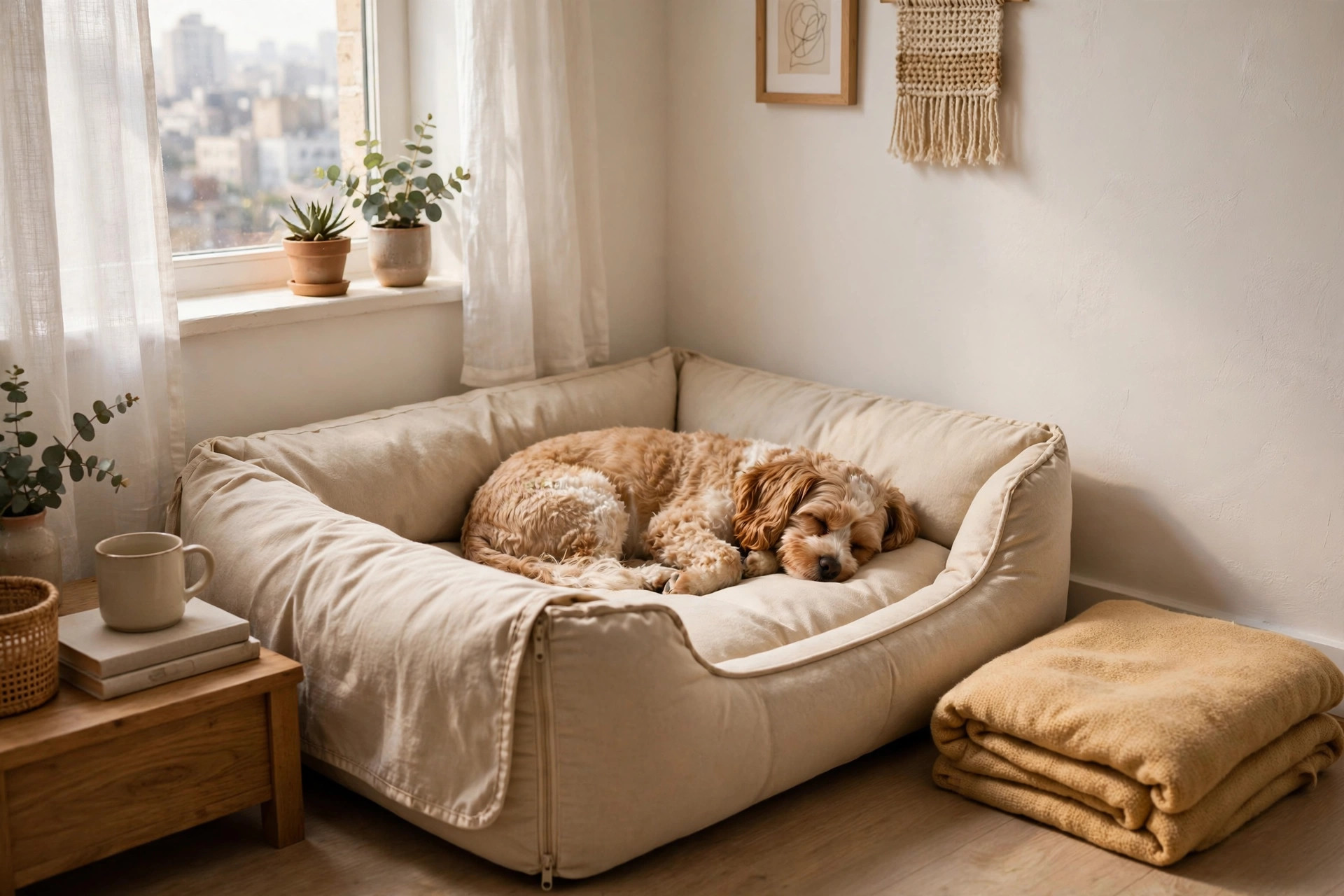
A dog bed concentrates everything the dog sheds, rolls in, and dreams on into two square feet of foam — in an apartment, it is usually the single largest odor source in the home, outweighing the dog itself. The cadence that keeps it neutral is not mysterious: covers weekly, blankets twice a month, inserts monthly, on temperatures the materials can survive. Wash less and the smell bakes in past rescue; wash wrong and the insert dies lumpy by month three. This guide gives the schedule by component, the material limits, and the two-cover rotation that makes the system effortless.
- Removable covers: wash weekly. Throw blankets on top: every 1–2 weeks. Inserts and foam: monthly surface care, deep wash monthly to quarterly by type.
- Covers wash hot, 60°C/140°F if cotton or durable synthetic; memory foam never goes in the machine — soak and air-dry instead.
- Two covers per bed is the enabling purchase: one on the bed, one in the wash, zero days with a naked insert absorbing odor.
- Dry completely before reassembly. A damp insert reassembled is sour within 48 hours, guaranteed.
The cadence by component, not by bed
Beds are systems with three layers on three clocks. The removable cover touches the dog and takes the sebum, drool, and tracked dirt; it goes in the weekly pet laundry block described in our pet laundry routine, hot where the fabric allows. The sacrificial top blanket — the fleece or throw you drape over the bed precisely to intercept mess — washes every one to two weeks and extends cover life, because most paw prints die on the blanket. The insert is the slow layer: vacuum it and sprinkle with baking soda for 30 minutes monthly even if it never gets wet, and deep-clean it on the schedule its material dictates, below.
| Component | Cadence | Method | Notes |
|---|---|---|---|
| Removable cover | Weekly | Machine wash 60°C durable / 40°C synthetic | Zip closed, inside out to protect the zipper |
| Top blanket / fleece | Every 1–2 weeks | Machine wash warm-hot | Shake hair off first, dry-tumble method |
| Poly-fill insert | Monthly–quarterly | Machine wash gentle, large drum only | Dry with dryer balls to re-loft; small machines kill it |
| Memory foam insert | Quarterly surface; soak biannually | Never machine wash; tub soak, press water out | Air-dry 24–48h; UV helps; must be bone dry |
| Orthopedic / senior bed | Cover weekly; waterproof liner weekly wipe | As above + liner check | Incontinence changes everything — see below |
Life events override the calendar. Mud season, post-illness, a boarding return, a flea treatment, or the seasonal shedding blow described in our shedding guide all pull the cover wash forward and add an insert surface-clean the same week. Puppies in potty training run their bedding on a rinse-when-soiled basis — which is the entire argument for washable, waterproof-lined beds in that phase, covered in our puppy setup guides. Senior dogs with any incontinence need a waterproof liner under the cover, checked and wiped weekly and washed the moment it is soiled, because urine in foam is unrecoverable — the liner is the ten-dollar part protecting the hundred-dollar bed.
Temperatures and products by material
Heat is the odor killer, but each material has a ceiling. Cotton canvas and durable poly-canvas covers take 60°C (140°F) weekly without complaint and come out genuinely reset. Microfiber and plush synthetics hold 40°C (105°F); hotter warps the pile over months. Sherpa and faux-fur surfaces should wash warm and air-dry or tumble low, because high dryer heat mats the fibers into felt that then traps more dirt per week — a declining spiral owners misread as the bed getting old. Waterproof liners (TPU-coated) wash warm and must air-dry; dryer heat delaminates the coating, silently ending its waterproofing.
Products follow our laundry routine rules: enzyme detergent to digest the protein load, vinegar in the rinse instead of fabric softener whose coating traps odor in the fibers, and an oxygen-booster pre-soak for any cover that smells again when damp. That damp-smell test is the diagnostic: run the cover under a tap after washing — if odor blooms, sebum survived, and the next wash goes hotter or soaks first. Inserts get gentler handling: poly-fill washes on gentle with two towels to balance the load and dries with dryer balls to restore loft; memory foam soaks in a tub with diluted detergent, gets pressed — never wrung — and air-dries a full day or two near moving air, often propped by the purifier's exhaust. Reassembling foam that is cool-damp to the wrist guarantees the sour restart everyone blames on the dog.
The two-cover rotation that makes weekly realistic
Weekly cover washing fails in real apartments for one reason: the bed is naked and absorbing odor for the hours the single cover is in the laundry pipeline, and the insert then needs the deep clean you were avoiding. The fix is a second cover, usually $18–$35 as a manufacturer spare, which for apartment-grade beds like the Casper Dog Bed or a Furhaven with a removable cover is an official accessory; for no-name beds, a fitted washable protector achieves the same swap. Rotation day runs cover-off, cover-on in 90 seconds, laundry in the weekly block, done. The insert never touches dog unprotected, so its monthly surface care stays sufficient for a year or more.
Choose beds with this system in mind from the start: retired inserts, glued seams, and non-removable covers are the false economy of dog bedding. Our small-space bed guide ranks models by cover removability and footprint; the senior orthopedic guide adds the waterproof-liner requirement. A bed that cannot be disassembled in an apartment is a smell with a purchase date.
Apartment execution: noise, space and building laundry
In-unit machine owners can run the weekly cover inside the pet laundry block without thinking further, ideally at an hour that respects shared walls — spin cycles on hardwood transmit, so the late-evening wash belongs to households with concrete between floors. Building-laundry and laundromat routines consolidate: covers and blankets go in one hot pet load weekly, inserts travel monthly for the big-drum machines that actually fit them, which conveniently matches poly-fill's requirement for drum volume. Carry inserts in a washable laundry bag; building machines shared with neighbors deserve the hair-prep discipline from our laundry routine, shake and dry-tumble first, so the next user's whites survive your dog's week.
Drying is the apartment bottleneck. Covers dry fast; blankets medium; inserts slowly, and they command the drying rack's prime real estate near the window for a day. Schedule insert cleans on a morning with airflow and nowhere the foam must be slept on that night — the dog can colonize the sofa throw for one evening. In humid climates or winter-sealed apartments, a small fan across the foam halves dry time and is the difference between fresh and funky. Landlords and leases occasionally prohibit washing pet items in shared machines; where that clause exists, laundromat pet loads plus a dog wash station's facilities keep you compliant without sour bedding at home.
Wash the cover for the smell, rotate the cover for the habit, dry everything completely for the result. The dog was never the odor reservoir — the unwashed bed was.
FAQ
Can I wash the whole bed, foam and all, in the bathtub?
Poly-fill, yes, with effort. Memory foam can soak in the tub if it fits, pressed not wrung, but never in a washing machine — agitation tears it apart internally. Either way, drying time, not washing, is the commitment: plan 24–48 hours.
How do I know when the insert is beyond saving?
When odor returns within days of a deep clean and full dry, sebum has saturated the core. Baking soda and sun delay the end, but a saturated insert gets replaced — and the replacement gets a waterproof liner from day one.
Is weekly cover washing really necessary for a clean-smelling dog?
For most apartment dogs, yes, weekly is the interval where covers stay neutral. Low-odor, low-shed dogs in large rotation (two beds, dog sleeps elsewhere half the week) can stretch to ten days; the sniff test at day seven decides.
What about cat beds?
Same system, lower volume: covers or whole small beds weekly to biweekly, hot where fabric allows. Cats sleep 16 hours in one spot; their beds concentrate hair and dander identically at smaller scale.