Best Orthopedic Dog Bed for Senior Apartment Dogs
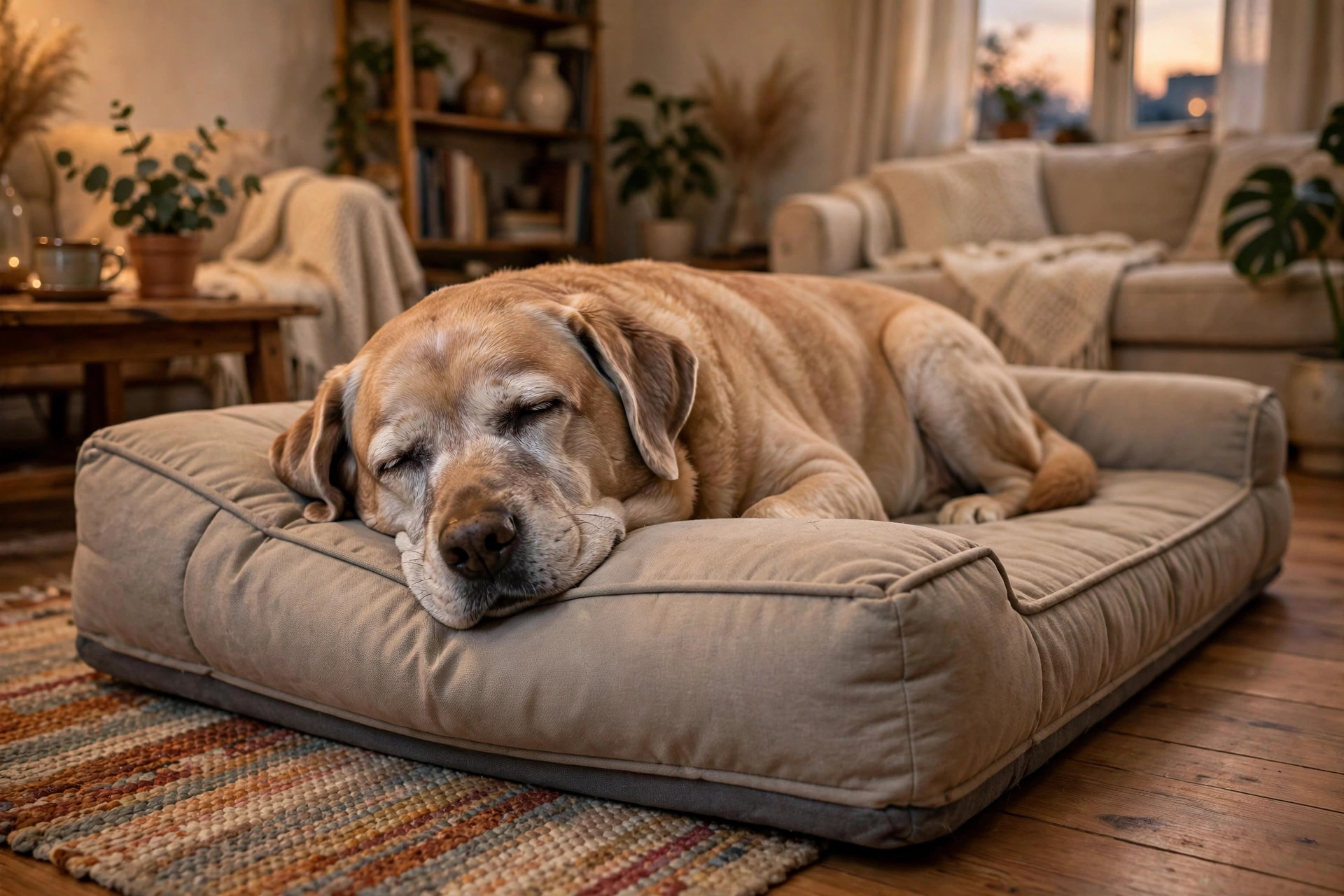
An older dog will not complain about a thin bed — it will just sleep less, shift more, and take longer to stand up in the morning. For a senior apartment dog, an orthopedic bed is genuinely medical equipment: it spreads pressure off arthritic hips and elbows, keeps stiff joints from pressing into hard floors, and shortens those wobbly 6 a.m. wake-ups. The catch is that the word "orthopedic" is not regulated, so half the beds wearing the label are just thick pillows. This guide is about telling the difference.
The knee test: press your knee into the bed with your full weight, the way a dog's hip presses down. If you can feel the floor through the foam, so can they — and the bed is not orthopedic no matter what the tag says.
What "orthopedic" actually means on a dog bed
A real orthopedic bed uses high-density foam that distributes a dog's weight instead of letting the heaviest points — hips, elbows, shoulders — sink straight through to the floor. There are three common constructions, and they are not equal:
- Solid memory foam is the real thing: it molds to the body, spreads pressure, and rebounds slowly. This is what senior joints actually benefit from.
- Egg-crate (convoluted) foam is the budget version: the peaks and valleys increase airflow and feel softer, but heavy dogs bottom out on it. Fine for small seniors, inadequate for large ones.
- Dense polyfill or fiberfill is not orthopedic at all, whatever the listing claims. It compresses flat within months and offers zero pressure distribution.
Two specs cut through the marketing. First, foam thickness: thick enough that a kneeling adult cannot feel the floor — 3–4 inches for small dogs, 4–5 for medium, 5–7 for large breeds (more on sizing below). Second, foam density: 3–5 lb per cubic foot is where memory foam supports without bottoming out. Listings that mention neither are telling you everything.
One honest note: no bed fixes arthritis. A good orthopedic bed reduces the nighttime joint compression that makes mornings stiff — many owners report their senior stands up faster within a week — but it works alongside vet care and appropriate exercise, not instead of them.
Size it by weight, not by breed photos
For young dogs, bed size is about sleeping style. For seniors, it is about weight: the heavier the dog, the more foam stands between its hips and your hardwood. Use this as your starting point:
| Dog's weight | Foam thickness you need | Typical bed size |
|---|---|---|
| Under 25 lbs | 3–4 in (egg-crate acceptable) | 24–30 in bed |
| 25–60 lbs | 4–5 in solid memory foam | 30–36 in bed |
| 60–90 lbs | 5–6 in solid memory foam | 36–42 in bed |
| Over 90 lbs | 6–7+ in solid memory foam | 42 in and up |
The reason heavy seniors need the thick end of the range: pressure. A 90-pound dog puts roughly the same force through one hip as an adult human puts through a knee — and dog memory foam is usually lower density than human mattress foam. This is why a 2-inch "orthopedic" mat from a discount store fails a lab within a month.
Apartment reality check: a 42 x 30 inch orthopedic bed is about 8.75 square feet — the largest single piece of pet gear most apartments hold. Before buying for a big senior, tape the footprint on the floor (our small-space dog bed guide walks through the tape test).
Five orthopedic beds worth the money
Real models, compared on foam construction, entry height, and whether the cover survives apartment laundry. Prices are typical US street prices.
| Model | Foam | Typical price | Best for |
|---|---|---|---|
| Big Barker 7" Pillow Top | 7 in triple-layer foam | Usually $220–$330 | 50+ lb dogs; the heavy-senior specialist |
| PetFusion Ultimate Dog Bed | 4 in solid memory foam | Usually $100–$180 | All-around quality under 70 lbs |
| Sealy Lux Quad Element | Quad-layer foam, 4–5 in | Usually $70–$130 | Mid-range comfort with edge bolsters |
| Bedsure Orthopedic Premium | Egg-crate + memory foam layers | Usually $55–$95 | Budget pick for small and medium seniors |
| Furhaven Therapeutic Faux Fur & Velvet | Therapeutic egg-crate foam | Usually $35–$65 | Tight budgets; small seniors |
Big Barker 7" Pillow Top — the heavy-senior specialist
Big Barker is the only mainstream brand that engineers specifically for large dogs: three foam layers totaling 7 inches, calibrated for dogs over 50 pounds, and a famous 10-year "won't flatten" warranty. For a senior lab or shepherd whose hips are the whole problem, this is the bed most likely to pass the knee test at full weight. The apartment caveat is real, though: the XL is 48 x 30 inches and reads like a loveseat. If your senior is large and the budget is tight, the next two picks get you most of the way there.
PetFusion Ultimate Dog Bed — the quality all-rounder
Four inches of solid memory foam on a CertiPUR-US certified base, with a removable, machine-washable cover and a non-slip bottom. It suits seniors up to about 70 pounds; beyond that, heavier hips start to press through the foam. The bolstered lounge version gives stiff-necked dogs a chin rest, and the low profile keeps entry easy.
Sealy Lux Quad Element — the mid-range comfort pick
The quad-layer design stacks memory foam over support foam for 4–5 inches of total height, wrapped in a faux-fur sleeping surface seniors like. Edge bolsters suit dogs that wedge themselves into corners, the cover is removable and washable, and the $70–$130 range makes it the value alternative to the PetFusion for medium seniors.
Bedsure Orthopedic Premium — the budget orthopedic that works
Most sub-$100 "orthopedic" beds fail the knee test. This one mostly passes for small and medium dogs: layered egg-crate foam over a memory-foam base, with a genuinely removable, washable cover and a non-slip bottom. It will not serve a 90-pound senior, but for a 20-pound senior dachshund or a 40-pound beagle, it delivers real pressure relief at a third of the premium price. Expect to replace it in 2–3 years rather than 5+.
Furhaven Therapeutic — the honest cheap option
At $35–$65, this is the bed to buy when the alternative is no orthopedic bed at all. The egg-crate therapeutic foam is a genuine step up from a folded blanket for a small senior, the faux-fur top is washable, and Furhaven sells replacement covers cheaply. Be realistic about its limits: a large dog will bottom it out, and the foam softens faster than premium options. For a senior cat-sized dog on a fixed budget, though, it is a kind upgrade.
The details that matter for stiff joints
Foam is only half the purchase. The other half is everything around it, and seniors are less forgiving of design mistakes than young dogs:
- Low entry height. An arthritic dog that has to climb a 7–8 inch bolster lip will simply stop using the bed. Look for a low front entry or a three-sided bolster with an open side — the PetFusion and Sealy both do this well.
- Non-slip bottom. A bed that slides on hardwood when a stiff dog tries to stand is frightening enough to make the dog avoid it. Rubberized bottoms are non-negotiable on hard floors.
- Waterproof liner. Senior accidents happen, and memory foam cannot be machine washed. A waterproof inner liner between the foam and the cover is the difference between a washable incident and a ruined $150 bed.
- Bolsters as chin rests. Dogs with stiff necks and spondylosis often sleep with their chin propped; a firm bolster gives them that support without curling the neck.
- Cooling for hot sleepers. Memory foam sleeps warm. If your senior pants at night, look for gel-infused foam or simply place the bed off heating vents and out of direct radiator heat.
For seniors that still crate-sleep, a thick orthopedic mat inside the crate can replace a standalone bed entirely — see our crate setup guide for sizing and placement. One sleeping spot instead of two saves real floor space, and the crate walls give wobbly sleepers something to lean on.
Keeping a senior's bed clean in an apartment
Senior beds get dirtier than young-dog beds — more drool, more shedding, occasional accidents — and you cannot just throw memory foam in the washer. The system that works:
- Wash the cover every 2–3 weeks. Warm water, no fabric softener (it traps odor in the fibers). A washable blanket draped over the bed doubles the interval between full cover washes.
- Enzymatic cleaner for accidents, immediately. Regular cleaners mask urine smell; enzymatic formulas break down the proteins that draw the dog back to the same spot. Blot, soak, blot — never rub foam.
- Sun the foam quarterly. A few hours of direct sun on a balcony kills odor-causing bacteria in foam you cannot wash. Cover the foam with a light sheet if the sun is intense enough to degrade it.
- Retire foam that stops rebounding. Press the foam and watch: if the dent stays visible for more than a minute, the support is gone and the bed is now just a flat cushion. For budget beds this happens around year two or three; for premium foam, year five-plus.
FAQ
Memory foam vs. egg-crate: which is better for a senior dog?
Solid memory foam, for any dog over about 40 pounds — it distributes weight without bottoming out. Egg-crate foam is a legitimate budget option for small seniors because it improves airflow and feels softer, but a heavy dog's hips will press straight through it. If the knee test fails, the foam type does not matter.
Is a 4-inch bed enough for a 70-pound senior lab?
Borderline. Four inches of high-density memory foam usually works up to about 70 pounds; beyond that, or for dogs with significant hip arthritis, 5–7 inches is the safer choice. When in doubt, do the knee test yourself before the dog ever uses the bed.
Can I put a memory foam dog bed in the washing machine?
No — machine washing destroys memory foam's structure and voids most warranties. Wash the removable cover, spot-clean the foam with mild soap and water, and sun it periodically. This is why a waterproof liner matters so much: it is the only thing standing between an accident and a ruined bed.
My senior still seems stiff in the morning. Is the bed failing, or is it the joints?
Check the bed first: press the foam — if your knee reaches the floor or the dent does not rebound, replace it. If the bed passes, talk to your vet: morning stiffness that is new, worsening, or paired with limping or reluctance on stairs deserves a checkup. Beds help with comfort; they do not treat progressing arthritis.