Best Laundry Routine for Pet Hair and Smell
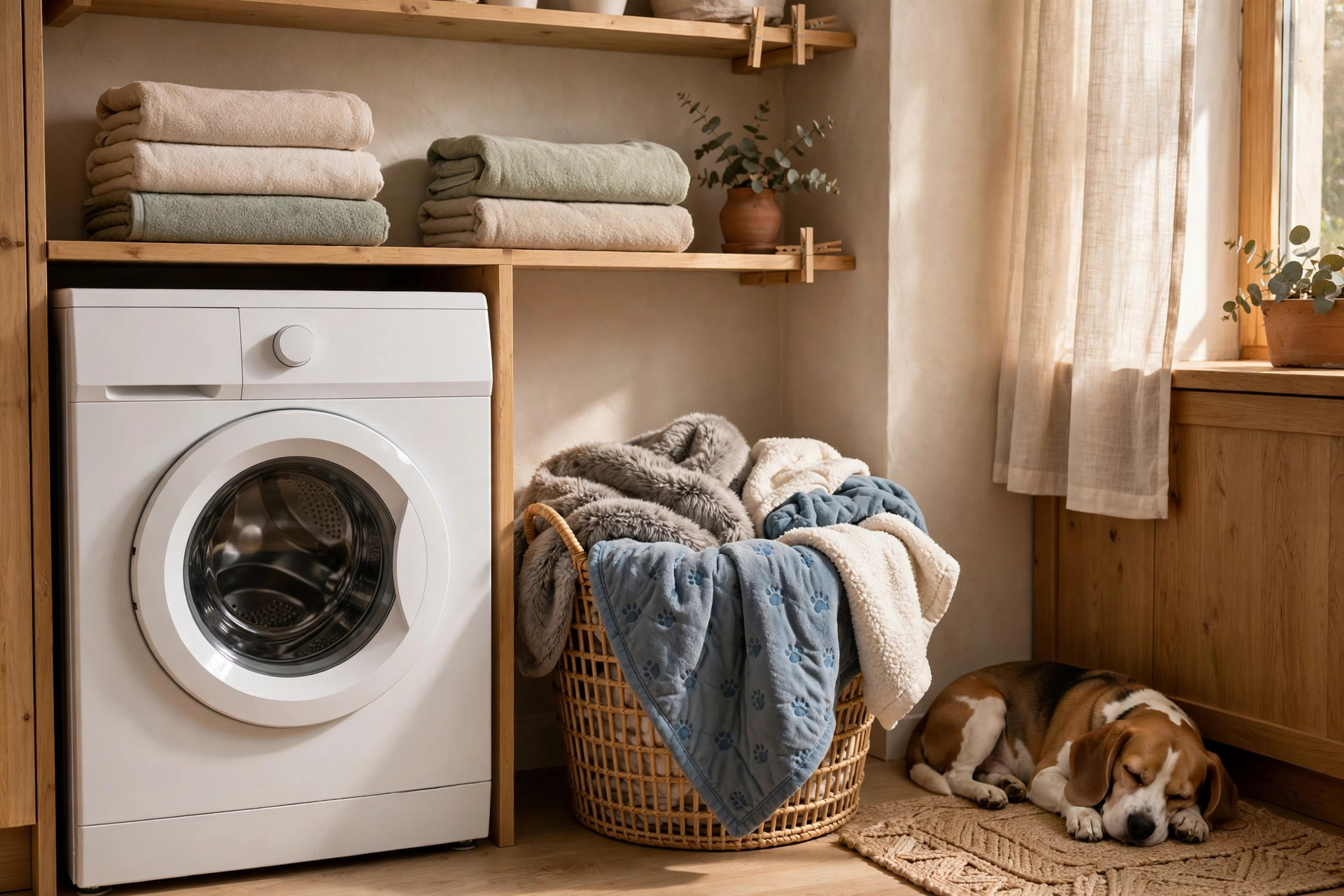
Pet laundry fails in the wash, not at the machine. Hair goes in dry, mats into felt during the cycle, and comes out redistributed onto everything — including next week's work shirts. Smell survives because odor lives in sebum and detergent residue, not on the fabric surface where a scented detergent can perfume it. The routine that works separates the jobs: remove hair dry, break odor with chemistry and heat, then protect the machine and your regular clothes from what is left. What follows is the full sequence, the load design for a small apartment, and the products that earn their shelf space.
- Dry before wet: shake, tumble 10 minutes no-heat, then wash. Water first makes hair felt into fabric.
- Pet textiles wash separately, hot where fabric allows (60°C/140°F), with an enzyme detergent and no fabric softener.
- The dryer finishes the hair job: clean the lint trap every load, and expect a second filter check mid-blow-season.
- Run an empty hot cleaning cycle monthly; lingering pet smell in 'clean' loads is usually the machine, not the clothes.
- Budget about $15–$25/month in products if you already own the machine; laundromat users add 30 minutes, not new products.
Step one is always dry: the hair must leave before water arrives
Hair adheres to dry fabric by static and loose weave grip; once wetted, it clumps, dives into seams and pockets, and survives the cycle woven in. The pre-wash sequence takes under five minutes of active effort. First, shake each item hard — outside the balcony door, over the tub, or into a bag at the laundromat. Second, tumble everything in the dryer on no-heat or air-fluff for 10 minutes with two dryer balls (wool or rubber, usually $8–$15 a set): the airflow exports hair to the lint trap before water can set it. Third, a 30-second lint-roll or rubber-glove pass catches the stubborn patches on fleece, which sheds hair reluctantly even after tumbling.
Pet-hair dissolver additives (Vamoosh-style, usually $12–$18 a box) dissolve hair chemically in the wash and do work, but they are the second-best solution at added cost and are rough treatment for delicate fabrics; the free dry-tumble achieves most of the same result. Hair-catching laundry discs and floating filters earn mixed reviews because most hair that reaches the water is already felt-bound; capture upstream of the water is the reliable engineering. In-building laundromat users: the dryer-first trick still works — run the pet load's dryer cycle first, wash second, dry again, accepting the extra coins as the hair tax that keeps your dress shirts clean.
Designing the wash load for odor, not perfume
Pet odor in textiles is sebum plus bacteria plus detergent residue layered by previous warm washes that never quite cleaned. Break it with three levers. Heat first: 60°C (140°F) where the fabric allows — bed covers, throws, towels — and warm 40°C (105°F) for synthetics that cannot take hot. Heat both kills odor bacteria and dissolves the sebum that anchors smell; our bedding-washing guide maps cadence and temperature by item so you are not boiling a memory-foam cover weekly. Chemistry second: an enzyme detergent (Persil or Tide with enzymes, usually $15–$22) digests the protein load; for genuinely soured items — the dog blanket that smells again when damp — a pre-soak 30 minutes in an oxygen booster (OxiClean-style, usually $10–$14) before the wash resets it. Scented-only detergents perfume the surface and lose within two wears.
Skip fabric softener and dryer-sheet perfume on pet textiles entirely. Softeners coat fibers with a waxy film that traps odor underneath and reduces absorbency — towels stop toweling, bed covers hold smell in the coating — and the residue is the main reason pet items smell clean dry and funky by evening. Vinegar in the rinse cup (about $4 a jug, 100 ml per load) is the apartment-friendly substitute: it strips residue, softens without coating, and the vinegar scent leaves completely in the dry. Load size matters more in pet loads than regular ones: half-full drums with room to tumble clean measurably better than stuffed ones, because hair and detergent both need water volume to exit. Wash pet loads separately from human essentials and always before — never after — your best clothes in the machine's week.
The dryer is your second hair filter
After the wash, tumble drying finishes the hair removal the wash started. Clean the lint trap before and after every pet load — during seasonal shedding, check it mid-cycle too, because a blinded trap extends dry times and bakes residual odor into damp fabric that sat hot too long. Dryer balls stay in for pet loads: they keep bulky covers separated for even drying and knock loose the hair the wash loosened. Dry completely; 90 percent dry is where mildew funk is born, and in apartments without in-unit machines, the bag-it-and-carry-home step amplifies any damp that remains. Items that cannot tumble — structured beds, cat furniture covers — air-dry flat near moving air, never balled in a corner.
Line-drying pet textiles indoors is the odor-safe default for delicate items, ideally near the window your cat perch or purifier already anchors; a small fan across the drying rack halves dry time and prevents the standing-water smell entirely. Sunlight is a mild sanitizer where a balcony allows it, but the true apartment variable is airflow hours, not UV. Whatever dries slowly twice will smell sour the third time regardless of detergent heroics, so treat slow-drying items by washing them earlier in the day when air moves.
The weekly system for a one-pet apartment
Consolidate pet laundry into one weekly block so hair never colonizes the general wash. A workable default for a dog household, borrowing the bedding cadence from our bedding guide: bed cover and sofa throw hot wash weekly; towels and grooming cloths with them; your own clothes after the pet load, with the lint trap cleaned between; delicates and darks last, once the drum has run a people-load buffer. Cat households add litter-mat and washable liner items to the same block and handle the box itself under the litter-zone routine, which costs the load nothing extra beyond a shake over the trash.
| Load | Contents | Temp | Products |
|---|---|---|---|
| Pet hot load | Bed cover, throws, dog towels | 60°C / 140°F | Enzyme detergent + vinegar rinse |
| Pet warm load | Synthetic blankets, harness, soft toys | 40°C / 105°F | Enzyme detergent; oxygen soak if soured |
| People buffer load | Everyday clothes after pet loads | As usual | Standard detergent; lint trap cleaned first |
| Machine reset | Empty drum, monthly | Hottest cycle | Machine cleaner or 250 ml vinegar |
Laundromat and shared-laundry variations keep the same order: dry-tumble pet items first where the facility allows, wash pet loads hot, dry completely in one session rather than hauling damp items home, and run your own clothes in the following machine round. The shared-room courtesy layer matters — wipe the lint trap you used, shake items at home before arrival, and your neighbors will never know the dog load passed through. During the weeks covered by our seasonal shedding guide, double the pet block to twice weekly and keep everything else identical; shedding season is an exception to every rhythm, including this one.
When clean loads still smell: the machine is the source
If freshly washed clothes carry a stale pet funk, suspect the machine before the detergent. Hair and sebum build a film in the drum gasket folds, the detergent drawer, and the lint filter cavity of combos; every warm wash re-deposits it. The monthly reset is an empty hottest cycle with a machine cleaner tablet (Affresh-style, usually $8–$12) or 250 ml white vinegar, followed by wiping the gasket folds with a cloth that will come away grayer than you expect. Front-loaders additionally need the door left ajar between washes — a closed damp drum in a small apartment is a smell factory for everything it cleans.
Between resets, two habits preserve the machine: never let a washed pet load sit wet for hours (the funk sets into fibers and the drum simultaneously), and remove hair from the gasket after pet loads with a dry cloth, 20 seconds, before it bakes into film. Our weekly 30-minute cleaning routine schedules the gasket wipe inside the same block as the pet laundry itself, so the machine hygiene never becomes a separate remembered chore. Machines in hard-water buildings scale faster; if detergent stops dissolving fully, that film plus pet sebum is the gray residue on dark loads, and a citric-acid descale cycle (usually $10) is the fix.
Laundry perfume asks 'how do we mask it.' Laundry chemistry asks 'how do we remove it.' Pet households only have time for the second question.
FAQ
Can I wash pet items with my own clothes to save loads?
Not without consequences: hair and odor transfer in the wash is real, and your clothes come out carrying both. If loads must merge, wash sturdy shared items like household towels with pet textiles, and keep worn-outside clothes separate.
Do pet-hair dissolving additives actually work?
Yes, chemically — they break hair down so it exits with the water. But the dry-tumble-first method achieves most of the removal free, is gentler on fabrics, and works at the laundromat too. Use dissolvers as a seasonal rescue, not the routine.
Why do pet blankets smell again when they get damp?
Residual sebum and bacteria survived a too-cool or too-crowded wash and reactivate with moisture. A hot wash with enzyme detergent after an oxygen pre-soak breaks the cycle; if the item is foam or filling that cannot take heat, replace the insert.
Is vinegar safe for my washing machine?
Occasional rinse-cycle vinegar is widely used and generally safe; monthly empty-cycle use as described is standard maintenance. Owners of machines under strict warranty can substitute a commercial machine cleaner with the same schedule.
How do I handle laundry in a building with only cold-water machines?
Lean harder on the other levers: enzyme detergent formulated for cold water, oxygen pre-soak at home in a bucket before the wash trip, full dry in one session, and the monthly machine reset becomes the landlord's filter — choose the best-maintained unit.