Best Automatic Litter Boxes for Small Apartments
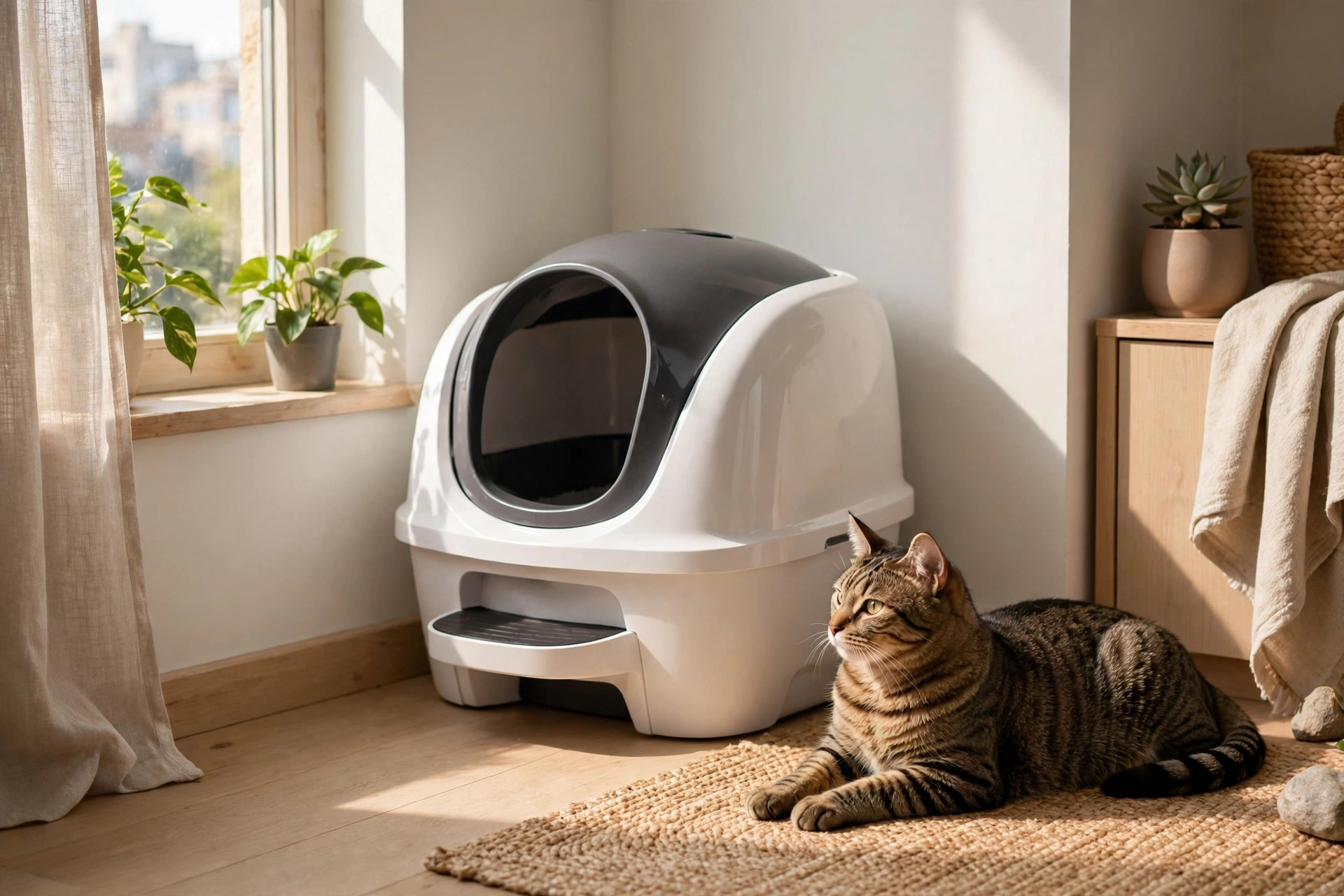
Scooping twice a day is easy to promise in June and easy to abandon in February. An automatic litter box does not remove the work — it moves it: instead of daily scooping you get a weekly waste swap, a monthly deep clean, and a machine that still needs floor space, an outlet, and a cat willing to step inside. In a 500-square-foot studio that trade is only worth it when the box is quiet, sealed, and small enough to leave you a walking path.
- Measure first: most rotating boxes need 22–28 inches of width plus 6 inches of clearance to cycle. A tape measure beats every product photo.
- Budget for consumables, not just the machine. Proprietary trays and liners run about $10–$22 a month per cat.
- Noise at 2 a.m. is the real test. Look for boxes rated under about 50 dB and a delay you can set to 7–10 minutes after exit.
- Keep the old box next to the new one for two weeks. Cats vote with their feet, and a power box they refuse is an expensive sculpture.
Five self-cleaning boxes, honestly compared
Every model here is a real, widely sold machine. Prices are typical street prices in US dollars and move with sales, so treat the ranges as planning numbers rather than promises.
| Model | Best for | Typical price | Small-apartment note |
|---|---|---|---|
| Litter-Robot 4 | Multi-cat homes | About $699 | 22.5 × 27 in footprint; sealed drawer holds about a week for two cats; app tracks weight and visits. |
| PETKIT Pura Max 2 | Value with app data | About $270–$330 | Cylinder design, 7 L waste bin; quiet cycle near 45 dB; needs PETKIT clumping litter for best results. |
| PetSafe ScoopFree Ultra | Simple, no-wash setup | About $180–$220 | Rake system with disposable crystal trays (~$20–$25 each); no plumbing or washing, but tray cost adds up. |
| CatGenie A.I. | No litter to carry | About $450–$500 | Washes and dries reusable granules; needs a water line and drain, so it fits laundry corners, not closets. |
| Neakasa M1 | Open-top preference | About $220–$280 | Open design suits cats who hate enclosed globes; 11 L waste bin; keep the entry facing a wall gap for shy cats. |
Litter-Robot 4 — the multi-cat benchmark
The globe rotates after a weight sensor confirms your cat has left, sifting clumps into a sealed, carbon-filtered drawer. For two cats the drawer typically needs emptying every 6–8 days; the app warns you before it overflows, which matters when the box lives behind a bathroom door you rarely open. It is the tallest pick here at about 29.5 inches, so check overhead clearance under shelves. The waste drawer uses standard tall kitchen bags, keeping liner costs near $2–$3 a month-generic, a rare mercy in this category.
PETKIT Pura Max 2 — quiet data on a budget
PETKIT's cylinder turns slowly and pauses if a cat approaches, and the cycle is genuinely quiet enough for a studio where the litter corner is eight feet from the bed. The 7-liter sealed bin handles roughly 10–15 days for one cat. You do need fine clumping litter; coarse crystals jam the sifter. Budget about $8–$12 a month for compatible litter top-ups beyond your normal spend.
PetSafe ScoopFree Ultra — no washing, ever
A rake pushes waste into a covered compartment in a disposable crystal tray. One tray lasts about 20–30 days for one cat, which makes this the only pick you never wash — attractive in a rental with a tiny tub. The honest cost: trays run about $20–$25 each in multi-packs, so yearly consumables pass $240. Crystals also track less than clay, a quiet win for hardwood floors.
CatGenie A.I. — the plumbing exception
CatGenie washes plastic granules with water and sanitizing solution, then warm-air dries them. You never haul litter again, but you must place it within reach of a water supply and drain (a laundry hookup or toilet-side tee). In most small apartments that location simply does not exist, which is why it ranks last here despite the clever engineering. A cleaning cartridge lasts about 240 washes, roughly $25 each.
Neakasa M1 — for cats who refuse a dome
Many cats, especially seniors and large breeds, will not enter an enclosed rotating globe. The M1 keeps an open top while a rake-and-lift system moves waste into a covered 11-liter bin. Odor control depends on closing the bin lid promptly and a weekly wipe; it is less sealed than the Litter-Robot, so place it away from the kitchen. At about 22 inches wide it is the narrowest full-auto option on this list.
Will it actually fit? The 10-minute measuring routine
- Floor patch: Mark the footprint with painter's tape and live with it for two days. If you keep stepping on the tape at night, the box is too big for that corner.
- Cycle clearance: Rotating globes need about 6 inches of side clearance and must not touch curtains or stored boxes mid-cycle.
- Outlet reach: All five picks need mains power. A cord across a walkway is a trip hazard and a chew target; keep the run under 5 feet or add a cord cover.
- Door swing: Bathroom doors in small rentals often swing inward over the only free corner. Open the door fully before you order anything.
Keep your cat's old manual box beside the new machine for the first two weeks, and move a scoop of used litter into the new box on day one. Familiar scent is the fastest acceptance trick there is, and it costs nothing.
The true monthly cost (the part ads skip)
Add three lines before comparing sticker prices: litter consumption (rotating boxes sift efficiently and typically use 20–30% less litter than manual scooping), waste bags or trays ($2–$3 for generic bags, $20–$25 for ScoopFree trays), and electricity (a cycle uses roughly 10–20 watts for two minutes — under $1 a month at typical US rates). Over two years the ScoopFree's trays alone can exceed the Litter-Robot's purchase premium, which is why the cheapest machine is rarely the cheapest box. If you already spend about $15 a month on clumping litter, expect a rotating box to land near $12–$16 all-in; a tray system lands near $25–$30. Compare that against your time honestly: ten minutes of scooping a day is about five hours a month.
Weekly routine that keeps odor at zero
- Weekly: Swap the waste bag or check the bin level, wipe the entry rim where litter dust cakes, and top up litter to the fill line.
- Monthly: Empty fully, wash the globe or tray bed with unscented soap, dry completely (damp litter clumps badly), and replace the carbon filter if your model uses one.
- Quarterly: Inspect sensors and seals; hair wrapped around a motor shaft is the most common cause of mid-cycle stalls.
If odor appears between cleans, the cause is almost never the machine — it is an over-full bin or litter kept past its absorbent life. Our guide to litter box furniture for small apartments covers hiding a manual backup, and clumping vs. crystal litter explains which litter chemistry each mechanism prefers. Cats who still refuse the machine after two weeks usually accept a top-entry box as a compromise.
FAQ
Do automatic boxes scare cats?
Some do at first. Choose a model with a post-exit delay of at least 7 minutes so the cycle never runs with the cat nearby, and keep the old box available for two weeks. Most cats transition within 3–7 days; kittens under about 4 pounds are too light for weight sensors on several models, so check the minimum weight in the manual.
Can one automatic box serve two cats?
Yes, if waste capacity matches. Plan to empty a sealed drawer every 5–8 days for two cats and keep litter topped to the fill line. Behavior guidance still suggests one box per cat plus one extra where space allows; in a studio, one large automatic box cleaned reliably beats two neglected manual ones.
What litter works in rotating boxes?
Hard-clumping clay litter with fine granules. Avoid crystals, pellets, and tofu litters in sifting mechanisms unless the manufacturer explicitly approves them — they jam or pass through the screen.
Is an automatic box worth it in a studio?
For one cat, only if you travel often or genuinely dread scooping. The footprint (about 4 square feet with clearance) is real rent. A covered manual box plus a disciplined twice-daily scoop still wins on cost and simplicity for many studio homes.