Alone-Time Training Plan for Apartment Puppies
The first time you close the apartment door on a new puppy, the clock feels louder than the hallway. Alone time is not something puppies outgrow on their own — it is a skill you teach, in minutes so small the puppy barely notices them, until an hour alone is simply nap time. This plan builds that skill over about three weeks, protects your neighbors' goodwill while you do it, and shows you exactly when whining means 'slow down' rather than 'wait it out.'
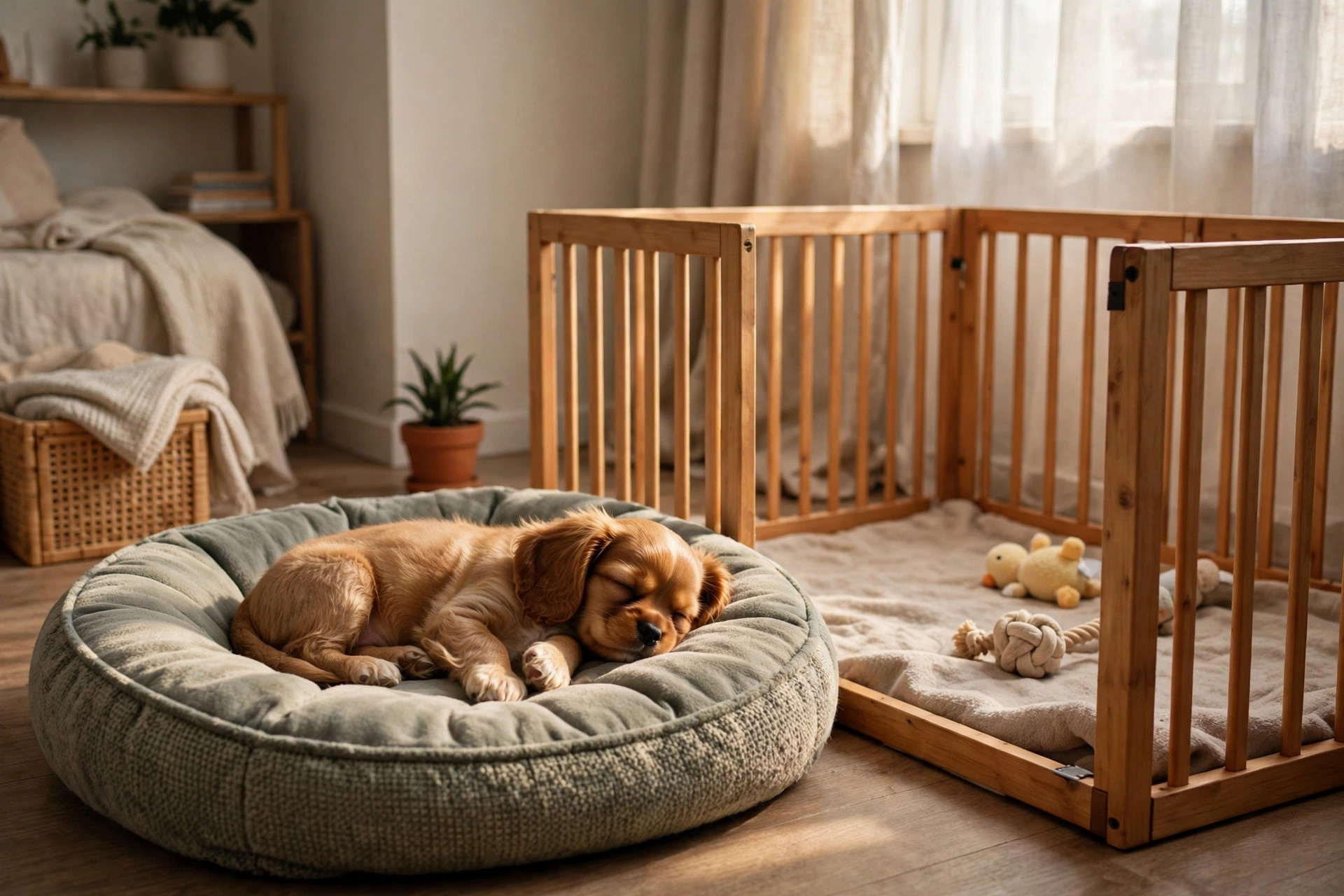
- Alone time is a taught skill, not a test: start with absences so short your puppy barely notices, then stretch them.
- The classic ladder: 5, 10, 20, 40, then 60 minutes across roughly three weeks — jump back a rung whenever you see panic signs.
- Tire the brain before you leave: a 10-minute sniff walk plus a frozen food toy beats a frantic hallway sprint.
- Keep arrivals and departures dull. No big hellos for the first five minutes home.
- If your puppy screams for more than 10 minutes straight or hurts itself trying to escape, stop and talk to a vet or certified trainer — that is distress, not stubbornness.
Why apartment puppies struggle with alone time
A puppy who arrives in a city apartment at eight to twelve weeks old has just lost the only social group it has ever known. Puppies are wired to stay close to their group, and a studio or one-bedroom gives them very few places where they cannot hear you — which cuts both ways. They learn your sounds fast, but they also notice the exact second the front door clicks. In a building, that first lonely howl is not just a training problem; thin walls turn it into a neighbor problem, which is why apartment owners need a plan that builds quiet confidence rather than hoping the puppy cries it out.
The good news is that alone-time tolerance responds well to boring, predictable repetition. Puppies learn through dozens of tiny data points: you picked up your keys and nothing bad happened; you stepped into the hallway and came back before worry spiked; being alone came with a frozen stuffed toy and a nap. The plan below strings those data points into a ladder. It assumes a puppy between 8 and 20 weeks, but the same ladder works for an older rescue who is new to apartment life — you simply move up the rungs a little faster.
One rule governs everything: the puppy should be calm, or at most mildly curious, for almost every absence you practice. A training plan that repeatedly floods a puppy with panic teaches the opposite lesson. Short and successful beats long and dramatic, every single time, and that is doubly true when the audience includes everyone on your floor.
Set the stage: pen, potty, and a tired brain
Choose the alone zone before your first practice session. For most apartment puppies, a playpen in the main living area beats a closed bedroom: the pen feels like a den rather than isolation, and sounds from the building stay familiar. A MidWest wire playpen (usually $40–$70 depending on height) folds flat against a wall when guests come, which matters in 500 square feet. Inside it: a bed, water, one safe chew, and a potty option if your puppy is under about four months — a washable pee pad in the corner, as far from the bed as the pen allows. Our guide to potty training a puppy in a high-rise covers the elevator math that makes an interim potty station necessary at this age.
Timing is half the training. Practice after a potty break and after five to ten minutes of gentle play or sniffing, never right after a wild zoomie session and never when the puppy is already overtired and cranky. A puppy who falls asleep during early absences is learning the best lesson of all: alone equals nap. Feed a small meal or offer a frozen KONG Classic (usually $8–$18 by size) stuffed with soaked kibble and a smear of peanut butter about ten minutes before you step out — a puppy working on a frozen toy for 15 minutes often never registers a 10-minute absence.
- Potty first, always. A puppy who needs to pee cannot learn to be calm; it can only learn that the pen is where accidents happen.
- Same setup every time. Same pen spot, same background sound (a radio or the white-noise machine from our anxiety-tools guide), same toy. Predictability is the curriculum.
- Camera if you can. A Petcube Cam 360 (usually $40–$60) or even a spare phone on a video call tells you whether silence means sleeping or frozen stress — the plan differs completely.
The duration ladder: three weeks from 5 minutes to an hour
Week one is pure theatre. Ten times a day, do your leaving routine — shoes, keys, coat — and then sit back down. Twice a day, actually step out: close the door, count 60 seconds in the hallway, return without ceremony. By day three or four, most puppies stop tracking the routine. Extend real absences to 5 minutes, then 10, always returning while the puppy is quiet. If you hear barking as you approach, wait for a two-second pause before opening the door so the barking is never what summons you.
Week two climbs to 20 and then 40 minutes. This is where a camera earns its keep: a puppy who whines for 30 seconds, then sighs and chews, is ready to progress; a puppy who paces, drools, or scratches at the pen needs another three or four days at the previous rung. Add one errand-length absence — a real trip to the lobby mailbox or the corner store — so the puppy learns that the door sound sometimes means a genuinely boring 25 minutes, not a training rep.
Week three targets 60 to 90 minutes, which covers a grocery run or a gym session for most owners. Two honest limits apply. First, bladder math: a three-month-old puppy can typically hold it for about three hours maximum, and less when awake and active, so alone time is capped by potty needs long before it is capped by courage. Second, the neighbors: practice your longest absences mid-morning or early evening, not at 11 p.m., and slip a short friendly note to immediate neighbors during week one. People tolerate a learning puppy far better when they know there is a plan and an end date.
Gear that genuinely helps (and what to skip)
Three purchases do real work in this plan. A West Paw Toppl (usually $20–$30) is easier for young puppies to empty than a classic KONG and stands up in a pen without rolling into the potty corner. A LickiMat Classic (usually $8–$15) spread with plain yogurt and frozen flat turns the first anxious minutes into licking, which is self-soothing behavior you want to encourage. And a snug playpen, as above, prevents the rehearsed destruction — chewed baseboards, shredded door frames — that creates both repair bills and bad habits.
Camera-equipped treat dispensers like the Furbo 360 (usually $150–$210) are optional luxuries. The camera view is useful; the treat toss is a mixed blessing, since a badly timed toss can wind a settling puppy back up. Skip calming supplements, pheromone diffusers marketed for puppies, and any kind of bark collar at this age. None of them teach the actual skill, which is simply: alone is safe, brief, and boring. Save the money for the treat pouch (usually $8–$14) you will wear through every stage of the ladder.
Judge every absence by the first five minutes. A puppy who settles inside five minutes is learning; a puppy who escalates past ten is not being stubborn — the step was too big. Drop a rung and rebuild.
Setbacks, weekends, and the two-puppy problem
Expect a wobble around week two or three, often after a weekend where the puppy had constant company. Monday's absence suddenly feels like a betrayal, and you may hear a protest that had disappeared. This is normal learning, not spite: context changed, so the skill wobbles. Answer it by repeating the last easy rung for two days rather than pushing through at the new duration. Likewise, if you work from home, schedule at least one real absence every day — puppies of home workers get the least practice and often hit trouble the first week their owner returns to an office.
Households with a second dog get a discount but not a free pass. An older calm dog genuinely lowers puppy stress, yet the puppy still needs solo reps — separate them for some absences, or the first vet visit where the puppy travels alone becomes a shock. Keep solo practice to the easy rungs when the older dog is out of sight.
Know the red flags that end the DIY plan: barking or howling that continues past 10 minutes without pause, drooling, pacing that never settles, elimination only when alone despite a recent potty break, or any self-injury. Those point to separation anxiety rather than normal puppy adjustment, and the right next step is your veterinarian plus a certified behavior professional. In an apartment, catching that distinction early protects both the puppy and your lease.
FAQ
How long can a 10-week-old puppy be left alone?
For training, keep absences under an hour at this age even if the puppy seems fine. Bladder capacity is the real limit — roughly one hour per month of age is the common ceiling, and awake puppies need to go sooner. Build duration and potty independence together.
Should I let my puppy cry it out in the pen?
No. Brief fussing that fades in a minute or two is normal, but sustained crying teaches the puppy that being alone is frightening. Return during a pause, shorten the next absence, and climb more slowly.
Is a crate or a playpen better for alone time?
Whichever your puppy already rests in calmly. Pens suit very young puppies who need a potty corner; crates suit puppies who are already crate-comfortable and past night-time accidents. Many apartment owners use a pen by day and the crate at night.
My puppy is quiet but never sleeps when alone. Is that okay?
Quiet-but-vigilant is a yellow flag. Check the camera: a puppy who lies still but tracks every hallway sound is coping, not relaxing. Add a frozen food toy, soften building noise with white noise, and hold at the current rung until you see real naps.
When can I leave my puppy for a full workday?
Not before about six months, and only with a midday break. Adult bladder control, a proofed 3–4 hour alone block, and a walker or partner visit in the middle make a workday realistic.