How to Teach an Indoor Cat to Come When Called
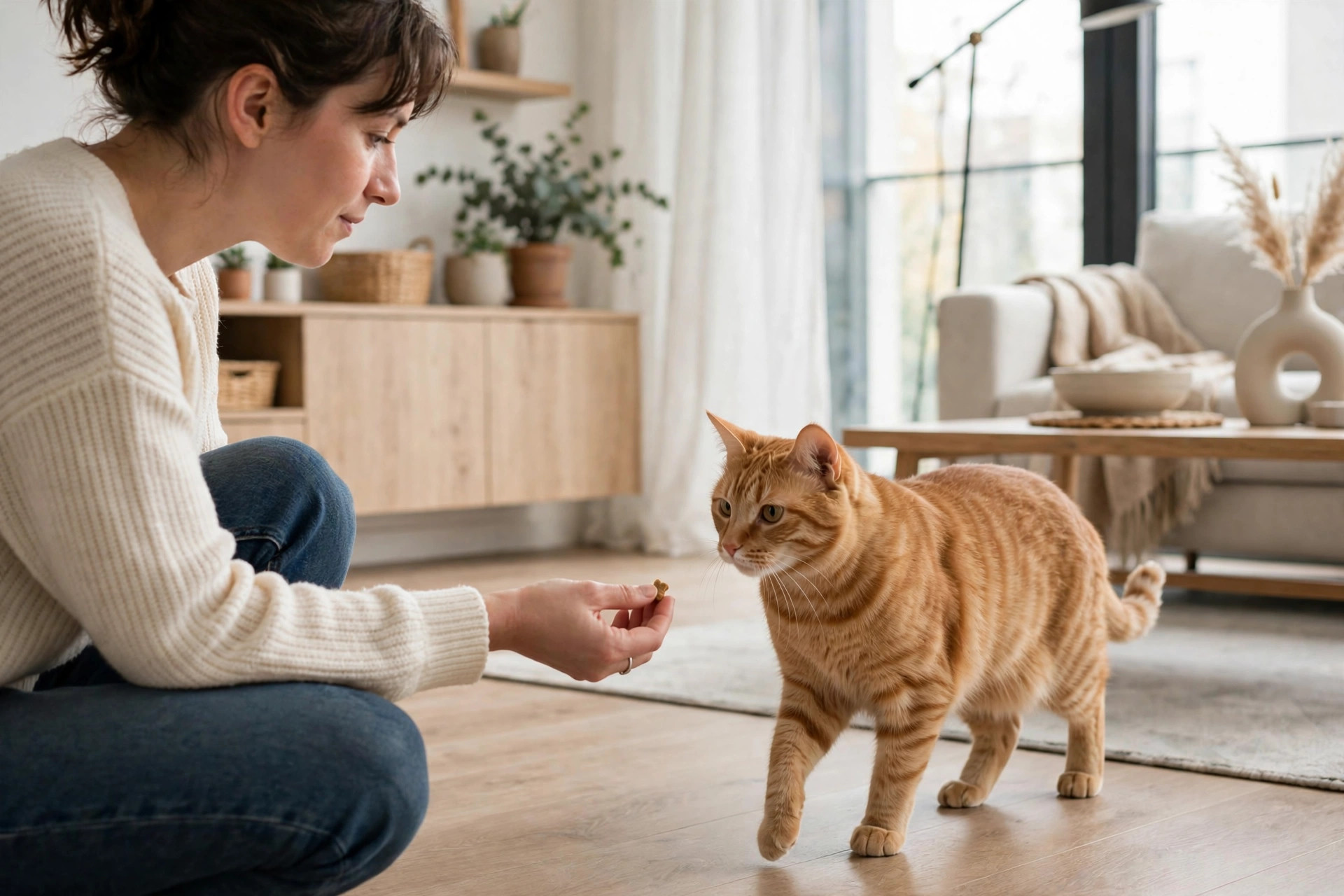
The joke is that cats come when they feel like it. The truth is that cats come when coming has always paid well — they are just stricter accountants than dogs. A reliable indoor recall is one of the most useful safety skills an apartment cat can have: the cat darts toward the open front door, you call once, and the cat turns around instead of vanishing into the hallway. It takes two to four weeks of five-minute sessions, a treat the cat would commit crimes for, and the discipline to never call the cat for anything unpleasant.
- Pick one cue word (most owners use the cat’s name plus “come”) and a jackpot treat reserved ONLY for recall — freeze-dried meat or lickable treats work best.
- Charge the cue first: say the word, deliver the treat, repeat 15–20 times a day for 3 days before asking for any movement.
- Build distance room by room: 3 feet, then across the room, then from another room, then with mild distractions. Two steps forward, one step back.
- Never call the cat for nail trims, carrier trips, or medication — one bad association can erase a week of training. Go get the cat for the unpleasant stuff.
- Indoor recall is a safety net, not outdoor permission: it is for the open door, the vet visit, and the hiding cat, not for off-leash outings.
Step 1: charge the cue (days 1–3)
Choose the cue now and never change it: the cat’s name followed by “come” works well (“Miso, come!”), or a distinctive whistle or tongue-click if you prefer a sound that carries through walls. Then choose the currency. Recall needs the highest-value treat in the house — not the everyday kibble, but the thing the cat loses its mind over: freeze-dried chicken or salmon ($8–$14 a bag), a lickable tube treat (Churu-style, about $0.50 each), or tiny bits of plain cooked chicken. This treat appears for recall and for nothing else. Exclusivity is what makes it powerful.
For three days, do nothing but pair the cue with the treat. Walk past the cat, say the cue in a bright, happy tone, and hand over the treat — no movement required, no distance, no test. Fifteen to twenty pairings a day, scattered through normal life: morning, lunch, evening, before bed. By day three, most cats’ heads whip around at the cue with that unmistakable “where is it” look. The cue is now charged: the word predicts the jackpot, and the cat’s brain has filed it under excellent news.
Step 2: build distance room by room (weeks 1–2)
Start embarrassingly easy: stand three feet from the cat, say the cue, and reward the single step toward you. Then six feet. Then across the room. Then call from the hallway while the cat is in the living room. Each new distance gets three to five successful reps before you stretch further, and if the cat stalls at a new distance twice in a row, you moved too fast — drop back to the last distance that worked and rebuild. Sessions stay at five minutes or under; cats check out mentally past that, and a checked-out cat is not learning.
Two rules make or break this phase. First, always let the cat win the first rep of a session — call from close range, pay big, and the cat starts the session believing this game is easy money. Second, never chase a non-response. If the cat ignores the cue, you asked for too much; walk closer, get the rep, and end on the success. Chasing teaches the cat that ignoring you starts a fun game of keep-away, which is the opposite of what you want. A cat that learns recall is always easy and always pays becomes a cat that comes at a run.
Step 3: proof it for real life (weeks 2–4)
A recall that works in a quiet living room is a party trick; a recall that works when the doorbell rings is a safety skill. Proofing means adding one difficulty at a time: call while the cat is eating (start across the room, not next to the bowl), call while a family member is moving around, call when the cat is watching birds at the window. Each new distraction starts at close range again — difficulty resets distance, every time.
Practice the two scenarios that matter most. The door drill: have someone open the front door a crack while you call the cat from a few feet away and pay enormously for the turn-around. Done a dozen times, this builds the habit that saves a cat someday. The hiding drill: call the cat when you genuinely cannot see it, and reward the appearance — this is how recall becomes your tool for vet-visit mornings and the “where is the cat” panic. Keep a treat pouch by the front door ($8–$12) so the door drill can pay instantly; delayed rewards do not build emergency behavior.
The recall treat is sacred. If the jackpot treat ever appears for anything except coming when called, its power halves — protect the currency and the cat will protect the habit.
Keeping it: the maintenance that takes ten seconds
Once the recall is reliable, it needs almost no upkeep — just use it. Call the cat for meals once a day (the easiest jackpot rep there is), call randomly once or twice a week for a surprise treat, and always pay the real-life recalls: the door drill, the pre-vet call, the “I need to find you” call. A recall that gets used and paid monthly stays sharp for years.
The one maintenance rule is the negative one: never poison the cue. If the cat needs a pill, a nail trim, or a carrier trip, go pick the cat up — do not call it. A single recall-to-something-awful teaches the cat that the cue is a trap, and rebuilding trust takes ten times longer than building it the first time. The cue must mean “the best thing ever is about to happen” every single time, with no exceptions. That is the whole contract, and cats — strict accountants that they are — will honor it exactly as far as you do.
FAQ
My cat ignores the cue completely. Is it just not food-motivated?
Almost every cat is food-motivated — you may not have found the currency yet. Try lickable tube treats, freeze-dried meat, a dab of plain meat baby food, or the water from a tuna can. Also check timing: train before meals, not after, when the cat is genuinely hungry. If the cue was charged properly, the head-turn on day three tells you the currency works.
Can I use recall to let my cat outside off-leash?
No — indoor recall is not outdoor reliability. Outside, the distraction level jumps a hundredfold (prey, dogs, traffic), and no treat competes with a fleeing squirrel. If you want outdoor time, use a harness and leash with our leash-training guide instead.
How long do training sessions need to be?
Five minutes maximum, once or twice a day. Cats learn in short bursts and shut down in long ones. Ten perfect three-minute sessions beat one frustrated fifteen-minute session every time.
Should every family member use the same cue?
Yes — same word, same cheerful tone, same jackpot treat. Consistency across people is what makes the cue reliable no matter who calls. Brief every household member once, including the teenager who will absolutely test it.