How to Reduce Nighttime Zoomies in Studio Apartments
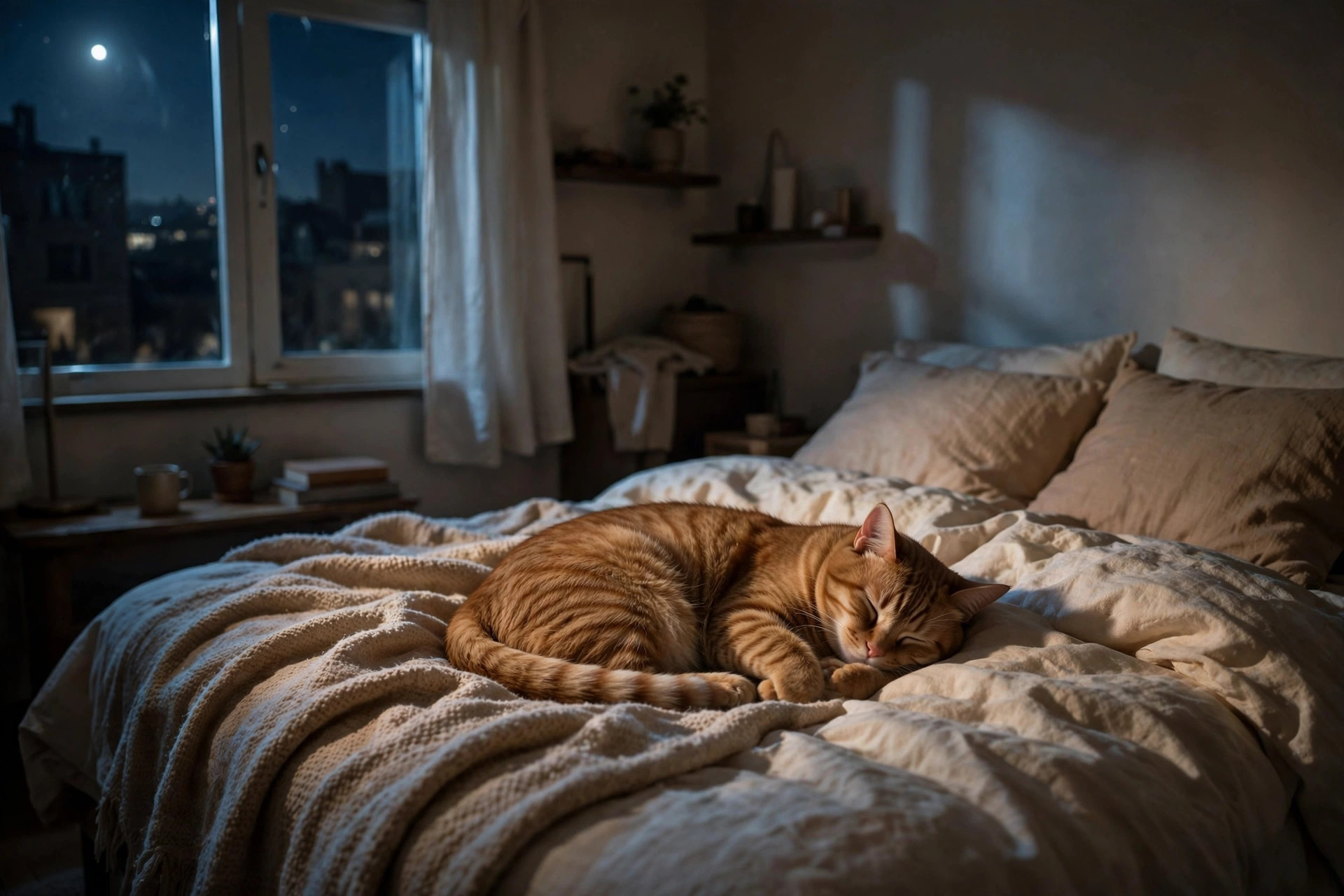
It is 11:40 p.m. You are finally asleep. Then: thunder across the hardwood, off the bed, off the dresser, a yowl, and a full-speed lap of the 400 square feet you call home — directly over your downstairs neighbor’s bedroom. Nighttime zoomies are biology doing its job at the worst possible hour, and in a studio apartment there is no door to close between the racetrack and your pillow. You cannot train away a crepuscular energy surge. But you can move it, shrink it, and muffle it — and most studio owners see a dramatic difference within a week.
- Zoomies are crepuscular biology, not misbehavior — cats and many dogs are wired for a burst of activity around dusk and dawn.
- Schedule a structured 15–20 minute play session 1–2 hours before your bedtime, ending with a big meal. Hunt, then feast, then sleep.
- Muffle the racetrack: rugs or runners on hardwood along the zoomie route protect both your sleep and the neighbor relationship.
- Never chase, yell at, or punish zoomies — it adds arousal and teaches the animal that midnight gets attention.
- Sudden new zoomies in a senior pet, or zoomies paired with other behavior changes, deserve a vet check first.
First, understand what you are dealing with
Cats are crepuscular — most active at dawn and dusk — because their wild ancestors hunted at the edges of the day. The 10 p.m. to midnight zoomie session is that dusk-hunting program running on schedule, displaced a few hours by indoor life. Dogs zoom too (the technical term is FRAPs: frenetic random activity periods), usually triggered by excitement, a bath, a poop, or the transition from activity to rest. In both species, the burst serves a purpose: burning the energy that the body stored up during the day’s naps.
Why it hits studios hardest: there is nowhere for the energy to go but the single room you sleep in, the floors are usually hard (landlords love hardwood and tile), and the neighbor below hears every landing. A zoomie session in a house is funny. The same session in a studio at midnight is a lease event. The strategy is therefore threefold: drain the tank earlier (so the midnight burst is smaller), shift the schedule (so the burst lands before bed, not after), and muffle the fallout (so the smaller burst bothers nobody).
The evening energy dump: a play session that actually works
A casual five minutes of waving a toy does not dent a zoomie. What works is a structured session that mimics a hunt cycle: stalk, chase, catch, “kill,” eat. For cats, a fishing-rod style teaser (Da Bird or similar, typically $8–$12) is the gold standard — make the feather dart, hide behind furniture, pause so the cat can stalk, then let the cat catch it. Always end with a catch. A session that ends with the toy yanked away leaves the cat more frustrated and more wired than before.
The session structure that drains the most energy in the least time:
| Phase | Duration | What to do |
|---|---|---|
| Warm-up stalk | 3–4 min | Slow toy movement, hiding behind furniture; let the cat plan |
| High-intensity chase | 5–7 min | Fast direction changes, jumps, sprints along the rug route |
| Cool-down catches | 3–4 min | Slower movement, frequent “catches” with treats between |
| The meal | Right after | Serve the main evening meal immediately — hunt, then feast |
For dogs, the equivalent is 15–20 minutes of fetch down a hallway, tug with rules (drop it earns the next round), or a flirt pole session — followed by the evening meal. Timing matters more than duration: run the session 1–2 hours before your bedtime, not right at bedtime. A dog or cat played hard at 9 p.m. is digesting and drowsy by 11; one played at 11 is wired until midnight. If your schedule only allows a late session, keep it to the cool-down intensity — gentle wrestling and sniff games rather than full sprints.
Shift the feeding schedule to work for sleep
The hunt-eat-groom-sleep sequence is hardwired: a full belly triggers drowsiness in both cats and dogs. Most owners feed dinner at 6 p.m. out of human habit, which puts the food coma at 7 and leaves the animal rested and ready by 11. Moving the main evening meal to 30–60 minutes before your bedtime — right after the play session — stacks the biology in your favor: drained muscles, full stomach, grooming, sleep.
For cats, consider splitting the evening portion: half at the traditional dinner time, half as the post-play “midnight snack” served via a puzzle feeder ($12–$25). The puzzle feeder adds 15–20 minutes of low-arousal mental work right when you want the cat winding down, and a cat working a puzzle is a cat not sprinting across the bed. Dogs get the same benefit from a stuffed Kong or lick mat served at bedtime — licking is physiologically calming.
Muffle the racetrack (for you and the neighbor)
You will not eliminate zoomies entirely — the goal is making the remaining ones survivable. In a studio, that means treating the zoomie route like an acoustic problem:
- Rugs on the runway. Identify the route — it is almost always the same loop: bed to dresser to window to kitchen — and lay rugs or runners along it. Even thin rugs cut landing noise dramatically compared to bare hardwood. Washable rugs ($40–$90 for a runner) are the practical pick for pet homes.
- Secure the launch pads. Dressers, nightstands, and shelves along the route should be anchored or weighted; a 10-pound cat hitting a light bookshelf at speed can topple it. Anchor tall bookcases and dressers to the wall with renter-friendly anti-tip straps ($10–$15 for a pack) — a 10-pound cat hitting a light shelf at speed can topple it.
- Clear the breakables. Anything on the runway at cat height gets moved or secured. This is a one-time 10-minute sweep, not an ongoing chore.
- White noise for you. A white noise machine ($30–$55) near your bed does not silence zoomies, but it blunts the startle that wakes you at the first thump — and staying asleep through a muffled lap is the real victory.
If the neighbor below has mentioned the noise, a brief friendly heads-up that you are actively working on it — plus the rugs going down — buys enormous goodwill. People tolerate a lot from neighbors they believe are trying.
Enrichment that works while you sleep
The 3 a.m. zoomie — distinct from the 11 p.m. one — usually means the animal woke up, found nothing to do, and manufactured excitement. Solo enrichment gives the waking brain a legal job:
For cats: leave out 2–3 quiet toys rotated nightly (crinkle balls and soft mice, not jingle bells), a cardboard scratcher near the sleeping area, and if feasible, a window perch facing whatever moves at night — many cats will choose moth-watching over parkour. Battery-operated toys are tempting but most are too loud for a studio at 3 a.m.; skip them. A timed feeder dispensing a tiny 2 a.m. snack ($40–$70 for a reliable 5-meal model) can also break the wake-up-hungry-zoom cycle for food-motivated cats.
For dogs: a frozen Kong or Toppl prepared before bed, given when you turn out the lights, keeps the dog occupied through the transition to sleep. Dogs that sleep in a crate or on a defined bed tend to resettle faster after waking — the bed is a trained “this is sleep place” cue. See how to help an apartment dog sleep through the night for the full canine sleep protocol.
The rule that fixes most zoomie complaints: never make midnight interesting. No chasing, no yelling, no laughing, no getting up to play — any of those teaches the animal that 11:40 p.m. is when the fun human activates. Boring, dark, and quiet is the only correct response to a zoomie in progress. Save all the fun for the 9 p.m. session, where it belongs.
What not to do (and when to call the vet)
Do not punish zoomies. Yelling, spray bottles, or throwing the cat out of the bedroom adds arousal and anxiety to an already aroused animal — and a cat locked out of the studio bedroom just zoomies in the studio living room, louder, with an audience of one neighbor. Do not chase. To a dog or cat, being chased is the game; you have just joined the zoomie. Do not exhaust them into compliance with marathon sessions right before bed — an overtired young animal gets wired, not sleepy, exactly like an overtired toddler.
Do call the vet if zoomies change character suddenly: a senior cat that never zoomed and starts nightly sprinting, zoomies paired with excessive thirst, appetite changes, or litter box changes, or a dog whose FRAPs come with disorientation or collapse. Sudden behavior changes in older animals are medical until proven otherwise — hyperthyroidism in cats is a classic zoomie-lookalike.
FAQ
Will my cat ever grow out of zoomies?
Partially. Kittens and young cats (under 2) zoom hardest and most often; frequency typically declines with age, and most cats settle into a shorter evening burst by age 3–4. But the crepuscular rhythm never fully disappears — management (play, feeding, rugs) stays useful for life.
Is it okay to play with my cat right before bed?
Yes, with the right intensity curve: high energy early in the session, winding down to slow catches, then food. What backfires is starting intense play at bedtime — give the 1–2 hour buffer so the animal is digesting and drowsy, not freshly amped.
My dog zoomies after every bath. Is that related?
Yes — post-bath FRAPs are one of the most common dog zoomie triggers, along with post-poop zoomies. It is a release of pent-up arousal, completely normal, and usually burns out in a few minutes. Just make sure the post-bath sprint zone has no slippery floors.
How long before the new routine shows results?
Most owners see a noticeable reduction within 5–7 days of consistent evening sessions plus the feeding shift. The first two nights may show little change — the animal’s internal clock needs a few repetitions to reschedule the burst. Consistency for two full weeks locks it in.