How to Pet-Proof Your Washer and Dryer in a Small Laundry Closet
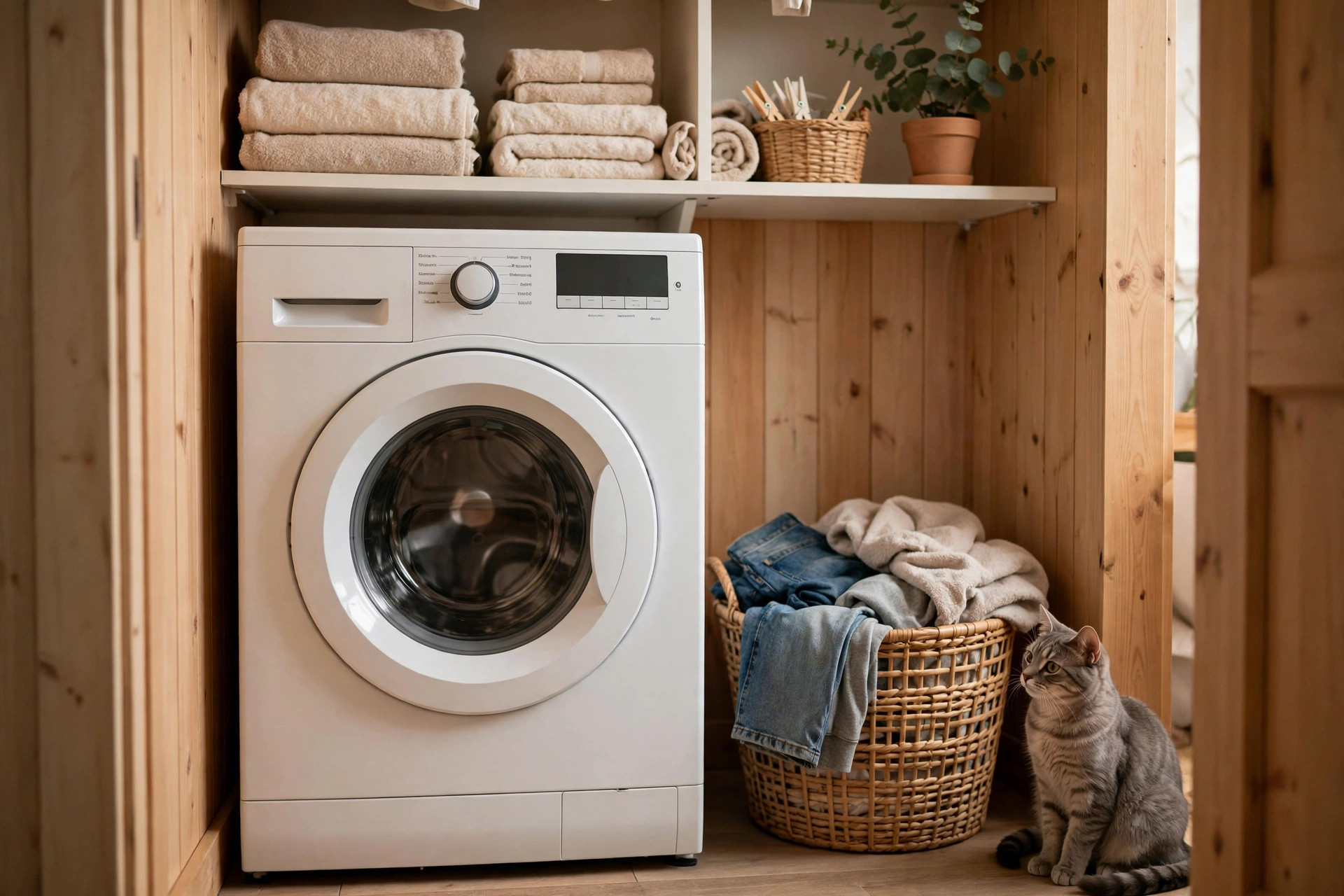
To a cat, an open washer is a warm, enclosed cave that smells like your clothes. Every year, cats — and occasionally small dogs — climb into washers and dryers in apartment laundry closets and do not come out. In a rental where the machines sit in a hallway closet or a kitchen corner with no door between them and the living room, the danger is constant and almost entirely preventable. The fix is a habit, not a renovation: fifteen seconds of checking before every single load.
- Check inside the drum before EVERY load — a cat can slip into a front-loader silently in under 30 seconds while you are folding.
- Front-loaders are the deadliest type: the open door is at pet height and the drum is the perfect hideout. Keep doors closed or latched when not loading.
- Renter-friendly door locks ($10–$20) and door-ajar alarms ($12–$18) work without drilling and fit most washer models.
- Detergent pods, dryer sheets, and scent boosters are the second danger in the closet — store them in a latched bin above pet reach.
- Teach every person in the household the load ritual. The accident almost always happens with a guest, roommate, or teenager who was not told.
Why the washer is the deadliest appliance in your home
Cats are drawn to washers for three reasons that combine badly: darkness, warmth, and your scent. A front-loader with the door left ajar — which many people do to prevent mildew smell — is a ground-level cave lined with soft clothes. Cats slip in without a sound, and in a small apartment laundry closet they are often out of sight within seconds. Small dogs, particularly curious puppies, climb into dryers the same way. The accidents veterinarians see follow one script: someone tosses in laundry without looking, closes the door, and presses start. By the time the machine makes an unusual noise, it is usually too late.
The timing of the danger matters. Cats are most likely to nap in the drum when the machine is warm after a cycle, and most likely to investigate when you are actively loading — the rustling clothes and open door are an invitation. In a 500-square-foot apartment where the washer sits in the hallway or kitchen, there is no separate laundry room door to close. The machines are simply part of the living space, which means pet-proofing has to be a behavior system, not a room you shut.
Front-loaders vs. top-loaders: where the risk really sits
Front-loading washers are the highest-risk type, full stop. The open door sits at floor level — exactly at cat height — and the horizontal drum reads as a den. Top-loaders are lower risk because the lid is above jump height for most cats and the vertical drum is less inviting, but the danger is not zero: kittens and small dogs have been found inside top-loaders left open, and the agitator is a crushing hazard for anything that falls in. Dryers carry the same risk as washers regardless of loading style — the warm, dark drum after a cycle is the single most attractive napping spot in the appliance.
Stackable units in apartment closets add a twist: the dryer sits at eye level for a cat on top of the washer, and the narrow closet means the cat is already within jumping distance whenever the closet doors are open. Compact apartment-sized machines (the 24-inch units common in city rentals) have smaller drums but proportionally the same danger — a 9-lb cat fits comfortably in a 2.2 cu ft compact drum. Size does not save you; only the check does.
The before-every-load ritual: 15 seconds that save lives
Make this automatic and it will never fail. The ritual has three steps, performed in order, every single time:
- Look inside. Lean in and visually check the empty drum before putting anything in. In dim closet light, use your phone flashlight — a dark cat in a dark drum is invisible without it. Sweep your hand through the clothes if the drum already has items.
- Count the cat. If you have cats, know where they are before you press start. A glance at the cat tree, the bed, the usual nap spot takes five seconds. If you cannot account for one, open the door and check again.
- Close or latch immediately. The moment the load is done or abandoned, close the door fully or engage the latch. The dangerous window is the “I’ll come back in a minute” open door.
The third step is where the habit usually dies. People leave washer doors ajar to prevent mildew — a real concern in humid apartments. The compromise: close the door fully whenever you leave the closet, and ventilate the drum only while you are actively doing laundry. Mildew prevention is worth much less than a life, and running an empty hot cycle with vinegar once a month ($2) handles the mildew anyway.
For dryers, add a fourth habit: keep the lint-trap area and the drum checked after every cycle, because a warm dryer is the prime target. And never, ever leave a dryer running while you are out of the apartment — the fire risk alone justifies that rule, and the pet risk compounds it.
Locking options for doors and controls (renter-friendly)
Habits protect against your own forgetfulness; locks protect against everyone else — the roommate, the visiting parent, the teenager who has never heard the lecture. Everything below installs without drilling and comes off clean at move-out.
| Option | Typical cost | How it works | Best for |
|---|---|---|---|
| Appliance door strap lock | $10–$16 for a 2-pack | Adhesive strap holds the washer/dryer door shut; adults release with a button press | Front-loaders; the cheapest reliable barrier |
| Door-ajar alarm | $12–$18 | Small sensor beeps when the door opens past a set point | Homes where someone must leave the door open for mildew control |
| Magnetic cabinet lock set | $15–$25 | Adhesive magnetic locks on the laundry closet doors themselves | Closets where keeping pets out of the whole space is easier |
| Child-proof control panel cover | $8–$12 | Clear adhesive cover over the cycle buttons | Homes with clever cats or toddlers who bat at buttons |
Many modern Samsung and LG washers also have a built-in child lock (usually a button combination held for three seconds) that locks the control panel — check the manual for your model. It does not lock the door, but it stops a paw from starting a cycle. Combine it with a physical door lock for full coverage. And whichever option you choose, teach the household the rule out loud, once: nobody opens a washer without looking first.
Detergent pods, dryer sheets, and the rest of the closet
The machines are the headline danger, but the laundry closet holds a second one at pet height: detergent pods look like candy, dryer sheets carry fragrances that irritate airways, and liquid detergent causes chemical burns in mouths. Cats batting pods across the floor is one of the most common poisoning calls vets get from apartments. Move every laundry product into a lidded plastic bin ($8–$14) on a shelf above pet reach — not on the washer lid, where a cat lands in one jump.
Dryer sheets deserve a special note: even unused ones are mildly toxic if chewed, and the cationic surfactants can cause drooling, vomiting, and in large amounts, serious GI damage. Switch to wool dryer balls ($10–$15 for a set of six) and the problem disappears entirely — they last for hundreds of loads and reduce static as well. If you share the closet with cleaning supplies, apply the same locked-away rule from our cleaning-products storage guide.
A closed washer door is the cheapest pet safety device ever made. Every other measure on this page is a backup for the day someone forgets step one.
Setting up a small laundry closet so pets cannot camp there
If your machines live in a closet with bifold or sliding doors, treat the closet itself as the barrier. Magnetic locks on the closet doors ($15–$25) keep cats out when laundry is not happening, and they are the single most effective measure for households with multiple people — one lock replaces five habits. Leave a two-inch gap for ventilation if mildew is an issue; a gap that small stops a cat but moves air.
Where there is no closet door — machines in a kitchen alcove or bathroom corner — the door strap locks on each appliance become the barrier. Keep the floor around the machines clear: a laundry basket of warm clothes on the floor is a nap invitation that teaches the cat the area is a bedroom, and a cat who sleeps near the washer is a cat who sleeps in the washer. Baskets go on top of the machine (lid down) or in a lidded hamper, never on the floor.
Finally, write the rule down and put it on the machine. A small printed card taped inside the closet door — “LOOK INSIDE before every load” — sounds silly until the week your mother-in-law visits. The accident never happens to the person who knows the rule. It happens to the person who was never told.
FAQ
My cat loves sleeping in the open dryer. How do I break the habit?
Close the door every time — consistency is the whole fix. Meanwhile, give the cat a better warm spot nearby: a heated bed ($30–$50) or a sunny window perch. Cats choose the dryer for warmth and enclosure; provide both elsewhere and the drum loses its appeal within a week or two.
Is it safe to leave the washer door open to prevent mildew if I have cats?
No. An open washer door is the primary danger. Close it whenever you are not actively loading, and handle mildew with a monthly empty hot cycle with vinegar instead. Ventilation is never worth the risk of a cat in the drum.
Do I need to worry about a top-loading washer?
Less, but not zero. Kittens and small dogs can still end up inside an open top-loader, and the agitator is dangerous. Keep the lid closed and apply the same look-inside ritual — it takes the same fifteen seconds.
What should I do if I think my pet was in the washer during a cycle?
Stop the machine immediately, get the pet out, and go to an emergency vet right away — even if the animal seems okay, internal injuries and hypothermia are common. Wrap the pet in a warm towel for the trip. This is a true emergency, not a wait-and-see situation; our first-aid guide covers what to do on the way.