Apartment Pet First Aid Basics Every Owner Should Know
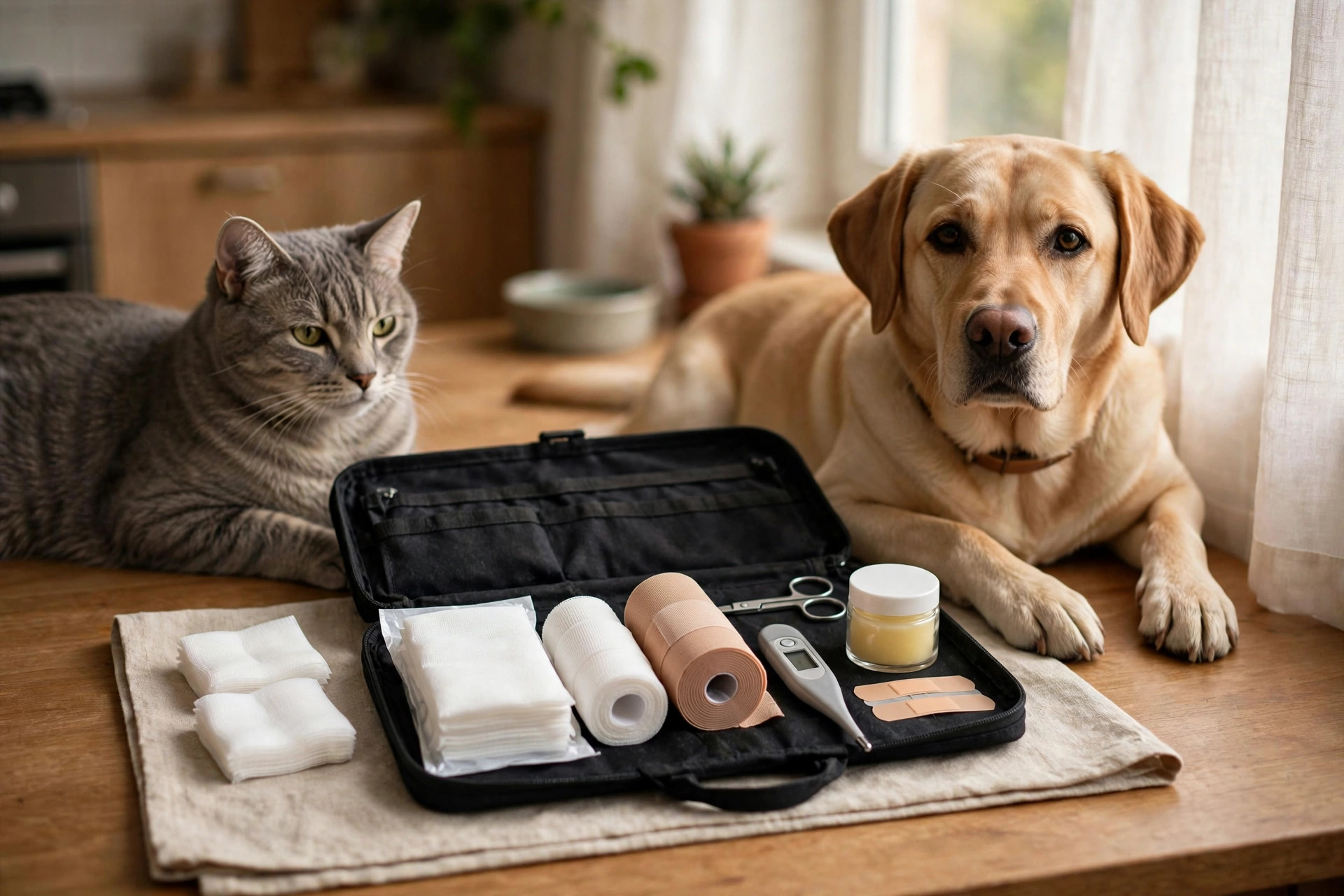
Most apartment pet emergencies do not happen on a trail or in a yard. They happen at 11 p.m. on a kitchen floor, in a hallway, or on the wrong end of an elevator ride — a cut paw on broken glass, a dog that got into dark chocolate, a cat coughing after a fall from a shelf. You will probably never need advanced first aid. You will, at some point, need ten calm minutes of basic care and a clear decision about whether this is a vet-now problem. That is what this guide covers.
The apartment first-aid kit: what to actually buy (about $40 total)
Skip the giant pre-packed pet first-aid bags sold for car camping. An apartment kit lives in one shoebox-sized bin near the door, and almost everything in it does double duty. Buy these items individually and you will spend roughly $35–$55 total, about half the price of a branded pet kit with the same contents:
- Non-stick gauze pads (2×2 and 4×4 inch), a roll of self-adhesive bandage wrap, and blunt-tip bandage scissors — about $10–$14 combined. Self-adhesive wrap (often sold as vet wrap, $4–$7 per roll) is the single most useful item here; it holds a pad on a leg or torso without tape pulling fur.
- Styptic powder (Kwik-Stop or similar, $8–$13) for broken nails, the most common bleeding event in apartment dogs.
- A digital rectal thermometer and water-based lubricant ($9–$14). Normal temperature is 100.5–102.5°F (38–39.2°C) for dogs and cats. Above 104°F is an emergency; below 99°F after an incident is also a warning sign.
- A flat slip leash ($8–$15) kept with the kit. In a panic, collars get grabbed and harnesses are in the other room. A slip lead works on any dog, including a neighbor’s.
- Your vet’s number, the nearest 24-hour emergency hospital address, and the ASPCA Animal Poison Control number — (888) 426-4435 — printed on paper taped inside the lid, not just saved in your phone. Poison Control charges a consultation fee (around $95 in recent years), and it is worth it: their guidance can be the difference between a $200 visit and a $2,000 one.
Add two apartment-specific items most lists miss. First, a pre-filled go-bag by the door: carrier or leash, a printed copy of vaccine records, and 48 hours of any daily medication. If the emergency is a building fire rather than a sick pet, you will not have time to assemble this — see our apartment fire escape plan with pets for the full exit checklist. Second, a flashlight where the kit is. Examining a mouth, paw, or wound in a dim apartment hallway without one wastes the minutes that matter.
The 60-second triage: check these five things first
When something goes wrong, do not start by Googling the symptom. Run this five-point check — it takes about a minute and tells you whether you are dealing with a monitor-at-home problem or a go-now problem.
- Breathing. Watch the chest for 15 seconds. Cats should breathe roughly 20–30 times per minute at rest, dogs 15–30 depending on size. Open-mouth breathing in a cat, blue or pale gums, or audible wheezing or choking sounds in either species means emergency care now.
- Gum color and refill. Lift the lip. Gums should be pink (dark-pigmented gums are normal in some breeds — know your pet’s baseline on a calm day). Press a fingertip to the gum until it blanches, then release: color should return in under 2 seconds. Pale, white, gray, or muddy gums, or a refill over 2 seconds, suggests blood loss, shock, or poor circulation.
- Responsiveness. Call their name and offer a high-value treat. A pet that will not rouse, cannot stand, or seems disoriented or wobbly after an incident needs a vet immediately — these are neurological red flags.
- Bleeding. Spurting blood, blood that soaks through a pad within minutes, or any bleeding that has not slowed after 10 minutes of direct pressure is an emergency. Slow oozing from a nail or small cut usually is not.
- Temperature, if you can take it safely. Over 104°F, cool the pet with room-temperature water on the belly and paw pads and go. Do not use ice water — it constricts skin blood vessels and traps heat.
Write down what you find, with the time. Emergency vets triage faster and more accurately when you can say “gums went pale around 9:40, refill is about three seconds” instead of “he seems off.” If any one of the five checks is clearly wrong, stop assessing and start moving — in a high-rise, the elevator ride and the trip down are part of the emergency timeline. Our high-rise pet evacuation plan covers how to get a sick or injured pet down and out quickly.
Cuts, torn nails, and bleeding: the apartment protocol
Broken glass, a snapped nail on a metal stair tread, a nicked ear after a dog-park scuffle in the building courtyard — bleeding is the emergency apartment owners actually face most. The protocol is simple, and it is mostly about pressure and patience.
For a cut paw or body wound: Apply a non-stick pad and press firmly for a full 10 minutes by the clock. Peeking every 30 seconds restarts the clotting process, and it is the most common mistake in home wound care. If blood soaks through, add a second pad on top rather than replacing the first. Once bleeding slows, secure the pad with self-adhesive wrap — snug enough to stay on, loose enough that you can slide a fingertip underneath. Swollen toes below the wrap mean it is too tight. Change the dressing daily, and keep the pet from licking it; an e-collar ($12–$20) beats a sock, which most dogs remove in minutes and some swallow.
For a torn or broken nail: Expect more blood than the injury seems to warrant — nail beds are vascular and dramatic. Press styptic powder directly into the nail tip for 10–15 seconds. Cornstarch works in a pinch, with less stopping power. If the nail is dangling or the bleeding has not stopped after 20 minutes, that is a same-day vet visit, not a wait-until-Monday one: an exposed nail bed is an infection risk.
- Blood spurting, or bleeding that has not slowed after 10 minutes of firm pressure
- Pale, white, or gray gums, or capillary refill over 2 seconds
- A deep wound you can see fat, muscle, or bone in, or any wound on the eye, chest, or abdomen
- A pet that cannot bear weight, will not rouse, or collapses
What not to do: Do not apply human antiseptic creams with painkillers, and never give ibuprofen, acetaminophen, or aspirin unless a vet has specifically dosed it for your pet. Acetaminophen is severely toxic to cats even in small amounts, and ibuprofen causes kidney and stomach-ulcer damage in both species. Plain is right: clean water, gauze, pressure, and a phone call.
Choking and poisoning: the two fastest emergencies
These are the two scenarios where minutes, not the drive to the vet, decide the outcome — and both are more common in apartments, where pets spend unsupervised hours around household hazards.
Choking. Signs: pawing at the mouth, drooling, gagging with no vomit produced, panic, then blue gums. First, look — do not sweep a finger blindly into the mouth, which pushes objects deeper and gets owners bitten by otherwise gentle pets. If you can see the object and it is loose, pull it out. If the pet is still coughing forcefully, it is moving some air: monitor and go. If a dog cannot breathe, stand behind it, place a fist just behind the ribcage, and deliver up to five firm upward thrusts. For cats and small dogs, hold the pet with its back against your chest and compress the abdomen just under the ribs five times. Then drive. Even a successful dislodge warrants a vet check the same day, because thrusts can bruise organs and partial obstructions can swell closed later.
Poisoning. The apartment hit list: dark chocolate and anything sweetened with xylitol (now often labeled “birch sugar” on peanut butter and gum), lilies — genuinely dangerous to cats, including the pollen and vase water — human painkillers, vitamin D supplements, and laundry pods. Do not induce vomiting unless a veterinarian or Poison Control tells you to. Some substances (cleaners, petroleum products) cause more damage coming back up, and hydrogen peroxide — the usual home method — is itself risky and now discouraged for cats entirely. Instead: remove access, note exactly what and how much was eaten and when, photograph the packaging, and call your vet or ASPCA Poison Control at (888) 426-4435. In apartments, also check what your building sprays in hallways and stairwells — pest treatments are a recurring low-level exposure source, which we cover in what to do when your apartment sprays for pests.
The most useful first-aid skill in an apartment is not a technique. It is having the emergency hospital’s address already saved, a carrier that is not buried in a closet, and a slip leash by the door — because the trip down the elevator is part of the emergency.
After the crisis: the 24 hours of care most owners skip
First aid does not end when the bleeding stops or the vet sends you home. The apartment-specific aftercare routine is where small complications get caught early.
- Recheck gums and breathing twice a day for 48 hours after any significant incident — a fall, a poisoning scare, heavy bleeding. Delayed internal bleeding and swelling classically declare themselves on day two, not hour two.
- Confine the recovery zone. In a small apartment you may not have a spare room; a playpen or a bathroom with the toilet lid down and cleaners removed works. Injured cats hide — check under the bed and behind the washer before assuming escape.
- Feed small, plain meals. After vomiting or any sedation, offer a quarter of the normal portion of bland food (plain boiled chicken and rice for dogs; plain meat baby food without onion or garlic powder for cats is a common vet-suggested option) and watch for 2 hours before offering more.
- Log it. Date, what happened, what you did, what the vet prescribed. Photograph wounds daily; a phone photo series shows progression better than memory, and it makes follow-up calls with your vet far more productive.
- Restock the kit the same week. Used gauze, an expired styptic stick, a missing slip leash — kits quietly empty themselves after the first real use. Check expiration dates twice a year, ideally when you change smoke-detector batteries.
One last apartment reality: know your building’s fastest exit with a pet in your arms. Which elevator bank is quickest at your floor, whether the service elevator needs a key, and whether the stairwell doors lock behind you. Learning that route on a calm Sunday — carrier in hand, treat in pocket — turns a panicked 3 a.m. guess into a rehearsed two-minute trip. Pair that route knowledge with door-dashing prevention from our guide to keeping cats from darting out the front door, and most apartment pet emergencies become rarer and shorter.
FAQ
What is the most important thing in an apartment pet first-aid kit?
A self-adhesive bandage wrap, non-stick gauze pads, styptic powder, a digital thermometer, and a printed sheet with your vet, the nearest 24-hour hospital, and ASPCA Poison Control at (888) 426-4435. That core costs about $35–$55 and covers the emergencies apartment pets actually have: bleeding, torn nails, fever, and poisoning scares.
My dog cut a paw and it is bleeding a lot. When is it an emergency?
Apply firm pressure with a non-stick pad for a full 10 minutes without peeking. If bleeding has not slowed by then, if it spurts, or if your dog’s gums look pale or the capillary refill is over 2 seconds, go to the emergency vet. A torn nail that keeps bleeding after 20 minutes and styptic powder also warrants a same-day visit.
Can I give my pet human painkillers like ibuprofen or Tylenol?
No. Ibuprofen can cause kidney failure and stomach ulcers in dogs and cats, and acetaminophen (Tylenol) is severely toxic to cats even in small doses. Never give human pain medication unless a veterinarian has prescribed and dosed it specifically for your pet.
Should I make my pet vomit if it ate something toxic?
Not unless a vet or ASPCA Poison Control instructs you to. Some substances cause more damage coming back up, and home vomiting methods carry their own risks. Remove access to the substance, note what and how much was eaten and when, and call your vet or Poison Control at (888) 426-4435 immediately.
How do I know if my pet’s temperature is an emergency?
Normal is 100.5–102.5°F (38–39.2°C). Above 104°F is an emergency — cool the belly and paw pads with room-temperature water (not ice water) and go to a vet. Below 99°F after an accident, illness, or fall is also a warning sign, especially with pale gums or weakness.