Best Snuffle Mats for Apartment Dogs
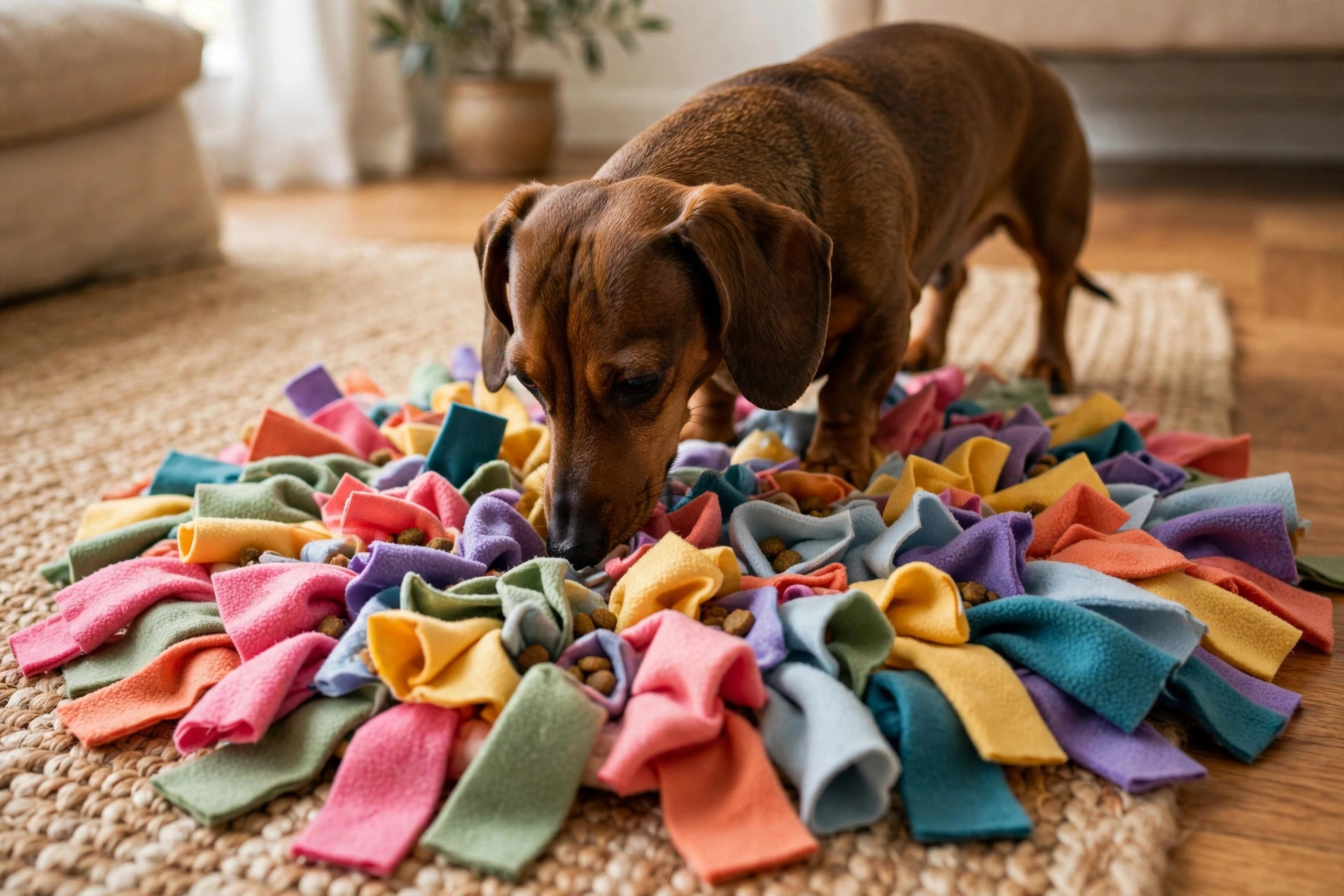
Fifteen minutes of sniffing tires a dog out roughly as much as an hour of walking — and unlike a walk, it happens entirely inside your apartment, in silence, with zero neighbor impact. A snuffle mat is the simplest enrichment tool ever designed: a mat with fleece strips you hide kibble in, turning breakfast into a foraging expedition. For apartment dogs that need mental work without a yard, it is the highest return per dollar in all of pet gear.
- A snuffle mat turns a 30-second meal into a 15-minute nose workout. Start every new dog on the easiest setting: kibble sitting on top.
- Washability decides everything. A mat you cannot machine-wash becomes a greasy, smelly object within a month.
- Supervise chewers. Snuffle mats are for sniffing, not shredding — swallowed fleece strips mean a vet visit.
- Fold-flat mats win for apartments. You will store it between meals, so it needs to disappear into a drawer.
Four mats worth the floor space
Every mat below is a real, widely sold product — no craft-fair one-offs, no drop-shipped mystery fleece. Prices are typical street prices.
| Mat | Best for | Usually | Apartment note |
|---|---|---|---|
| PAW5 Wooly Snuffle Mat | The original, best-built | $35–$45 | Dense fleece, machine washable, folds flat |
| LOOBANI Dog Snuffle Mat | Beginners and puppies | $18–$28 | Shallower folds are easier for first-timers; very washable |
| AWOOF Pet Snuffle Mat | Advanced sniffers | $25–$35 | Deeper pockets and varied textures challenge experienced noses |
| VIVAGLORY Olive Shape Snuffle Mat | Tight budgets | $15–$22 | Compact round shape fits small kitchens; thinner fleece |
PAW5 Wooly — the original and still the best
PAW5 invented the modern snuffle mat, and the Wooly still sets the standard: densely packed fleece strips tied to a sturdy base, with enough depth that even clever dogs work for several minutes per meal. It is genuinely machine washable — cold cycle, air dry — and survives it far better than cheaper mats whose strips thin out after three washes. It folds flat for drawer storage, which is the detail that matters in a one-bedroom. The price is double the budget options, but it is the mat most owners still own two years later.
LOOBANI — the beginner pick
New dogs sometimes stare at a deep snuffle mat the way you would stare at a locked safe. LOOBANI’s shallower folds let a puppy or a cautious rescue succeed on day one — kibble is findable, not buried — which builds the foraging habit instead of frustration. The fleece is lighter than PAW5’s, so it washes and dries faster, a real advantage if you run it through the laundry weekly. Move up to a deeper mat once the dog clears this one in under five minutes.
AWOOF — the advanced pick
For the dog that has solved every puzzle feeder you own: AWOOF’s deeper pockets, mixed strip lengths, and varied textures make kibble genuinely hard to find. Experienced sniffers get a real workout instead of a victory lap. The tradeoff of deep folds is cleaning — crumbs work their way down and the mat needs a proper wash more often — and very small dogs can struggle to nose into the deepest sections. Best as a second mat, not a first.
VIVAGLORY Olive — the budget pick
The honest cheap option. The round, compact shape fits a small kitchen floor without dominating it, and the price means you can try the whole concept for the cost of a pizza. The fleece is thinner and sparser than the picks above, so determined dogs finish faster and the mat shows wear sooner. For a gentle forager or a trial run before investing in a PAW5, it is perfectly serviceable.
How to use a snuffle mat without the rookie mistakes
Most snuffle-mat failures are user error, not product error. The protocol that works:
- Day one: kibble on top. Scatter the meal across the surface without hiding anything. The dog learns “good things appear on this mat.”
- Days two to four: lightly tucked. Push kibble just under the top layer of strips. The dog learns to nose through fleece.
- Week two: properly hidden. Work kibble deep into the folds. A full meal should take 10–15 minutes.
- Ongoing: feed every meal this way. Two snuffle sessions a day replaces the food bowl entirely for most dogs. It is not a special occasion — it is the new normal.
Two rules that are not negotiable. First, supervise: the moment the dog starts chewing or pulling strips instead of sniffing, the session ends and the mat goes away. Snuffle mats are foraging tools, not chew toys, and swallowed fleece is a veterinary emergency. Second, wash it weekly: saliva and kibble dust turn unwashed fleece rancid. Machine wash cold, air dry — the dryer melts cheap fleece and shrinks the good stuff.
- Machine washable, genuinely. “Hand wash only” on a product that gets licked daily means it will never be washed. Cold machine cycle is the minimum.
- Strip density. Sparse strips mean kibble sits on the surface and the “puzzle” lasts ninety seconds. Dense fleece is the whole product.
- A non-slip or weighted base. On hard floors, a light mat slides around and the dog chases it instead of sniffing. Heavier is better.
- Fold-flat storage. You will put it away between meals. If it does not fold, it becomes permanent floor clutter.
When to retire a snuffle mat
Even the best mat is consumable. Retire it when strips start detaching (a loose strip is a swallowing risk), when the fleece stays greasy after washing (rancid oil the dog should not be licking), or when the dog has fully solved it and finishes in under three minutes — at that point it is a slow feeder, not enrichment, and it is time for a deeper design or a lick mat for variety. Most quality mats last 6–12 months of daily use, which works out to a few dollars a month — still the cheapest enrichment on the market.
The apartment math that sells snuffle mats: a 20-minute sniffing session before work produces a dog that naps until lunch, which produces zero barking, which produces zero neighbor complaints. Pair the mat with indoor games for rainy days and bad weather stops being a behavior problem.
FAQ
Can a snuffle mat replace walks?
No — but it replaces the mental part of the exercise equation, which is the part apartment dogs usually miss. Sniffing is cognitively demanding work; a dog that snuffles for 15 minutes twice a day needs less frantic physical exercise to stay calm. You still owe the dog outdoor time for bathroom breaks, fresh air, and the world’s smells. Think “shorter, calmer walks,” not “no walks.”
My dog just flips the mat over and eats the kibble. Now what?
Two fixes. First, the mat is too easy — the dog found a cheat code because the honest path was not rewarding enough. Tuck kibble deeper and use smellier treats for the first week. Second, anchor it: put the mat inside a shallow cardboard box or a baking tray with sides, so flipping is harder than sniffing. Most dogs abandon the flip strategy within a few sessions once sniffing pays better.
Are snuffle mats safe for puppies?
Yes, with supervision — puppies are the ideal audience, since foraging is a natural behavior you want to encourage. Use the shallowest mat you can find, scatter kibble on top at first, and watch every session. Puppies explore with their mouths, so any strip-chewing means the mat comes up immediately.
Can I make one myself instead of buying?
You can — fleece strips tied through a rubber sink mat is the classic DIY — but honestly evaluate the cost. Fleece and a base mat run $15–$25 in materials plus an hour of tying, and homemade versions rarely wash as well. DIY makes sense as a weekend project with kids; as pure economics, the budget commercial mats win.