Best Shower Attachments for Bathing Dogs in Apartments
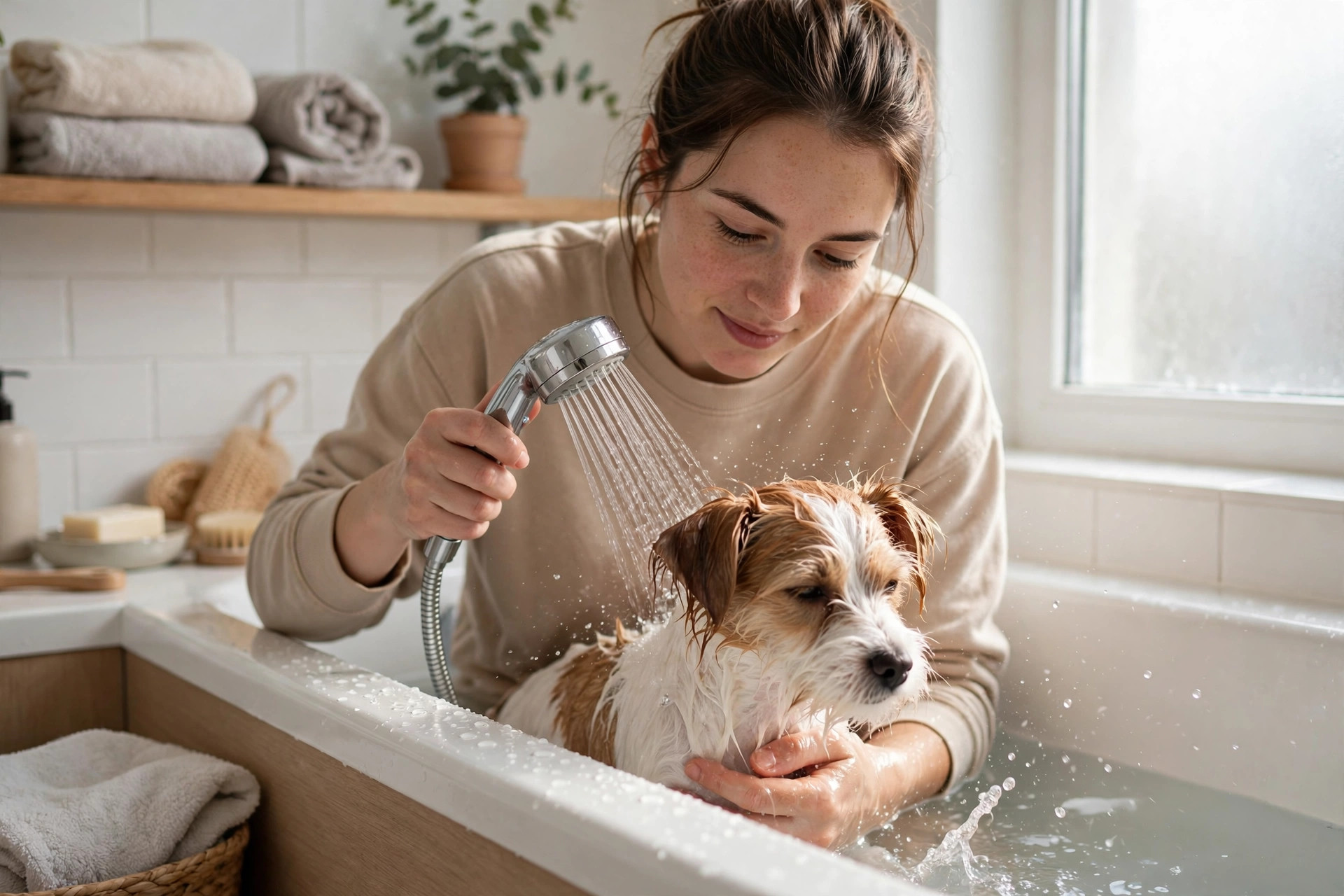
Bathing a dog under a fixed apartment showerhead is a lesson in geometry: the water goes one place, the dog goes the opposite, and your walls get the rest. A handheld attachment changes the physics — you bring the water to the dog, rinse the soap out of the underbelly in seconds, and stop soaking your own clothes. For apartment life, the whole category costs under $45 and installs without tools in about ten minutes, which makes it one of the best dollars-per-sanity upgrades a dog owner can buy.
What actually matters in a dog shower attachment
Forget the showerhead you would buy for yourself. A dog attachment lives a harder life — dropped on tile, chewed by the hose, yanked by a wet 60 lb dog — and the specs that matter are different:
- Adjustable spray, including a low-pressure rinse mode. Full-blast pressure startles dogs and drives soap deeper into thick coats instead of rinsing it out. A gentle, wide spray that rinses without a roar is the single most-used setting.
- A hose at least 5 feet long. Four feet sounds fine until the dog retreats to the far corner of the tub. Six feet gives you real reach; longer hoses tangle.
- One-hand on/off. You always have one hand on the dog. A pause button on the handle — or a squeeze-trigger design — beats walking to the wall valve mid-bath.
- Standard 1/2-inch threading and a diverter. Rental-friendly means it screws onto your existing shower arm with no plumbing. The included diverter must switch cleanly between your normal showerhead and the pet sprayer without dripping all over the tub edge.
- Rubber scrubber nubs on the face (optional but nice). Some models build silicone nubs into the spray head, letting you massage shampoo in and rinse in one motion — one less hand lost to a separate brush.
Four attachments worth installing
| Model | Type | Typical price | Best for |
|---|---|---|---|
| Waterpik PPR-252 Pet Wand Pro | Handheld wand + diverter | Usually $30–$40 | Thick coats; adjustable pressure from gentle rinse to power wash. |
| Aquapaw Pet Bathing Tool | Strap-on sprayer-scrubber | Usually $25–$35 | Dogs that hate bath time; scrub and rinse one-handed. |
| Rinse Ace 3-Way Pet Shower Sprayer | Diverter + handheld | Usually $25–$35 | Shared showers; cleanest switch between human and dog mode. |
| YOO.MEE 4-in-1 Pet Shower Attachment | Handle + brush face | Usually $18–$26 | Tight budgets; silicone nubs replace a separate bath brush. |
Waterpik PPR-252 Pet Wand Pro — the coat-deep rinser
Waterpik’s pet wand is the category’s workhorse, and the pressure adjustment is why: a dial on the handle runs from a soft rinse that will not panic a nervous dog up to a high-pressure jet that actually penetrates a double coat to the skin. Rinsing soap residue out of thick fur is the part of the bath most owners rush, and leftover shampoo is the top cause of post-bath itching — a tool that reaches the undercoat matters. The 8-foot hose is generous, arguably too long for a small tub-shower, so coil the excess on the wall hook it includes. Installation is a standard shower-arm swap: unscrew the old head, thread on the diverter, done in about ten minutes with the included Teflon tape.
Aquapaw — the one-hand bath for squirmers
The Aquapaw straps onto your palm like a mitt, combining the sprayer and the scrubber in one hand. That frees your other hand to hold the dog — which is the entire game with a 40 lb rescue that treats bath time as a hostage situation. Two spray settings (a gentle rinse and a more forceful jet) are controlled by how you position your hand over the strap. It connects to any standard shower or garden hose fitting. Honest limitations: the spray is less adjustable than a dial-style wand, the palm strap stretches with heavy use over a year or so, and big dogs with very thick coats still need a separate deep rinse. For nervous small and medium dogs, though, nothing keeps the bath moving faster.
Rinse Ace 3-Way — the roommate-friendly option
If the shower is shared with humans who will absolutely remove your pet contraption, the Rinse Ace’s diverter is the politest design: one clean lever switches between the regular showerhead and the pet sprayer, and the pet hose docks neatly on a suction-cup holder when not in use. The sprayer itself is a straightforward 3-pattern handheld with an on/off button on the handle. It does nothing exotic, but it is the attachment most likely to still be installed six months later — because nobody in the apartment minds it. Typical price $25–$35.
YOO.MEE 4-in-1 — the budget scrubber
The YOO.MEE’s spray face is ringed with silicone nubs, so the same head that rinses also massages shampoo through the coat — eliminating the separate bath brush from your crowded shower caddy. Four spray patterns cover the basics. Build quality is what you would expect under $26: the hose is lighter, the diverter feels plasticky, and in hard-water buildings the nubs need a vinegar soak every month or two. As an entry point to confirm the whole attachment concept before spending more, it is perfectly fine.
The most common mistake in dog bathing is rinsing for half as long as the shampooing. Soap residue left in the undercoat causes more itchy-dog misery than any “wrong” shampoo. Whatever attachment you buy, rinse until the water runs completely clear — then rinse one more minute.
Installation without annoying your landlord
Every attachment here installs the same way and leaves zero trace when you move out:
- Unscrew your existing showerhead by hand or with a wrench wrapped in a cloth (protects the finish — a scratched shower arm is the only move-out charge risk in this project). Keep the old head in a bag under the sink.
- Wrap the shower arm threads with 3–4 turns of the included Teflon tape, clockwise as you face the wall. This is the difference between a dry install and a slow drip down the tile.
- Thread on the diverter hand-tight, then a quarter turn more. Attach the pet hose to the diverter’s side port and your normal head to the top.
- Test before the dog enters. Run each spray setting, check every joint for drips, and set the water temperature with your wrist — aim for lukewarm, roughly body temperature. Dogs overheat faster than humans in warm water.
No tools beyond what is in the box, no plumber, nothing your lease cares about. When you move, reverse the steps and the bathroom is exactly as you found it.
The 15-minute apartment bath system
The attachment is only half the setup. A complete small-bathroom bath runs like this:
- Contain the splash. A cheap shower curtain liner ($8–$12) hung from a tension rod across the tub opening keeps the bathroom floor dry. For walk-in showers, a weighted door-draft stopper laid across the entry slows the water that escapes.
- Non-slip the tub. A $12–$18 suction-cup bath mat under the dog prevents the panic scramble that turns baths into rodeo. Dogs that feel secure stand stiller.
- Warm the room first. Run the shower hot with the door closed for two minutes before the dog comes in. A warm, steamy bathroom keeps a wet dog from shivering between rinse and towel.
- Shampoo order: body first, head last. Dogs tolerate the body wash fine and shake when water hits the head. Use the low-pressure rinse on the face, aimed from behind the ears forward — never into the ears. Water trapped in ear canals is the top cause of post-bath ear infections in floppy-eared breeds.
- Contain the shake. Close the shower curtain before the final rinse ends. Then towel in the tub — our dog towel setup guide covers the microfiber stack that dries a dog before it reaches your couch.
How often? Our bathing schedule guide breaks it down by coat type, but the short version is: most apartment dogs need a bath every 4–6 weeks, muddy-paw rinses with plain water as needed between, and no more than necessary — over-bathing strips the coat oils that keep city-dry air from turning skin flaky.
What to skip
Three products keep showing up in this category and keep disappointing. Bathtub faucet hose adapters (the kind that slip over the tub spout) work only if your spout is the right shape, and they pop off mid-bath at the worst moment. Ultra-cheap sub-$12 sprayers from marketplace sellers tend to crack at the handle joint within a few baths — the joint takes full water pressure plus dog torque. And full “pet bath stations” with pumps are designed for yards and garages; in an apartment bathroom they eat a square foot of floor you do not have and add setup time to a chore that should take fifteen minutes.
- Thick or double coat → Waterpik Pet Wand Pro for the pressure range.
- Nervous dog that fights the bath → Aquapaw, for the free hand.
- Shared shower with roommates or a partner → Rinse Ace, for the clean diverter.
- Just want to try the concept cheaply → YOO.MEE, and upgrade later if you love it.
FAQ
Will a shower attachment damage my rental bathroom?
No — every attachment here threads onto the existing shower arm with no drilling or plumbing changes. Keep the original showerhead in a bag under the sink and reinstall it when you move out; the bathroom will be exactly as you found it.
What water temperature is safe for bathing a dog?
Lukewarm, roughly body temperature — test with your wrist, not your hand. Water that feels pleasantly warm to you can overheat a dog, especially small or brachycephalic breeds. Never use hot water; it dries out their skin fast.
Can I use human shampoo on my dog in a pinch?
Once in an emergency will not cause harm, but do not make it a habit: human shampoo’s pH is wrong for dog skin and causes dryness and itching with repeated use. Dog shampoo is cheap — a $12 bottle lasts an apartment dog most of a year.
How do I keep water out of my dog’s ears?
Place a cotton ball loosely in each ear before the bath (not pushed in deep), wash the head last with the spray on its gentlest setting aimed from behind the ears forward, and dry the ear flaps thoroughly afterward. Persistent head-shaking after baths means water got in — watch for scratching, which signals infection.