Best Cat Scratcher Loungers for Small Apartments
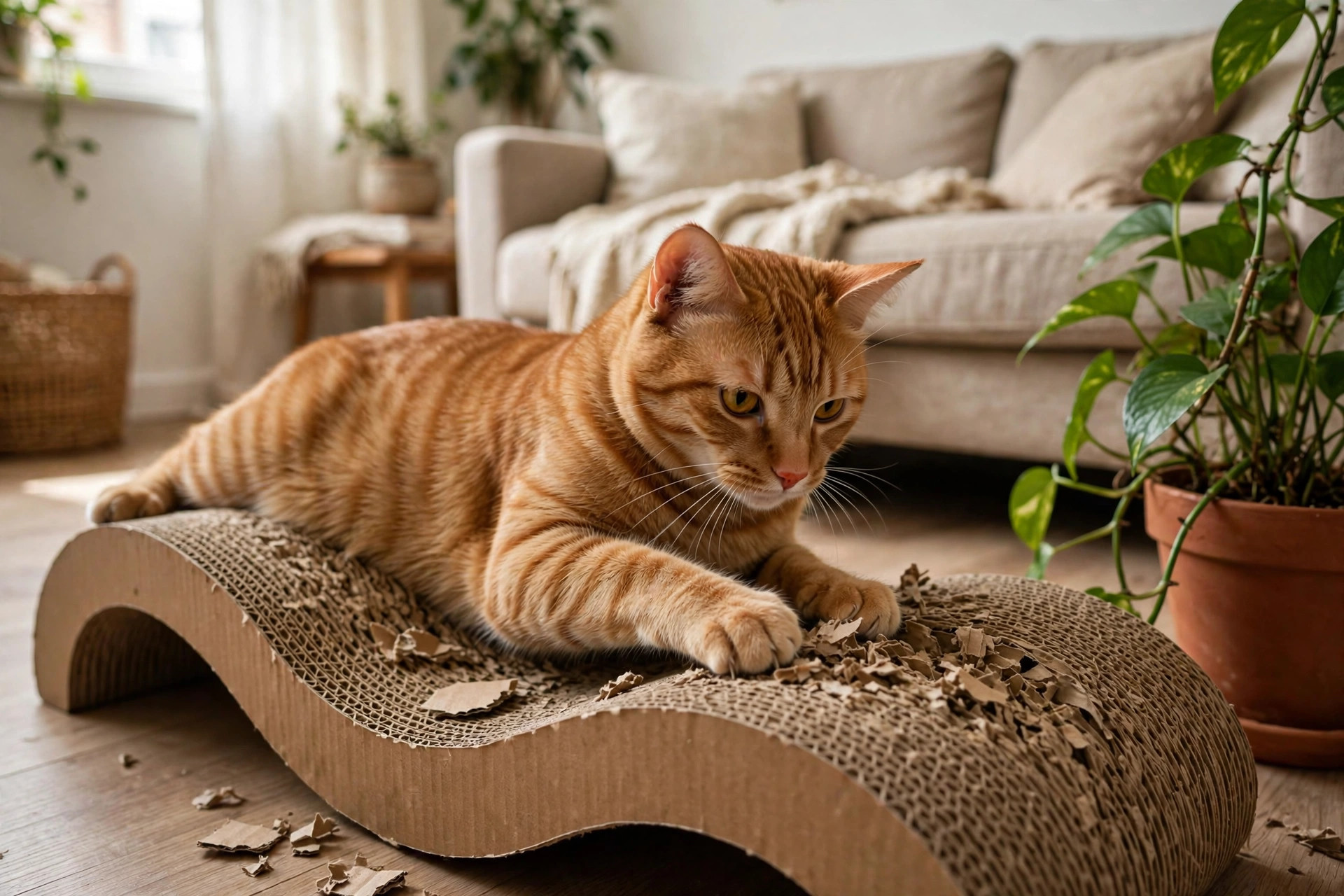
A scratcher lounger is the rare piece of cat furniture that earns its floor space twice: it is a legal scratching target and a bed in one footprint. In a 500-square-foot apartment, that dual purpose matters — a standalone scratching post plus a separate cat bed is two objects competing for the same corner. The trick is picking one shaped right for how your cat actually scratches (horizontal, vertical, or both) and sturdy enough not to slide across hardwood at 2 a.m.
- Curved cardboard loungers suit most cats: scratchable on the curve, nap-worthy in the dip, and cheap enough to replace.
- Size for the cat you have: the lounger should fit her full stretched length plus 2 inches — undersized loungers become scratch-only and the sofa stays the bed.
- Cardboard is disposable by design (replace every 3–6 months); sisal lasts years but costs more up front.
- Placement beats product: put it where the cat already scratches, not where it looks nice.
- Rub dried catnip into a new lounger once; if she still ignores it after a week, move it before you declare it a failure.
Six loungers that earn their floor space
| Lounger | Material | Typical price | Small-apartment note |
|---|---|---|---|
| PetFusion 3-Sided Vertical | Cardboard | $45–$60 | Scratches vertical + horizontal; recycled cardboard, replaceable pads. |
| SnugglyCat Ripple Rug | Woven rug | $40–$55 | Flat and flexible; drapes over furniture, travels well. Best for rug-scratchers. |
| Scratch Lounge Classic | Cardboard | $20–$30 | The original curved lounger; includes catnip. Budget king, wears faster. |
| Kitty City XL Corrugate | Cardboard | $35–$50 | Extra-large for big cats (fits 15+ lbs stretched). Takes real floor space. |
| SmartCat Bootsie’s Sisal Lounger | Sisal | $45–$60 | Durable woven sisal; the long-term pick if cardboard confetti drives you mad. |
| Petlinks HappyNip Curve | Cardboard | $25–$40 | Compact curve for studios; catnip-infused cardboard. Good starter. |
PetFusion 3-Sided — the best all-rounder
The triangular profile is clever: one vertical face for stand-up stretching scratches, one angled face, and one flat top for lounging. Cats that scratch chair legs (vertical) and rugs (horizontal) both get what they want from one object, which is exactly the versatility a small apartment demands. The cardboard inserts are replaceable, so the handsome outer frame lasts through several refill cycles at about $15 per refill — much cheaper than replacing whole loungers. At roughly 22 inches long it fits a real cat stretched out, and the weight keeps it planted on hard floors.
SnugglyCat Ripple Rug — for the unconventional scratcher
Some cats refuse every structured scratcher and go straight for the area rug. The Ripple Rug meets them where they are: a thick woven mat that can lie flat, fold into a tunnel, or drape over the sofa arm they are currently destroying. It is the lowest-footprint option here — it folds away entirely — and it travels, which matters if the cat splits time between homes. It will not satisfy a cat that needs a tall vertical stretch, so pair it with a vertical option for those cats.
SmartCat Bootsie’s Sisal Lounger — the tidy long-term pick
Cardboard loungers shed confetti — shredded corrugated bits migrate across hardwood and into socks. If that drives you up the wall, woven sisal is the answer: it wears slowly, produces almost no debris, and survives years of daily use. The upfront cost ($45–$60) is higher, but one sisal lounger outlasts four or five cardboard ones, so the math favors it within the first year for heavy scratchers. The scratch feel is different from cardboard, so transition gradually if your cat is a cardboard loyalist.
Scratch Lounge Classic — the budget starter
The curved cardboard lounger that defined the category, still the cheapest way to test whether your cat is a lounger person at all. The included catnip packet jump-starts interest. It wears faster than premium cardboard (expect 2–4 months for a dedicated scratcher), but at $20–$30 that is a feature: you learn your cat’s preferences cheaply before investing in the $50 replacement.
Sizing: measure the stretch, not the curl
Cats sleep curled but scratch stretched, and the lounger has to serve both. Measure your cat from nose to tail base while she is stretched out after a nap — then add 2 inches. That is your minimum lounger length. A 10-pound cat typically needs 20–22 inches; a 15-pound Maine Coon mix needs the XL tier (24+ inches). Width matters too: narrow loungers tip when a big cat launches onto them, so look for a wide base or a low center of gravity. For kittens, buy for the adult size — a lounger that fits at 6 months is a toy at 18 months, and cats bond with their scratch spots.
Placement: the 80% rule
Eighty percent of scratcher rejection is placement. Cats scratch to mark territory at territory boundaries and to stretch after waking — so the lounger belongs (1) near where the cat sleeps, (2) near the furniture she currently targets, or (3) near the apartment entrance, in that order of effectiveness. The living-room corner that looks tidy is usually wrong. Practical protocol: put the new lounger directly in front of the sofa arm she scratches, let her transfer the habit for two weeks, then inch it toward its permanent spot a foot per day. Cover the old target with a throw or double-sided tape during the transition — our couch-scratching guide covers the full retraining sequence. In studios, one lounger near the bed plus a puzzle feeder nearby creates a complete cat zone in about four square feet, and a low-mess catnip toy on the lounger seals the deal.
FAQ
My cat ignores the lounger and still scratches the sofa. Now what?
Move the lounger to the sofa arm she uses — do not wait. Rub dried catnip into the scratch surface, and make the sofa temporarily unappealing with a throw or double-sided tape. Most "failures" resolve within a week of correct placement.
How often do cardboard loungers need replacing?
Every 3–6 months for an average scratcher; heavy scratchers can flatten one side in 6–8 weeks. Replace when the surface is shredded flat — a worn-out scratcher teaches the cat that scratchers are unsatisfying, which sends her back to the sofa.
Cardboard or sisal — which do cats prefer?
Most cats prefer cardboard’s shreddable texture; it is the closest to tree bark. Sisal wins on durability and cleanliness. If your cat has only ever used cardboard, introduce sisal alongside it rather than swapping cold turkey.
Do I still need a tall scratching post too?
Ideally, one of each: the lounger covers horizontal scratching and napping, but cats also need a full vertical stretch (at least 28–32 inches tall). In a true studio where only one fits, pick the orientation your cat uses most — watch her for a week and buy accordingly.